jobs

Top 10 Website For Data Science Jobs

Today, data science jobs are some of the highest paying occupations on the planet. Data science jobs are on high demand from both the company and employee perspective. The current shortage of big data talent across the globe is well-documented. In 2018, there was a 56% demand for data science jobs in the U.S. So if you’re interested in working within this space, what’s the best approach to finding a job or an internship? You have the usual suspects like Indeed, LinkedIn, and Monster, but these aren’t your only options. There are also niche recruitment portals where you can stand out and make an impression.

Since you’ve done all the hard work studying big data and analytics to get to this point, we did the legwork and put together a list of our 10 favorite data science-related job sites where you can start applying for data science, deep learning (DL), machine learning (ML), and statistical analysis jobs.

1. StackOverflow

Image for post

StackOverflow is one of the biggest Q&A websites for programming and engineering. It also so happens that they have a job board! This is a great place to check not just for data scientists, but also software engineers and developers.

2. ai-jobs.net
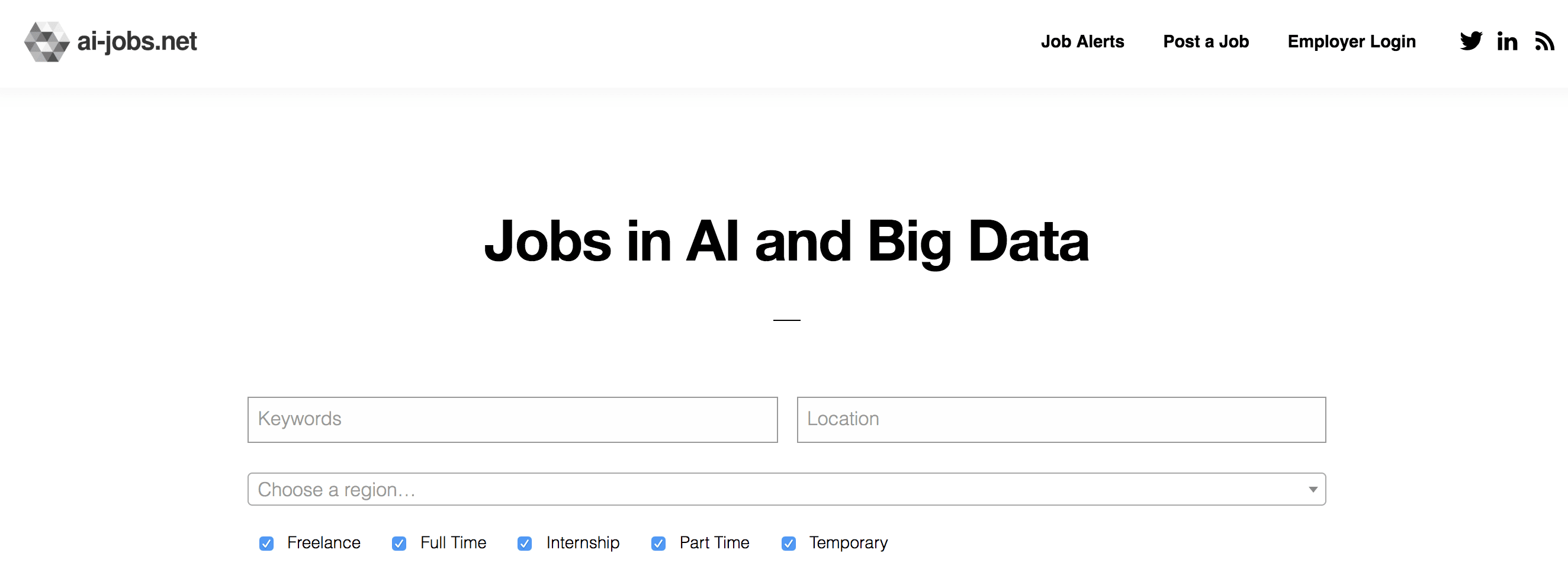
Ai-jobs.net

Ai-jobs.net is a job board that specifically serves the artificial intelligence (AI) and data science community. Whether you’re looking for something permanent or a contract role, there’s an option for everyone. The jobs listed on the website can also be found on their Reddit thread. The aim here is to provide a comprehensive and clear listing of jobs related to AI, big data, DL, and ML. So the site is pretty basic, straightforward, and all the focus is on current vacancies.

3. Y Combinator (YC)

Image for post

Y Combinator is one of the largest seed accelerators in the world and has funded some very established tech companies like Stripe, Airbnb, and DoorDash. They also have a job board that connects you with over 400 startups funded by YC.

4. Amazon Jobs
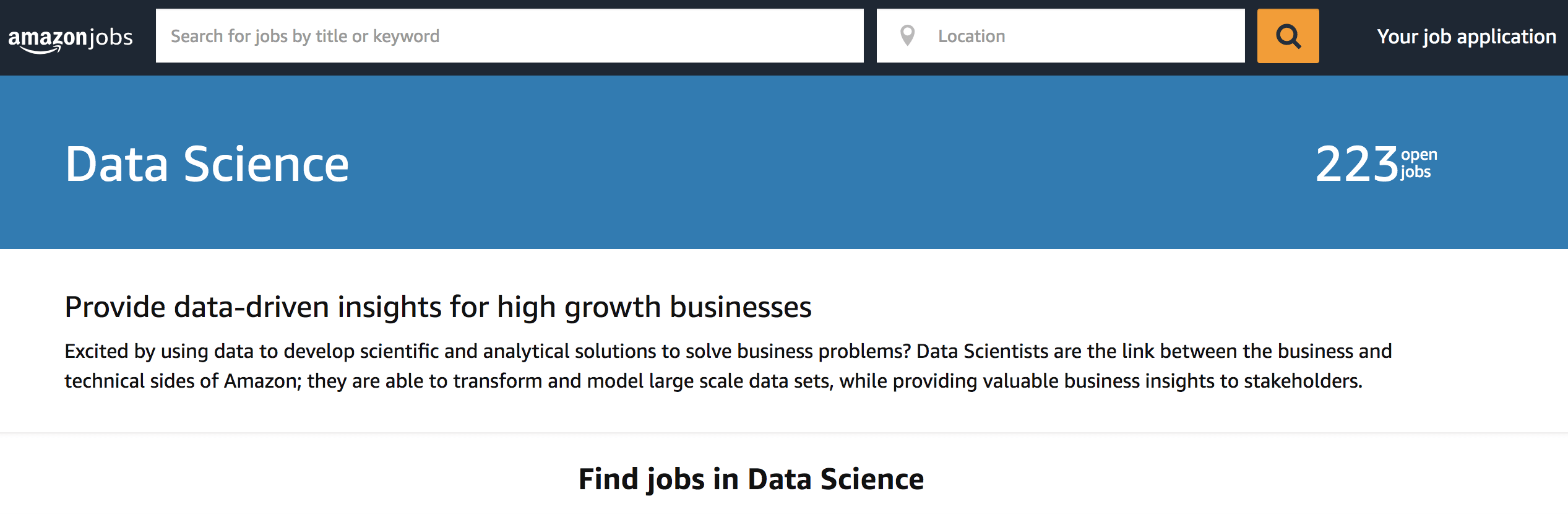
Amazon data science jobs

When it comes to data science jobs, Amazon is a leading employer. They have openings for a broad spectrum of roles from Senior Data Scientist – Prime Air to WWPS Data Analyst – Intern. Amazon provides a job opening for a broad spectrum of roles. Being a leader in technology, their job postings are listed on their website. Amazon is of the opinion that data scientists are a significant link between enterprises and the technical side of Amazon. If transforming and modeling data sets and providing insights to stakeholders interests you, Amazon Jobs is an excellent destination for both recent graduates and seasoned professionals.

5. AngelList

Image for post

AngelList is one of the largest platforms for startups that facilitates investments and recruitment. Like LinkedIn, you’ll create your own profile, fill in your information, and have access to a number of startup jobs. I found that this website is especially good if you’re looking for smaller startups (1–10 people).

6. Analytics Jobs
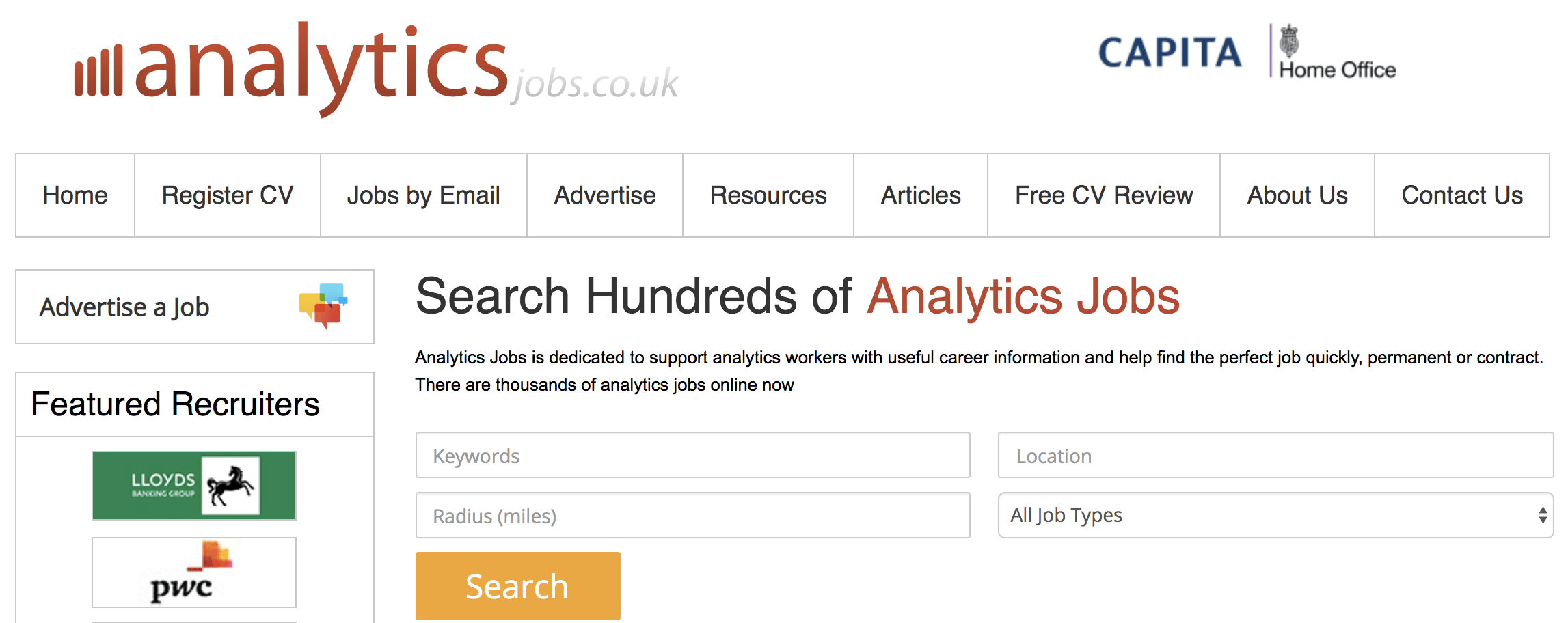
data science jobs search

Analytics Jobs hosts job postings that are related to analytics. So you don’t have to waste time filtering your searches or hunting down relevant vacancies. However, this job board is dedicated to big-data vacancies in the United Kingdom. Owned and operated by Technojobs Group for over 20 years, it’s a source of useful career and training information to keep you up to date with industry trends and requirements. Finding the appropriate listing is as easy as clicking the relevant category on the left sidebar.

7. Leetcode
Image for post

Leetcode, similar to HackeRank and InterviewBit, is a website where you can practice your coding skills by completing coding challenges. This is a great place to brush up on sorting algorithms and SQL. They’ve also included a new feature where you can practice mock interviews! Overall, I highly recommend you use this to help you prepare for your technical interviews.

8. Jumpstart

Image for post

Jumpstart is a really neat resource that I only came across recently through a friend. Think of it like Reddit, but for tech jobs. While primarily used as a forum, they also have their own job board and have a calendar full of various tech events that you can sign up for!

9. Kaggle
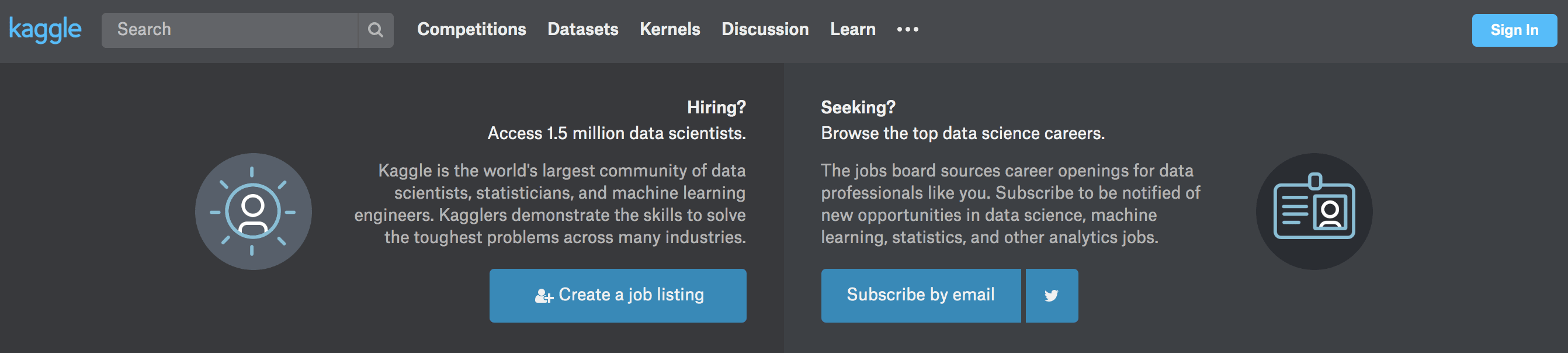
Kaggle

Kaggle boasts one of the world’s largest communities of data scientists, machine learning engineers, and statisticians. Members can subscribe to the latest updates on job openings and post their own vacancies. You can filter your results based on role, salary, and experience level. You can find top-ranked global companies like Amazon, Facebook, Google, and Microsoft posting their job openings here. So it might serve you well to join this community of data professionals.

10. Glassdoor

Image for post

Yes, I know Glassdoor is a job board. But personally, I never really used it for that purpose. Instead, I like to use it for its unique features like the ability to see company reviews and interview questions for a plethora of companies. If you’re applying for companies that you’ve never heard of, take advantage of this and know what you’re getting yourself into. And if you want to get a better idea of a company’s interview process, this is a great resource too.

Every reader contribution, however big or small, is so valuable for our future. Support pyoflife.com from as little as $1 – and it only takes a minute. Thank you.

Highest Paying Jobs with an Economics Degree

What can you do with an economics degree? This is a question many prospective college students ask when considering this popular major. While there may be many potential answers to this question, some of the most lucrative ones are highlighted below. If you want to study economics and earn a handsome salary upon graduation, these are the career paths you should consider.

Job TitleMedian Salary (2018)*Job Growth (2018-2028)*
Economist$104,3408%
Budget Analyst$76,2204%
Top Executive$104,9806%
Personal Financial Advisor$88,8907%
Financial Manager$127,99016%
Source: *U.S. Bureau of Labor

1. Economist

With a bachelor’s degree in economics, you would be qualified for entry-level positions and pursuing a graduate degree in economics would open up several other options. Economist uses analytical and research skills to carry out studies regarding economic scenarios. They analyze industry trends to help organizations improve their performance.

They might work for organizations in a variety of industries, including business, finance, healthcare, education, the government, and more. The economist can also act as an expert witness in legal cases to assess economic damages, analyze intellectual property and antitrust violations, and address regulatory violations.  In 2018, economists made a median annual salary of $104,340.

2. Budget Analyst

A budget analyst is employed by an organization or business and is responsible for helping the company develop and manage an annual budget. They may work closely with other company executives and managers to understand the financial needs of each department, as well as the expenditures.

An economics bachelor’s degree would be adequate preparation for a career as a budget analyst, though certification may also be helpful for those working in the government. These professionals made a median salary of $76,220.

Related post: Economics Books For Economist.

3. Top Executive

Top executives work in several different capacities for companies and organizations, like operations managers, executive directors, and CEOs. While their responsibilities and job duties may vary depending on their specific role, top executives are often in charge of setting organizational goals, working with other company executives, analyzing sales and financial reports, and overseeing the daily operations of a company.

With an economics degree and relevant work experience, you would be qualified for a position as a top executive. In 2018, top executives made a median annual salary of $104,980 and there is the potential to earn even more depending on your role, as the top ten per cent of CEOs made over $208,000 in 2018.

4. Personal Financial Advisor

As a personal financial advisor, you will work closely with clients who are seeking financial advice concerning their investments and savings. You may help them set up savings funds for retirement or their children’s future education, manage their investment portfolios, and navigate tax season.

A degree in economics would provide an individual with a good foundation for a career as a personal financial advisor and certifications or licenses may provide an additional advantage. These advisors made a median annual salary of $88,890 in 2018, which is also much higher than the national median of $38,640 for all occupations.

5. Financial Manager

Financial managers play a key role in businesses and organizations, as they oversee all of the business’s financial activities and make important financial decisions. For example, a financial manager would be responsible for managing the finance department and all of its employees, producing financial reports and statements, making sure budgets are set and abided by, and reporting to top executives.

Financial managers typically have a bachelor’s degree in a relevant field, like economics, and significant work experience in a related role. In 2018, financial managers earned a median annual salary of $127,990.

Complete Career Guide For A Data Scientist

In the fast-paced world of technology, the role of a data scientist has become increasingly crucial. As businesses rely on data-driven insights to make informed decisions, the demand for skilled data scientists continues to soar. If you aspire to embark on a career in data science, this comprehensive guide will walk you through the essential steps and considerations to build a successful path.

Introduction

The field of data science is a dynamic and interdisciplinary domain that combines expertise in statistics, mathematics, and computer science. As businesses harness the power of data to gain a competitive edge, the role of a data scientist has evolved into one of the most sought-after positions in the job market.

Understanding the Role of a Data Scientist

At its core, a data scientist is responsible for extracting meaningful insights from complex datasets. This involves employing statistical analysis, machine learning algorithms, and data visualization techniques. The role is not only about crunching numbers but also requires effective communication to convey findings to non-technical stakeholders.

Complete Career Guide For A Data Scientist

Educational Background and Skills Required

To embark on a career in data science, a strong educational foundation is crucial. Most data scientists hold advanced degrees in fields such as computer science, statistics, or mathematics. Additionally, acquiring certifications in relevant technologies and methodologies enhances one’s credibility in the field.

Building a Strong Foundation in Programming

Proficiency in programming is a cornerstone skill for a data scientist. The ability to code allows professionals to manipulate and analyze data efficiently. Python, R, and SQL are among the preferred programming languages in the field, with each offering unique advantages for specific tasks.

Specializations in Data Science

Data science encompasses various specializations, including machine learning, data engineering, and business analytics. Aspiring data scientists should explore these branches to identify their interests and align their career goals accordingly. Each specialization presents distinct opportunities and challenges.

Gaining Practical Experience

While theoretical knowledge is essential, gaining practical experience is equally crucial. Engaging in real-world projects, and internships, and participating in open-source initiatives contribute significantly to skill development. Platforms like Kaggle provide a competitive environment for honing problem-solving skills.

Networking in the Data Science Community

Building a network within the data science community opens doors to valuable opportunities. Joining online forums, attending conferences, and networking events allows aspiring data scientists to connect with industry professionals, share insights, and stay abreast of the latest trends.

Crafting an Impressive Data Scientist Resume

A well-crafted resume is the first step in securing a data science position. Highlighting academic achievements, relevant projects, and acquired skills is essential. A strong resume showcases expertise and demonstrates the ability to apply knowledge in practical scenarios.

Preparing for Data Science Interviews

Data science interviews often include technical assessments and problem-solving challenges. Aspiring data scientists should prepare for common interview questions, showcasing their analytical and problem-solving abilities. Effective communication of methodologies and findings is equally important.

Salary Expectations and Job Market Trends

Salary expectations in data science vary based on factors such as experience, location, and industry. Analyzing current job market trends provides insights into the demand for specific skill sets. Staying informed about salary benchmarks ensures fair compensation negotiations.

Continuous Learning and Professional Development

Data science is a rapidly evolving field. Continuous learning is essential to stay updated on new technologies and methodologies. Online courses, workshops, and industry conferences provide opportunities for professional development.

Challenges Faced by Data Scientists

While a career in data science is rewarding, it comes with its challenges. Aspiring data scientists should be prepared to face obstacles such as handling massive datasets, overcoming algorithmic biases, and addressing ethical considerations in data analysis.

Diversity and Inclusion in Data Science

Diversity and inclusion are integral to fostering innovation in data science. Initiatives and programs promoting diversity create a more vibrant and creative work environment. Embracing diverse perspectives enhances problem-solving and contributes to a more robust data science community.

Future of Data Science

The future of data science holds exciting possibilities with emerging technologies such as artificial intelligence, blockchain, and quantum computing. As the field evolves, data scientists can anticipate new challenges and opportunities, making adaptability and continuous learning paramount.

Conclusion

Embarking on a career in data science is an exciting journey filled with opportunities for growth and innovation. By following this comprehensive career guide, aspiring data scientists can navigate the complexities of the field, build a strong foundation, and contribute meaningfully to the ever-expanding world of data.

Download: The Data Science Handbook

How to use LinkedIn for your career progression?

Learning how to use LinkedIn for professional development is a great step toward improving your network, keeping in touch with colleagues, finding that perfect job and making new connections that offer exciting opportunities. LinkedIn is one of the fastest-growing and most valuable assets to access. In 2019 alone, LinkedIn had 645 million accounts, and 40% of those users actually logged on every single day.  With over 30 million companies now active on the platform, there were over 20 million open job postings in 2019 alone. 

Use LinkedIn for career progression:

1. Build an Outstanding Profile

LinkedIn provides a vast set of internal tools for building one’s profile. Make sure you fill out all areas and provide enough value in order to demonstrate your skills and qualifications in the best possible manner. Use a specific headline that corresponds with your core skill. Craft a genuine summary that outlines your top accomplishments and your main focus. Update your skills, the job experience (in details), communities you participate with and certificates that you hold. You can use a trustworthy photo which showcases your best self. Apply that same photo to your other online accounts so that people can connect the dots. Upload any SlideShare presentations or additional assets applicable to LinkedIn.

Remember first impressions matter, and not just in person.  Before ever meeting you, 41% of recruiters have admitted judging candidates by their photos. Your profile picture is your calling card on LinkedIn.

2. Use the app to your advantage.

When you are on the job hunt, find companies you want to work for, and make it a point to follow their accounts so you can stay aware of the company’s current happenings.  The “companies” tab will display updates, employees and job postings, all in one central location that will then make its way over to your news feed. Once you land an interview, you will already be well up to date on their latest product releases or corporate announcements, and this makes you stand out more than you realize

The app also contains a pulse tab, which allows you to see personalized articles and topics related to your industry and target audience. Dedicate a little time each morning to sift through the app. With your morning cup of coffee, spend 10 minutes finding articles worth sharing, or work towards building content around your industry (articles, blog posts, etc) so you can establish yourself as a thought-leader in your niche. 

3. Produce Regular Valuable Content

Out of the 645 million LinkedIn accounts, less than .5% are actually contributing new content.  This place is a goldmine for sharing content and being seen. Low competition means high view opportunities, a recipe for success.   If you find an article you liked within your realm of subject matter, read the comments section to find questions that other viewers may have posed as a way to search for and address gaps that weren’t covered on the topic. Tag other people who will get notified once mentioned – especially if you discuss more active LinkedIn members.

Recording daily educational videos (or every few days) will most likely receive more attention than standard textual posts. If you want to build your portfolio for work purposes, make sure your topics are closely related to your speciality. You want to end up with a complete profile that screams “professional” and is focused on what you do and are eager to do.

4. Connect with the right people

You met someone a few years back in college doesn’t necessarily mean you want to connect with them on this professional platform. Your level of reach depends largely on how social and engaged you are on the platform, not necessarily how many people are connected with you.  Start by connecting with existing professional and personal contacts in the industry you are working in, or want to move into.  If you meet a new coworker or connect with a professional during a networking event, seek out their account and send them a LinkedIn request that contains a short personalized message.

Join LinkedIn groups and interact with people. Comment on discussions, share topics on your own feed, mention other team members. Most people would be sending invitations every now and then and don’t be afraid to ask for a connection request after a couple of interactions.

If you like my work support me on: https://www.patreon.com/pyoflife