python

Foundations for Analytics with Python

Foundations for Analytics with Python: In today’s data-driven world, the ability to extract insights from vast amounts of data is invaluable. Python has emerged as one of the most popular programming languages for data analytics due to its simplicity, versatility, and powerful libraries. Whether you’re a complete novice or an experienced programmer looking to delve into analytics, mastering Python can open doors to a plethora of opportunities in the field of data science.

Introduction to Analytics with Python

What is analytics?

Analytics involves the discovery, interpretation, and communication of meaningful patterns in data. It encompasses various techniques and methodologies to extract actionable insights and drive informed decision-making.

Importance of Python in analytics

Python’s simplicity and readability make it an ideal choice for data analysis and visualization. Its extensive ecosystem of libraries such as Pandas, NumPy, Matplotlib, and scikit-learn provides robust tools for every stage of the analytics pipeline.

Foundations for Analytics with Python Foundations for Analytics with Python
Foundations for Analytics with Python

Basics of Python Programming

Variables and data types

Python offers dynamic typing, allowing variables to be assigned without explicitly declaring their data type. Common data types include integers, floats, strings, lists, and dictionaries.

Control flow statements

Control flow statements such as if-else, loops, and conditional statements enable the execution of code based on certain conditions or criteria.

Functions and modules

Functions are reusable blocks of code that perform specific tasks, while modules are collections of related functions and variables that can be imported into other Python scripts.

Data Manipulation with Pandas

Introduction to Pandas Library

Pandas is a powerful library for data manipulation and analysis, offering data structures like DataFrame and Series that facilitate easy handling of structured data.

Loading and exploring data

Pandas provides functions to read data from various file formats such as CSV, Excel, and SQL databases. Once loaded, data can be explored using descriptive statistics and visualization techniques.

Data cleaning and preprocessing

Data cleaning involves handling missing values, removing duplicates, and standardizing data formats to ensure consistency and accuracy in analysis.

Data Visualization with Matplotlib and Seaborn

Importance of data visualization

Data visualization plays a crucial role in conveying insights and trends effectively. Matplotlib and Seaborn are two popular libraries for creating static, interactive, and publication-quality plots.

Overview of Matplotlib and Seaborn libraries

Matplotlib offers a wide range of plotting functions for basic to advanced visualizations, while Seaborn provides high-level abstractions and themes for creating attractive statistical plots.

Creating various types of plots

From simple line plots to complex heatmaps and box plots, Matplotlib and Seaborn offer versatility in visualizing different types of data and relationships.

Introduction to NumPy

Understanding arrays in NumPy

NumPy arrays are multidimensional containers for homogeneous data, offering efficient storage and operations for numerical computations.

Performing array operations

NumPy provides a plethora of mathematical functions and operations for array manipulation, including arithmetic, statistical, and linear algebraic operations.

Statistical Analysis with SciPy

Overview of SciPy library

SciPy builds on top of NumPy to provide additional functionality for scientific computing, including optimization, integration, interpolation, and statistical analysis.

Performing statistical tests and analysis

SciPy offers a wide range of statistical functions for hypothesis testing, probability distributions, correlation analysis, and regression modeling.

Machine Learning Fundamentals

What is machine learning?

Machine learning is a subset of artificial intelligence that enables systems to learn from data and make predictions or decisions without being explicitly programmed.

Introduction to scikit-learn library

Scikit-learn is a versatile library for machine learning in Python, offering algorithms for classification, regression, clustering, dimensionality reduction, and model evaluation.

Building Predictive Models

Data preprocessing for machine learning

Data preprocessing involves tasks such as feature scaling, encoding categorical variables, and splitting data into training and testing sets to prepare it for modeling.

Training and evaluating models

Scikit-learn provides an intuitive interface for training machine learning models and evaluating their performance using metrics such as accuracy, precision, recall, and F1-score.

Deep Dive into Advanced Topics

Introduction to advanced libraries like TensorFlow and PyTorch

TensorFlow and PyTorch are popular libraries for deep learning, offering high-level abstractions and computational graphs for building and training neural networks.

Deep learning concepts

Deep learning encompasses advanced neural network architectures such as convolutional neural networks (CNNs), recurrent neural networks (RNNs), and generative adversarial networks (GANs) for tasks like image recognition, natural language processing, and generative modeling.

Practical Applications of Analytics with Python

Real-world use cases

Python’s versatility and robust libraries make it indispensable for a wide range of applications, including finance, healthcare, e-commerce, social media analytics, and IoT.

Industry applications

Python is extensively used in industries like banking, insurance, retail, healthcare, manufacturing, and technology for tasks such as fraud detection, customer segmentation, demand forecasting, and predictive maintenance.

Challenges and Solutions

Common challenges faced by beginners

Beginners often struggle with understanding complex concepts, debugging errors, and transitioning from theoretical knowledge to practical implementation.

Tips to overcome challenges

Practicing regularly, seeking help from online resources and communities, breaking down problems into smaller tasks, and experimenting with different approaches can help overcome challenges and accelerate learning.

Resources for Further Learning

Online courses and tutorials

Numerous online platforms offer courses and tutorials on Python programming, data science, machine learning, and deep learning, catering to learners of all levels.

Books and references

Books such as “Python for Data Analysis” by Wes McKinney, “Hands-On Machine Learning with Scikit-Learn, Keras, and TensorFlow” by Aurélien Géron, and “Deep Learning” by Ian Goodfellow, Yoshua Bengio, and Aaron Courville are recommended for in-depth understanding.

Conclusion: Foundations for Analytics with Python

In conclusion, mastering analytics with Python is a rewarding journey that equips individuals with the skills and tools to unlock insights from data, drive innovation, and make informed decisions. Whether you’re a non-programmer venturing into the world of analytics or an experienced hacker looking to expand your repertoire, Python offers a solid foundation to embark on this transformative path.

Download(PDF)

Read More: Python Programming Fundamentals
Python Programming Fundamentals
Python Programming Fundamentals: Python is a versatile and popular programming language known for its simplicity and readability. It has gained immense popularity in various domains, including web development, data analysis, artificial intelligence, and automation. Whether you are a beginner or an experienced programmer, understanding the fundamentals of Python is essential to harness its full potential. In this article, we will explore the key concepts and principles that form the foundation of Python programming.

1. Introduction to Python

Python is a high-level, interpreted programming language developed by Guido van Rossum in the late 1980s. It emphasizes code readability and allows programmers to express concepts in fewer lines of code compared to other languages. Python’s design philosophy focuses on simplicity and clarity, making it an excellent choice for beginners.

Python Programming Fundamentals

2. Variables and Data Types

In Python, variables are used to store data. They can hold different types of values, such as numbers, strings, lists, and dictionaries. Python supports various data types, including integers, floats, strings, booleans, lists, tuples, and dictionaries. Understanding data types is crucial for manipulating and organizing data effectively.

3. Control Structures

3.1 Conditional Statements

Conditional statements in Python allow us to execute different blocks of code based on specific conditions. The if, elif, and else statements are used to perform conditional branching. By utilizing these statements, programmers can make their programs more flexible and responsive to different scenarios.

3.2 Loops

Loops are used to repeatedly execute a block of code until a specific condition is met. Python provides two types of loops: for loop and while loop. These loops are invaluable when it comes to iterating over elements in a list, performing repetitive tasks, or implementing algorithms.

4. Functions and Modules

Functions are reusable blocks of code that perform specific tasks. They allow programmers to break down complex problems into smaller, manageable parts. Python also supports modules, which are files containing Python code that can be imported into other programs. Modules provide a way to organize and reuse code across different projects.

5. File Handling

File handling is an essential aspect of programming that involves reading from and writing to files. Python provides various functions and methods to interact with files, allowing programmers to perform operations such as reading data from a file, writing data to a file, and modifying existing files.

6. Exception Handling

Exception handling enables programmers to handle and recover from errors or exceptional situations that may occur during program execution. Python’s exception-handling mechanism helps prevent program crashes and allows for graceful error handling and recovery.

7. Object-Oriented Programming (OOP)

Python is an object-oriented programming (OOP) language. It supports the concepts of classes and objects, inheritance, and polymorphism. OOP allows programmers to create reusable and modular code, making it easier to manage complex projects and collaborate with other developers.

7.1 Classes and Objects

Classes are blueprints or templates for creating objects. Objects are instances of classes that encapsulate data and behavior. By using classes and objects, programmers can model real-world entities and implement complex systems with ease.

7.2 Inheritance

Inheritance is a fundamental concept in OOP that allows classes to inherit attributes and methods from other classes. It promotes code reuse, extensibility, and modular design. In Python, classes can inherit from one or more base classes, forming a hierarchy of classes.

7.3 Polymorphism

Polymorphism allows objects of different classes to be treated as objects of a common base class. It enables flexibility and dynamic behavior in code. Polymorphism is achieved through method overriding and method overloading in Python.

8. Python Libraries and Frameworks

Python offers a vast ecosystem of libraries and frameworks that extend its capabilities and provide solutions for specific tasks. Some popular libraries include NumPy for scientific computing, pandas for data analysis, matplotlib for data visualization, and Flask and Django for web development. Leveraging these libraries and frameworks can significantly enhance productivity and efficiency.

9. Best Practices and Tips

To write clean, maintainable, and efficient Python code, it is essential to follow best practices. Some tips include writing modular and reusable code, using meaningful variable and function names, adhering to PEP 8 style guidelines, and documenting code effectively. By adopting these practices, developers can improve code quality and collaboration.

10. Conclusion

Python’s simplicity, versatility, and robustness have made it a preferred programming language for beginners and professionals alike. In this article, we explored the fundamentals of Python programming, including variables, control structures, functions, file handling, exception handling, object-oriented programming, and Python libraries. By mastering these concepts, you can unlock endless possibilities and embark on exciting software development journeys.

11. FAQs (Frequently Asked Questions)

Q1: Can I use Python for web development? A: Yes, Python can be used for web development. Frameworks like Django and Flask provide powerful tools and functionalities for building web applications.

Q2: Is Python suitable for scientific computing? A: Absolutely. Python, along with libraries like NumPy, SciPy, and pandas, is widely used for scientific computing, data analysis, and machine learning.

Q3: Are Python programs cross-platform compatible? A: Yes, Python programs can run on various platforms, including Windows, macOS, and Linux, without any major modifications.

Q4: Can I contribute to the Python community? A: Yes, Python is an open-source language, and you can contribute to its development by submitting bug reports, proposing enhancements, or contributing to the core Python codebase.

Q5: Where can I find additional resources to learn Python? A: There are numerous online tutorials, documentation, and books available to learn Python. Websites like Python.org and online learning platforms like Coursera and Udemy offer comprehensive Python courses.

In conclusion, Python’s simplicity, readability, and extensive ecosystem make it an excellent choice for programming beginners and seasoned developers. By mastering the fundamentals of Python, you can embark on exciting projects, solve real-world problems, and contribute to the thriving Python community.

Download (PDF)

Python for Marketing Research and Analytics

Python for Marketing Research and Analytics: In today’s digital age, data is king, especially in the realm of marketing. Every click, every view, and every purchase leaves a digital footprint that savvy marketers can leverage to understand consumer behavior and make informed decisions. However, the sheer volume and complexity of data available can be overwhelming. This is where Python comes into play.

Why Python is Essential for Marketing Research

Python has emerged as a powerhouse tool for data analysis and manipulation due to its simplicity, versatility, and extensive libraries. In the realm of marketing research and analytics, Python offers several advantages:

1. Efficiency: Python’s concise syntax and vast ecosystem of libraries enable marketers to streamline data collection, processing, and analysis workflows, reducing time and effort.

2. Flexibility: Python’s flexibility allows marketers to adapt their analysis to various data sources and formats, whether structured data from databases or unstructured data from social media feeds.

3. Scalability: Python scales effortlessly from small-scale analyses to large-scale, enterprise-level projects, making it suitable for businesses of all sizes.

4. Integration: Python seamlessly integrates with other technologies commonly used in marketing, such as web scraping tools, APIs, and CRM systems, facilitating seamless data flow and automation.

Python for Marketing Research and Analytics

Basic Python Concepts for Marketers

Before diving into marketing-specific applications, marketers need to grasp some fundamental Python concepts:

Variables and Data Types

Variables are containers for storing data values, while data types define the type of data that a variable can hold. Understanding data types like strings, integers, floats, and booleans is crucial for data manipulation.

Lists, Tuples, and Dictionaries

Lists, tuples, and dictionaries are data structures used to store data collections. They offer different methods of organizing and accessing data, providing flexibility in handling datasets.

Control Flow Statements

Control flow statements like if-else conditions and loops allow marketers to control the flow of their programs based on certain conditions, enabling them to automate repetitive tasks and make decisions based on data.

Data Collection and Cleaning with Python

One of the primary tasks in marketing research is collecting and cleaning data from various sources. Python offers powerful tools for these purposes:

Web Scraping

Python libraries like BeautifulSoup and Scrapy facilitate web scraping, allowing marketers to extract data from websites and online platforms for analysis.

Data Parsing and Cleaning

Once data is collected, it often requires preprocessing to remove inconsistencies, errors, and irrelevant information. Python’s libraries such as Pandas provide robust tools for data parsing, cleaning, and transformation.

Data Analysis and Visualization with Python

With clean data at hand, marketers can leverage Python for in-depth analysis and visualization:

Pandas for Data Analysis

Pandas is a popular library for data manipulation and analysis, offering powerful tools for slicing, dicing, aggregating, and summarizing datasets.

Matplotlib and Seaborn for Visualization

Matplotlib and Seaborn are Python libraries for creating static, interactive, and publication-quality visualizations, allowing marketers to communicate insights effectively.

Advanced Techniques in Python for Marketing Research

Python’s capabilities extend beyond basic data manipulation and visualization. Marketers can harness advanced techniques for deeper insights:

Machine Learning Applications

Python’s robust machine learning libraries like scikit-learn and TensorFlow enable marketers to build predictive models, segment customers, and personalize marketing campaigns based on data-driven insights.

Natural Language Processing (NLP) for Text Analysis

With the proliferation of textual data from social media, customer reviews, and surveys, NLP techniques in Python empower marketers to analyze sentiment, extract key topics, and derive actionable insights from text data.

Case Studies and Examples

To illustrate Python’s practical applications in marketing research and analytics, let’s explore a few case studies and examples:

  • Predictive customer segmentation using machine learning algorithms.
  • Sentiment analysis of social media mentions to gauge brand perception.
  • Web scraping competitor websites to analyze pricing strategies.

Challenges and Considerations

While Python offers immense potential for marketing research, several challenges and considerations must be addressed:

  • Data privacy and compliance with regulations like GDPR.
  • Integration with existing marketing technology stacks.
  • Skills gap and the need for continuous learning among marketers.

Conclusion

Python has become an indispensable tool in the arsenal of modern marketers, empowering them to extract actionable insights from vast troves of data efficiently and effectively. By mastering Python’s data collection, cleaning, analysis, and visualization capabilities, marketers can gain a competitive edge in understanding consumer behavior, optimizing campaigns, and driving business growth.

Download(PDF)

Read More: Python Crash Course: A Hands-On, Project-Based Introduction to Programming

Mastering Python for Data Science

In this digital era, data science has become an integral part of various industries. Python, a powerful programming language, has emerged as the go-to language for data scientists. It offers a wide range of libraries and tools that simplify the process of data manipulation, analysis, visualization, and machine learning. In this article, we will explore the essential aspects of mastering Python for data science.

Importance of Python in Data Science

Python has gained immense popularity in the field of data science due to its simplicity, versatility, and extensive library ecosystem. It provides a user-friendly syntax, making it easier for both beginners and experienced programmers to work with data. Python’s vast collection of libraries such as NumPy, Pandas, Matplotlib, and Scikit-learn empowers data scientists to efficiently perform complex data operations and build sophisticated machine learning models.

Mastering Python for Data Science

Essential Python Libraries for Data Science

To excel in data science using Python, it’s crucial to familiarize yourself with key libraries. NumPy provides support for large, multi-dimensional arrays and various mathematical functions. Pandas offers data structures and tools for data manipulation and analysis. Matplotlib enables the creation of visually appealing data visualizations. Scikit-learn provides a robust set of tools for machine learning tasks. These libraries serve as the foundation for mastering Python for data science.

Data Manipulation and Analysis with Python

Python’s Pandas library is widely used for data manipulation and analysis. It provides powerful data structures like DataFrames, which allow easy handling of structured data. With Pandas, you can perform tasks such as data cleaning, merging, filtering, and aggregation. It also integrates well with other libraries, making it a versatile tool for data manipulation in data science projects.

Data Visualization with Python

Visualizing data is essential for gaining insights and effectively communicating findings. Python’s Matplotlib library offers a comprehensive set of tools for creating various types of visualizations, including line plots, scatter plots, bar charts, and heatmaps. Additionally, libraries like Seaborn and Plotly provide higher-level abstractions and interactive visualizations. Mastering data visualization in Python is crucial for presenting data in a compelling and informative manner.

Machine Learning with Python

Machine learning is a key component of data science, and Python provides an extensive ecosystem for building and deploying machine learning models. Scikit-learn, one of the most widely used libraries, offers a wide range of algorithms for tasks such as classification, regression, clustering, and dimensionality reduction. By mastering Python for machine learning, data scientists can create accurate models to make predictions and extract valuable insights from data.

Deep Learning with Python

Deep learning has revolutionized various domains, including image recognition, natural language processing, and recommendation systems. Python’s TensorFlow and PyTorch libraries provide powerful tools for building and training deep neural networks. These libraries offer flexible architectures and pre-trained models, making it easier to apply deep learning techniques to complex data science problems.

Natural Language Processing with Python

Natural Language Processing (NLP) allows machines to understand and analyze human language. Python’s NLTK and SpaCy libraries offer a wide range of tools and algorithms for NLP tasks such as tokenization, part-of-speech tagging, named entity recognition, and sentiment analysis. Mastering Python for NLP empowers data scientists to extract meaningful insights from textual data.

Big Data Processing with Python

With the exponential growth of data, handling large datasets efficiently has become crucial. Python provides libraries like PySpark, Dask, and Koalas, which enable distributed data processing on clusters. These libraries leverage the power of technologies like Apache Spark and Apache Hadoop to scale Python code and process massive amounts of data in parallel.

Python for Web Scraping

Web scraping is the process of extracting data from websites, and Python’s BeautifulSoup and Scrapy libraries simplify this task. These libraries offer intuitive APIs for navigating web pages, parsing HTML/XML, and extracting relevant information. Mastering web scraping with Python opens up opportunities to gather data for analysis and research purposes.

Python for Data Science Projects

To become a proficient data scientist, it’s essential to work on real-world projects. Python’s versatility and vast library ecosystem make it ideal for implementing data science projects. By undertaking projects that involve data collection, cleaning, analysis, and modeling, aspiring data scientists can enhance their skills and build a strong portfolio.

Challenges and Future of Python in Data Science

While Python has become the de facto language for data science, it faces challenges related to scalability and performance for certain use cases. As the volume and complexity of data continue to grow, Python’s limitations may become more evident. However, the Python community is actively working on addressing these challenges by developing libraries and tools that optimize performance and support parallel computing. The future of Python in data science looks promising, with ongoing advancements to meet the evolving needs of the field.

Conclusion

Mastering Python for data science opens up a world of opportunities. With its extensive library ecosystem, Python empowers data scientists to efficiently manipulate data, create visualizations, build machine learning models, and extract insights. By delving into essential libraries and techniques, aspiring data scientists can develop the skills needed to tackle complex data challenges and make meaningful contributions to their respective domains.

Download (PDF)

Read More: Programming for Computations – Python

Learning Scientific Programming with Python

Learning Scientific Programming with Python: Scientific programming involves using computer programming languages to solve scientific problems. Python has emerged as one of the most popular languages for scientific programming due to its simplicity, versatility, and a vast ecosystem of libraries.

Getting Started with Python

Before diving into scientific programming, it’s essential to have a basic understanding of Python. You can start by installing Python on your system and getting familiar with its syntax, data types, and control structures.

Basics of Scientific Computing with Python

Two fundamental libraries for scientific computing in Python are NumPy and SciPy. NumPy supports numerical computations, while SciPy offers a wide range of scientific computing tools, including optimization, integration, interpolation, and linear algebra.

Data Visualization with Matplotlib

Data visualization is crucial for understanding and analyzing scientific data. Matplotlib is a powerful library for creating static, animated, and interactive visualizations in Python. It enables you to plot various types of graphs, charts, and diagrams to represent your data effectively.

Working with Data in Python

Pandas is a popular library for data manipulation and analysis in Python. It provides data structures and functions for efficiently handling structured data, such as tables and time series. With Pandas, you can easily clean, transform, and analyze large datasets.

Learning Scientific Programming with Python

Introduction to Scientific Libraries in Python

In addition to NumPy, SciPy, and Matplotlib, Python offers several other libraries for specific scientific tasks. SymPy is a library for symbolic mathematics, allowing you to perform algebraic manipulations, calculus, and symbolic solving. Scikit-learn is a versatile library for machine learning, providing tools for classification, regression, clustering, dimensionality reduction, and more.

Application of Scientific Programming in Various Fields

Scientific programming with Python finds applications across various domains, including physics, biology, chemistry, and engineering. Researchers and scientists use Python to model physical systems, analyze biological data, simulate chemical reactions, and solve engineering problems.

Best Practices and Tips for Scientific Programming

When engaging in scientific programming, it’s essential to follow best practices to write efficient, maintainable, and reproducible code. This includes writing clear and concise code, using meaningful variable names, documenting your code, testing thoroughly, and leveraging version control systems like Git to manage your projects.

Conclusion

Learning scientific programming with Python opens up opportunities for researchers, scientists, engineers, and students. By mastering Python and its scientific libraries, you can tackle complex problems, gain insights from data, and contribute to advancements in various fields.

Download(PDF)

Read More: Introduction to Scientific Programming with Python

Intro to Exploratory Data Analysis (EDA) in Python

Intro to Exploratory Data Analysis (EDA) in Python: In the world of data science, one of the initial and crucial steps in understanding a dataset is Exploratory Data Analysis (EDA). It’s like embarking on a journey where you explore the characteristics and patterns within your data before diving into any complex modeling. In this article, we’ll delve into what EDA is all about and how Python facilitates this process seamlessly with its powerful libraries.

Importance of EDA in Data Science

EDA serves as the foundation for any data analysis project. By visualizing and summarizing the main characteristics of a dataset, it helps analysts to:

  • Identify patterns and relationships
  • Detect outliers and anomalies
  • Understand the distribution and structure of the data
  • Formulate hypotheses for further analysis

Tools and Libraries for EDA in Python

Python offers a rich ecosystem of libraries for performing EDA efficiently. Some of the commonly used ones include:

Pandas

Pandas is a versatile library that provides data structures and functions to manipulate and analyze structured data. It offers powerful tools for reading, writing, and transforming data, making it a cornerstone for EDA.

Matplotlib

Matplotlib is a comprehensive library for creating static, animated, and interactive visualizations in Python. It enables users to generate various plots, from simple bar charts to complex 3D visualizations, ideal for exploring data distribution and relationships.

Seaborn

Seaborn is built on top of Matplotlib and provides a high-level interface for drawing attractive and informative statistical graphics. It simplifies the process of creating complex visualizations like heatmaps, pair plots, and categorical plots, enhancing theEDA experience.

Intro to Exploratory Data Analysis (EDA) in Python

Understanding Data Types

Before diving into analysis, it’s essential to understand the types of data present in the dataset:

Numeric Data

Numeric data consists of numbers and can be categorized as continuous or discrete. Understanding the distribution of numeric variables is crucial for identifying trends and outliers.

Categorical Data

Categorical data represents characteristics or qualities and often takes on a fixed number of possible values. Analyzing categorical variables involves examining frequency counts and distributions.

DateTime Data

DateTime data includes dates and times, which require special handling for meaningful analysis. Extracting features like the day of the week or month can reveal temporal patterns in the data.

Handling Missing Values

Dealing with missing values is a common challenge in real-world datasets. EDA involves assessing the extent of missingness and choosing appropriate strategies such as imputation or deletion to handle them effectively.

Descriptive Statistics

Descriptive statistics provide a summary of the main characteristics of a dataset. Measures like mean, median, standard deviation and percentiles offer insights into the central tendency and variability of the data.

Data Visualization Techniques

Visualization is a powerful tool for gaining insights into the data. Some commonly used techniques in EDA include:

Histograms

Histograms display the distribution of a numeric variable by dividing it into bins and plotting the frequency of observations within each bin.

Boxplots

Boxplots summarize the distribution of a numeric variable by displaying key statistics such as the median, quartiles, and outliers.

Scatter plots

Scatter plots reveal relationships between two numeric variables by plotting each data point as a dot on the graph.

Univariate Analysis

Univariate analysis focuses on examining the distribution and summary statistics of a single variable, providing insights into its characteristics.

Bivariate Analysis

Bivariate analysis explores the relationship between two variables, uncovering patterns and correlations that may exist between them.

Multivariate Analysis

Multivariate analysis extends bivariate analysis to multiple variables, allowing for a more comprehensive understanding of complex relationships within the data.

Outlier Detection and Treatment

Outliers can significantly impact the results of data analysis. EDA includes techniques for identifying and handling outliers to ensure robust and reliable insights.

Correlation Analysis

Correlation analysis measures the strength and direction of the relationship between two numeric variables, helping to identify potential dependencies and patterns.

Conclusion

Exploratory Data Analysis is a crucial step in the data analysis process, enabling analysts to uncover insights, detect patterns, and formulate hypotheses. By leveraging Python and its powerful libraries, analysts can streamline the EDA process and gain valuable insights into their datasets.

Download(PDF)

Read More: Python For Data Science Cheat Sheet

Python for Programmers with introductory AI case studies

Python for Programmers: Python has emerged as one of the most popular programming languages worldwide. Its simple syntax and readability make it an ideal choice for beginners and experienced programmers.

Importance of Python for Programmers

Versatility

Python is a versatile language that can be used for various applications such as web development, data analysis, artificial intelligence, machine learning, and more.

Simplicity

The simplicity of Python’s syntax allows programmers to write code efficiently and effectively. This simplicity also contributes to faster development cycles and easier maintenance.

Extensive Libraries

Python boasts a vast collection of libraries and frameworks that facilitate various tasks, ranging from data manipulation to web scraping to machine learning. These libraries enable programmers to leverage existing solutions and accelerate development.

Python for Programmers with introductory AI case studies

Python Basics for Programmers

Syntax

Python’s syntax is straightforward to understand, making it accessible to programmers of all levels. Its use of indentation for code blocks enhances readability and reduces the likelihood of syntax errors.

Data Types

Python supports various data types, including integers, floats, strings, lists, tuples, dictionaries, and more. This flexibility allows programmers to handle diverse data structures efficiently.

Variables

In Python, variables are dynamically typed, meaning they can hold values of any data type. This dynamic typing simplifies variable declaration and enhances code flexibility.

Operators

Python supports various operators, including arithmetic, comparison, logical, and assignment operators. These operators enable programmers to perform various operations on data with ease.

Python Control Structures

Conditional Statements

Python supports conditional statements such as if, elif, and else, allowing programmers to execute different blocks of code based on specific conditions.

Loops

Python provides loop constructs like for and while loops, enabling programmers to iterate over sequences and perform repetitive tasks efficiently.

Functions and Modules in Python

Functions in Python allow programmers to encapsulate reusable code blocks, enhancing code organization and modularity. Python modules further facilitate code reuse by enabling the grouping of related functions and variables.

Object-Oriented Programming (OOP) in Python

Classes and Objects

Python supports object-oriented programming paradigms, allowing programmers to create classes and objects to model real-world entities. This approach enhances code reusability and maintainability.

Inheritance

Inheritance in Python enables the creation of subclasses that inherit properties and behaviors from parent classes. This feature promotes code reuse and supports hierarchical structuring.

Polymorphism

Polymorphism in Python allows objects of different classes to be treated interchangeably, enhancing code flexibility and extensibility.

Introduction to Artificial Intelligence (AI)

Artificial intelligence (AI) refers to the simulation of human intelligence in machines, enabling them to perform tasks that typically require human intelligence, such as learning, reasoning, and problem-solving.

Python’s Role in AI Development

Python has become the de facto language for AI development due to its simplicity, extensive libraries, and vibrant community support. Its rich ecosystem of libraries such as TensorFlow, Keras, and Scikit-learn facilitates various AI tasks, including machine learning, natural language processing, computer vision, and more.

Case Study: Sentiment Analysis with Python

Problem Statement

Sentiment analysis involves determining the sentiment expressed in textual data, such as positive, negative, or neutral.

Solution with Python

Python offers powerful libraries like NLTK and TextBlob for sentiment analysis. These libraries provide pre-trained models and tools for text processing, making sentiment analysis implementation straightforward.

Code Implementation

# Importing the necessary libraries  from textblob import TextBlob  # Analyzing sentiment text = "Python is an amazing programming language!"  blob = TextBlob(text) sentiment = blob.sentiment  # Displaying sentiment print(sentiment)

Case Study: Image Recognition with Python

Problem Statement

Image recognition involves identifying and categorizing objects or patterns within images.

Solution with Python

Python’s libraries like OpenCV and TensorFlow facilitate image recognition tasks. These libraries provide pre-trained models and APIs for image processing, enabling the development of robust image recognition systems.

Code Implementation

# Importing the necessary libraries  import cv2  # Loading pre-trained model model = cv2.dnn.readNetFromTensorflow('frozen_inference_graph.pb', 'ssd_mobilenet_v2_coco.pbtxt')  # Performing object detection  # Code implementation omitted for brevity

Conclusion

Python is a versatile and powerful programming language that plays a crucial role in various fields, including artificial intelligence. Its simplicity, extensive libraries, and strong community support make it an ideal choice for programmers seeking to develop AI solutions. We’ve demonstrated Python’s efficacy in real-world AI applications through introductory case studies in sentiment analysis and image recognition.

Download(PDF)

Read More: Intro to Python for Computer Science and Data Science

Intro to Python for Computer Science and Data Science

Intro to Python for Computer Science and Data Science: Python has emerged as one of the most popular programming languages in recent years, and its versatility makes it a favorite among computer scientists and data scientists. In this article, we’ll delve into the basics of Python, its importance in computer science and data science, and explore various applications of Python in these domains.

Why Python is Important for Computer Science and Data Science

Python’s rise to prominence can be attributed to several factors. Firstly, its simplicity and readability make it an ideal choice for beginners in programming. The syntax of Python is clear and concise, resembling natural language, which makes it easy to learn and understand for individuals with no prior coding experience.

Moreover, Python boasts a vast ecosystem of libraries and frameworks tailored for various purposes, ranging from web development to scientific computing. This extensive collection of tools simplifies complex tasks and accelerates the development process, making Python a preferred language for tackling diverse challenges in computer science and data science.

Intro to Python for Computer Science and Data Science

Basics of Python Programming Language

Variables and Data Types

In Python, variables are used to store data values. The data type of a variable is automatically determined based on the value assigned to it. Python supports various data types, including integers, floats, strings, lists, tuples, dictionaries, and sets.

Basic Syntax

Python utilizes indentation to define code blocks, dispensing with the need for curly braces or semicolons. This clean and concise syntax enhances code readability and reduces the likelihood of errors.

Conditional Statements and Loops

Python supports traditional control flow constructs such as if-else statements, for loops, and while loops, enabling developers to implement logic and iterate over data efficiently.

Python Libraries for Data Science

Python offers a plethora of libraries tailored for data manipulation, analysis, and visualization. Some of the popular libraries in the realm of data science include NumPy, Pandas, Matplotlib, and SciPy. These libraries provide powerful tools for handling large datasets, performing statistical analysis, and generating insightful visualizations.

Introduction to Object-Oriented Programming (OOP) in Python

Python is an object-oriented programming (OOP) language, that allows developers to create reusable and modular code by organizing functionality into classes and objects. This paradigm facilitates code maintenance, scalability, and code reusability, making it well-suited for large-scale software development projects.

Python for Data Analysis

In data analysis, Python shines as a versatile tool for exploring, cleaning, and transforming data. With libraries like Pandas, data scientists can easily manipulate tabular data, perform aggregations, and handle missing values. Additionally, libraries such as Matplotlib and Seaborn enable the creation of informative visualizations to extract insights from data.

Python for Machine Learning

Python serves as a powerhouse for machine learning tasks, thanks to libraries like Scikit-Learn, TensorFlow, and PyTorch. These libraries offer robust implementations of various machine learning algorithms, simplifying tasks such as classification, regression, clustering, and neural network modeling.

Python for Web Development

Python’s versatility extends to web development, with frameworks like Flask and Django facilitating the creation of dynamic and scalable web applications. These frameworks provide essential features such as routing, templating, and ORM (Object-Relational Mapping), streamlining the development process and enabling rapid prototyping of web-based solutions.

Resources for Learning Python

For aspiring Python developers, numerous resources are available to enhance their skills and knowledge. Online tutorials, documentation, and interactive coding platforms offer hands-on learning experiences, while books and community forums provide valuable insights and support from experienced developers.

Conclusion

In conclusion, Python is a powerhouse in both computer science and data science domains, offering a versatile and intuitive platform for developing robust software solutions and extracting insights from complex datasets. Its simplicity, readability, and extensive ecosystem of libraries make it the language of choice for professionals and enthusiasts alike.

Download(PDF)

Read More: Python For Data Science Cheat Sheet

Linear Algebra with Python

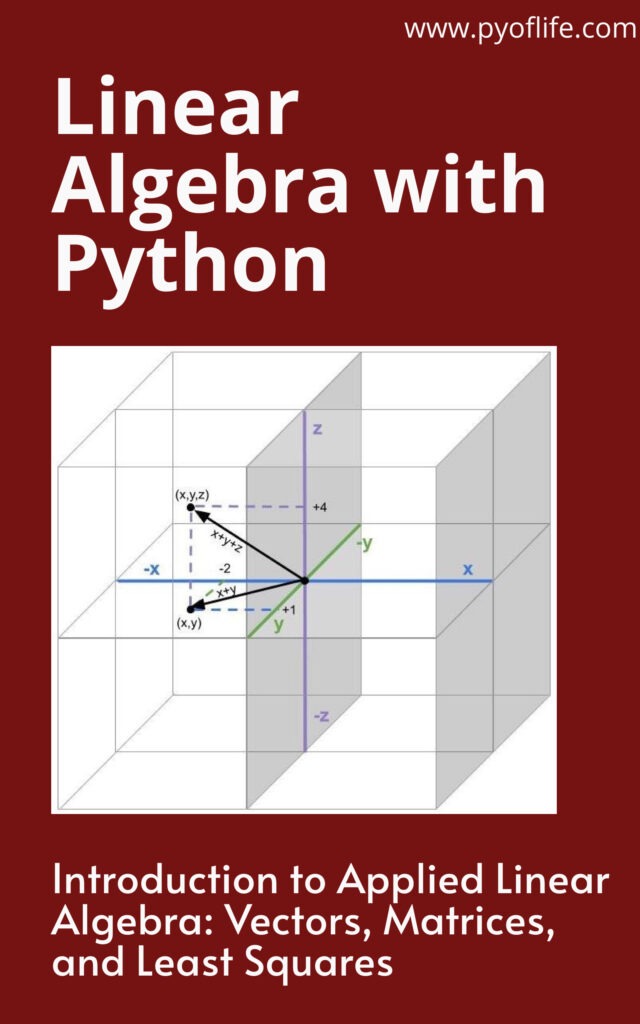
Linear Algebra with Python: Linear algebra is a fundamental branch of mathematics that deals with vector spaces and linear mappings between these spaces. It plays a crucial role in various fields such as machine learning, computer graphics, physics, engineering, and more. Understanding linear algebra is essential for tackling complex problems in these domains efficiently.

Applications of Linear Algebra

Linear algebra finds extensive applications in diverse areas. In machine learning and data science, it forms the backbone of many algorithms for tasks like regression, classification, and dimensionality reduction. In computer graphics, it enables the creation and manipulation of 3D objects and animations. Additionally, linear algebra is indispensable in solving systems of equations in engineering and physics problems.

Getting Started with Python for Linear Algebra

To dive into linear algebra with Python, you need a basic understanding of the Python programming language. Python’s simplicity and readability make it an excellent choice for numerical computing tasks. Moreover, Python offers several powerful libraries for linear algebra, such as NumPy and SciPy.

Linear Algebra with Python

Basic Operations with NumPy

NumPy is a fundamental library for scientific computing in Python. It provides support for multidimensional arrays and a wide range of mathematical functions. Getting started with NumPy involves installing the library and familiarizing yourself with basic array creation, manipulation, and indexing operations.

Linear Algebra Operations with NumPy

Once you’re comfortable with NumPy arrays, you can perform various linear algebra operations using its functions. These operations include matrix multiplication, addition, subtraction, finding determinants, solving linear equations, and computing norms.

Advanced Linear Algebra Techniques with SciPy

SciPy builds upon NumPy and offers additional functionality for scientific computing. It includes modules for optimization, integration, interpolation, and linear algebra. Advanced techniques like eigenvalue decomposition, singular value decomposition (SVD), and solving sparse linear systems are readily available in SciPy.

Visualizing Linear Algebra Concepts

Visualizing mathematical concepts can aid in understanding and debugging algorithms. Matplotlib, a popular plotting library in Python, enables you to create visual representations of vectors, matrices, and mathematical functions. Visualization can help in gaining insights into the behavior of linear algebra operations.

Real-world Examples and Case Studies

To solidify your understanding, it’s beneficial to explore real-world examples and case studies where linear algebra is applied. You can find problems from diverse fields like finance, signal processing, image processing, and robotics. By solving these problems using Python, you’ll gain practical experience and insight into how linear algebra translates into actionable solutions.

Best Practices and Tips for Efficient Coding

As you delve deeper into linear algebra programming, it’s essential to follow best practices to write clean, efficient, and maintainable code. This includes using meaningful variable names, writing modular code, documenting your functions, and optimizing performance when necessary. Additionally, being aware of common pitfalls and debugging techniques will save you time and effort in the long run.

Conclusion

In conclusion, mastering linear algebra with Python opens up a world of possibilities in various fields of science and engineering. By leveraging powerful libraries like NumPy and SciPy, you can tackle complex problems efficiently and gain deeper insights into the underlying mathematical principles. Whether you’re a beginner or an experienced programmer, incorporating linear algebra into your skill set will undoubtedly enhance your capabilities and broaden your horizons.

Download(PDF)

Read More: Machine Learning with Scikit-Learn, Keras, and TensorFlow

Python For Data Science Cheat Sheet

Python has emerged as a powerhouse in the field of data science, offering a versatile and easy-to-learn programming language. One invaluable tool for data scientists navigating the expansive world of Python is the “Python For Data Science Cheat Sheet.”

II. Basics of Python

Navigating the realm of Python begins with understanding the basics. From the installation process to grasping Python syntax and exploring variables and data types, a strong foundation is crucial for data science endeavors.

III. Data Science Libraries in Python

Unlock the potential of Python for data science by delving into essential libraries like NumPy for numerical operations, Pandas for seamless data manipulation, and Matplotlib and Seaborn for crafting compelling data visualizations.

Python For Data Science Cheat Sheet

IV. Data Wrangling with Python

Data wrangling, a pivotal aspect of any data science project, involves loading and cleaning datasets, handling missing data effectively, and employing various data transformation techniques.

V. Machine Learning with Python

Explore the world of machine learning with Python through the scikit-learn library, covering common algorithms, building models, and evaluating their performance.

VI. Advanced Topics

Elevate your data science expertise by diving into advanced topics such as deep learning using TensorFlow and Keras, natural language processing with NLTK, and mastering feature engineering and dimensionality reduction.

VII. Tips and Tricks

Efficient coding practices, valuable resources for continuous learning, and active community support form the backbone of success in Python data science.

VIII. Real-world Applications

Witness Python’s impact in data science through real-world examples and industry applications, drawing inspiration from success stories.

IX. Challenges and Solutions

Anticipate and overcome common hurdles faced by data scientists using Python, offering practical solutions and workarounds.

X. Staying Updated

Stay at the forefront of Python in data science by understanding the importance of continuous learning, leveraging online communities, and participating in forums.

XI. Conclusion

As we wrap up this journey, it’s clear that Python is not just a programming language; it’s a dynamic tool shaping the future of data science. Embrace the power of Python and encourage continuous learning for unparalleled success.

Download (PDF)

Read More: Python for data analysis: Data wrangling with pandas NumPy and ipython