python

How To Code in Python 3

Welcome to the world of Python 3 programming! Whether you’re a beginner looking to dip your toes into coding or an experienced programmer venturing into Python, this guide will provide you with valuable insights, tips, and step-by-step instructions. In this article, we’ll explore the fundamentals of coding in Python 3, cover essential topics, and address common questions that may arise during your Python journey.

1. Getting Started with Python 3

Python is a versatile and beginner-friendly programming language. Let’s kick off our Python journey with the basics:

What is Python 3?

Python 3 is the latest version of Python, a high-level programming language known for its simplicity and readability. It’s widely used in web development, data analysis, artificial intelligence, and more.

Installing Python 3

To begin coding in Python 3, you need to install it on your computer. Visit the official Python website (link) and follow the installation instructions for your operating system.

Your First Python Program

Let’s write a simple “Hello, World!” program in Python to get started:

print("Hello, World!")
How To Code in Python 3

2. Python Syntax and Basics

Understanding the syntax and basics of Python is crucial. Let’s delve deeper:

Variables and Data Types

In Python, variables are used to store data. Common data types include integers, floats, strings, and booleans.

Control Flow

Learn about if statements, loops, and conditional statements to control the flow of your Python program.

Functions

Functions allow you to organize your code into reusable blocks. We’ll explore how to define and use functions effectively.

3. How To Code in Python 3

Let’s focus on the central topic:

Python Coding Best Practices

To write clean and maintainable Python code, follow these best practices. They include using meaningful variable names, proper indentation, and commenting on your code.

Debugging in Python

Discover techniques and tools for debugging your Python programs. We’ll cover common debugging issues and how to fix them.

4. Python Libraries and Frameworks

Python’s extensive library ecosystem makes it a powerful language. Here are some essential libraries and frameworks:

NumPy and pandas

For data manipulation and analysis, NumPy and pandas are indispensable. Learn how to use them effectively.

Django and Flask

If you’re interested in web development, Django and Flask are popular frameworks. We’ll introduce you to their basics.

5. FAQs about Python 3

Is Python 3 Hard to Learn?

Python’s simplicity makes it beginner-friendly. With dedication and practice, anyone can learn it.

What Can I Build with Python 3?

Python is incredibly versatile. You can create websites, build games, perform data analysis, and even work on machine learning projects.

How Do I Stay Updated with Python?

Python’s community is active. Follow Python-related blogs, forums, and attend meetups or conferences to stay updated.

Are There Job Opportunities for Python Developers?

Yes, Python developers are in high demand. Many companies look for Python expertise, especially in data science and web development.

How Do I Handle Python Errors?

Understanding error messages is key. Python provides descriptive error messages to help you identify and resolve issues.

What Are Some Advanced Python Topics?

Once you’ve mastered the basics, explore advanced topics like decorators, generators, and metaclasses to become a Python expert.

Conclusion

Congratulations! You’ve taken your first steps in learning how to code in Python 3. Python’s versatility and ease of use make it a valuable skill in today’s tech-driven world. Remember, practice is key to mastering Python, so keep coding and exploring new projects.

Download (PDF)

Download: Mastering Python Tricks for Efficient Coding

Think Bayes: Bayesian Statistics In Python

Welcome to a journey through the fascinating realm of Bayesian statistics in Python, where we unravel the power of probabilistic programming using Think Bayes. In this comprehensive guide, we’ll explore the ins and outs of Bayesian statistics, providing you with valuable insights, expert knowledge, and answers to frequently asked questions (FAQs). Whether you’re a novice or an experienced data scientist, this article will equip you with the skills and understanding needed to harness the full potential of Think Bayes.

1. Understanding Bayesian Statistics

Bayesian statistics is a statistical approach that allows us to update our beliefs about a hypothesis as new evidence becomes available. It’s a powerful tool in data science and offers a robust framework for making predictions and decisions.

2. Why Python for Bayesian Statistics?

Python is a popular choice for Bayesian statistics due to its simplicity and a wealth of libraries like Think Bayes that make implementing Bayesian models a breeze.

Think Bayes Bayesian Statistics In Python

3. Getting Started with Think Bayes

Let’s dive right into Think Bayes and understand how to install and set up this incredible Python library for Bayesian analysis.

4. Basic Probability Theory

Before delving deeper into Think Bayes, it’s crucial to have a solid grasp of basic probability theory. We’ll cover essential concepts that will lay the foundation for Bayesian statistics.

5. Bayesian Inference

Discover the heart of Bayesian statistics – Bayesian inference. Learn how to make inferences about unknown parameters using probability distributions.

6. Bayes’ Theorem Demystified

Unravel the mysteries of Bayes’ theorem, a fundamental concept in Bayesian statistics. We’ll break it down into simple terms for better comprehension.

7. Prior and Posterior Distributions

Explore the significance of prior and posterior distributions in Bayesian analysis and how they impact decision-making.

8. Bayesian Modeling

Take your Bayesian skills to the next level by delving into Bayesian modeling techniques and applications.

9. Think Bayes in Action

Let’s put theory into practice. We’ll work through real-world examples using Think Bayes to solve complex problems.

10. Evaluating Model Performance

Learn how to assess the performance of Bayesian models and make data-driven decisions based on the results.

11. Think Bayes vs. Other Libraries

Compare Think Bayes with other Python libraries used for Bayesian analysis, highlighting its unique advantages.

12. Advanced Topics in Bayesian Statistics

Delve into advanced topics such as hierarchical modeling, Markov Chain Monte Carlo (MCMC) methods, and Bayesian networks.

13. Common Mistakes in Bayesian Analysis

Avoid pitfalls in Bayesian analysis by learning about common mistakes and how to steer clear of them.

14. FAQs

What Is the Key Advantage of Bayesian Statistics in Python?

Bayesian statistics in Python offers a flexible and intuitive approach to handling uncertainty in data, making it a powerful tool for data analysis and decision-making.

Can I Use Think Bayes for Machine Learning?

Yes, Think Bayes can be integrated into machine learning pipelines for tasks like classification and regression.

Is Bayesian Analysis Only for Advanced Data Scientists?

No, Bayesian analysis can be learned by beginners too, thanks to user-friendly libraries like Think Bayes.

How Do I Choose Priors in Bayesian Analysis?

Selecting appropriate priors is a critical step in Bayesian analysis. We’ll provide guidance on making informed choices.

Are There Any Limitations to Bayesian Statistics?

While Bayesian statistics is powerful, it’s not a one-size-fits-all solution. We’ll discuss its limitations and when other methods may be more suitable.

Can You Recommend Resources for Further Learning?

Absolutely! We’ll share valuable resources and references to help you deepen your understanding of Bayesian statistics in Python.

Conclusion

In this comprehensive guide, we’ve embarked on a journey through the world of Bayesian statistics in Python using Think Bayes. We’ve covered essential topics, provided real-world insights, and answered common questions. Whether you’re a data science enthusiast or a seasoned professional, you now have the knowledge and tools to harness the power of Bayesian statistics in Python.

Don’t miss the opportunity to explore the endless possibilities that Think Bayes offers in the realm of data analysis. Start your Bayesian journey today!

Download (PDF)

Download: Bayesian modeling and computation in python

Python Programming for Data Analysis

Python programming has emerged as one of the most popular languages for data analysis, thanks to its simplicity and flexibility. It is an open-source, object-oriented programming language widely used for various tasks, including building web applications and scientific computing. In this article, we will cover the basics of Python programming for data analysis.

Setting up Python Environment for Data Analysis

Before we start exploring Python for data analysis, we need to set up our environment. We will need to install Python and several libraries that are commonly used in data analysis, such as Numpy, Pandas, Matplotlib, and Seaborn. These libraries can be installed using the pip command in the terminal or command prompt.

Python Programming for Data Analysis

Data Types and Data Structures in Python

Python supports several data types, including numeric data types, strings, lists, tuples, sets, and dictionaries. Numeric data types include integers, floating-point numbers, and complex numbers. Strings are used to represent text data, while lists, tuples, sets, and dictionaries are used to store collections of data.

Reading and Writing Data with Python

Python provides several libraries for reading and writing data in different formats. For instance, we can read and write CSV files using the built-in csv module, which provides several functions for working with CSV files. Similarly, we can read and write Excel files using the pandas library.

Data Analysis with Python

Python provides several libraries that are specifically designed for data analysis, such as Numpy and Pandas. Numpy provides support for mathematical operations, while Pandas provides support for data manipulation and analysis. With these libraries, we can perform a variety of data analysis tasks, such as data cleaning, preprocessing, and visualization.

Data Visualization with Python

Python offers several libraries for data visualization, including Matplotlib and Seaborn. Matplotlib provides support for basic visualization, while Seaborn provides support for advanced visualization. With these libraries, we can create a variety of visualizations, such as bar charts, line charts, scatter plots, and heat maps.

Download(PDF)


Create Graphical User Interfaces with Python

Create Graphical User Interfaces with Python: Python, a language known for its simplicity and versatility, is not only a favorite among developers but also an excellent choice for creating Graphical User Interfaces (GUIs). Whether you’re a seasoned programmer or a novice looking to dive into GUI development, Python has got you covered. In this comprehensive guide, we will explore the world of GUIs in Python, step by step, helping you unleash your creativity and turn your ideas into visually appealing and user-friendly applications.

Create Graphical User Interfaces with Python

Python’s rich ecosystem offers several libraries and frameworks for GUI development, making it a top choice for developers worldwide. Let’s dive right into the heart of this guide:

Understanding the Basics

What is a Graphical User Interface?

A Graphical User Interface, commonly known as a GUI, is a visual way for users to interact with a computer program. Instead of typing commands, users can simply click buttons, drag elements, and manipulate graphical objects to perform tasks.

Why Choose Python for GUI Development?

Python’s popularity and ease of use make it an ideal choice for GUI development. Its extensive libraries, like Tkinter, PyQt, and Kivy, provide powerful tools to create stunning interfaces effortlessly.

Create Graphical User Interfaces with Python

Getting Started with Tkinter

Tkinter: Python’s Standard GUI Library

Tkinter is Python’s standard GUI library that comes bundled with most Python installations. It offers a simple way to create windows, dialogs, buttons, and more.

Setting Up Tkinter

Before diving into GUI development with Tkinter, ensure you have Python installed on your system. Then, follow these simple steps:

  1. Import Tkinter: Start by importing Tkinter into your Python script.
  2. Create a Window: Initialize the main application window.
  3. Adding Widgets: Populate the window with widgets like buttons, labels, and entry fields.
  4. Handling Events: Define functions to handle user interactions, such as button clicks.

Building Your First GUI Application

Step-by-Step Guide to a Simple Calculator

Let’s create a basic calculator application to get hands-on experience with Tkinter.

  1. Import Tkinter:
import tkinter as tk
  1. Create a Window:
root = tk.Tk() root.title("Simple Calculator")
  1. Adding Widgets:
# Entry field entry = tk.Entry(root, width=20, borderwidth=5) entry.grid(row=0, column=0, columnspan=4) # Buttons buttons = [ '7', '8', '9', '/', '4', '5', '6', '*', '1', '2', '3', '-', '0', '.', '=', '+' ] row_num, col_num = 1, 0 for button_text in buttons: button = tk.Button(root, text=button_text, padx=20, pady=20, command=lambda text=button_text: handle_click(text)) button.grid(row=row_num, column=col_num) col_num += 1 if col_num > 3: col_num = 0 row_num += 1
  1. Handling Events:
# Define button click function def handle_click(text): current = entry.get() if text == '=': try: result = eval(current) entry.delete(0, tk.END) entry.insert(tk.END, result) except Exception as e: entry.delete(0, tk.END) entry.insert(tk.END, "Error") else: entry.insert(tk.END, text)

Now you have a functional calculator GUI application. This example demonstrates the simplicity and power of Tkinter for creating GUIs in Python.

Exploring Advanced GUI Frameworks

Taking GUI Development to the Next Level

While Tkinter is excellent for simple applications, Python offers more advanced GUI frameworks for complex projects:

PyQt:

  • PyQt is a set of Python bindings for the Qt application framework.
  • It offers a comprehensive range of features, including support for 2D vector graphics and 3D graphics utilizing OpenGL.

Kivy:

  • Kivy is an open-source Python library for developing multitouch applications.
  • It’s highly suitable for creating touch-friendly interfaces on various platforms.

Tips and Tricks for GUI Development

Mastering the Art of GUI Design

Creating visually appealing and user-friendly GUIs requires more than just coding skills. Here are some tips and tricks to enhance your GUI development:

1. Plan Your Interface:

Before you start coding, sketch a layout and user flow to ensure a clear and intuitive interface.

2. Keep it Simple:

Avoid clutter and excessive elements. A clean design is often more effective.

3. Responsiveness Matters:

Ensure that your GUI works seamlessly on different screen sizes and resolutions.

4. Use Icons and Graphics:

Icons and graphical elements can improve user understanding and engagement.

5. Test Thoroughly:

Test your GUI with potential users to gather feedback and make improvements.

FAQs

Answering Your Burning Questions

How long does it take to learn GUI development with Python?

Learning the basics of GUI development with Python can take a few weeks to a couple of months, depending on your prior programming experience. Mastery comes with practice and project-based learning.

Is Python suitable for game development with GUIs?

Yes, Python can be used for game development with GUIs. Libraries like Pygame and Kivy are popular choices for creating games with graphical interfaces.

Are there any online resources for learning GUI development with Python?

Yes, there are plenty of online tutorials, courses, and documentation available for learning GUI development with Python. Websites like Coursera, edX, and Python.org offer valuable resources.

Can I create mobile apps with Python and GUIs?

Yes, you can create mobile apps with Python using frameworks like Kivy and BeeWare. These frameworks allow you to develop cross-platform apps for Android and iOS.

What are some popular software applications developed with Python GUIs?

Python has been used to develop various applications, including web browsers (like Chrome), 3D modeling tools (Blender), and image editing software (GIMP).

What are the career prospects for GUI developers?

GUI development is a valuable skill in today’s tech industry. GUI developers are in demand for creating user-friendly software applications, websites, and mobile apps.

Conclusion

In this comprehensive guide, we’ve explored the fascinating world of creating Graphical User Interfaces with Python. From understanding the basics to building your first GUI application and exploring advanced frameworks, you now have the knowledge and tools to embark on your GUI development journey.

Remember, GUI development is not just about coding; it’s about creating an exceptional user experience. So, plan, design, and code with passion. Your creativity knows no bounds, and with Python, the possibilities are endless. So, go ahead and create your GUI ideas with Python!

Download(PDF)

Download: Python Data Science: An Ultimate Guide for Beginners to Learn Fundamentals of Data Science Using Python

Python Notes for Professionals Book

Welcome to the world of Python programming! Whether you are a seasoned developer or just starting your coding journey, the “Python Notes for Professionals” book is a valuable resource that can help you master this versatile programming language. In this comprehensive guide, we will explore the key aspects of this book, from its content to its benefits. So, let’s dive into the world of Python Notes for Professionals!

Introduction

Python is a popular, high-level programming language known for its simplicity and readability. If you are looking to enhance your Python skills or start your coding journey, the “Python Notes for Professionals” book is a valuable resource that covers a wide range of topics, making it suitable for both beginners and experienced developers.

What are Python Notes for Professionals?

The “Python Notes for Professionals” book is a comprehensive guide that provides in-depth insights into Python programming. It is not just a beginner’s guide; it caters to professionals looking to expand their Python knowledge. The book covers everything from the basics to advanced topics, ensuring that readers gain a holistic understanding of Python.

Why Choose Python Notes for Professionals?

You might wonder why you should choose this book over the numerous Python resources available. Here’s why:

  • Comprehensive Coverage: Python Notes for Professionals covers a broad spectrum of Python topics, making it a one-stop solution for all your Python-related queries.
  • Structured Learning: The book follows a logical sequence, gradually building your Python skills from the ground up. This structured approach makes it easy to grasp complex concepts.
  • Real-World Applications: It not only teaches you Python syntax but also demonstrates how to apply it in real-world scenarios, such as web development and data analysis.
  • Regular Updates: Python is an evolving language, and the book is updated to accommodate the latest Python features and best practices.
Python Notes for Professionals Book

Who Should Read This Book?

This book is suitable for:

  • Beginners: If you are new to Python, this book provides a gentle introduction, starting with the basics and progressing to more advanced concepts.
  • Experienced Developers: Seasoned developers can use this book to deepen their understanding of Python, explore advanced topics, and stay updated with the latest trends.

Book Structure and Organization

The “Python Notes for Professionals” book is thoughtfully organized to ensure a smooth learning experience. It consists of the following sections:

Python Fundamentals

Variables and Data Types

In this section, you will learn about variables and data types in Python. Python’s dynamic typing and rich set of data types make it a versatile language for various applications.

Control Structures

Python provides powerful control structures like loops and conditionals. This section explains how to use these structures effectively in your programs.

Advanced Python

Object-Oriented Programming

Python is an object-oriented language, and this section delves into the principles of OOP, helping you write more organized and maintainable code.

Libraries

Python’s extensive library ecosystem is one of its strengths. Here, you will explore some essential libraries that can streamline your development process.

Real-World Applications

Web Development

Learn how to create web applications using Python’s web frameworks like Django and Flask.

Data Analysis

Discover how Python can be used for data analysis and visualization, a crucial skill in today’s data-driven world.

FAQs

How can I purchase the book?

You can purchase the “Python Notes for Professionals” book from various online retailers, including Amazon and the official website of the publisher. Simply search for the book title and choose your preferred platform.

Is it suitable for beginners?

Yes, this book caters to beginners as well as experienced developers. It starts with the basics and gradually progresses to advanced topics, ensuring that everyone can benefit from it.

What sets it apart from other Python books?

This book stands out due to its comprehensive coverage, real-world examples, and regular updates to keep pace with Python’s evolution. It provides a holistic learning experience.

Can I access online resources?

Yes, the book comes with online resources, including code samples and additional materials to enhance your learning experience.

Are there updates for new Python versions?

Yes, the book is updated to accommodate new Python versions and best practices, ensuring that you have access to the latest information.

Is it worth the investment?

Absolutely! Investing in your Python skills can open up numerous career opportunities. This book offers valuable insights and knowledge that can benefit you throughout your programming journey.

Conclusion

The “Python Notes for Professionals” book is your gateway to mastering Python. Whether you’re a beginner or an experienced developer, this comprehensive guide has something to offer everyone. It covers the fundamentals, advanced topics, and real-world applications, making it a must-have resource for anyone looking to excel in Python programming.

Download(PDF)

Download: Python Data Science: An Ultimate Guide for Beginners to Learn Fundamentals of Data Science Using Python

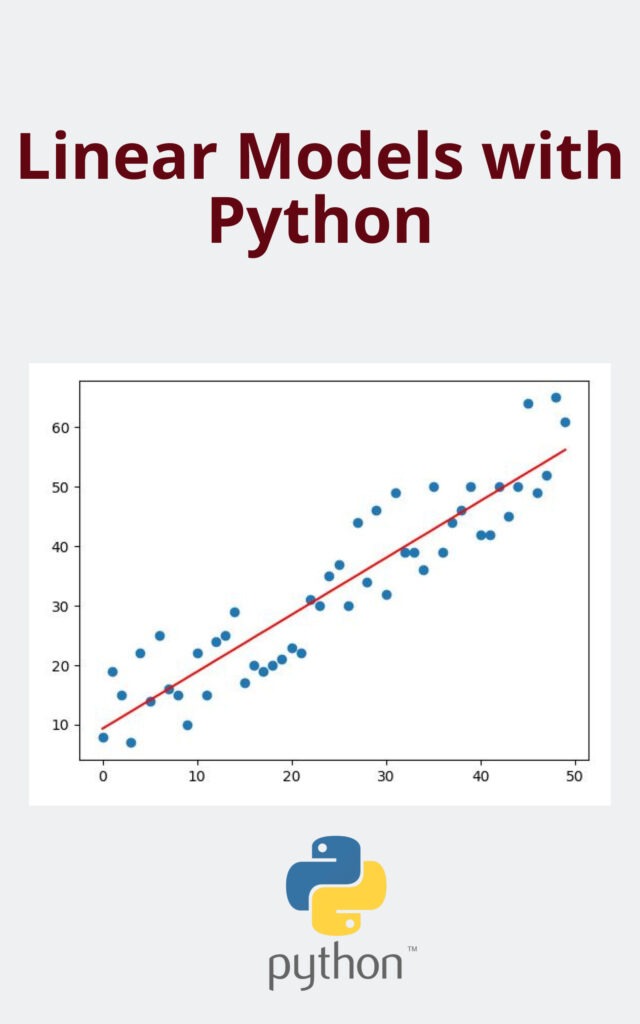
Linear Models with Python

In the fast-evolving landscape of data science and machine learning, Linear Models with Python stand out as a foundational pillar. These models offer a powerful and versatile approach to predictive analysis. In this in-depth guide, we will take you on a journey through the world of Linear Models with Python, breaking down complex concepts into easily digestible pieces. Whether you’re a novice or an experienced data scientist, this article is your go-to resource for mastering Linear Models with Python.

Linear Models with Python: An Overview

Linear Models with Python are mathematical representations used for predictive modeling and regression analysis. They form the basis for many machine learning algorithms, making them essential knowledge for anyone venturing into data science.

Linear Models with Python

What Are Linear Models?

Linear Models are mathematical equations used to model the relationship between a dependent variable and one or more independent variables. They assume a linear relationship, making them particularly useful for understanding and predicting data patterns.

Types of Linear Models

  1. Simple Linear Regression: This model deals with a single independent variable to predict the dependent variable’s outcome.
  2. Multiple Linear Regression: When multiple independent variables come into play, this model offers a more comprehensive prediction.

Why Python for Linear Models?

Python has emerged as the preferred programming language for data science and machine learning, and for good reason. Its simplicity and versatility make it an ideal choice for implementing Linear Models.

Python’s Data Science Libraries

Python boasts a rich ecosystem of libraries such as NumPy, Pandas, and Scikit-Learn, which streamline the implementation of Linear Models.

Flexibility and Scalability

Python’s open-source nature allows for easy customization and integration with other data science tools.

Building Linear Models with Python

Now, let’s delve into the practical aspect of building Linear Models with Python.

Data Preprocessing

Before you embark on model building, data preprocessing is key. It involves cleaning, transforming, and organizing your data to ensure optimal model performance.

Model Training

Using your prepared data, you’ll train your Linear Model to learn the underlying patterns and relationships in the data.

Model Evaluation

The next step is assessing your model’s accuracy and performance. Techniques like cross-validation help ensure your model generalizes well to new data.

Model Deployment

Once you have a well-trained model, it’s time to deploy it in real-world applications, where it can make predictions and provide valuable insights.

Advantages of Linear Models with Python

Linear Models offer several advantages that contribute to their widespread use in data science.

Interpretability

Linear Models provide clear insights into the relationship between variables, making it easier to understand and explain results.

Computational Efficiency

They are computationally efficient, making them suitable for large datasets.

Wide Applicability

Linear Models can be applied to various domains, from finance to healthcare, for tasks like sales forecasting and risk assessment.

Common Challenges in Linear Modeling

While Linear Models are powerful, they do come with their set of challenges.

Assumption of Linearity

Linear Models assume a linear relationship, which may not always hold true in real-world scenarios.

Overfitting

Overfitting occurs when a model performs well on training data but poorly on new data. Techniques like regularization can mitigate this issue.

FAQs

What is the role of Python in Linear Modeling?

Python is the go-to programming language for implementing Linear Models due to its versatility, libraries, and ease of use.

Can Linear Models handle non-linear data?

While Linear Models assume linearity, techniques like feature engineering can help them handle non-linear relationships to some extent.

How do I choose the right type of Linear Model?

The choice depends on your data and the problem at hand. Simple Linear Regression is suitable for single-variable analysis, while Multiple Linear Regression handles multiple variables.

Is data preprocessing necessary for Linear Models?

Yes, data preprocessing is crucial to ensure the quality and accuracy of your model’s predictions.

How do I prevent overfitting in Linear Models?

Overfitting can be prevented by using techniques like regularization, cross-validation, and feature selection.

Can Linear Models be used for classification tasks?

While they are primarily used for regression tasks, Linear Models can be adapted for classification by using techniques like Logistic Regression.

Conclusion

In the realm of data science, Linear Models with Python hold an indispensable position. Their simplicity, interpretability, and wide applicability make them a valuable tool for predictive analysis. By mastering the art of building and fine-tuning Linear Models, you can unlock the potential to derive actionable insights from your data.

Download(PDF)

Download: Python Data Science: An Ultimate Guide for Beginners to Learn Fundamentals of Data Science Using Python

Python Data Science: An Ultimate Guide for Beginners to Learn Fundamentals of Data Science Using Python

Learn Fundamentals of Data Science Using Python: In today’s data-driven world, the field of data science has become a pivotal force driving decision-making processes across various industries. Python, a versatile and beginner-friendly programming language, has emerged as the go-to tool for aspiring data scientists. In this comprehensive guide, we will unravel the intricacies of Python Data Science, equipping beginners with the essential knowledge to embark on their data science journey. Whether you’re a curious novice or someone looking to upskill, this guide will provide you with the fundamentals you need to succeed.

Why Python for Data Science?

Python’s popularity in the field of data science is no accident. It offers several advantages:

  • Simplicity: Python’s syntax is easy to learn and read, making it perfect for beginners.
  • Versatility: Python can handle various data formats and integrates seamlessly with other tools.
  • Rich Ecosystem: Python boasts a vast collection of libraries for data analysis, such as NumPy, pandas, and Matplotlib.
  • Community Support: The Python community is large and active, ensuring you have access to valuable resources and support.
Python Data Science An Ultimate Guide for Beginners to Learn Fundamentals of Data Science Using Python
Python Data Science: An Ultimate Guide for Beginners to Learn Fundamentals of Data Science Using Python

Setting Up Your Python Environment

Before delving into data science, you need to set up your Python environment. Here are the essential steps:

  1. Choose an IDE: Select an Integrated Development Environment (IDE) such as Jupyter Notebook or VSCode.
  2. Install Python: Download and install Python from the official website (python.org).
  3. Install Libraries: Use pip (Python’s package manager) to install data science libraries like NumPy, pandas, and scikit-learn.
  4. Data Datasets: Acquire datasets for practice from sources like Kaggle or UCI Machine Learning Repository.

Data Manipulation with Python

One of the core skills in data science is data manipulation. Python’s libraries make this task efficient:

  • NumPy: Use NumPy to work with arrays and perform mathematical operations on data.
  • pandas: pandas is ideal for data manipulation and analysis, providing powerful data structures like DataFrames.
  • Data Cleaning: Learn techniques to clean and preprocess data, including handling missing values and outliers.

Data Visualization with Python

Visualizing data is crucial to grasp insights effectively. Python offers excellent visualization libraries:

  • Matplotlib: Create static, animated, or interactive plots to represent your data.
  • Seaborn: Seaborn simplifies complex visualizations with high-level abstractions.
  • Plotly: Build interactive and shareable dashboards and visualizations.

Exploratory Data Analysis (EDA)

EDA is the process of understanding your data before diving into modeling. In this section, you’ll learn how to:

  • Summarize Data: Use descriptive statistics to understand the main characteristics of your dataset.
  • Visualize Data Distributions: Plot histograms, box plots, and scatter plots to identify patterns.
  • Feature Engineering: Engineer new features to improve model performance.

Machine Learning with Python

Machine learning is at the heart of data science. Python offers a plethora of libraries to build predictive models:

  • scikit-learn: scikit-learn is a versatile library for various machine learning algorithms.
  • Model Evaluation: Learn how to train, evaluate, and fine-tune machine learning models.
  • Regression and Classification: Understand the fundamentals of regression and classification techniques.

Deep Learning with Python

Delve into the exciting world of deep learning using Python and libraries like TensorFlow and Keras:

  • Neural Networks: Grasp the basics of neural networks and their applications.
  • Image and Text Processing: Explore image and text processing with deep learning.
  • Deep Learning Projects: Implement deep learning projects to reinforce your knowledge.

Natural Language Processing (NLP)

NLP enables machines to understand and interact with human language. Learn how Python facilitates NLP tasks:

  • NLTK: The Natural Language Toolkit (NLTK) offers tools for text analysis.
  • Text Classification: Understand sentiment analysis and text classification using Python.

Big Data and Python

Handling large datasets is a crucial skill in data science. Python is equipped for big data tasks:

  • Apache Spark: Use PySpark, the Python API for Apache Spark, to handle big data efficiently.
  • Distributed Computing: Learn about distributed computing frameworks for data processing.

Data Science Libraries in Python

Discover the essential data science libraries and their applications:

  • SciPy: Explore scientific and technical computing with SciPy.
  • Statsmodels: Perform statistical modeling and hypothesis testing.
  • Bokeh: Create interactive data visualizations for web applications.

Real-world Data Science Projects

Apply your knowledge to real-world data science projects. We’ll provide guidance on choosing and executing projects that align with your interests and goals.

Learning Resources for Python Data Science

To continue your learning journey, we’ve compiled a list of valuable resources, including online courses, books, and tutorials.

Learn Fundamentals of Data Science Using Python (FAQs)

What is Data Science, and why is Python important in it?

Data Science is a multidisciplinary field that uses scientific methods, algorithms, processes, and systems to extract knowledge and insights from structured and unstructured data. Python’s importance in data science lies in its simplicity, versatility, and extensive library support, making it an ideal choice for data analysis and modeling.

How can I start learning Python Data Science from scratch?

To start learning Python Data Science from scratch, follow these steps:

  1. Install Python and an IDE (Integrated Development Environment) like Jupyter Notebook.
  2. Learn the basics of Python programming, including variables, data types, and control structures.
  3. Dive into data manipulation with NumPy and pandas.
  4. Explore data visualization using Matplotlib and Seaborn.
  5. Study machine learning and deep learning with libraries like scikit-learn, TensorFlow, and Keras.

Are there any prerequisites for Python Data Science?

No, Python Data Science does not have strict prerequisites. However, a basic understanding of programming concepts can be helpful. This guide is designed to accommodate beginners with no prior experience in data science.

Can I become a data scientist solely by learning Python Data Science?

While Python Data Science is a crucial part of the data science journey, becoming a proficient data scientist requires a broader skill set. You should also learn statistics, domain-specific knowledge, and data communication skills to excel in this field.

What are the career prospects for Python Data Science professionals?

The demand for Python Data Science professionals is on the rise across industries such as healthcare, finance, e-commerce, and technology. As a Python Data Science professional, you can work as a data analyst, machine learning engineer, data scientist, or AI researcher.

How can I stay updated in the ever-evolving field of Python Data Science?

Staying updated in Python Data Science involves continuous learning. Follow industry blogs, participate in online forums, attend webinars, and consider enrolling in advanced courses or certifications to keep your skills current.

Conclusion

In this ultimate guide to Python Data Science, we’ve explored the foundations, tools, and techniques that will set you on the path to becoming a proficient data scientist. Remember that the journey may be challenging, but with dedication and continuous learning, you can unlock the endless possibilities that data science offers. Embrace Python’s simplicity and power to analyze, visualize, and predict, and you’ll be well on your way to mastering the art of data science.

Download (PDF)

Download: Introduction to Machine Learning with Python

A Tour of Data Science: Learn R and Python in Parallel

In today’s data-driven world, harnessing the potential of data is a valuable skill. Data science, a field at the intersection of statistics, programming, and domain knowledge, has gained immense importance. Two of the most popular tools in the data scientist’s toolkit are R and Python. In this article, we will take you on a tour of data science, teaching you how to learn R and Python in parallel. Whether you are a novice or an experienced data enthusiast, this guide will equip you with the knowledge and skills to excel in this fascinating field.

A Tour of Data Science

Understanding Data Science

Data science is the art of extracting valuable insights and knowledge from data. It involves collecting, cleaning, analyzing, and visualizing data to make informed decisions. This field plays a crucial role in various industries, from healthcare to finance, by providing data-driven solutions.

Why Learn R and Python in Parallel?

Learning both R and Python simultaneously can be advantageous. R is renowned for its statistical analysis capabilities, while Python is versatile and widely used for data manipulation and machine learning. Mastering both languages enhances your ability to tackle diverse data science tasks effectively.

A Tour of Data Science Learn R and Python in Parallel
A Tour of Data Science: Learn R and Python in Parallel

Getting Started with R and Python

Installing R and Python

To embark on your data science journey, you must install R and Python on your computer. Visit the official websites of R and Python to download the latest versions.

Setting Up an Integrated Development Environment (IDE)

Choose an IDE such as RStudio for R and Jupyter Notebook for Python. These environments provide a user-friendly interface and powerful tools for coding and analysis.

Fundamentals of R

Variables and Data Types

In R, you’ll work with variables and data types. Variables store values, and data types define the kind of value a variable can hold, including integers, characters, and logical values.

Data Manipulation with R

Learn how to manipulate data in R using functions like subset(), merge(), and transform(). These functions allow you to filter, combine, and transform datasets.

Statistical Analysis with R

R excels in statistical analysis. Discover how to perform descriptive statistics, regression analysis, and hypothesis testing using R’s extensive libraries.

Fundamentals of Python

Python Syntax

Python’s clean and readable syntax makes it an excellent choice for beginners. Understand variables, data types, and control structures in Python.

Data Manipulation with Python

Python’s libraries, such as Pandas, are ideal for data manipulation. Explore techniques like data cleaning, merging, and reshaping.

Machine Learning with Python

Delve into machine learning using Python’s libraries like Scikit-Learn. Learn how to build predictive models and make data-driven decisions.

Parallel Learning Strategies

Side-by-Side Learning

Take a parallel approach by working on R and Python projects simultaneously. For example, analyze a dataset with R, and then replicate the analysis in Python. Compare the results to deepen your understanding.

Cross-Language Integration

Discover the power of integrating R and Python in a single project. Use packages like reticulate to call R functions from Python and vice versa.

A Tour of Data Science: Learn R and Python in Parallel (FAQs)

  • How long does it take to learn R and Python in parallel? Learning the basics can take a few weeks, but mastering both languages may require several months of consistent practice.
  • Are there any prerequisites for learning data science? While not mandatory, a background in mathematics, statistics, or programming can be beneficial.
  • Can I use R and Python for data visualization? Yes, both languages offer excellent data visualization libraries. R has ggplot2, while Python has Matplotlib and Seaborn.
  • Are there online courses or tutorials available for learning R and Python? Yes, numerous online platforms offer paths, tutorials, and resources to help you learn R and Python at your own pace.
  • What job opportunities are available for data scientists proficient in R and Python? Data scientists with expertise in R and Python are in high demand across various industries, including tech, healthcare, finance, and e-commerce.
  • How can I stay updated with the latest developments in data science? Follow blogs, forums, and communities related to data science. Engage in online discussions and attend webinars and conferences to stay informed.

Conclusion

Embarking on a tour of data science, where you learn R and Python in parallel, opens doors to a world of possibilities. You gain the ability to decipher complex data, make data-driven decisions, and contribute significantly to your field of interest. Remember, practice and persistence are key. So, dive into the world of data science, and let R and Python be your trusty companions on this exciting journey.

Download (PDF)

Download: Applied Scientific Computing: With Python


Introduction to Machine Learning with Python

Introduction to Machine Learning with Python: In today’s data-driven world, the field of machine learning has emerged as a game-changer for businesses and industries across the globe. One of the most popular and versatile programming languages for implementing machine learning algorithms is Python. In this comprehensive guide, we will delve into the world of machine learning with Python, catering specifically to data scientists. Whether you are a beginner looking to explore the basics or an experienced practitioner seeking advanced insights, this guide has something for everyone.

What is Machine Learning?

Machine learning, often abbreviated as ML, is a subfield of artificial intelligence (AI) that focuses on the development of algorithms and statistical models that enable computer systems to learn and improve from experience. These algorithms allow computers to identify patterns, make predictions, and automate decision-making processes without being explicitly programmed.

Introduction to Machine Learning with Python

Introduction to Machine Learning with Python

Why Python for Machine Learning?

Python has become the de facto programming language for machine learning, and for several good reasons:

1. Versatility and Ease of Use

Python’s simple and readable syntax makes it accessible to both beginners and experienced programmers. This versatility ensures that data scientists can quickly prototype and experiment with machine learning models.

2. Rich Ecosystem of Libraries

Python boasts a vast ecosystem of libraries and frameworks tailored for machine learning, such as TensorFlow, scikit-learn, and PyTorch. These libraries provide pre-built functions and tools that simplify the implementation of complex algorithms.

3. Community Support

Python has a large and active community of developers and data scientists who contribute to open-source projects. This support network means that you can find solutions to common problems and stay updated with the latest developments in the field.

4. Integration Capabilities

Python seamlessly integrates with other data science tools and technologies, such as Jupyter Notebooks for interactive coding and data visualization libraries like Matplotlib and Seaborn.

5. Machine Learning Frameworks

Python offers access to powerful machine learning frameworks like scikit-learn, which simplifies tasks such as data preprocessing, model selection, and evaluation.

Getting Started with Python for Machine Learning

Setting Up Your Environment

Before diving into machine learning, you need to set up your Python environment. Here are the steps to get you started:

  1. Install Python: If you don’t have Python installed, download and install the latest version from the official Python website (https://www.python.org/downloads/).
  2. Install a Code Editor: Choose a code editor or integrated development environment (IDE) like Visual Studio Code or Jupyter Notebook to write and execute your Python code.
  3. Install Libraries: Use pip, Python’s package manager, to install essential libraries like NumPy, pandas, scikit-learn, and TensorFlow.

Exploring Python’s Data Structures

Python offers several data structures that are crucial for data manipulation and analysis. These include lists, tuples, dictionaries, and sets. Understanding these data structures is essential for working with datasets in machine learning.

Basic Python Programming Concepts

To become proficient in Python, you should grasp fundamental programming concepts, such as variables, data types, loops, and conditional statements. Python’s simplicity makes it easy to pick up these concepts quickly.

Introduction to Machine Learning Algorithms

Now that you have a solid foundation in Python, let’s explore some fundamental machine learning algorithms:

  1. Linear Regression: A basic algorithm used for predicting a continuous target variable based on one or more predictor variables.
  2. Classification Algorithms: These algorithms, including logistic regression, decision trees, and support vector machines, are used for categorizing data points into predefined classes or categories.
  3. Clustering Algorithms: Algorithms like K-means clustering and hierarchical clustering group data points with similar characteristics.
  4. Neural Networks: Deep learning, a subset of machine learning, utilizes neural networks to model complex patterns in data, such as image and speech recognition.

Introduction to Machine Learning with Python (FAQs)

How can I start learning machine learning with Python?

Begin by learning Python programming basics. Then, explore machine learning libraries like scikit-learn and TensorFlow. Online courses, tutorials, and books can provide structured learning paths.

What are some real-world applications of machine learning with Python?

Machine learning with Python is used in various fields, including healthcare (for disease prediction), finance (for fraud detection), and e-commerce (for recommendation systems).

Do I need a strong mathematical background to excel in machine learning?

While a basic understanding of mathematics, including linear algebra and calculus, is beneficial, many libraries and tools in Python abstract away the mathematical complexities, allowing data scientists to focus on application.

Are there any online communities or forums for Python machine learning enthusiasts?

Yes, there are numerous communities, such as Stack Overflow, Reddit’s r/MachineLearning, and GitHub, where you can seek help, share your knowledge, and collaborate on projects.

What is the future of machine learning with Python?

Python’s dominance in the field of machine learning is expected to continue. As the community grows, so will the capabilities of Python libraries and frameworks, making it an even more powerful tool for data scientists.

How do I stay updated with the latest developments in Python for machine learning?

To stay informed, follow influential data scientists and organizations on social media platforms like Twitter and LinkedIn, and regularly check dedicated websites and blogs in the field.

Conclusion

In this guide, we’ve introduced you to the world of machine learning with Python, tailored for data scientists. Python’s simplicity, rich library ecosystem, and supportive community make it an ideal choice for those looking to harness the power of machine learning. Remember that the journey of mastering machine learning is both exciting and rewarding. Start with the basics, explore algorithms, and stay curious. As you continue your learning journey, you’ll discover new possibilities and applications for machine learning with Python.

Download(PDF)

Download: Machine Learning with Python Tutorial

Applied Scientific Computing: With Python

In today’s digital age, scientific computing has become an integral part of research and analysis across various disciplines. Applied Scientific Computing: Python offers a powerful toolkit for scientists, engineers, and researchers, enabling them to tackle complex problems, analyze data, and simulate experiments with ease. In this comprehensive guide, we’ll delve into the world of applied scientific computing with Python, exploring its applications, benefits, and the tools and techniques that make it an indispensable asset for modern research.

Scientific computing has come a long way from the early days of manual calculations and simple computer programs. With the advent of Python, the landscape of scientific analysis and research has evolved dramatically. Python’s simplicity, versatility, and vast ecosystem of libraries have made it the preferred choice for scientists and researchers worldwide.
Applied Scientific Computing With Python

Applied Scientific Computing With Python

The Power of Python

Python: A Versatile Programming Language

Python’s popularity in scientific computing can be attributed to its versatility. Whether you are a physicist, biologist, economist, or data scientist, Python offers a common platform to develop and implement computational solutions. Its elegant syntax makes it accessible even to those without a strong programming background.

Libraries for Scientific Computing in Python

One of the key strengths of Python is its rich collection of libraries tailored for scientific computing. Libraries like NumPy, SciPy, Matplotlib, and Pandas provide the necessary tools for numerical computations, data analysis, and visualization. Let’s explore some of these libraries in detail.

Applications of Applied Scientific Computing

Physics and Engineering

In the realm of physics and engineering, Python has found extensive use in simulating physical systems, analyzing experimental data, and solving complex mathematical problems. Researchers can model physical phenomena, perform simulations, and visualize results with ease.

Life Sciences

Biologists and geneticists benefit from Python’s ability to process and analyze biological data. Whether it’s DNA sequencing, protein structure prediction, or population genetics, Python’s libraries simplify the computational aspects of life sciences research.

Data Science and Machine Learning

Python has emerged as the primary language for data science and machine learning. With libraries like scikit-learn and TensorFlow, researchers can build predictive models, perform data analysis, and develop intelligent algorithms.

Economics and Finance

In economics and finance, Python is a valuable tool for analyzing market trends, modeling financial instruments, and implementing trading strategies. Its flexibility and speed make it a preferred choice for quantitative analysts.

Benefits of Using Python

Flexibility and Versatility

Python’s flexibility allows scientists to focus on solving problems rather than wrestling with the intricacies of programming. Its versatility ensures that researchers across various domains can benefit from a common set of tools and practices.

Open Source and Active Community

Python’s open-source nature means that a vast community of developers continually improves and extends its capabilities. This ensures that the language remains up-to-date and well-supported.

Integration with Other Tools

Python seamlessly integrates with other tools and languages, making it suitable for collaborative research projects. It can communicate with C/C++, Java, and Fortran, allowing researchers to leverage existing codebases.

Tools and Techniques

NumPy: The Foundation of Scientific Computing in Python

NumPy, short for “Numerical Python,” is the cornerstone of scientific computing in Python. It provides support for large, multi-dimensional arrays and matrices, along with a variety of high-level mathematical functions to operate on these arrays.

SciPy: High-Level Scientific Computing

SciPy builds on NumPy and offers additional functionality for optimization, integration, interpolation, eigenvalue problems, and more. It provides a vast array of scientific and engineering routines, making it an indispensable library for researchers.

Matplotlib: Data Visualization in Python

Matplotlib is the go-to library for creating static, animated, and interactive visualizations in Python. Researchers can generate plots, charts, and graphs to convey their findings effectively.

Pandas: Data Manipulation and Analysis

Pandas simplifies data manipulation and analysis. It introduces data structures like DataFrames and Series, making it easier to work with structured data. Researchers can clean, transform, and analyze data efficiently.

Jupyter Notebook: Interactive Computing Environment

Jupyter Notebook provides an interactive and collaborative environment for scientific computing. Researchers can combine code, documentation, and visualizations in a single document, fostering reproducibility and knowledge sharing.

Building Your Python Skills

Online Courses and Tutorials

To harness the power of Python in scientific computing, you can start with online courses and tutorials. Websites like Coursera, edX, and Udemy offer a wide range of courses, from beginner to advanced levels.

Books and Documentation

Books like “Python for Data Analysis” by Wes McKinney and “Python for Scientists and Engineers” by John M. Stewart provide comprehensive guidance on using Python for scientific purposes. Additionally, Python’s official documentation is an invaluable resource.

Community and Forums

Engaging with the Python community can accelerate your learning process. Websites like Stack Overflow and specialized forums like Stack Exchange for Data Science are excellent platforms to seek help and share knowledge.

Real-world Examples

Simulating Physical Systems

Imagine you’re a physicist studying the behavior of particles in a magnetic field. Using Python, you can create a numerical simulation that models the interactions between particles and magnetic forces. This simulation helps you gain insights into the system’s behavior and predict outcomes.

Analyzing Biological Data

Biologists often deal with vast datasets containing genetic information. Python’s libraries for data analysis make it possible to process this data, identify patterns, and draw meaningful conclusions about genetic variations and their impact.

Predictive Modeling in Finance

In the financial world, Python plays a crucial role in building predictive models. Traders and financial analysts use Python to develop algorithms that analyze market data and make real-time trading decisions.

Frequently Asked Questions (FAQs)

  1. Is Python suitable for scientific computing beginners? Absolutely! Python’s simplicity and readability make it an excellent choice for beginners in scientific computing.
  2. What are the advantages of using Python over other programming languages for scientific computing? Python offers a vast ecosystem of libraries, a supportive community, and seamless integration with other tools, making it a versatile and powerful choice.
  3. Can I use Python for real-time data analysis? Yes, Python is capable of real-time data analysis, especially when combined with libraries like Pandas and NumPy.
  4. Are there online courses specifically tailored to scientific computing with Python? Yes, many online courses and tutorials cater to scientific computing using Python, allowing you to learn at your own pace.
  5. Is Python suitable for high-performance computing tasks? While Python may not be as performant as low-level languages, it can still handle many high-performance computing tasks effectively.
  6. What are some practical examples of scientific research conducted using Python? Python has been used for climate modeling, drug discovery, image processing, and more, showcasing its versatility in scientific research.

Conclusion

In the realm of applied scientific computing, Python stands as a powerful and versatile ally for researchers and scientists across various disciplines. Its ease of use, rich ecosystem of libraries, and strong community support make it the go-to choice for tackling complex problems and driving innovation.

As you embark on your journey into the world of applied scientific computing with Python, remember that learning and exploring are key. With the right resources and a curious mindset, you can unlock the full potential of Python in your research endeavors.

Download(PDF)

Download: Architecture Patterns with Python