SAROJ

Introduction to Stock Analysis with R

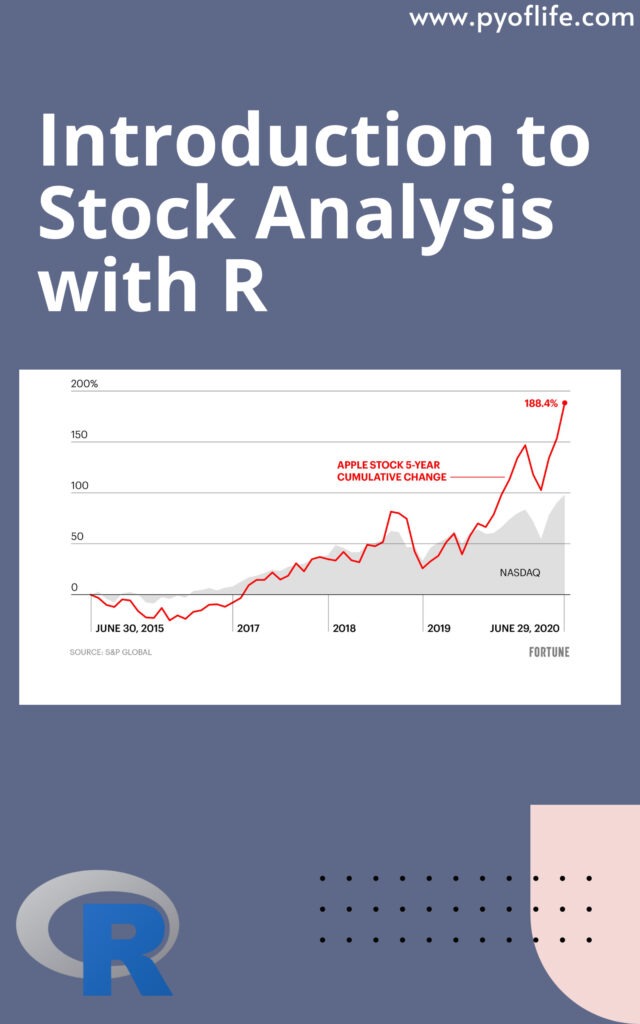
Introduction to Stock Analysis with R: Stock analysis serves as the compass for investors navigating the labyrinth of financial markets, guiding them toward informed decisions amidst the sea of data and fluctuating trends. In this digital age, where data reigns supreme, technology integration has revolutionized stock analysis. Among the myriad of tools available, R stands out as a powerful ally for investors, offering a robust platform for conducting comprehensive stock analysis.

What is Stock Analysis?

Stock analysis is the process of evaluating the financial performance and market dynamics of publicly traded companies. It encompasses a spectrum of techniques aimed at deciphering the intrinsic value of stocks, assessing market trends, and predicting future price movements. By scrutinizing financial statements, economic indicators, and industry trends, analysts aim to unearth investment opportunities and mitigate risks.

The Role of R in Stock Analysis

R, a versatile programming language and software environment, has emerged as a stalwart companion for analysts delving into the depths of stock analysis. Renowned for its flexibility and extensive library of statistical tools, R empowers analysts to crunch vast datasets, visualize complex relationships, and develop predictive models with unparalleled precision. Its open-source nature fosters a vibrant community of developers continuously enriching its repertoire, making it an indispensable asset in the arsenal of modern-day investors.

Getting Started with R

Embarking on the journey of stock analysis with R begins with the installation of R and its integrated development environment (IDE), RStudio. These tools provide a user-friendly interface and many resources to kickstart your exploration. Familiarizing oneself with the basics of R programming, such as data structures, functions, and control flow, lays the groundwork for navigating the intricacies of stock analysis.

Introduction to Stock Analysis with R

Data Acquisition

At the heart of stock analysis lies data – the raw material from which insights are distilled. R facilitates seamless data acquisition from diverse sources, be it online databases, APIs, or local files. Leveraging packages like quantmod and tidyquant, analysts can import historical stock prices, financial statements, and economic indicators, priming the canvas for analysis.

Example:

# Install and load necessary packages  install.packages("quantmod")  library(quantmod)  # Define the stock symbol and the date range  stock_symbol <- "AAPL"  start_date <- "2015-01-30"  end_date <- "2020-05-29"  # Fetch stock data  getSymbols(stock_symbol, src = "yahoo", from = start_date, to = end_date)

This example fetches historical stock data for Apple Inc. (ticker symbol: AAPL) from January 1, 2020, to January 1, 2023, using the quantmod package.

Visualizing Stock Prices:

Once you have obtained the stock data, it’s beneficial to visualize it to gain insights into the stock’s price movements over time. R offers powerful visualization libraries like ggplot2 for creating customizable and insightful plots.

Example:

# Plotting stock prices  plot(as.xts(AAPL$AAPL.Close), main = "AAPL Stock Prices", ylab = "Price (USD)")

This code generates a simple time series plot of Apple’s closing stock prices over the specified time period.

Performing Basic Analysis:

After visualizing the stock prices, you can perform basic analysis to understand key metrics such as returns, volatility, and moving averages. R provides functions and packages to compute these metrics efficiently.

Example:

# Calculate daily returns  daily_returns <- diff(log(AAPL$AAPL.Close))  # Compute rolling 30-day volatility  volatility <- rollapply(daily_returns, width = 30, FUN = sd, align = "right", fill = NA)  # Plot volatility  plot(volatility, main = "30-Day Rolling Volatility", ylab = "Volatility")

This code calculates daily returns and computes the rolling 30-day volatility of Apple’s stock prices, providing insights into the stock’s risk profile over time.

Conclusion

In the ever-evolving landscape of financial markets, stock analysis with R serves as a beacon of insight, guiding investors through the tumultuous seas of uncertainty. Armed with a potent arsenal of statistical tools and a spirit of exploration, analysts navigate the labyrinth of data, uncovering hidden gems amidst the chaos. As technology continues to advance and new frontiers emerge, the symbiotic relationship between R and stock analysis will continue to flourish, empowering investors to navigate the volatile seas of the market with confidence and clarity.

Download:

Read More: Forecasting: Principles And Practice Using R

Linear Algebra with Python

Linear Algebra with Python: Linear algebra is a fundamental branch of mathematics that deals with vector spaces and linear mappings between these spaces. It plays a crucial role in various fields such as machine learning, computer graphics, physics, engineering, and more. Understanding linear algebra is essential for tackling complex problems in these domains efficiently.

Applications of Linear Algebra

Linear algebra finds extensive applications in diverse areas. In machine learning and data science, it forms the backbone of many algorithms for tasks like regression, classification, and dimensionality reduction. In computer graphics, it enables the creation and manipulation of 3D objects and animations. Additionally, linear algebra is indispensable in solving systems of equations in engineering and physics problems.

Getting Started with Python for Linear Algebra

To dive into linear algebra with Python, you need a basic understanding of the Python programming language. Python’s simplicity and readability make it an excellent choice for numerical computing tasks. Moreover, Python offers several powerful libraries for linear algebra, such as NumPy and SciPy.

Linear Algebra with Python

Basic Operations with NumPy

NumPy is a fundamental library for scientific computing in Python. It provides support for multidimensional arrays and a wide range of mathematical functions. Getting started with NumPy involves installing the library and familiarizing yourself with basic array creation, manipulation, and indexing operations.

Linear Algebra Operations with NumPy

Once you’re comfortable with NumPy arrays, you can perform various linear algebra operations using its functions. These operations include matrix multiplication, addition, subtraction, finding determinants, solving linear equations, and computing norms.

Advanced Linear Algebra Techniques with SciPy

SciPy builds upon NumPy and offers additional functionality for scientific computing. It includes modules for optimization, integration, interpolation, and linear algebra. Advanced techniques like eigenvalue decomposition, singular value decomposition (SVD), and solving sparse linear systems are readily available in SciPy.

Visualizing Linear Algebra Concepts

Visualizing mathematical concepts can aid in understanding and debugging algorithms. Matplotlib, a popular plotting library in Python, enables you to create visual representations of vectors, matrices, and mathematical functions. Visualization can help in gaining insights into the behavior of linear algebra operations.

Real-world Examples and Case Studies

To solidify your understanding, it’s beneficial to explore real-world examples and case studies where linear algebra is applied. You can find problems from diverse fields like finance, signal processing, image processing, and robotics. By solving these problems using Python, you’ll gain practical experience and insight into how linear algebra translates into actionable solutions.

Best Practices and Tips for Efficient Coding

As you delve deeper into linear algebra programming, it’s essential to follow best practices to write clean, efficient, and maintainable code. This includes using meaningful variable names, writing modular code, documenting your functions, and optimizing performance when necessary. Additionally, being aware of common pitfalls and debugging techniques will save you time and effort in the long run.

Conclusion

In conclusion, mastering linear algebra with Python opens up a world of possibilities in various fields of science and engineering. By leveraging powerful libraries like NumPy and SciPy, you can tackle complex problems efficiently and gain deeper insights into the underlying mathematical principles. Whether you’re a beginner or an experienced programmer, incorporating linear algebra into your skill set will undoubtedly enhance your capabilities and broaden your horizons.

Download(PDF)

Read More: Machine Learning with Scikit-Learn, Keras, and TensorFlow

Data Analysis with R: Selected Topics and Examples

Data Analysis with R: Selected Topics and Examples: In the fast-evolving world of data science, mastering the art of data analysis with R has become a key skill for professionals across various industries. In this article, we will delve into selected topics and examples that highlight the versatility of R in handling complex data sets.

Exploring Data Visualization

Data visualization is a crucial aspect of data analysis. R provides a robust set of tools and packages to create compelling visuals. Whether it’s scatter plots, histograms, or heatmaps, R makes it easy to represent data graphically, aiding in a better understanding of patterns and trends.

Utilizing popular packages such as ggplot2 and lattice, data scientists can create interactive and informative visuals. These visuals not only enhance the analysis process but also facilitate effective communication of findings to stakeholders.

Data Cleaning and Preprocessing

Clean data is the backbone of any meaningful analysis. R offers a range of functions and techniques to clean and preprocess data efficiently. From handling missing values to detecting outliers, data scientists can ensure that their datasets are pristine before diving into analysis.

The process involves exploring the dataset, identifying anomalies, and employing functions like na.omit() and outliers to enhance data quality. By mastering these techniques, analysts can ensure the accuracy and reliability of their results.

Data Analysis with R Selected Topics and Examples

Statistical Analysis with R

Understanding basic statistical concepts is essential for drawing meaningful insights from data. R provides a user-friendly environment for performing various statistical tests. Analysts can explore measures of central tendency, dispersion, and correlation effortlessly.

With the ability to execute t-tests, ANOVA, and regression analysis, R empowers data scientists to make informed decisions based on statistical evidence. This section will guide readers through the steps of conducting statistical analysis using R.

Machine Learning Applications

R’s capabilities extend beyond basic statistical analysis to machine learning. From classification to clustering, R offers a plethora of machine learning algorithms. This section introduces readers to the world of machine learning, showcasing practical applications and case studies.

By discussing algorithms like decision trees, random forests, and k-means clustering, readers gain insights into how R can be leveraged for predictive modeling and pattern recognition. This section bridges the gap between traditional statistical analysis and cutting-edge machine learning.

Time Series Analysis

Time series data requires specialized techniques for effective analysis. R provides dedicated tools for time series analysis, enabling analysts to unravel temporal patterns and trends. This section explains the intricacies of handling time-based data and introduces functions like ts() and decompose().

Through examples and real-world applications, readers will grasp the significance of time series analysis in making predictions and informed decisions. The ability to analyze temporal data sets R apart as a powerful tool in the data scientist’s toolkit.

Reporting and Documentation

Effective reporting and documentation are often overlooked aspects of data analysis. RMarkdown, an integral part of the R ecosystem, allows analysts to create dynamic reports that blend code, visuals, and text seamlessly.

This section guides readers through the process of creating well-documented reports, enhancing the reproducibility and transparency of their analyses. By adopting best practices in reporting, data scientists can effectively convey their findings to both technical and non-technical stakeholders.

Conclusion

In conclusion, mastering selected topics in data analysis with R opens a world of possibilities for data scientists and analysts. From visualizing data to implementing machine learning algorithms, R provides a comprehensive toolkit for extracting valuable insights from diverse datasets. As the demand for data-driven decision-making continues to rise, acquiring proficiency in R remains a strategic investment in one’s career.

Download(PDF)

Read More: Efficient R Programming

Python For Data Science Cheat Sheet

Python has emerged as a powerhouse in the field of data science, offering a versatile and easy-to-learn programming language. One invaluable tool for data scientists navigating the expansive world of Python is the “Python For Data Science Cheat Sheet.”

II. Basics of Python

Navigating the realm of Python begins with understanding the basics. From the installation process to grasping Python syntax and exploring variables and data types, a strong foundation is crucial for data science endeavors.

III. Data Science Libraries in Python

Unlock the potential of Python for data science by delving into essential libraries like NumPy for numerical operations, Pandas for seamless data manipulation, and Matplotlib and Seaborn for crafting compelling data visualizations.

Python For Data Science Cheat Sheet

IV. Data Wrangling with Python

Data wrangling, a pivotal aspect of any data science project, involves loading and cleaning datasets, handling missing data effectively, and employing various data transformation techniques.

V. Machine Learning with Python

Explore the world of machine learning with Python through the scikit-learn library, covering common algorithms, building models, and evaluating their performance.

VI. Advanced Topics

Elevate your data science expertise by diving into advanced topics such as deep learning using TensorFlow and Keras, natural language processing with NLTK, and mastering feature engineering and dimensionality reduction.

VII. Tips and Tricks

Efficient coding practices, valuable resources for continuous learning, and active community support form the backbone of success in Python data science.

VIII. Real-world Applications

Witness Python’s impact in data science through real-world examples and industry applications, drawing inspiration from success stories.

IX. Challenges and Solutions

Anticipate and overcome common hurdles faced by data scientists using Python, offering practical solutions and workarounds.

X. Staying Updated

Stay at the forefront of Python in data science by understanding the importance of continuous learning, leveraging online communities, and participating in forums.

XI. Conclusion

As we wrap up this journey, it’s clear that Python is not just a programming language; it’s a dynamic tool shaping the future of data science. Embrace the power of Python and encourage continuous learning for unparalleled success.

Download (PDF)

Read More: Python for data analysis: Data wrangling with pandas NumPy and ipython

Data Mining with Rattle and R

In today’s data-driven world, extracting meaningful insights from large datasets is crucial for businesses to stay competitive. Data mining, a powerful technique in this regard, allows us to uncover hidden patterns and valuable information. This article delves into the world of data mining, with a specific focus on utilizing Rattle and R for efficient and effective analysis.

II. Understanding Data Mining

Data mining involves the process of discovering patterns, correlations, and trends within vast datasets. Its primary purpose is to transform raw data into actionable information, aiding in decision-making processes. This section will explore the various techniques and methods employed in data mining.

III. Rattle and R: An Introduction

Rattle serves as a user-friendly graphical user interface for the R programming language. R, renowned for its statistical computing and graphics capabilities, becomes even more accessible through Rattle. This section provides a foundational understanding of both Rattle and R.

Data Mining with Rattle and R

IV. Installing Rattle and R

Before diving into data mining, it’s essential to set up the necessary tools. This section offers a step-by-step guide on installing R and configuring Rattle as a user-friendly interface, ensuring a smooth start for beginners.

V. Data Preparation

Data preparation is a critical step in the data mining process. Rattle simplifies this task by providing tools for data preprocessing, handling missing values, and addressing outliers. This section will guide you through the crucial steps of preparing your data for analysis.

VI. Exploratory Data Analysis (EDA)

Exploratory Data Analysis is the phase where the data’s patterns are visualized and understood. Rattle offers a range of visualization tools to facilitate this process. Learn how to gain valuable insights through visualizations and exploratory techniques.

VII. Building Models

Once the data is prepared, the next step is building predictive models. This section introduces the basics of machine learning models and demonstrates how to construct them using Rattle and R.

VIII. Model Evaluation

Understanding model performance is essential for effective data mining. Techniques such as cross-validation are crucial in assessing the reliability of your models. Learn how to evaluate and refine your models for optimal results.

IX. Advanced Techniques in Rattle

Explore advanced techniques in data mining with Rattle, including feature engineering, handling imbalanced datasets, and fine-tuning models. Gain insights into optimizing your models for better accuracy and efficiency.

X. Real-world Applications

Case studies provide practical insights into the application of Rattle and R in real-world scenarios. Discover success stories that highlight the impact of data mining in diverse industries.

XI. Challenges and Solutions

Despite its benefits, data mining comes with challenges. This section addresses common issues faced in the process and explains how Rattle and R offer solutions to overcome these challenges.

XII. Future Trends

Stay ahead of the curve by exploring emerging trends in data mining with Rattle and R. Discover how these technologies are evolving to meet the demands of an ever-changing landscape.

XIII. Conclusion

In conclusion, data mining with Rattle and R opens doors to a world of possibilities. The combination of a user-friendly interface and a powerful programming language makes the process accessible and efficient.

Download(PDF)

Read More:Data Science for Business With R

Regression Analysis using Python

Regression Analysis using Python: In the vast realm of data science, Regression Analysis stands as a fundamental pillar. It involves predicting a continuous variable based on one or more independent variables, making it a crucial tool for understanding relationships within data.

II. Types of Regression Analysis

Regression Analysis comes in various forms, including Simple Linear Regression, Multiple Linear Regression, Polynomial Regression, Ridge Regression, and Lasso Regression. Each type caters to different scenarios, offering flexibility in addressing diverse data structures.

III. Steps in Regression Analysis

To conduct effective Regression Analysis, one must follow key steps: Data Collection, Data Preprocessing, Exploratory Data Analysis, Model Selection, Model Training, and Model Evaluation. These steps ensure a systematic approach to deriving meaningful insights.

Regression Analysis using Python

IV. Python Libraries for Regression Analysis

Leveraging Python libraries such as Scikit-Learn simplifies the implementation of Regression Models. This section will delve into the basics of Scikit-Learn and guide you through the process of implementing and comparing various Regression Models in Python.

V. Case Study: Predicting House Prices

A practical example enhances understanding. We’ll explore a case study on predicting house prices, covering data overview, cleaning, feature selection, building regression models, and evaluating them for interpretation.

VI. Challenges in Regression Analysis

While Regression Analysis is powerful, challenges like Overfitting, Underfitting, and Multicollinearity can affect its accuracy. This section addresses these challenges and provides insights into handling outliers effectively.

VII. Best Practices for Regression Analysis in Python

Implementing best practices enhances the robustness of Regression Analysis. Feature scaling, cross-validation, and regularization techniques are essential tools for accurate and reliable predictions.

VIII. Real-World Applications

Regression Analysis finds applications in diverse fields such as finance, marketing, and healthcare. Real-world examples showcase the practical implications of Regression Analysis in solving complex problems.

IX. Advancements in Regression Analysis

As technology evolves, Regression Analysis integrates with machine learning and embraces deep learning approaches. This section explores how these advancements contribute to the accuracy and efficiency of predictions.

X. Future Trends in Regression Analysis

Looking ahead, automated model selection and explainable AI are emerging trends. Understanding these future developments provides a roadmap for staying at the forefront of Regression Analysis.

XI. Conclusion

In conclusion, Regression Analysis using Python is a dynamic and essential aspect of data science. Its versatility, coupled with Python’s robust libraries, makes it a potent tool for deriving valuable insights from data.

Download(PDF)

Read More: Introduction to Time Series with Python

Bayesian modeling and computation in python

Bayesian modeling and computation are increasingly popular approaches in statistics and machine learning. Bayesian methods allow for the incorporation of prior knowledge or beliefs into the modeling process and can be used to make predictions, estimate parameters, and perform inference. Python has become a popular language for implementing Bayesian modeling and computation due to its ease of use and the availability of many powerful libraries. In this article, we will provide an overview of Bayesian modeling and computation in Python, including key concepts and popular libraries.

Bayesian modeling and computation in python

Bayesian modeling and computation in Python

Bayesian Modeling

Bayesian modeling is a statistical approach that involves specifying a prior distribution for the parameters of interest, and updating this distribution using observed data to obtain a posterior distribution. The posterior distribution can then be used to make predictions or estimate parameters.

The key advantage of Bayesian modeling is that it allows for the incorporation of prior knowledge or beliefs into the modeling process. This can be particularly useful in situations where there is limited data available, or when the data is noisy or uncertain.

Bayesian Computation

Bayesian computation involves the numerical methods used to estimate the posterior distribution. This can involve Markov Chain Monte Carlo (MCMC) methods, which are iterative algorithms that generate samples from the posterior distribution, or Variational Inference (VI) methods, which approximate the posterior distribution using a simpler distribution.

MCMC methods can be slow and computationally intensive, but they are generally more accurate than VI methods. VI methods are faster and more scalable, but may not provide as accurate results as MCMC methods.

Popular Libraries

Python has many popular libraries for Bayesian modeling and computation, including:

PyMC3

PyMC3 is a Python library for probabilistic programming, which allows users to specify Bayesian models using a simple and intuitive syntax. PyMC3 uses MCMC methods for posterior inference and provides a range of built-in distributions and transformations.

Edward2

Edward2 is a probabilistic programming library for TensorFlow, which allows users to define Bayesian models using TensorFlow syntax. Edward2 uses VI methods for posterior inference and provides a range of built-in distributions.

TensorFlow Probability (TFP)

TensorFlow Probability is a library for probabilistic programming that provides a range of tools for building and fitting Bayesian models. TFP includes both MCMC and VI methods for posterior inference, as well as a range of built-in distributions and transformations.

Pyro

Pyro is a probabilistic programming library built on PyTorch, which allows users to specify Bayesian models using PyTorch syntax. Pyro uses MCMC methods for posterior inference and provides a range of built-in distributions and transformations.

Download:

Bayesian Computation with R

Bayesian Computation is a powerful statistical approach that has gained prominence in recent years. In the realm of data science and statistical analysis, understanding Bayesian Computation with the R programming language opens doors to flexible and insightful modeling. Let’s delve into the basics and explore how R facilitates the implementation of Bayesian methods.

Basics of Bayesian Computation

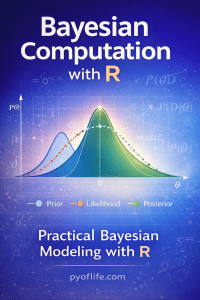
Understanding Bayesian Inference is crucial for grasping the essence of Bayesian Computation. At its core, Bayesian Inference involves updating our beliefs about a parameter based on new evidence. This process is driven by the interplay between prior and posterior distributions.

Tools for Bayesian Computation

R programming, with its rich ecosystem of packages, provides an excellent platform for Bayesian Analysis. Whether you’re a seasoned statistician or a data science enthusiast, familiarizing yourself with R and its dedicated Bayesian packages is a worthwhile investment.

Bayesian Computation with R

Bayesian Computation with R Download:

Implementing Bayesian Computation with R

Setting up your R environment for Bayesian analysis involves installing relevant packages and loading necessary libraries. Once your environment is ready, loading and preprocessing your data precede specifying prior distributions and running Bayesian models. The results obtained are then interpretable and contribute valuable insights.

Advantages of Bayesian Computation

The flexibility offered by Bayesian models in specifying prior knowledge, handling uncertainty effectively, and adapting to various datasets sets Bayesian Computation apart. Embracing Bayesian approaches equips analysts with a powerful toolset for robust statistical analysis.

Challenges and Considerations

Despite its merits, Bayesian Computation poses challenges such as computational intensity, selecting appropriate priors, and addressing convergence issues. Navigating these challenges requires a nuanced understanding of both Bayesian principles and the intricacies of the data at hand.

Real-world Applications

The real-world applications of Bayesian Computation span diverse fields. From finance to healthcare and predictive modeling in business, Bayesian methods have proven instrumental in extracting meaningful insights from complex datasets.

Case Study: Bayesian Analysis in Action

To illustrate the practical application of Bayesian Computation with R, let’s walk through a case study. We’ll explore a real-world scenario, applying Bayesian principles using R programming and interpreting the results to draw informed conclusions.

Tips for Effective Bayesian Computation

Continuous learning and exploration are paramount in the dynamic field of Bayesian Computation. Engaging with Bayesian communities and collaborating with fellow enthusiasts enhances your understanding and application of Bayesian methods.

Future Trends in Bayesian Computation

As technology advances, new techniques and tools continue to emerge in Bayesian Computation. Keeping an eye on these trends is crucial for staying at the forefront of data science and research.

Conclusion

In conclusion, Bayesian Computation with R offers a versatile and powerful approach to statistical analysis. From its foundational principles to practical implementation, the journey through Bayesian Computation opens up exciting possibilities for those passionate about extracting insights from data.

Download(PDF)

Read More: Bayesian Statistics With R

Advanced Data Science and Analytics with Python

Advanced Data Science and Analytics with Python: In today’s rapidly evolving technological landscape, the field of data science and analytics plays a pivotal role in harnessing the power of information for informed decision-making. Python, a versatile programming language, has emerged as a frontrunner in this domain, offering a robust platform for advanced data science applications.

Importance of Advanced Data Science

Advanced data science goes beyond traditional analytics, providing organizations with deeper insights and predictive capabilities. This not only enhances decision-making processes but also drives innovation and efficiency, making it an indispensable tool for businesses in various sectors.

Python in Data Science

Python’s popularity in data science can be attributed to its simplicity, readability, and extensive collection of libraries tailored for analytics. From data manipulation to visualization, Python seamlessly integrates into the data science workflow, making it a preferred choice for professionals in the field.

Advanced Data Science and Analytics with Python

Download:

Advanced Techniques in Data Science

Machine learning and deep learning have become integral components of advanced data science. These techniques enable predictive modeling and analysis of complex datasets, opening doors to innovative solutions and discoveries.

Real-world Applications

The practical applications of advanced data science with Python are vast and impactful. In healthcare, analytics helps in disease prediction and personalized treatment plans. Financial forecasting and image recognition are also key areas where Python-driven analytics has proven its efficacy.

Challenges and Solutions

As the volume of data continues to grow, data scientists face challenges related to processing and analyzing big data. Ethical considerations, such as privacy and bias, also pose significant hurdles. However, ongoing developments in technology and methodologies provide solutions to address these challenges effectively.

Python Tools and Frameworks

Jupyter Notebooks, along with libraries like Pandas, NumPy, and Matplotlib, form the backbone of Python in data science. These tools facilitate interactive and visual analysis, making complex data manipulation and visualization tasks more accessible.

Best Practices in Advanced Data Science

Data preprocessing and cleaning are critical steps in the data science pipeline, ensuring the accuracy and reliability of results. Rigorous model evaluation and optimization are also essential for building robust predictive models.

Future Trends in Data Science

The integration of artificial intelligence (AI) with data science is a future trend that holds immense potential. Continued advancements in Python tools and frameworks will further democratize data science, making it accessible to a broader audience.

Case Studies

Examining successful advanced data science projects provides valuable insights into the practical applications of Python. Real-world cases demonstrate how organizations leverage data science to solve complex problems and gain a competitive advantage.

Training and Education

Numerous resources, including online courses and certifications, are available for those aspiring to delve into advanced data science with Python. These learning opportunities cater to individuals at various skill levels, ensuring a continuous learning journey.

Industry Adoption

Businesses across industries increasingly adopt advanced data science to stay ahead in the competitive landscape. Leveraging analytics gives organizations the ability to identify trends, understand customer behavior, and optimize operations for maximum efficiency.

Expert Insights

Interviews with leading data scientists offer a glimpse into the minds driving innovations in the field. Their perspectives on the future of data science provide valuable guidance for aspiring professionals and seasoned practitioners alike.

Conclusion

In conclusion, the marriage of advanced data science and Python opens up a world of possibilities for organizations seeking to extract meaningful insights from their data. The continuous evolution of Python tools and frameworks, coupled with best practices and real-world applications, positions Python as a cornerstone in the future of data science.

Download(PDF)

Read More: Python for data analysis: Data wrangling with pandas NumPy and ipython

The Elements of Statistical Learning

The world of data is expanding exponentially, and understanding the elements of statistical learning has become crucial for making sense of this vast information landscape. In this article, we will explore the key components of statistical learning, focusing on data mining, inference, and prediction.

Purpose of Statistical Learning

Statistical learning serves the purpose of extracting meaningful insights from complex datasets. It goes beyond simple data analysis, aiming to uncover patterns, trends, and relationships that may not be immediately apparent.

Key Concepts

To delve into statistical learning, one must grasp essential concepts such as supervised and unsupervised learning, feature selection, and model evaluation. These form the foundation upon which the entire process is built.

Understanding Data Mining

Data mining is a pivotal aspect of statistical learning. It involves the extraction of valuable information from large datasets, and uncovering hidden patterns and knowledge. We’ll explore various data mining techniques, including clustering and association rule mining.

The Elements of Statistical Learning

Inference Explained

In statistical learning, inference refers to the process of concluding a population based on a sample of data. This section will discuss the importance of inference and how it contributes to making informed decisions.

The Role of Prediction

Prediction is at the heart of statistical learning. We’ll dive into the significance of predictive modeling, exploring how algorithms forecast future trends and behaviors based on historical data.

Statistical Learning Algorithms

A comprehensive overview of the diverse range of statistical learning algorithms will be provided. From linear regression to decision trees and neural networks, understanding these tools is vital for effective data analysis.

Implementing Data Mining

Practical application is key. This section will guide readers on how to implement data mining techniques using popular tools like Python and R, empowering them to extract valuable insights from their datasets.

Ethical Considerations in Data Mining

With great power comes great responsibility. The article will address the ethical considerations surrounding data mining, emphasizing the importance of responsible and transparent use of statistical learning techniques.

Enhancing Predictive Accuracy

Fine-tuning models for better predictive accuracy is an ongoing process. Practical tips and strategies will be shared to help readers enhance the precision and reliability of their statistical learning models.

Success Stories in Statistical Learning

Case studies featuring real-world applications of statistical learning will be explored. From healthcare to finance, we’ll highlight success stories where these techniques have made a significant impact.

Advancements in Data Mining

The field of statistical learning is dynamic. This section will discuss the latest advancements in data mining, including emerging technologies and methodologies that are shaping the future of the industry.

Recap of Statistical Learning Elements

As we near the conclusion, a concise recap of the key elements of statistical learning will be provided, reinforcing the fundamental concepts covered throughout the article.

Conclusion

In conclusion, the elements of statistical learning are indispensable in navigating the vast sea of data. By understanding data mining, inference, and prediction, individuals and businesses can harness the power of statistical learning to make informed decisions and gain a competitive edge.

Download(PDF)

Download: Statistics: An Introduction Using R