Data Science

Learning Python’s Basic Statistics with ChatGPT

Learning Python’s Basic Statistics with ChatGPT: Python has cemented its place as a preferred programming language for data analysis due to its ease of use and robust library ecosystem. Among its many capabilities, Python’s statistical functions stand out, allowing users to perform intricate data analyses effortlessly. This article explores how to leverage Python’s statistical tools with the assistance of ChatGPT, a powerful language model designed to facilitate learning and application of these tools.

Understanding Python’s Statistical Packages

Python offers a myriad of packages tailored for statistical analysis. Key libraries include:

  1. NumPy: Essential for numerical computing, NumPy provides a powerful array object and numerous functions for array manipulation and statistical analysis.
  2. Pandas: Ideal for data manipulation and analysis, Pandas introduces data structures like DataFrames to handle and analyze large datasets efficiently.
  3. SciPy: Built for scientific computing, SciPy includes modules for optimization, integration, interpolation, and statistical analysis.
  4. Statsmodels: This library focuses on statistical modeling, providing tools for regression analysis, time series analysis, and more.

These libraries collectively empower Python users to perform a wide range of statistical operations, from basic descriptive statistics to complex inferential tests.

Learning Python’s Basic Statistics with ChatGPT

Leveraging ChatGPT for Statistical Analysis

The study conducted utilized ChatGPT to enhance the understanding and execution of statistical analyses in Python. By interacting with ChatGPT, users can obtain explanations, code snippets, and guidance on various statistical methods. Below are some insights derived from using ChatGPT:

Example Analyses Using Python

T-Test: A T-test helps determine if there is a significant difference between the means of two groups. Here’s a Python example using the scipy.stats library:

import numpy as np
from scipy.stats import ttest_ind

# Generate two sets of data
group1 = np.random.normal(5, 1, 100)
group2 = np.random.normal(7, 1, 100)

# Calculate the T-test
t_statistic, p_value = ttest_ind(group1, group2)

# Print the results
print("T-test statistic:", t_statistic)
print("P-value:", p_value)

This script generates two random datasets and performs a T-test to compare their means, providing both the T-statistic and p-value to evaluate significance.

Mann-Whitney U Test: Used when data doesn’t follow a normal distribution, the Mann-Whitney U test compares the medians of two independent groups. Here’s how to execute it in Python:

from scipy.stats import mannwhitneyu

# Define the two groups
group1 = [3, 4, 5, 6, 7, 8, 9]
group2 = [1, 2, 3, 4, 5]

# Perform the Mann-Whitney U test
statistic, p_value = mannwhitneyu(group1, group2, alternative='two-sided')

# Print the results
print("Mann-Whitney U statistic:", statistic)
print("p-value:", p_value)

This example illustrates comparing two groups’ medians and provides the U statistic and p-value for significance testing.

Visualizing Statistical Results

Visualization is crucial for interpreting statistical results. Python’s matplotlib and seaborn libraries are invaluable for creating informative visualizations. For instance, box plots and histograms can effectively display data distributions and test results.

Box Plot: A box plot compares the distributions of two groups, highlighting medians and quartiles.

import matplotlib.pyplot as plt
import seaborn as sns

# Define the two groups
group1 = [3, 4, 5, 6, 7, 8, 9]
group2 = [1, 2, 3, 4, 5]

# Create a box plot
sns.boxplot(x=['Group 1']*len(group1) + ['Group 2']*len(group2), y=group1+group2)

# Add titles and labels
plt.title('Box plot of two groups')
plt.xlabel('Group')
plt.ylabel('Value')

# Show the plot
plt.show()

Histogram: A histogram visualizes the frequency distribution of data points within each group.

# Create histograms of the two groups
sns.histplot(group1, kde=True, color='blue', alpha=0.5, label='Group 1')
sns.histplot(group2, kde=True, color='green', alpha=0.5, label='Group 2')

# Add titles and labels
plt.title('Histogram of two groups')
plt.xlabel('Value')
plt.ylabel('Frequency')

# Add a legend
plt.legend()

# Show the plot
plt.show()

These visual tools, combined with statistical tests, provide a comprehensive approach to data analysis, making the interpretation of results more intuitive.

Conclusion

Python’s statistical libraries, when used in conjunction with ChatGPT, offer a powerful toolkit for data analysis. By leveraging these resources, users can perform complex statistical tests, visualize their results effectively, and gain deeper insights into their data. Whether you’re a beginner or an experienced analyst, integrating ChatGPT with Python’s statistical capabilities can significantly enhance your analytical workflow.

Download:

Read More: Statistics and Data Visualization with Python

Modern Data Visualization with R

In today’s data-driven world, the ability to transform raw data into meaningful insights is paramount. And at the forefront of this transformation is the art of data visualization. Among the myriad of tools available, R stands out as a powerhouse for modern data visualization, offering a rich ecosystem of packages and capabilities that empower users to create stunning, informative visualizations with ease.

Understanding the Essence of Data Visualization

Data visualization is not merely about creating pretty charts and graphs; it’s about distilling complex information into clear, concise visuals that facilitate understanding and decision-making. With R, users can delve deep into their data, uncovering patterns, trends, and relationships that might otherwise remain hidden in rows and columns of numbers.

Harnessing the Power of R for Visualization

At the core of R’s visualization prowess lies its diverse array of packages, each tailored to specific needs and preferences. Whether you’re a beginner exploring basic plots or an advanced user crafting intricate interactive dashboards, R offers something for everyone.

Modern Data Visualization with R

Learn For Free

ggplot2: The Versatile Workhorse

Central to R’s visualization toolkit is ggplot2, a package renowned for its elegant syntax and versatility. With ggplot2, users can effortlessly create a wide range of plots, from simple scatter plots to complex layered visualizations. Its grammar of graphics framework provides a structured approach to building plots, enabling users to customize every aspect of their visualizations with ease.

Plotly: Elevating Interactivity to New Heights

For those seeking to engage audiences with dynamic, interactive visualizations, Plotly is a game-changer. This powerful package seamlessly integrates with R, allowing users to transform static plots into interactive experiences with just a few lines of code. From zoomable maps to responsive charts, Plotly empowers users to create immersive visualizations that captivate and inform.

Shiny: Bringing Data to Life

Beyond static visualizations, R’s Shiny package empowers users to build interactive web applications that bring their data to life. With Shiny, users can create custom dashboards, interactive reports, and data-driven applications without the need for advanced web development skills. Whether you’re sharing insights with stakeholders or exploring data on the fly, Shiny enables seamless interaction with your visualizations.

Navigating the Landscape of Modern Data Visualization

In the era of big data, the need for effective data visualization has never been greater. With R as your tool of choice, you can unlock the full potential of your data, transforming it into actionable insights that drive innovation and decision-making. Whether you’re a data scientist, analyst, or enthusiast, mastering modern data visualization with R opens doors to a world of discovery and opportunity.

Conclusion

In conclusion, modern data visualization with R is not just about creating pretty pictures—it’s about illuminating the hidden stories within your data. With R’s rich ecosystem of packages and tools, you have the power to craft compelling visualizations that inform, inspire, and empower. So why settle for static spreadsheets when you can unleash the full potential of your data with R? Embrace the art of data visualization, and embark on a journey of discovery that will revolutionize the way you see and understand the world.

Download:

Read More:Data Visualization and Exploration with R

Learning Statistics with Python

In data science and analysis, proficiency in statistics is akin to wielding a powerful tool that can unlock insights and patterns hidden within vast datasets. However, the traditional approach to learning statistics can often feel daunting and overwhelming. Enter Python, the versatile programming language that has revolutionized the world of data analytics. Learning statistics with Python not only simplifies the process but also adds a dynamic dimension to statistical analysis. Let’s delve into how Python can be your ally in mastering statistics and navigating the complex landscape of data science.

Why Python?

Python has emerged as the go-to language for data scientists and analysts due to its simplicity, readability, and extensive libraries tailored for data manipulation and analysis. From beginners to seasoned professionals, Python offers a low barrier to entry while accommodating advanced functionalities, making it an ideal choice for learning statistics.

Python Libraries for Statistical Analysis:

One of the key advantages of Python is its rich ecosystem of libraries specifically designed for statistical analysis. Libraries such as NumPy, pandas, SciPy, and matplotlib provide a comprehensive toolkit for handling data, performing statistical computations, visualizing results, and conducting hypothesis testing. These libraries abstract complex mathematical operations, allowing users to focus on the analysis rather than the implementation details.

Learning Statistics with Python

Interactive Learning with Jupyter Notebooks:

Python’s integration with Jupyter Notebooks facilitates interactive learning by combining code, visualizations, and explanatory text in a single document. This interactive environment encourages experimentation and exploration, enabling learners to gain a deeper understanding of statistical concepts through hands-on practice. Whether it’s exploring descriptive statistics, probability distributions, or hypothesis testing, Jupyter Notebooks provide a flexible platform for learning at your own pace.

Real-World Applications:

Learning statistics with Python extends beyond theoretical knowledge to practical application in real-world scenarios. As data becomes increasingly ubiquitous across industries, the ability to extract meaningful insights from data sets is highly valued. Whether you’re analyzing financial data, conducting A/B testing for marketing campaigns, or building predictive models for healthcare outcomes, Python empowers you to tackle diverse challenges with statistical rigor.

Community Support and Resources:

The Python community is renowned for its inclusivity, collaboration, and wealth of resources for learners at all levels. Online forums, such as Stack Overflow and Reddit, provide platforms for seeking assistance, sharing insights, and troubleshooting coding issues. Additionally, online courses, tutorials, and documentation abound, catering to diverse learning preferences and objectives. Leveraging the collective knowledge and expertise of the Python community enhances the learning experience and fosters continuous growth.

Conclusion:

Learning statistics with Python opens doors to a world of opportunities in data analysis, machine learning, and beyond. By harnessing the power of Python libraries, interactive tools like Jupyter Notebooks, and the supportive Python community, you can embark on a journey to become a proficient data practitioner. Whether you’re a student, a professional transitioning into data science, or simply curious about statistics, Python offers a versatile and accessible platform for honing your analytical skills and unraveling the mysteries hidden within data. Embrace Python as your companion in the quest for statistical mastery, and embark on a transformative learning journey that will empower you to thrive in the data-driven era.

Download:

Read More: Introduction To Python For Econometrics Statistics And Data Analysis

Data Mining with R: Learning with Case Studies

Data Mining with R: Learning with Case Studies: In the ever-expanding digital landscape, data has become the currency of the modern age. Businesses, researchers, and individuals alike are constantly seeking ways to extract valuable insights from the vast ocean of data available to them. This quest has given rise to the field of data mining, a process that involves discovering patterns, correlations, and anomalies within datasets to make informed decisions.

Understanding the Essence of Data Mining

Data mining is the process of discovering patterns, trends, and relationships within large datasets to extract valuable knowledge. It encompasses a range of techniques, including clustering, classification, regression, and association rule mining, among others. At its core, data mining aims to transform raw data into actionable insights, empowering organizations to make informed decisions and gain a competitive edge in today’s data-driven world.

Data Mining with R Learning with Case Studies

Embracing R: A Versatile Tool for Data Mining

R, an open-source programming language and environment, has emerged as a preferred choice for data mining enthusiasts and professionals. Renowned for its flexibility, extensibility, and rich ecosystem of packages, R provides a robust framework for tackling diverse data mining tasks with ease. Whether it’s exploratory data analysis, predictive modeling, or text mining, R offers a plethora of tools and libraries to cater to every analytical need.

Delving into Case Studies: Learning by Example

To grasp the essence of data mining with R, nothing beats hands-on experience with real-world case studies. Let’s delve into a few illustrative examples that showcase the power and versatility of R in action:

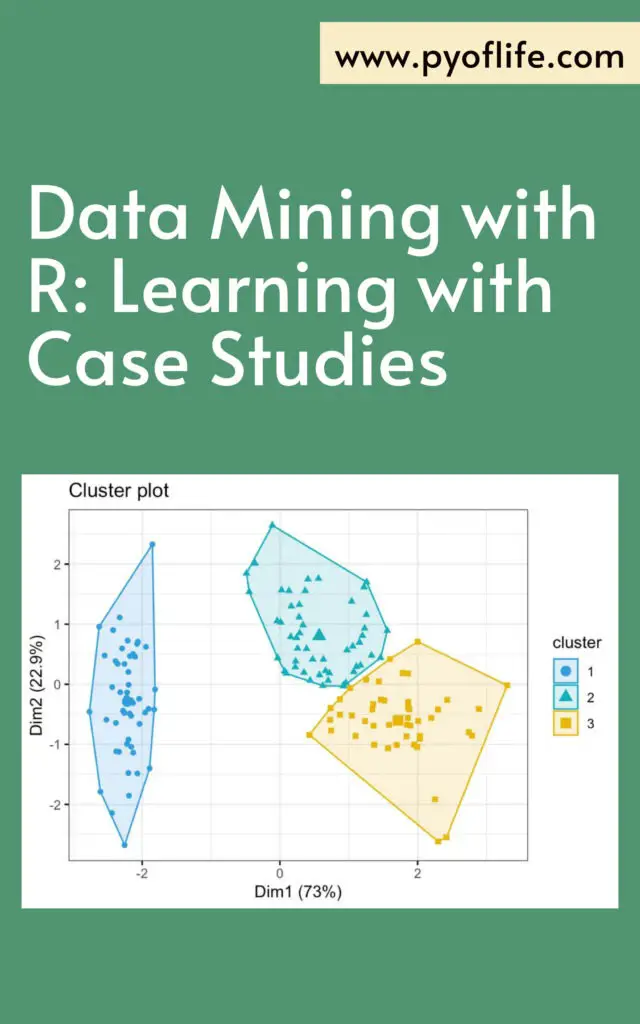
  1. Customer Segmentation for E-commerce: Imagine you’re tasked with segmenting customers based on their purchasing behavior for an e-commerce platform. By leveraging clustering algorithms such as K-means in R, you can identify distinct customer segments and tailor marketing strategies to cater to their specific needs and preferences.
  2. Predictive Maintenance in Manufacturing: In a manufacturing setting, predicting equipment failures before they occur can save both time and resources. Through predictive modeling techniques like decision trees or random forests in R, you can analyze historical maintenance data to forecast potential failures, enabling proactive maintenance interventions and minimizing downtime.
  3. Sentiment Analysis in Social Media: With the explosion of social media data, understanding customer sentiment has become paramount for businesses. Using sentiment analysis techniques in R, you can analyze textual data from social media platforms to gauge public opinion, identify emerging trends, and fine-tune marketing campaigns accordingly.

Conclusion: Empowering Insights with R and Data Mining

In conclusion, data mining with R transcends mere analysis; it’s a journey of discovery, innovation, and empowerment. By harnessing the combined prowess of R’s analytical capabilities and real-world case studies, practitioners can unlock the latent potential within their data, driving informed decision-making and fostering a culture of data-driven excellence. So, embrace the power of data mining with R, and embark on a transformative voyage towards actionable insights and unparalleled success.

Download (PDF):

Read more: Data Mining with Rattle and R

Clean Python: Elegant Coding in Python

Clean Python: Elegant Coding in Python: In the world of programming, elegance isn’t just about aesthetics; it’s about efficiency, maintainability, and clarity. Python, renowned for its readability and simplicity, offers developers a canvas to create clean, elegant code. In this article, we delve into the essence of clean Python coding, exploring techniques and best practices that elevate your scripts from functional to exceptional.

Understanding Clean Python: Clean Python isn’t just a matter of adhering to PEP 8 guidelines or using descriptive variable names (though those are important). It’s a holistic approach to writing code that emphasizes simplicity, clarity, and efficiency. Clean code is easy to read, easy to understand, and easy to modify.

Clean Python Elegant Coding in Python

The Principles of Clean Python:

  1. Simplicity: Keep it simple. Avoid unnecessary complexity and convoluted logic. Write code that is straightforward to comprehend at a glance.
  2. Clarity: Make your intentions clear. Use meaningful variable names, function names, and comments to explain the purpose and functionality of your code.
  3. Modularity: Break your code into small, reusable components. Encapsulate functionality into functions and classes to promote code reuse and maintainability.
  4. Consistency: Follow consistent coding style and formatting throughout your project. Consistency enhances readability and makes collaboration easier.
  5. Efficiency: Write code that is both computationally efficient and efficient for developers to work with. Avoid unnecessary loops, redundant calculations, and inefficient data structures.
  6. Testing: Write automated tests to verify the correctness of your code. Test-driven development (TDD) can help ensure that your code behaves as expected and remains reliable during future modifications.
  7. Documentation: Document your code effectively. Use docstrings to describe the purpose, parameters, and return values of functions and modules. Good documentation makes it easier for other developers (and future you) to understand and use your code.

Techniques for Writing Clean Python:

  1. List Comprehensions: Utilize list comprehensions to write concise and expressive code for creating lists based on existing iterables.
  2. Generator Expressions: Use generator expressions to create memory-efficient iterators for processing large datasets.
  3. Context Managers: Employ context managers (with statements) to manage resources and ensure proper cleanup, such as file handling or database connections.
  4. Decorators: Harness the power of decorators to add functionality to functions and methods without modifying their underlying code.
  5. Unpacking: Take advantage of tuple unpacking and dictionary unpacking to succinctly assign values to multiple variables at once.
  6. The Zen of Python: Embrace the principles outlined in the Zen of Python (accessible by typing import this in a Python interpreter). Let these guiding principles inform your coding decisions and foster a mindset of simplicity and clarity.

Conclusion: Clean Python coding is an art form—a skill that developers hone over time through practice, study, and collaboration. By adhering to simplicity, clarity, and efficiency, and employing techniques that promote readability and maintainability, you can elevate your Python code from mundane to magnificent. So, embrace the elegance of clean Python, and let your code speak volumes about your craftsmanship and expertise.

Download (PDF)

Read More: Introduction To Python For Econometrics Statistics And Data Analysis

Fundamentals of Data Visualization

Fundamentals of Data Visualization: Data visualization is the process of representing data in graphical or visual formats such as charts, graphs, and maps to help viewers understand the significance of the data. It plays a crucial role in data analysis and decision-making across various fields, including business, science, and academia.

Importance of Data Visualization

In today’s data-driven world, the volume and complexity of data are increasing rapidly. Data visualization enables us to distill this vast amount of information into easily understandable visuals, allowing stakeholders to identify trends, patterns, and insights at a glance. It helps in uncovering hidden relationships within the data that may not be apparent from raw numbers or text alone.

Enhancing Communication and Understanding

One of the primary benefits of data visualization is its ability to enhance communication and understanding. Visual representations of data are more engaging and accessible than tables or text, making it easier for both technical and non-technical audiences to grasp complex concepts. Visualizations facilitate clearer communication of ideas, enabling stakeholders to make informed decisions based on data-driven insights.

Fundamentals of Data Visualization

Facilitating Decision-Making

Data visualization empowers decision-makers by providing them with actionable insights derived from data analysis. Whether it’s identifying market trends, optimizing business processes, or tracking performance metrics, visualizations help stakeholders quickly assess situations and make data-driven decisions with confidence. By presenting information visually, data visualization reduces the cognitive load associated with interpreting raw data, allowing decision-makers to focus on what matters most.

Types of Data Visualizations

There are various types of data visualizations, each suited to different types of data and analytical objectives. Some common types include:

  • Bar charts: Ideal for comparing categories or groups.
  • Line charts: Useful for showing trends over time.
  • Pie charts: Effective for illustrating proportions or percentages.
  • Scatter plots: Helpful for visualizing relationships between two variables.
  • Heatmaps: Great for displaying dense data or identifying patterns in large datasets.
  • Maps: Suitable for spatial analysis and geographical data visualization.

Tools for Data Visualization

Several tools and software are available for creating data visualizations, ranging from simple spreadsheet applications to advanced data visualization platforms. Some popular tools include:

  • Microsoft Excel: Offers basic charting capabilities for creating simple visualizations.
  • Tableau: A powerful data visualization tool that allows users to create interactive and dynamic dashboards.
  • Python: A versatile programming language with libraries like Matplotlib and Seaborn for creating customized visualizations.
  • R: A statistical programming language with packages like ggplot2 for producing high-quality graphics.
  • D3.js: A JavaScript library for creating interactive and dynamic data visualizations on the web.

Best Practices for Data Visualization

To create effective data visualizations, it’s essential to follow best practices that enhance clarity, accuracy, and interpretability:

  • Simplify: Keep visualizations clean and uncluttered to avoid overwhelming the audience with unnecessary information.
  • Label: Clearly label axes, data points, and other elements to provide context and aid interpretation.
  • Choose appropriate visualizations: Select the right type of visualization that effectively communicates the message you want to convey.
  • Use color judiciously: Choose colors thoughtfully to differentiate data categories and highlight key insights without causing confusion.
  • Provide context: Provide relevant context and explanations to help viewers understand the significance of the data.

Conclusion: Fundamentals of Data Visualization

In conclusion, data visualization is a powerful tool for transforming data into actionable insights. By presenting information visually, data visualization enhances communication, facilitates decision-making, and enables stakeholders to unlock the full potential of their data. By following best practices and leveraging the right tools, organizations can harness the power of data visualization to drive innovation, gain competitive advantage, and achieve their business objectives.

Download (PDF)

Read More: Data Visualization and Exploration with R

Introduction To Python For Econometrics Statistics And Data Analysis

Introduction to python for econometrics statistics and data analysis: Python is a versatile programming language that is widely used for econometrics, statistics, and data analysis. With its easy-to-learn syntax, powerful libraries, and flexible data structures, Python has become an essential tool for data scientists, economists, and statisticians.

Introduction To Python For Econometrics Statistics And Data Analysis

Here are some of the most commonly used Python libraries for econometrics, statistics, and data analysis:

  1. NumPy: NumPy is a library for numerical computing in Python. It provides tools for handling large, multi-dimensional arrays and matrices, as well as functions for mathematical operations.
  2. pandas: pandas is a library for data manipulation and analysis. It provides data structures for handling tabular data, time series data, and more. pandas also includes functions for data cleaning, merging, and reshaping.
  3. Matplotlib: Matplotlib is a library for creating visualizations in Python. It provides tools for creating line plots, scatter plots, histograms, and more.
  4. SciPy: SciPy is a library for scientific computing in Python. It includes tools for optimization, integration, interpolation, and more.
  5. statsmodels: statsmodels is a library for statistical modeling in Python. It provides tools for regression analysis, time series analysis, and more.
  6. scikit-learn: scikit-learn is a library for machine learning in Python. It provides tools for supervised and unsupervised learning, as well as tools for data preprocessing and model selection.
  7. seaborn: seaborn is a library for creating statistical visualizations in Python. It provides tools for creating heatmaps, scatter plots, and more.

Using these libraries, you can perform a wide range of econometric, statistical, and data analysis tasks in Python.

Download (PDF)

Using R With Multivariate Statistics

Using R With Multivariate Statistics: R is a powerful open-source programming language and software environment widely used for statistical computing and graphics. With its extensive libraries and packages, R offers a versatile platform for data analysis, making it a popular choice among researchers, analysts, and statisticians.

Why use R for statistical analysis?

R provides a comprehensive suite of tools for data manipulation, visualization, and statistical modeling. Its flexibility, scalability, and active community support make it ideal for handling complex statistical tasks, including multivariate analysis.

Understanding Multivariate Statistics

What are multivariate statistics?

Multivariate statistics involve the analysis of data sets with multiple variables. Unlike univariate or bivariate analysis, which focuses on one or two variables, multivariate analysis considers the relationships among multiple variables simultaneously.

Importance of multivariate statistics

Multivariate techniques allow researchers to explore complex relationships within data sets and identify underlying patterns or structures. These methods are essential for understanding the interdependencies among variables and making informed decisions in various fields, such as economics, psychology, biology, and marketing.

Using R With Multivariate Statistics

How R Facilitates Multivariate Statistical Analysis

Packages for multivariate analysis in R

R offers a wide range of packages specifically designed for multivariate analysis, including “stats,” “MASS,” “caret,” and “psych.” These packages provide functions and algorithms for conducting various multivariate techniques efficiently.

Exploratory data analysis with R

Before applying multivariate techniques, exploratory data analysis (EDA) helps in understanding the structure and characteristics of the data. R provides powerful tools, such as descriptive statistics, data visualization, and correlation analysis, to explore data sets effectively.

Performing multivariate techniques in R

R supports numerous multivariate techniques, including Principal Component Analysis (PCA), Factor Analysis (FA), Cluster Analysis, and Discriminant Analysis. Users can easily implement these methods using dedicated functions and commands in R.

Common Multivariate Techniques in R

Principal Component Analysis (PCA)

PCA is a dimensionality reduction technique used to identify the most important variables in a data set. R’s “prcomp” function allows users to perform PCA and visualize the results using biplots and scree plots.

Factor Analysis (FA)

FA explores the underlying structure of observed variables and identifies latent factors influencing them. R’s “factanal” function enables users to conduct factor analysis and interpret the factor loadings and communalities.

Cluster Analysis

Cluster analysis groups similar observations into clusters based on their attributes. R offers several clustering algorithms, such as k-means and hierarchical clustering, accessible through the “stats” and “cluster” packages.

Discriminant Analysis

Discriminant analysis identifies the linear combinations of variables that best discriminate between predefined groups or classes. R’s “lda” and “qda” functions facilitate discriminant analysis and assess classification accuracy.

Advantages of Using R for Multivariate Statistics

Flexibility and customization

R allows users to customize analyses and graphics according to their specific requirements. With extensive libraries and packages, users can tailor multivariate techniques to suit diverse research contexts and objectives.

Availability of comprehensive documentation and resources

R benefits from a vast community of users and developers who contribute to its documentation, tutorials, and online forums. Users can access a wealth of resources, including textbooks, online courses, and user guides, to enhance their proficiency in multivariate analysis with R.

Integration with other statistical and graphical tools

R seamlessly integrates with other software tools and programming languages, such as Python, MATLAB, and SQL. This interoperability enables users to combine R’s statistical capabilities with complementary tools for data preprocessing, modeling, and presentation.

Case Studies and Examples

Real-world applications of R in multivariate analysis

Case studies demonstrate R’s effectiveness in diverse applications, such as market segmentation, customer profiling, image processing, and genomic analysis. By showcasing practical examples, users can gain insights into the potential of R for solving complex analytical challenges.

Challenges and Considerations

Learning curve and proficiency in R programming

While R offers extensive functionality for multivariate analysis, mastering its syntax and programming paradigms may require time and effort. Beginners may encounter challenges in understanding advanced concepts and debugging code, necessitating continuous learning and practice.

Data preprocessing and quality assurance

Multivariate analysis relies on clean, well-structured data to produce reliable results. Data preprocessing tasks, such as missing value imputation, outlier detection, and normalization, are critical for ensuring the validity and accuracy of multivariate analyses conducted in R.

Conclusion

In conclusion, R provides a robust platform for conducting multivariate statistical analysis, offering a wide range of techniques, packages, and resources for researchers and practitioners. By harnessing the power of R, analysts can uncover valuable insights from complex data sets and make data-driven decisions with confidence.

Download:

Read More: Applied Multivariate Statistics with R

Python for Graph and Network Analysis

Python for Graph and Network Analysis: Graph and network theory is a useful tool for understanding complex data relationships in today’s interconnected world. Python, with its abundance of libraries and tools, has become a popular choice for analyzing graphs and networks because of its versatility and user-friendly nature. In this guide, we will explore Python’s potential for graph and network analysis. We’ll discuss its techniques and applications, providing insights to help you take advantage of its capabilities.

Python for Graph and Network Analysis: Laying the Foundation

Python’s popularity for graph and network analysis is not a coincidence. It offers a plethora of libraries such as NetworkX, igraph, and graph-tool, which provide functionalities for creating, analyzing, and visualizing graphs. These libraries are not only user-friendly but also packed with advanced features, making them suitable for both beginners and experienced analysts.

Python for Graph and Network Analysis

Unveiling the Power of Network Visualization

Network visualization is a crucial aspect of graph analysis, allowing researchers to gain intuitive insights into the structure of complex systems. Python libraries like NetworkX offer tools for visually appealing and informative network visualizations. Through the use of nodes, edges, and attributes, analysts can represent and interpret intricate relationships effectively.

Exploring Centrality Measures: Understanding Importance

Centrality measures are fundamental in network analysis, as they identify the most important nodes within a network. Techniques like Degree Centrality, Betweenness Centrality, and Eigenvector Centrality quantify the significance of nodes in various ways. Python empowers analysts to effortlessly compute these measures, revealing key players in networks such as social media connections or transportation systems.

Community Detection: Uncovering Hidden Structures

Networks often contain communities or clusters of nodes that exhibit higher internal connectivity than with the rest of the network. Python’s community detection algorithms, available in libraries like NetworkX, enable analysts to automatically identify these clusters. Applications range from identifying groups in social networks to detecting protein interaction modules in biological networks.

Influence Propagation: Tracking Information Flow

Understanding how information spreads within a network is essential in diverse fields, from marketing to epidemiology. Python offers tools to simulate and analyze influence propagation. By modeling the spread of information or diseases, analysts can predict outcomes and optimize strategies.

Link Prediction: Forecasting Connections

Predicting future connections in a network is a challenging yet valuable endeavor. Python equips analysts with algorithms that utilize existing network structures to forecast new links. These predictions find applications in recommendation systems, fraud detection, and collaborative filtering.

Leveraging Python for Large-Scale Networks

As networks grow in size and complexity, efficient analysis becomes paramount. Python’s libraries incorporate optimization techniques and parallel processing to handle large-scale networks. Analysts can leverage these tools to analyze vast networks such as the Internet or transportation systems.

FAQs

Can I use Python for graph analysis if I’m a beginner?

Absolutely! Python’s libraries offer user-friendly interfaces that cater to beginners. You can start with NetworkX, which provides comprehensive documentation and examples.

Are there any online courses to learn Python for graph analysis?

Certainly! Platforms like Coursera and Udemy offer courses that cover Python for graph and network analysis. Look for courses that provide hands-on experience with real-world datasets.

What are some applications of graph analysis in business?

Graph analysis has various business applications, including social network analysis for customer relationship management and supply chain optimization through network flow analysis.

Is Python suitable for analyzing large-scale networks?

Yes, Python’s libraries have optimization techniques and parallel processing capabilities that make them suitable for analyzing large-scale networks efficiently.

Can I visualize 3D networks using Python?

Yes, libraries like mayavi in Python can be used to create stunning 3D visualizations of networks, providing a deeper understanding of complex relationships.

How can I contribute to the development of graph analysis libraries in Python?

You can contribute to open-source projects like NetworkX on platforms like GitHub. By contributing code, documentation, or even reporting issues, you can actively participate in the growth of these libraries.

Conclusion

Python’s prowess in graph and network analysis is undeniable. With its comprehensive libraries, user-friendly interfaces, and versatile applications, Python empowers analysts to unravel the intricacies of complex networks. Whether you’re a beginner or an experienced analyst, Python provides the tools to derive meaningful insights and drive innovation through graph and network analysis.

Download:

Read More: Python DataVisualization Cookbook

Python Programming for Economics and Finance

Python Programming for Economics and Finance: In the world of economics and finance, where numbers reign supreme and trends dictate decisions, the need for robust analytical tools has never been greater. Enter Python, a programming language that has emerged as a game-changer in the field. Much like a Swiss army knife, Python offers a plethora of functionalities, making it indispensable for professionals seeking to navigate the complexities of financial markets and economic models.

A Foundation of Simplicity

At its core, Python boasts a simplicity that belies its capabilities. With clean, readable syntax akin to plain English, Python makes coding accessible even to those with minimal programming experience. This simplicity serves as a foundation upon which complex financial models can be built, enabling economists and financiers to focus on the intricacies of their analyses rather than getting bogged down in convoluted code.

Symbolism in Code

In the world of programming, every line of code is laden with symbolism. Just as a single word can convey layers of meaning in literature, each function and variable in Python symbolizes a specific action or value. For example, in a financial model, the variable representing stock prices may symbolize the ebb and flow of market dynamics, while a function calculating returns may symbolize the investor’s quest for profitability.

Irony of Efficiency

Ironically, in the realm of economics and finance, where time is of the essence and efficiency is paramount, the traditional tools often fall short. Spreadsheets, once hailed as a marvel of modern technology, can quickly become unwieldy and error-prone when faced with large datasets and complex calculations. Here, Python shines brightest, offering unparalleled efficiency and scalability.

Python Programming for Economics and Finance

Foreshadowing Trends

In economics and finance, success often hinges on the ability to anticipate future trends. Python’s extensive libraries, such as Pandas and NumPy, provide the tools necessary to analyze historical data and identify patterns that may foreshadow future market movements. By harnessing the predictive power of Python, economists and financiers can stay one step ahead in an ever-changing landscape.

Metaphor in Modeling

Building financial models is akin to crafting a narrative, where each variable and assumption contributes to the overarching story. In Python, these models take shape through a series of equations and algorithms, each metaphorically representing a different aspect of economic theory or market behavior. Like a master storyteller, the programmer must weave these elements together cohesively to create a compelling narrative of financial analysis.

Personification of Algorithms

In the world of Python programming, algorithms take on a life of their own, each with its own personality and quirks. From simple sorting algorithms to complex machine learning models, these digital entities tirelessly crunch numbers and sift through data in pursuit of insights. Personifying these algorithms can help developers better understand their behavior and optimize their performance for specific tasks.

Hyperbolic Growth

The growth of Python in economics and finance has been nothing short of hyperbolic. What began as a niche tool for tech-savvy analysts has blossomed into a mainstream phenomenon, with Python now widely taught in universities and adopted by leading financial institutions. This meteoric rise speaks to the language’s unparalleled versatility and the increasing demand for data-driven insights in the financial world.

Alliteration in Analysis

In the pursuit of financial analysis, alliteration abounds in the algorithms and equations that underpin Python scripts. From Monte Carlo simulations to Black-Scholes option pricing models, the language of finance is rich with repetitive sounds and structures that reflect the iterative nature of analytical processes. Embracing alliteration in code can help streamline development and enhance readability, ensuring that complex analyses are accessible to all stakeholders.

Imagery of Visualization

In the realm of economics and finance, data visualization serves as a powerful tool for conveying complex ideas and insights. Python’s matplotlib and seaborn libraries offer a canvas upon which analysts can paint vivid imagery of market trends, economic indicators, and financial forecasts. Through carefully crafted visualizations, economists and financiers can transform raw data into compelling narratives that resonate with decision-makers.

Onomatopoeia of Coding

The rhythmic clatter of keystrokes, the gentle hum of a processor at work—coding in Python is a symphony of sound and motion. Like onomatopoeic words that mimic the sounds they describe, Python code reflects the underlying processes it represents. From the crisp snap of a conditional statement to the melodic flow of a loop, each line of code resonates with the essence of its function, creating a symphony of computation.

Simile in Syntax

The syntax of Python is like a well-tuned instrument, its harmony and rhythm guiding programmers through the composition of algorithms and scripts. Like a conductor leading an orchestra, the Python interpreter interprets each line of code with precision and clarity, ensuring that the final composition is both elegant and efficient. By mastering the language’s syntax, economists and financiers can orchestrate symphonies of analysis that resonate with clarity and insight.

The Symphony of Syntax

In Python programming, syntax is not merely a set of rules to be followed but rather a language unto itself, replete with nuance and subtlety. Like a musical score, each line of code contributes to the overall composition, with syntax serving as the notes and rhythms that give structure to the melody. By mastering the syntax of Python, economists and financiers can compose symphonies of analysis that resonate with clarity and insight.

Conclusion: Python Programming for Economics and Finance

In conclusion, Python has emerged as a symphony of code, a versatile tool that harmonizes with the complexities of economics and finance. Python empowers analysts to unravel the mysteries of financial markets and economic systems with clarity and insight through its simplicity, symbolism, and scalability. As the language continues to evolve and grow, so will its impact on the world of economics and finance, composing a symphony of analysis that resonates with depth and complexity.

Download (PDF)

 Read More: Python for Finance: Mastering Data-Driven Finance