Data Science

Probability and Statistics with Examples using R

Probability and Statistics with Examples using R: Navigating the vast seas of data can often feel like embarking on an uncertain voyage. Yet, amidst the waves of uncertainty, lies the compass of probability and statistics, guiding us through the murky waters of randomness. In this article, we delve into the heart of these disciplines, using the powerful tool of R to illuminate the path ahead.

Setting the Stage: Understanding Probability

Imagine a carnival wheel spinning, its colors blurring into a kaleidoscope of possibilities. This vivid imagery mirrors the essence of probability, where every spin represents a chance, a probability waiting to unfold.

Unraveling the Threads: Basic Concepts of Probability

In the realm of probability, each event is like a character in a story, waiting to reveal its narrative. From the flip of a coin to the roll of a dice, every outcome carries its own weight, its own significance in the grand tapestry of probability.

Probability and Statistics with Examples using R

The Dance of Distributions: Exploring Probability Distributions

Picture a symphony hall filled with musicians, each playing a different tune. Just as each instrument contributes to the harmony of the orchestra, each probability distribution adds its unique melody to the composition of statistics.

The Star of the Show: Normal Distribution

In the world of statistics, the normal distribution reigns supreme, casting its shadow over countless phenomena. Like a steady heartbeat, it pulses through the veins of data, shaping the landscape of probability with its familiar bell curve.

Taming the Beast: Standard Deviation

Standard deviation, the wild beast of statistics, prowls through the jungle of data, measuring the spread of values with its untamed roar. Yet, beneath its ferocious exterior lies a method to the madness, a guide to understanding the chaos of variability.

A Closer Look: Hypothesis Testing

Hypothesis testing, the detective of statistics, sifts through the evidence, separating truth from conjecture. Like a courtroom drama, it presents its case to the jury of probability, seeking to uncover the secrets hidden within the data.

Building Bridges: Correlation and Regression

Correlation and regression, the architects of statistics, construct bridges between variables, linking them in intricate patterns of connection. Like master builders, they lay the foundations of understanding, paving the way for deeper insights into the relationships within data.

Journey into the Unknown: Probability Sampling

In the vast wilderness of data, probability sampling acts as a guide, leading us on expeditions into uncharted territory. Like intrepid explorers, we venture forth, armed with our sampling techniques, in search of hidden treasures buried within the depths of probability.

The Art of Prediction: Forecasting with Time Series Analysis

Time series analysis, the crystal ball of statistics, gazes into the mists of time, predicting future trends with uncanny accuracy. Like ancient seers, it deciphers the patterns of the past, unveiling the secrets of what lies ahead.

Navigating the Storm: Probability in Decision Making

In the tumultuous waters of decision making, probability serves as our compass, guiding us through the stormy seas of uncertainty. Like seasoned sailors, we plot our course, weighing the risks and rewards that lie on the horizon.

The Power of Simulation: Monte Carlo Methods

Monte Carlo methods, the magicians of probability, conjure worlds of possibility from the depths of randomness. Like illusionists, they perform their tricks, transforming uncertainty into insight with a flick of the wand.

Beyond the Numbers: Applications of Probability and Statistics

Beyond the realm of mathematics, probability and statistics find their home in a multitude of fields, from finance to medicine, from sports to engineering. Like versatile tools in a craftsman’s workshop, they shape the world around us, molding reality with the hands of probability.

Embracing the Unknown: Challenges and Future Directions

As we stand on the threshold of tomorrow, the challenges of probability and statistics loom large on the horizon. Yet, like pioneers forging new paths through the wilderness, we face the unknown with courage and determination, knowing that the journey ahead holds infinite possibilities.

Conclusion: Charting Our Course Forward

In the ever-changing landscape of data, probability, and statistics serve as our guiding lights, illuminating the path ahead with clarity and insight. With the powerful tool of R in our hands, we embark on a journey of discovery, charting our course through the boundless seas of uncertainty, towards a future filled with infinite possibilities.

Download (PDF)

Read More: Introduction to Probability for Data Science

Practical Social Network Analysis with Python

Practical Social Network Analysis with Python: In the vast expanse of the digital realm, social networks resemble constellations, each dot representing a user, interconnected by threads of relationships. Python, akin to a celestial mapmaker’s tool, allows us to unravel this intricate tapestry, deciphering patterns, insights, and hidden connections.

Embarking on the Journey: Setting the Stage with Python

Unveiling the Tools: Python as Our Trusty Compass

Python, with its simplicity and versatility, emerges as our guiding compass in this odyssey. Like a seasoned sailor navigating stormy seas, we harness Python’s power to chart our course through the labyrinth of social networks.

The Genesis of Social Network Analysis: A Glimpse into the Past

From Plato’s Cave to Zuckerberg’s Empire: A Historical Prelude

Long before the advent of digital platforms, humanity harbored an innate desire for connection and community. From ancient gatherings in Plato’s cave to the modern-day digital empires of Zuckerberg and beyond, the essence of social networks has endured, evolving with each epoch.

Practical Social Network Analysis with Python

Decoding the Digital Ecosystem: Understanding Social Network Analysis

Cracking the Code: The Essence of Social Network Analysis

Social Network Analysis (SNA) serves as our cipher, enabling us to decode the underlying structure and dynamics of digital ecosystems. Like archeologists unearthing ancient relics, SNA empowers us to reveal hidden truths lurking beneath the surface of seemingly chaotic networks.

The Pythonic Arsenal: Tools and Libraries for Social Network Analysis

Arming Ourselves: Python Libraries as Our Weapons of Choice

Python boasts an arsenal of powerful libraries tailored for SNA, each serving as a weapon in our quest for insight. From NetworkX to Gephi, these tools equip us with the means to probe, dissect, and analyze the intricate web of social connections.

Collecting the Threads: Data Acquisition and Preparation

Gathering Stardust: Data Collection in the Digital Cosmos

Before embarking on our journey, we must gather stardust – the raw data that fuels our analysis. From APIs to web scraping, we cast our nets far and wide, capturing snippets of digital conversations and interactions.

Unveiling Hidden Patterns: Network Visualization and Exploration

Painting the Canvas: Visualization as Our Brushstroke

Visualization serves as our brushstroke, transforming raw data into vibrant canvases teeming with life. Like artists sculpting clay, we mold the digital landscape, revealing hidden patterns and insights obscured to the naked eye.

The Dance of Nodes: Centrality and Influence

Amidst the Dance: Unraveling Centrality and Influence

Within the bustling dance of nodes, certain individuals emerge as pivotal figures, wielding influence and shaping the course of digital discourse. Through measures of centrality, we identify these key players, unraveling the intricate web of power dynamics.

Unveiling Communities: Clustering and Community Detection

In the Heart of the Hive: Community Detection as Our Compass

Like explorers traversing uncharted territories, we navigate the heart of digital hives, uncovering hidden communities nestled within the vast expanse of social networks. Through clustering algorithms, we peel back the layers of connectivity, revealing tribes bound by common interests and affiliations.

Predicting the Future: Forecasting Dynamics and Trends

Reading the Signs: Forecasting Dynamics in the Digital Cosmos

Armed with insights gleaned from our analysis, we embark on a journey through the mists of time, seeking to predict the future course of digital dynamics and trends. Like seers peering into crystal balls, we harness the power of Python to forecast the ever-shifting currents of the digital cosmos.

Challenges and Pitfalls: Navigating the Murky Waters

Amidst the Storm: Challenges on the Horizon

Yet, amidst the vast expanse of digital seas, challenges loom on the horizon. From data privacy concerns to algorithmic biases, we navigate treacherous waters fraught with ethical dilemmas and pitfalls.

Conclusion: A Continuum of Discovery

In the Tapestry of Time: A Continuum of Discovery

As we draw the curtains on our odyssey through the digital cosmos, one truth remains self-evident: the journey of discovery is a continuum, with each revelation paving the way for new horizons. Armed with Python as our trusty companion, we embark on an endless quest to unravel the mysteries of social networks, one thread at a time.

Download (PDF)

Read More: Python for Graph and Network Analysis

Hands-On Programming with R

Hands-On Programming with R: In the world of data science and statistical computing, R stands as a beacon of versatility and power. With its rich ecosystem of packages and libraries, R offers a playground for those seeking to delve deep into the realm of data analysis and visualization. However, mastering R requires more than just theoretical knowledge; it demands a hands-on approach that immerses you in the intricacies of coding.

The Canvas of Creation: Getting Started with R

Embarking on a journey with R is akin to stepping into an artist’s studio, armed with brushes and colors, ready to paint your masterpiece. But instead of a canvas, you’re greeted with a blank script, waiting to be filled with lines of code. This blank canvas symbolizes endless possibilities, where each line of code is a brushstroke, shaping your data into meaningful insights.

Hands-On Programming with R

The Palette of Packages: Exploring R’s Ecosystem

Just as an artist selects their palette of colors, a programmer navigates through R’s vast ecosystem of packages, each offering unique tools and functionalities. From data manipulation to machine learning, the plethora of packages available in R serve as brushes, allowing you to paint with precision and finesse.

Brushes of Functions: Understanding R’s Syntax

In the hands of a skilled painter, a brush becomes an extension of their creativity. Similarly, mastering R’s syntax transforms lines of code into powerful tools for analysis. Understanding functions, loops, and conditionals is like honing your brushwork, allowing you to craft intricate solutions to complex problems.

The Art of Data Wrangling: Sculpting Your Dataset

Before you can unleash your creativity, you must first sculpt your dataset into a form that is conducive to analysis. This process of data wrangling is akin to molding clay, shaping it until it conforms to your vision. With R’s tidyverse package, this task becomes a breeze, as you manipulate, filter, and reshape your data with ease.

Painting with Precision: Visualizing Data with ggplot2

Just as a painter uses different techniques to achieve varying effects, a data scientist employs visualization tools to convey insights effectively. Enter ggplot2, the masterpiece of Hadley Wickham. With its intuitive syntax and powerful capabilities, ggplot2 allows you to create stunning visualizations that breathe life into your data.

The Symphony of Analysis: Performing Statistical Tests

In the world of data science, statistics serve as the composer, orchestrating the symphony of analysis. With R’s extensive library of statistical functions, you can conduct hypothesis tests, perform regression analysis, and unravel the hidden patterns within your data. Each test is like a note in the symphony, contributing to the overall harmony of your analysis.

Conducting the Orchestra: Writing Functions in R

Just as a conductor guides an orchestra through a symphony, a programmer directs the flow of code with functions. Whether you’re creating custom algorithms or automating repetitive tasks, writing functions in R allows you to orchestrate your code with precision and efficiency. Each function is like a musical score, guiding the execution of your program with clarity and purpose.

The Tapestry of Machine Learning: Unleashing R’s Predictive Power

As technology advances, machine learning emerges as the brushstroke of the future, painting a portrait of predictive analytics. With R’s machine learning packages, you can train models, make predictions, and uncover insights that transcend traditional analysis. From decision trees to neural networks, the possibilities are as vast as the universe itself.

Crafting the Future: Building Predictive Models

Just as a sculptor chisels away at marble to reveal a masterpiece, a data scientist crafts predictive models to unveil hidden patterns within data. With R’s caret package, you can fine-tune algorithms, evaluate model performance, and navigate the complexities of machine learning with confidence. Each model is a testament to your craftsmanship, illuminating the path to future insights.

The Evolution of R: Embracing the Future

Like a phoenix rising from the ashes, R continues to evolve, adapting to the ever-changing landscape of technology. With each new version, new features and improvements emerge, pushing the boundaries of what’s possible. As the world of data science continues to expand, R remains a steadfast companion, guiding you through the complexities of analysis with grace and precision.

Conclusion: Embracing the Art of Programming with R

In conclusion, hands-on programming with R is more than just a technical pursuit; it’s an art form that allows you to unleash your creativity and explore the boundless possibilities of data science. By embracing R’s syntax, exploring its ecosystem, and mastering its tools, you can paint a masterpiece of analysis that illuminates the hidden truths within your data. So pick up your brush, sharpen your skills, and embark on a journey that transcends mere programming—it’s time to create art with code.

Download (PDF)

R For Data Science

Data Science and Analytics with Python

Data Science and Analytics with Python: Data Science is an interdisciplinary field that deals with the extraction of meaningful insights and knowledge from data using statistical, computational, and machine-learning techniques. Python is one of the most widely used programming languages in data science, due to its simplicity, readability, and vast libraries for data analysis and machine learning. In this article, we’ll cover the basics of data science and analytics with Python. We’ll start by introducing the tools and libraries used in data science and then move on to cover the following topics:

Data Science and Analytics with Python
  1. Data Cleaning and Preparation: The first step in any data science project is to clean and prepare the data. In Python, we can use pandas, a library for data manipulation and analysis, to perform operations such as removing missing values, handling duplicates, and transforming data.
  2. Data Exploration and Visualization: Data exploration and visualization are crucial steps in gaining insights into the data. In Python, we can use libraries such as matplotlib and seaborn for visualizing data, and pandas for exploring data and generating summary statistics.
  3. Statistical Modeling: Statistical modeling is used to make predictions or inferences based on data. In Python, we can use libraries such as scikit-learn for building and evaluating machine learning models, and statsmodels for fitting statistical models.
  4. Machine Learning: Machine learning is a subfield of artificial intelligence that deals with building algorithms that can learn from and make predictions on data. Python has several popular libraries for machine learning, including scikit-learn, TensorFlow, and PyTorch.
  5. Big Data Analytics: Big Data refers to large, complex datasets that cannot be processed using traditional data processing techniques. Python has several libraries for processing and analyzing big data, including Apache Spark and Dask.

In conclusion, Python is an excellent choice for data science and analytics, due to its simplicity, readability, and vast libraries for data analysis and machine learning. Whether you’re a beginner or an experienced data scientist, Python provides the tools and libraries you need to extract meaningful insights and knowledge from your data.

Download (PDF)

Hands-On Spatial Data Science with R

Hands-On Spatial Data Science with R: In a world increasingly defined by data, the power of spatial information is undeniable. Every day, countless decisions are shaped by our understanding of where things are located and how they relate to one another. Spatial data science, the art of extracting insights from location-based data, has emerged as a critical tool in fields ranging from urban planning to epidemiology.

A Digital Cartographer’s Toolbox: The Role of R

At the heart of spatial data science lies R, a powerful programming language and environment for statistical computing and graphics. While R is renowned for its versatility in data analysis, its capabilities extend seamlessly to spatial data through specialized packages and libraries.

Setting the Stage: Understanding Spatial Data

Before delving into the intricacies of spatial data science with R, it’s essential to grasp the fundamentals. Spatial data comes in many forms, from simple coordinates to complex geometries representing everything from points of interest to entire regions. Understanding the structure and nuances of spatial data is crucial for effective analysis.

Hands-On Spatial Data Science with R

The Dance of Data: Manipulating Spatial Data with R

With R as our guide, we embark on a journey of discovery through the world of spatial data. Through a series of elegant commands and functions, R allows us to manipulate and transform spatial data with ease. Whether we’re merging datasets, performing spatial joins, or conducting geometric operations, R provides the tools we need to unlock the hidden insights within our data.

Visualizing the Landscape: Mapping with R

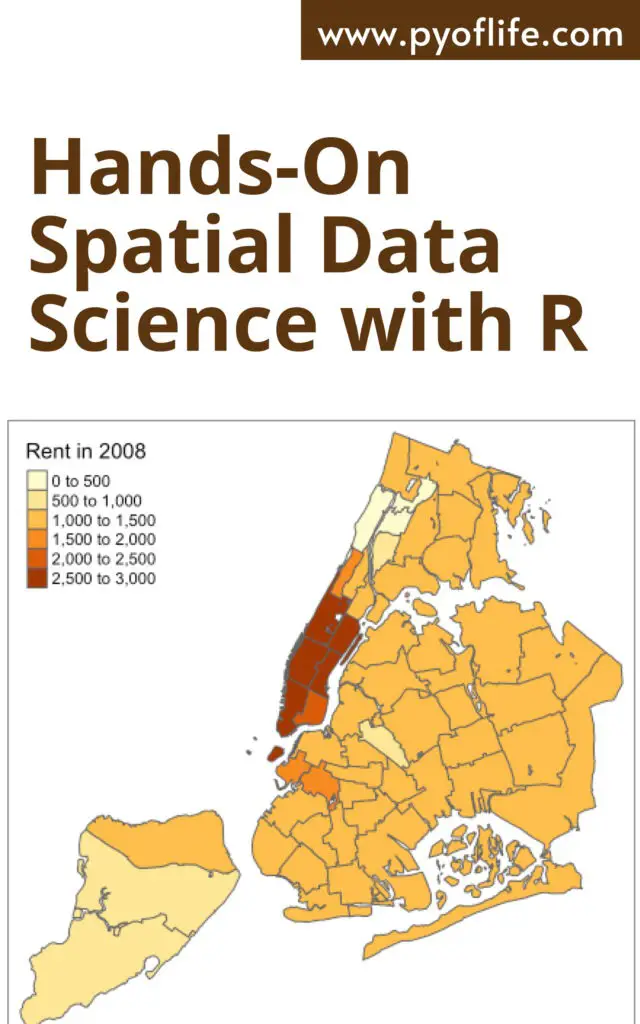
In the realm of spatial data science, visualization is king. R offers a suite of powerful tools for creating stunning maps and visualizations that bring our data to life. From simple scatter plots to intricate choropleth maps, R empowers us to explore and communicate the spatial patterns and relationships inherent in our data.

From Pixels to Patterns: Analyzing Spatial Data with R

Beyond mere visualization, R enables us to conduct sophisticated analyses of spatial data. Through techniques such as spatial autocorrelation, hot spot analysis, and spatial regression, we can uncover the underlying patterns and processes driving spatial phenomena. With R as our compass, we navigate the intricate web of spatial relationships that shape our world.

The Power of Prediction: Spatial Modeling with R

In the realm of spatial data science, prediction is paramount. Whether forecasting urban growth, predicting disease outbreaks, or modeling environmental processes, R equips us with the tools we need to develop accurate and insightful spatial models. Through techniques such as spatial interpolation, machine learning, and geostatistics, we harness the power of R to anticipate future trends and phenomena.

Bridging the Gap: Integrating Spatial Data with Other Tools

In today’s data-driven world, spatial data rarely exists in isolation. Integrating spatial data with other sources of information is essential for unlocking its full potential. Fortunately, R plays well with others, seamlessly integrating with databases, web services, and other analytical tools. Whether accessing data from remote APIs or integrating spatial analysis into a larger workflow, R empowers us to bridge the gap between spatial and non-spatial data sources.

The Art of Exploration: Case Studies in Spatial Data Science with R

To truly appreciate the power of spatial data science with R, we turn to real-world examples. From tracking the spread of infectious diseases to optimizing urban transportation networks, the applications of spatial data science are as diverse as the landscapes they seek to understand. Through a series of captivating case studies, we explore how R enables us to tackle complex spatial problems and unlock actionable insights.

Navigating the Terrain: Challenges and Opportunities in Spatial Data Science

While the potential of spatial data science with R is vast, it is not without its challenges. From data quality issues to computational limitations, navigating the terrain of spatial analysis can be fraught with obstacles. However, with perseverance and ingenuity, these challenges can be overcome, opening up new vistas of opportunity for spatial data scientists everywhere.

Charting the Course: The Future of Spatial Data Science with R

As we chart a course into the future of spatial data science, the role of R remains as vital as ever. With ongoing advancements in technology and methodology, the possibilities for spatial analysis are limitless. Whether pushing the boundaries of machine learning, harnessing the power of big data, or exploring the frontiers of spatial visualization, R will continue to serve as our guiding star in the ever-expanding universe of spatial data science.

Conclusion: Navigating the Digital Frontier with R

In conclusion, spatial data science with R offers a tantalizing glimpse into the hidden landscapes of our world. Through a unique blend of art and science, R empowers us to explore, analyze, and visualize spatial data in ways previously thought impossible. As we journey into this brave new world of spatial discovery, let us embrace the power of R as our faithful companion and guide.

Get Started: Embark on Your Spatial Data Science Journey Today

Ready to unlock the secrets of spatial data science with R? Whether you’re a seasoned analyst or a curious newcomer, there’s never been a better time to dive in. With its intuitive syntax, a vast ecosystem of packages, and a vibrant community of users, R offers endless possibilities for exploration and discovery. So don your digital cartographer’s hat and embark on your spatial data science journey today. The world is waiting to be explored.

Download (PDF)

Read More: Spatial Statistics for Data Science: Theory and Practice with R

Python for Finance: Mastering Data-Driven Finance

In the realm of finance, where every decimal point counts, the utilization of Python as a data-driven tool has become akin to wielding a powerful sword. With its prowess in handling data and executing complex algorithms, Python has emerged as a cornerstone for mastering the intricacies of data-driven finance. In this article, we embark on a journey to uncover the manifold applications and advantages of Python in the financial domain.

Python: The Swiss Army Knife of Financial Analysis

In the vast landscape of finance, data reigns supreme. Python, with its versatile libraries and robust functionalities, serves as the quintessential Swiss Army knife for financial analysts. Its ability to effortlessly manipulate data, perform statistical analysis, and visualize results makes it indispensable in deciphering the nuances of financial markets.

The Symbolic Significance of Python in Finance

In the symbiotic relationship between technology and finance, Python emerges as a symbol of adaptability and resilience. Just as a snake sheds its old skin to embrace new beginnings, Python empowers financial analysts to adapt to evolving market dynamics and glean insights from vast swathes of data.

Python for Finance Mastering Data-Driven Finance

The Irony of Traditional Methods vs. Python’s Efficiency

Ironically, in an era where time is of the essence, traditional methods of financial analysis often prove to be cumbersome and time-consuming. Enter Python, with its efficiency and automation capabilities, flipping the script and revolutionizing the way financial analysis is conducted. What once took hours of manual labor can now be accomplished in a fraction of the time, allowing analysts to focus on strategic decision-making.

Foreshadowing the Future of Finance with Python

As we peer into the crystal ball of finance, the trajectory becomes clear: Python is poised to shape the future of financial analysis in profound ways. Its ability to adapt to emerging trends, harness the power of big data, and facilitate predictive modeling foreshadows a landscape where data-driven insights drive financial decision-making.

Metaphorical Mastery: Python as the Architect of Financial Models

In the construction of financial models, Python assumes the role of an architect, laying the foundation upon which insights are built. Much like a master craftsman meticulously designs a blueprint, financial analysts harness Python’s capabilities to construct models that capture the essence of market dynamics and forecast future trends.

Personifying Profitability: Python as a Strategic Ally

In the ever-evolving battlefield of finance, profitability emerges as the ultimate goal. Personifying profitability, Python becomes the strategic ally that empowers analysts to navigate through the complexities of financial data and unearth hidden opportunities for growth and prosperity.

Hyperbolic Horizons: Python’s Impact on Financial Efficiency

Hyperbole finds its place in the realm of finance when Python’s impact on efficiency is brought to light. The exponential increase in productivity, the dramatic reduction in error margins, and the monumental strides in decision-making capabilities paint a hyperbolic picture of Python’s influence on financial efficiency.

Alliteration: Python’s Powerful Performance in Portfolio Management

In the realm of portfolio management, Python’s prowess is palpable. Its ability to parse through vast datasets, perform complex risk analysis, and optimize portfolios with precision exemplifies its powerful performance in driving financial success.

Imagining the Possibilities: Python’s Visualization Capabilities

In the realm of data visualization, Python unleashes a symphony of imagery that transforms abstract numbers into tangible insights. Through vivid charts, graphs, and heatmaps, Python paints a picture of market trends and patterns, allowing analysts to decipher complex data at a glance.

Onomatopoeic Optimization: Python’s Impact on Algorithmic Trading

In the realm of algorithmic trading, Python’s influence is akin to the sound of success – a symphony of strategic trades executed with precision. Its ability to optimize trading algorithms, backtest strategies, and execute trades in real-time resonates with the rhythm of profitability in financial markets.

The simile of Simplicity: Python’s User-Friendly Interface

In a world where complexity often breeds confusion, Python stands out with its user-friendly interface, akin to a gentle breeze amidst a stormy sea. Its simple syntax and intuitive libraries make it accessible even to those with limited programming experience, democratizing the realm of financial analysis.

Unraveling the Enigma: Python’s Role in Risk Management

In the high-stakes game of finance, risk management emerges as a paramount concern. Python’s role in unraveling the enigma of risk is undeniable, providing analysts with the tools needed to assess, mitigate, and navigate through the labyrinth of financial uncertainties.

Leveraging Libraries: Python’s Risk Analysis Arsenal

Python’s extensive collection of libraries serves as a veritable arsenal for risk analysis. From Monte Carlo simulations to Value at Risk (VaR) calculations, Python equips analysts with the means to quantify risk exposure, stress-test portfolios, and implement robust risk management strategies.

Hedging Against Volatility: Python’s Dynamic Derivative Analysis

Volatility, like a tempestuous tempest, can wreak havoc on financial portfolios. Python’s dynamic derivative analysis capabilities enable analysts to hedge against volatility, construct optimal hedging strategies, and safeguard portfolios against adverse market movements.

Mitigating Market Meltdowns: Python’s Stress Testing Solutions

In the aftermath of market meltdowns, the importance of stress testing becomes glaringly evident. Python’s stress-testing solutions empower analysts to simulate worst-case scenarios, assess the resilience of portfolios, and fortify them against systemic risks, ensuring financial stability in tumultuous times.

Conclusion: Python for Finance: Mastering Data-Driven Finance

In the labyrinth of finance, Python emerges as the guiding light that illuminates the path to mastery. Its versatility, efficiency, and adaptability empower analysts to unravel the complexities of financial markets, harness the power of data, and make informed decisions that drive success and prosperity. As we embark on this journey of discovery, let Python be our steadfast companion, leading us toward a future where data-driven finance reigns supreme.

Download (PDF)

Read More: Derivatives Analytics with Python: data analysis, models, simulation, calibration and hedging

Mastering Machine Learning with Python in Six Steps

Machine learning, the buzzword of the technological era, has become an integral part of various industries, from finance to healthcare, from retail to entertainment. Among the plethora of tools available for machine learning, Python stands out as a versatile and powerful language. In this article, we will embark on a journey to unravel the intricacies of mastering machine learning with Python in six steps. Each step is like a building block, contributing to the construction of a solid understanding and proficiency in this dynamic field.

Step 1: Laying the Foundation

Before delving into the world of machine learning, it’s essential to lay a strong foundation. Think of it as preparing the soil before planting seeds. In this step, we will acquaint ourselves with the basics of Python programming. From variables to loops, from functions to libraries, every aspect of Python serves as a fundamental tool in our journey towards mastering machine learning.

The Symbolic Beginning

Just as every journey begins with a single step, our venture into machine learning commences with Python, symbolizing the gateway to a realm of possibilities. Python’s simplicity and readability act as guiding stars, illuminating the path ahead.

Mastering Machine Learning with Python in Six Steps

Download:

Step 2: Understanding the Concepts

Machine learning isn’t just about coding; it’s about understanding the underlying concepts. This step is akin to grasping the theories behind the practical applications. We will explore concepts like supervised learning, unsupervised learning, and reinforcement learning. It’s like deciphering the language of machines, enabling us to communicate with them effectively.

The Irony of Complexity

Ironically, while machine learning aims to simplify tasks through automation, its concepts can be complex. Yet, understanding this complexity is the key to unlocking the potential of Python in machine learning. It’s like untangling a web of intricacies to reveal the underlying beauty.

Step 3: Exploring Python Libraries

Python’s strength lies in its vast array of libraries tailored for machine learning. In this step, we will explore libraries like NumPy, Pandas, and Scikit-learn. These libraries act as our allies, providing tools and functions to expedite our journey. It’s akin to entering a treasure trove, each library offering valuable resources waiting to be unearthed.

The Foreshadowing of Possibilities

As we delve deeper into Python libraries, we can’t help but feel a sense of foreshadowing. These libraries hold the key to unlocking limitless possibilities in machine learning. It’s like standing at the edge of a vast ocean, with endless horizons stretching before us, hinting at the adventures yet to come.

Step 4: Data Wrangling and Preprocessing

Before feeding data into machine learning models, it’s crucial to preprocess and wrangle it into a usable format. This step involves cleaning the data, handling missing values, and scaling features. Think of it as preparing ingredients before cooking a gourmet meal – each ingredient must be fresh and meticulously prepared to ensure a delectable outcome.

Personification of Data

In the world of machine learning, data takes on a life of its own, almost like a character in a story. It’s raw and unrefined, yet brimming with potential. Through preprocessing and wrangling, we breathe life into this data, sculpting it into a form that machine learning models can understand.

Step 5: Model Building and Training

With our data prepared, it’s time to embark on the most exhilarating phase – model building and training. From simple linear regression to complex neural networks, Python offers a plethora of tools for building and training models. This step is akin to crafting a masterpiece, where each line of code contributes to the creation of something extraordinary.

Hyperbolic Endeavors

As we immerse ourselves in model building and training, the possibilities seem boundless, almost hyperbolic in nature. With each iteration, our models evolve, pushing the boundaries of what was once thought possible. It’s like riding a wave of excitement, propelled forward by the sheer magnitude of our endeavors.

Step 6: Evaluation and Fine-Tuning

Building models is only half the battle; evaluating their performance and fine-tuning them is equally important. In this step, we will explore techniques for evaluating model performance and optimizing hyperparameters. It’s like refining a sculpture, chiseling away at imperfections until it embodies perfection.

The Simile of Optimization

Optimizing machine learning models is akin to fine-tuning a musical instrument – each adjustment brings us closer to achieving harmony. Through meticulous evaluation and fine-tuning, we sculpt our models into instruments of precision, ready to orchestrate solutions to complex problems.

Conclusion: Mastery Unveiled

In conclusion, mastering machine learning with Python is a journey filled with twists and turns, challenges and triumphs. Like a master artisan, we hone our skills, wielding Python as our tool of choice. With each step, we inch closer to mastery, unraveling the mysteries of machine learning one line of code at a time. So, embark on this journey with courage and curiosity, for the realm of machine learning awaits those who dare to explore its depths.

Download(PDF)

Read More: Python Machine Learning: The Crash Course For Beginners

Intermediate Statistics with R

In the vast landscape of data analysis, statistics serves as the compass, guiding researchers through the tangled undergrowth of information. As we embark on our journey into the realm of intermediate statistics, we’ll discover how to wield the powerful tool of R, a versatile programming language, to navigate this wilderness with precision and insight.

Setting the Stage: Understanding the Terrain

Before delving into the intricacies of intermediate statistics, it’s essential to grasp the foundational concepts of probability and basic statistical methods. Just as a seasoned traveler prepares for their expedition, we must equip ourselves with a solid understanding of the landscape we’re about to traverse.

The Building Blocks: Probability and Basic Statistics

In this section, we’ll lay the groundwork by exploring the fundamental principles of probability theory and basic statistical techniques. These concepts serve as the bedrock upon which we’ll construct our understanding of more advanced statistical methods.

Intermediate Statistics with R
Intermediate Statistics with

Download:

Embracing Uncertainty: Probability Theory

Probability theory acts as our map, helping us navigate the uncertain terrain of randomness and variability. By learning to quantify uncertainty, we gain the ability to make informed decisions in the face of ambiguity.

The Tools of the Trade: Basic Statistical Methods

Like a craftsman with their tools, statisticians wield a variety of methods to analyze data and extract meaningful insights. From descriptive statistics to inferential techniques, each tool in our arsenal serves a unique purpose in unraveling the mysteries hidden within the data.

Charting a Course: Intermediate Statistics in R

With our foundational knowledge in hand, we’re ready to embark on the next leg of our journey: intermediate statistics with R. Like a skilled navigator plotting a course through uncharted waters, we’ll harness the capabilities of R to explore complex statistical models and techniques.

Harnessing the Power of R: A Versatile Tool for Data Analysis

R stands as a beacon of light in the darkness, offering a robust platform for statistical computing and data visualization. Much like a skilled artisan shaping raw materials into a masterpiece, we’ll harness the power of R to sculpt our data into meaningful insights.

Sculpting Data: Data Manipulation and Management

Before we can embark on our statistical voyage, we must first prepare our data for analysis. Like a sculptor chiseling away rough edges to reveal the beauty within, we’ll use R to cleanse, transform, and reshape our data into a more manageable form.

Unveiling Patterns: Exploratory Data Analysis (EDA)

As we venture deeper into the wilderness of data, we’ll rely on exploratory data analysis to uncover hidden patterns and relationships. Like a detective unraveling clues to solve a mystery, we’ll use R’s powerful visualization tools to illuminate the underlying structure of our data.

Navigating the Statistical Landscape: Intermediate Techniques and Models

Armed with our trusty compass of probability and the tools of R at our disposal, we’ll now venture into the heart of intermediate statistics. From regression analysis to hypothesis testing, each technique serves as a landmark on our journey toward deeper understanding.

Regression Analysis: Mapping Relationships

Regression analysis serves as our guide through the tangled web of relationships between variables. Like a cartographer mapping the contours of a landscape, we’ll use R to chart the course of dependency between variables and uncover insights hidden beneath the surface.

Hypothesis Testing: Challenging the Unknown

In the wilderness of statistics, hypotheses are our compass, guiding us toward truth amidst uncertainty. Like a trial in the court of data, hypothesis testing allows us to challenge our assumptions and draw conclusions based on evidence gathered through rigorous analysis.

Conclusion: Navigating the Statistical Frontier

As our journey through the realm of intermediate statistics with R draws to a close, we emerge enlightened and empowered by the knowledge we’ve gained. Like intrepid explorers charting new territory, we’ve navigated the statistical wilderness with confidence and curiosity, uncovering insights that illuminate the path ahead.

Final Thoughts: Continuing the Exploration

While our journey may have reached its conclusion, the exploration of statistics with R is an ongoing adventure. Like the stars guiding sailors across the vast expanse of the ocean, the principles and techniques we’ve learned serve as beacons of insight, guiding us toward new discoveries and deeper understanding.

Takeaways:

  1. Probability and basic statistics lay the foundation for understanding more advanced concepts.
  2. R is a powerful tool for data manipulation, visualization, and analysis.
  3. Regression analysis and hypothesis testing are essential techniques in intermediate statistics.
  4. Exploratory data analysis reveals hidden patterns and relationships within data.
  5. The journey through statistics with R is one of continuous learning and discovery.

Download(PDF)

Read More: R Programming in Statistics

Data Visualization with Pandas and Matplotlib

In the vast realm of data analytics, there exists an art form that transcends mere numbers and statistics – data visualization. Like a masterful painter wielding a brush, data scientists employ tools like Pandas and Matplotlib to breathe life into raw data, transforming it into vibrant, insightful visual narratives.

The Power of Visual Representation

Data visualization serves as the beacon guiding analysts through the labyrinth of information overload. Through colorful charts, graphs, and plots, complex datasets are distilled into digestible insights, enabling better decision-making and storytelling.

Navigating the Tools: Pandas Unveiled

Setting the Stage: Introducing Pandas

Pandas, aptly named after the term “panel data,” acts as the foundation upon which data manipulation and analysis thrive. With its intuitive data structures and powerful functions, Pandas serves as the canvas upon which data tales unfold.

Data Visualization with Pandas and Matplotlib

Learn for free

Symbolizing Structure: The DataFrame

At the heart of Pandas lies the DataFrame – a symbolic tableau where data finds its form. Resembling a vast spreadsheet, the DataFrame organizes information into rows and columns, providing structure to chaos.

Foreshadowing Flexibility: Pandas Functions

With Pandas, analysts wield a versatile toolkit capable of handling data transformations with ease. From filtering and sorting to grouping and aggregating, Pandas’ functions foreshadow a journey of endless possibilities.

Metaphorical Manipulation: Data Wrangling

In the realm of data, cleanliness is akin to godliness. Pandas empowers analysts to metaphorically cleanse their datasets, removing imperfections and outliers to reveal the underlying truths hidden within.

Painting with Precision: Matplotlib Unleashed

Unveiling the Canvas: Introduction to Matplotlib

As Pandas lays the groundwork, Matplotlib steps onto the stage as the artist’s palette, ready to bring data to life with strokes of color and precision. Like a blank canvas awaiting the master’s touch, Matplotlib offers boundless potential for creative expression.

Personifying Plots: The Anatomy of Matplotlib

Each plot crafted with Matplotlib takes on a life of its own, embodying the essence of the data it represents. From scatter plots that dance with points of data to line plots that trace the passage of time, Matplotlib personifies information with grace and elegance.

Hyperbolic Hues: Customizing Visualizations

In the hands of a skilled analyst, Matplotlib becomes a playground of hyperbole, where colors burst forth in vibrant splendor and lines stretch to infinity. Through customizable parameters, visualizations take on exaggerated forms, capturing attention and igniting curiosity.

Alliterative Axes: Adding Context to Visuals

Just as words flow rhythmically in poetry, axes in Matplotlib add alliterative allure to visualizations, providing context and scale to the narrative unfolding before the viewer’s eyes. With labeled axes, data gains direction and meaning, guiding interpretation with clarity.

Crafting Masterpieces: Practical Applications

Simile in Science: Exploratory Data Analysis

Embarking on a scientific journey, researchers harness the power of Pandas and Matplotlib to compare datasets with the precision of a simile. Through exploratory data analysis, patterns emerge like metaphors, shedding light on the mysteries of the natural world.

Imagining Insights: Business Intelligence

In the realm of business, data visualizations serve as windows into the future, allowing stakeholders to imagine insights yet unseen. With Pandas and Matplotlib as their guides, analysts paint a picture of market trends and consumer behavior, paving the way for strategic decision-making.

Onomatopoeic Optimization: Performance Metrics

In the fast-paced world of technology, every millisecond counts. Through onomatopoeic optimization, engineers leverage Pandas and Matplotlib to visualize performance metrics, listening to the rhythmic beats of efficiency and scalability as data flows through algorithms and systems.

Conclusion: Data Visualization with Pandas and Matplotlib

As we draw the curtains on this exploration of data visualization with Pandas and Matplotlib, we are reminded that the journey of discovery is never-ending. Like a symphony of data, each plot and graph tells a unique story, inviting us to delve deeper into the mysteries of the digital age. Armed with the tools of symbolism, irony, foreshadowing, metaphor, personification, hyperbole, alliteration, imagery, onomatopoeia, and simile, the data artist ventures forth, ready to transform raw information into works of art that inspire, inform, and captivate the imagination.

Download(PDF)

Read More: Best Packages For Data Visualization In Python

R for Economic Research

In the realm of modern economic analysis, a treasure trove of tools awaits those who dare to explore the depths of data-driven insights. Among these tools, one shines with a brilliance that transcends mere utility—it’s R. Embark with us on a journey through the enigmatic landscapes of economic research, where R stands as a beacon guiding scholars and analysts alike towards clarity and understanding.

The Canvas of Economic Analysis

Before delving into the intricacies of R, let’s first paint a picture of the vast canvas upon which economists work. Economic phenomena, like the ebb and flow of markets, the pulse of consumer behavior, and the dynamics of policy interventions, create a rich tapestry of data. Yet, within this complexity lies the potential for comprehension and prediction.

Enter R: The Maestro of Data Symphony

Imagine R as the maestro of a grand symphony, orchestrating disparate data points into harmonious melodies of analysis. With its intuitive interface and robust functionality, R empowers economists to wield the baton of data manipulation with finesse. From importing datasets to conducting complex statistical analyses, R is the virtuoso conductor guiding economic research towards crescendos of insight.

R for Economic Research

Symbolism of R: Unlocking Doors of Perception

In the world of economic research, R serves as more than just a tool—it’s a symbol of liberation. Just as Prometheus brought fire to humanity, R ignites the flames of knowledge within economists, enabling them to break free from the shackles of traditional methodologies. Through its open-source ethos and vibrant community, R fosters a culture of collaboration and innovation, where barriers to entry are dismantled, and possibilities abound.

The Irony of Complexity and Simplicity

Ironically, in the labyrinth of economic analysis, complexity often yields simplicity. While the intricacies of economic phenomena may seem daunting, R offers a paradoxical solution—a simple yet powerful framework for untangling the web of data. Through its elegant syntax and extensive libraries, R transforms complexity into clarity, providing economists with the tools they need to navigate the convoluted pathways of economic inquiry.

Foreshadowing Insights: Anticipating Trends

In the ever-changing landscape of economics, foresight is invaluable. Here, R emerges as a prophet, capable of foretelling future trends and patterns with uncanny accuracy. Through time-series analysis, econometric modeling, and predictive algorithms, R illuminates the path ahead, allowing economists to anticipate shifts in markets, policy landscapes, and consumer behavior.

Metaphorical Functions: R as the Swiss Army Knife

Picture R as the Swiss Army knife of economic analysis—a multifaceted tool with a myriad of functions. Whether you’re exploring correlations between variables, visualizing data with stunning graphics, or conducting hypothesis tests with precision, R adapts to the diverse needs of economists, seamlessly transitioning between tasks with ease.

Personification of Data: Breathing Life into Numbers

In the hands of skilled practitioners, R breathes life into raw data, endowing it with personality and meaning. Through the lens of R’s statistical functions and data visualization capabilities, economists transform abstract numbers into tangible insights, revealing the stories hidden within the data’s depths. Like a master storyteller, R gives voice to the silent language of statistics, inviting economists to listen and learn.

Hyperbolic Potency: Amplifying Analytical Capabilities

Prepare to be amazed by the hyperbolic potency of R—a tool that amplifies analytical capabilities to extraordinary levels. With its vast array of packages and extensions, R empowers economists to push the boundaries of traditional analysis, unleashing the full potential of their research endeavors. From machine learning algorithms to spatial econometrics, R offers a cornucopia of analytical techniques, limited only by the imagination of its users.

Alliterative Elegance: Crafting Code as Poetry

Behold the alliterative elegance of R, where code becomes poetry and algorithms dance with grace. In the hands of skilled practitioners, R transcends mere syntax, evolving into a medium of expression—a canvas upon which economists paint their analytical masterpieces. Through the rhythmic cadence of loops and functions, economists weave narratives of insight and discovery, transforming raw data into works of art.

Imagery: Painting Pictures with Data

Step into the world of economic analysis, where data becomes the brush and R the palette. With its rich repertoire of visualization tools, R enables economists to paint vivid pictures of economic phenomena, capturing the essence of trends, patterns, and relationships. From bar charts to heat maps, R transforms abstract numbers into tangible images, inviting economists to explore the landscape of data with eyes wide open.

Onomatopoeic Precision: Coding with Clarity

Listen closely to the symphony of R, where each line of code resonates with onomatopoeic precision. Like the striking of a tuning fork, R’s syntax reverberates with clarity and purpose, guiding economists through the intricacies of data manipulation and analysis. With its intuitive commands and logical structure, R ensures that every keystroke contributes to the harmonious composition of economic research.

Simile: R as a Compass in the Wilderness

Navigating the wilderness of economic data can feel like traversing uncharted territory without a compass. Here, R emerges as a beacon of guidance, illuminating the path towards clarity and understanding. Like a faithful companion, R stands by economists’ side, offering direction and support as they journey through the tangled undergrowth of data, towards the light of insight.

Conclusion: Embracing the Power of R

In the ever-evolving landscape of economic research, R stands as a stalwart ally—an indispensable tool for navigating the complexities of data-driven analysis. Through its symbolic significance, ironic simplicity, and metaphorical richness, R transcends mere utility, becoming a catalyst for innovation and discovery. So, dear economists, heed the call of R and embark on a journey of exploration and enlightenment, where data transforms into knowledge, and insight illuminates the path forward.

Download (PDF)

Read More: Quantitative Economics With R