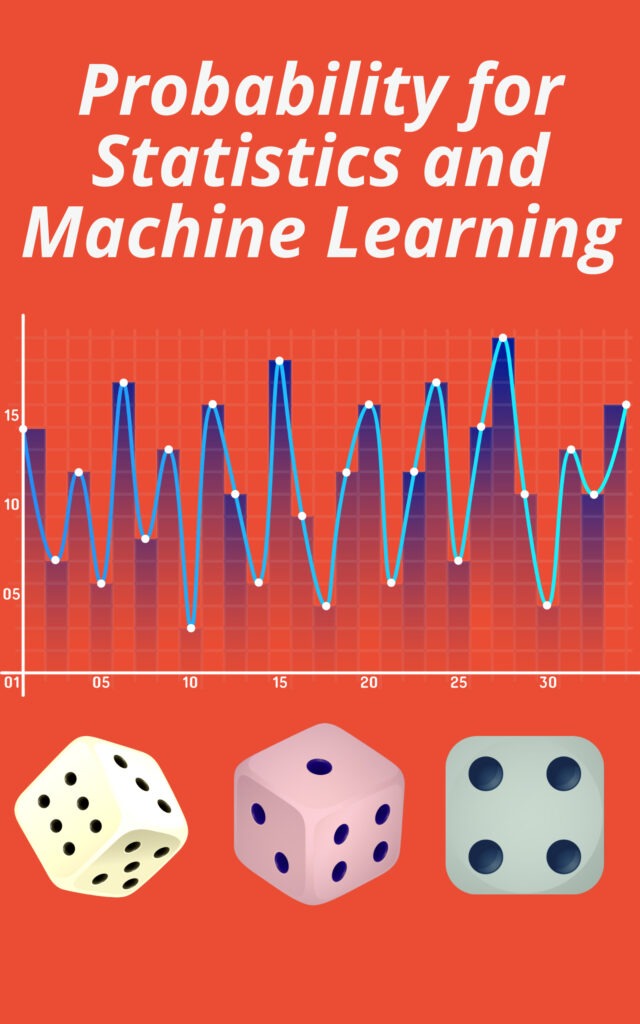
Probability for Statistics and Machine Learning

Probability is a fundamental concept in both statistics and machine learning. It plays a crucial role in understanding uncertainty, and randomness, and making informed decisions in various domains. In this article, we will delve into the significance of probability in statistics and explore its applications in the realm of machine learning.

Understanding Probability

Definition of Probability

Probability refers to the likelihood of an event occurring. It is quantified as a value between 0 and 1, where 0 indicates an impossible event, and 1 denotes a certain event. Probability forms the basis of statistical inference, allowing us to draw conclusions from data and make predictions with confidence.

Probability Applications in Statistics

In statistics, probability is used to model uncertainty and variability. It aids in analyzing data, estimating parameters, and conducting hypothesis tests. Whether it’s predicting the outcome of an election or estimating the average height of a population, probability helps statisticians make sense of the world.

Probability for Statistics and Machine Learning

Probability Distributions

Discrete Probability Distributions

Discrete probability distributions deal with countable outcomes. Examples include the binomial distribution, which models the number of successes in a fixed number of trials, and the Poisson distribution, which describes rare events occurring within a fixed interval.

Continuous Probability Distributions

On the other hand, continuous probability distributions involve uncountable outcomes, typically represented by real numbers. The normal distribution is one of the most common continuous distributions, central to many statistical analyses due to the Central Limit Theorem.

Bayes’ Theorem

Bayes’ Theorem is a fundamental probability theorem that finds applications in various fields. It allows us to update our beliefs about an event based on new evidence. In statistics and machine learning, Bayes’ Theorem is particularly crucial in Bayesian inference and probabilistic modeling.

Probability in Machine Learning

Applications in Classification Problems

In machine learning, probability plays a vital role in classification tasks. Algorithms like logistic regression and support vector machines use probability scores to classify data points into different categories.

Naive Bayes Classifier

The Naive Bayes classifier is a probabilistic algorithm widely used for text classification, spam filtering, and recommendation systems. Despite its simplicity and the “naive” assumption of independence between features, it often performs remarkably well in various applications.

Probability Sampling Methods

Probability sampling methods are essential for obtaining representative samples from a larger population. Some common techniques include:

Simple Random Sampling

Simple random sampling ensures that every individual in the population has an equal chance of being selected in the sample, reducing bias in estimates.

Stratified Sampling

Stratified sampling involves dividing the population into subgroups (strata) based on certain characteristics and then sampling from each stratum proportionally.

Systematic Sampling

Systematic sampling selects every nth individual from a list of the population, making the process efficient and straightforward.

Cluster Sampling

Cluster sampling divides the population into clusters, randomly selecting some clusters, and then sampling all individuals within those chosen clusters.

Central Limit Theorem

The Central Limit Theorem is a fundamental concept in statistics, stating that the distribution of the sample means tends to be normal, regardless of the shape of the original population distribution. It is crucial for hypothesis testing and constructing confidence intervals.

Hypothesis Testing and Probability

Hypothesis testing involves making decisions based on data to determine whether a specific claim about a population is supported by the evidence. Probability forms the basis for understanding p-values and the significance of test statistics.

The Role of Probability in Regression Analysis

Regression analysis aims to model the relationship between a dependent variable and one or more independent variables. Probability helps in interpreting regression coefficients and assessing the significance of the model.

Monte Carlo Simulation

Monte Carlo simulation is a powerful technique used to model complex systems and processes using random sampling. It finds applications in finance, physics, engineering, and many other fields.

Limitations and Challenges in Probability for Statistics and Machine Learning

While probability is a powerful tool, it is not without limitations and challenges. Overreliance on assumptions, the curse of dimensionality, and computational complexity are some issues that researchers and practitioners face.

Conclusion

In conclusion, probability is the backbone of statistics and machine learning, enabling us to make sense of uncertainty and make informed decisions. From probability distributions to hypothesis testing and Bayesian inference, the applications of probability are vast and diverse.

FAQ

  1. What is the importance of probability in statistics? Probability allows statisticians to quantify uncertainty and make reliable inferences from data, forming the foundation of statistical analysis.
  2. How is probability used in machine learning algorithms? Probability is used in machine learning algorithms for classification, recommendation systems, and probabilistic modeling.
  3. What is the significance of Bayes’ Theorem? Bayes’ Theorem provides a principled way of updating our beliefs based on new evidence, making it essential in Bayesian inference.
  4. Can you provide real-life examples of probability distributions? Certainly! Examples include flipping a coin (binomial distribution) or the number of customers arriving at a store per hour (Poisson distribution).
  5. How does probability impact decision-making in business? In business, probability aids decision-making by providing insights into risks, estimating future trends, and optimizing processes.

Download: Beginning Python Visualization

Mathematics and Programming for Machine Learning with R

Welcome to the exciting realm of Mathematics and Programming for Machine Learning with R. As machine learning continues to transform various industries, understanding the underlying mathematical principles and programming techniques is crucial for aspiring data scientists and AI enthusiasts. In this article, we’ll delve into the fundamentals of mathematics and programming in the context of machine learning using R. Whether you’re a beginner or looking to enhance your skills, this guide will equip you with the knowledge and expertise to embark on your machine learning journey confidently.

Mathematics and Programming for Machine Learning with R

In this section, we’ll explore how Mathematics and Programming come together to form a powerful duo in the field of Machine Learning with R.

Mathematics and Programming for Machine Learning with R

1. The Role of Mathematics in Machine Learning (?)

Mathematics serves as the backbone of machine learning algorithms. Understanding concepts like linear algebra, calculus, and statistics is essential for developing, evaluating, and fine-tuning machine learning models in R.

2. Key Mathematical Concepts for Machine Learning (?)

In this subsection, we’ll explore crucial mathematical concepts used in machine learning, such as matrix operations, derivatives, probability distributions, and optimization techniques.

3. Programming with R for Machine Learning (?)

R is a versatile and popular programming language for data analysis and machine learning. In this section, we’ll delve into the fundamentals of programming with R and its application in machine learning.

4. Getting Started with R (?)

Here, we’ll provide a step-by-step guide to set up R on your system and introduce you to R Studio, the integrated development environment (IDE) commonly used for R programming.

5. Data Preprocessing with R (?)

Data preprocessing is a critical step in the machine learning pipeline. Learn how to clean, transform, and prepare data for machine learning tasks using R.

6. Supervised Learning with R (?)

Supervised learning is a popular machine learning paradigm. Discover how to implement various supervised learning algorithms, such as linear regression, decision trees, and support vector machines, using R.

7. Unsupervised Learning with R (?)

Unsupervised learning is another essential aspect of machine learning. Explore techniques like clustering and dimensionality reduction using R.

8. Evaluating and Tuning Models in R (?)

Model evaluation and hyperparameter tuning are vital for optimizing machine learning models. Learn how to assess model performance and improve its accuracy using R.

9. Deep Learning with R (?)

Delve into the fascinating world of deep learning with R. Understand neural networks and build powerful deep learning models using popular R libraries.

10. Handling Imbalanced Data in R (?)

Class imbalance is a common challenge in machine learning. Discover techniques to handle imbalanced datasets and create robust models using R.

11. Reinforcement Learning with R (?)

Reinforcement learning enables machines to learn from their environment through trial and error. Learn how to implement reinforcement learning algorithms in R.

12. Natural Language Processing with R (?)

Natural Language Processing (NLP) is a cutting-edge field. Uncover how R can be used to process and analyze textual data effectively.

13. Time Series Analysis with R (?)

Time series data is prevalent in various domains. Master the art of time series analysis and forecasting using R.

14. Interpretable Machine Learning with R (?)

Interpretable machine learning is crucial for understanding model decisions. Learn techniques to make machine learning models more interpretable using R.

15. Transfer Learning in R (?)

Transfer learning allows models to leverage knowledge from one domain to another. Discover how to perform transfer learning in R.

16. Model Deployment with R (?)

Model deployment is the final step in the machine learning pipeline. Understand how to deploy machine learning models into real-world applications using R.

17. Ethics in Machine Learning (?)

Machine learning brings ethical challenges. Discuss the ethical considerations and responsible AI practices in the context of machine learning with R.

18. Mathematics and Programming for Machine Learning with R: Real-World Applications (?)

In this section, we’ll showcase real-world applications of machine learning with R, covering domains like healthcare, finance, e-commerce, and more.

19. The Future of Mathematics and Programming in Machine Learning with R (?)

Explore the exciting future trends and advancements in the intersection of mathematics, programming, and machine learning with R.

FAQs:

1. What are the prerequisites for learning Mathematics and Programming for Machine Learning with R?

To embark on this journey, a solid foundation in mathematics (linear algebra, calculus, and statistics) and basic programming knowledge would be beneficial.

2. Is R the best language for machine learning?

While there are various programming languages for machine learning, R’s versatility, rich libraries, and active community make it an excellent choice for data scientists and statisticians.

3. How much programming experience do I need to learn machine learning with R?

If you’re new to programming, don’t worry! R is beginner-friendly, and with dedication and practice, you can grasp the programming concepts for machine learning.

4. Can I implement deep learning algorithms in R?

Yes, you can! R offers powerful libraries like ‘Keras’ and ‘TensorFlow’ for implementing deep learning models.

5. Are there any free resources to learn machine learning with R?

Absolutely! You can find numerous online tutorials, courses, and community forums that offer free resources to learn machine learning with R.

6. How can I contribute to the machine learning community using R?

You can contribute by sharing your knowledge through blogs, open-source projects, or by participating in data science competitions and forums.

Conclusion:

Congratulations! You’ve explored the fascinating world of Mathematics and Programming for Machine Learning with R. We hope this comprehensive guide has empowered you with the necessary knowledge and skills to embark on your journey in the field of machine learning. Remember, learning is an ongoing process, and with dedication and practice, you can become a proficient machine learning practitioner. So, take what you’ve learned here, explore further, and let your curiosity drive you to create innovative machine learning solutions.

Download: Machine Learning with R

Simple Introduction to R Programming

R programming is a powerful language and environment for statistical computing and graphics. It has gained immense popularity in recent years due to its versatility and open-source nature. Whether you are an aspiring data scientist, analyst, or researcher, learning R programming can be a game-changer in your career. In this guide, we will take you through a simple introduction to R programming, starting from its fundamental concepts and gradually diving into its real-world applications.

Simple Introduction to R Programming

R programming is a widely-used programming language that was initially developed for statistical computing and graphics. It was created by Ross Ihaka and Robert Gentleman in the early 1990s and is currently maintained by the R Development Core Team. The language is built on the principles of flexibility, extensibility, and community-driven development, making it a popular choice among statisticians, data analysts, and researchers.

A Brief History of R Programming

R programming’s history dates back to the early 1970s when the S programming language was developed at Bell Laboratories. The primary aim of S was to provide a language for data analysis and graphics. In the 1990s, Ross Ihaka and Robert Gentleman at the University of Auckland, New Zealand, started working on R, which was inspired by the S language.

In 1995, R emerged as a complete, open-source implementation of the S language. It quickly gained traction in the statistical community due to its extensive library of statistical and graphical methods. Today, R stands as one of the most popular programming languages for data analysis and visualization.

Simple Introduction to R Programming

Installing R and Getting Started

Before we dive deeper into R programming, let’s get started with the installation process.

  1. Visit the official R project website at www.r-project.org.
  2. Click on the “Download” link and choose the appropriate version for your operating system (Windows, macOS, or Linux).
  3. Follow the installation instructions provided on the website.

Once you have successfully installed R, you can launch the R console, also known as the R interactive environment. Here, you can enter commands and execute them to perform various tasks.

Basic Syntax and Data Structures

In R programming, you interact with the system using commands and scripts. Let’s explore the basic syntax and data structures that form the building blocks of R programming.

1. Variables and Assignment

In R, you can assign values to variables using the assignment operator <- or =.

# Example:
x <- 10
y = 5

2. Data Types

R supports various data types, including:

  • Numeric: Represents real or decimal numbers.
  • Integer: Represents whole numbers.
  • Character: Represents text or string data.
  • Logical: Represents TRUE or FALSE values.
# Example:
age <- 30
name <- "John Doe"
is_student <- TRUE

3. Vectors

A vector is the simplest data structure in R, representing a collection of elements of the same data type.

# Example:
numbers <- c(1, 2, 3, 4, 5)
fruits <- c("apple", "banana", "orange")

4. Matrices

Matrices are two-dimensional data structures with rows and columns.

# Example:
matrix_data <- matrix(data = c(1, 2, 3, 4, 5, 6), nrow = 2, ncol = 3)

5. Lists

Lists are collections of different data types, such as vectors, matrices, and even other lists.

# Example:
info_list <- list(name = "John Doe", age = 30, is_student = TRUE)

6. Data Frames

Data frames are tabular data structures, similar to spreadsheets, with rows and columns.

# Example:
employee_data <- data.frame(name = c("John", "Jane", "Mike"), age = c(25, 28, 32), salary = c(50000, 55000, 60000))

Basic Operations and Functions

R programming provides a wide range of functions for performing mathematical operations, data manipulation, and statistical analysis. Here are some essential operations and functions:

7. Arithmetic Operations

R supports all standard arithmetic operations like addition, subtraction, multiplication, division, and more.

# Example:
a <- 10
b <- 5

sum_result <- a + b

8. Statistical Functions

R comes with a plethora of statistical functions for descriptive and inferential statistics.

# Example:
data <- c(3, 5, 6, 8, 10)

mean_value <- mean(data)

LSI Keyword: Data Visualization in R

One of R’s most significant advantages is its exceptional data visualization capabilities. Let’s explore some popular data visualization techniques.

9. Scatter Plots

Scatter plots are used to visualize the relationship between two continuous variables.

# Example:
x <- c(1, 2, 3, 4, 5)
y <- c(5, 9, 3, 7, 8)

plot(x, y, main = "Scatter Plot Example", xlab = "X-axis", ylab = "Y-axis")

10. Bar Charts

Bar charts are useful for comparing categorical data.

# Example:
data <- c("Category A", "Category B", "Category C")
values <- c(20, 15, 30)

barplot(values, names.arg = data, main = "Bar Chart Example", xlab = "Categories", ylab = "Values")

Conditional Statements and Loops

Conditional statements and loops are essential in programming to make decisions and repeat tasks. R programming offers several ways to achieve this.

11. If-Else Statements

If-else statements allow you to perform different actions based on specific conditions.

# Example:
age <- 25

if (age >= 18) {
  print("You are an adult.")
} else {
  print("You are a minor.")
}

12. For Loop

For loops are used to iterate over a sequence of elements.

# Example:
for (i in 1:5) {
  print(paste("Iteration:", i))
}

13. While Loop

While loops repeat a block of code as long as a specified condition is true.

# Example:
count <- 1

while (count <= 5) {
  print(paste("Count:", count))
  count <- count + 1
}

LSI Keyword: R Programming Packages

R programming’s strength lies in its vast collection of packages that extend its functionality. Let’s explore some popular packages.

14. ggplot2

ggplot2 is a widely-used package for data visualization, providing a flexible and intuitive grammar of graphics.

# Example:
install.packages("ggplot2")
library(ggplot2)

data <- data.frame(x = c(1, 2, 3, 4, 5), y = c(5, 9, 3, 7, 8))

ggplot(data, aes(x = x, y = y)) +
  geom_point() +
  ggtitle("ggplot2 Example") +
  xlab("X-axis") +
  ylab("Y-axis")

15. dplyr

dplyr is a powerful package for data manipulation, featuring easy-to-use functions.

# Example:
install.packages("dplyr")
library(dplyr)

data <- data.frame(name = c("John", "Jane", "Mike"), age = c(25, 28, 32), salary = c(50000, 55000, 60000))

filtered_data <- data %>%
  filter(age > 25)

Reading and Writing Data

16. Reading CSV Files

R allows you to read data from various file formats, such as CSV files.

# Example:
data <- read.csv("data.csv")

17. Writing Data to a File

You can also save data frames to files in different formats.

# Example:
write.csv(data, file = "output_data.csv")

Data Analysis and Statistics

R programming is widely used for data analysis and statistical modeling. Let’s explore some statistical techniques in R.

18. Linear Regression

Linear regression is used to model the relationship between two continuous variables.

# Example:
data <- data.frame(x = c(1, 2, 3, 4, 5), y = c(5, 9, 3, 7, 8))

model <- lm(y ~ x, data = data)

summary(model)

19. Hypothesis Testing

Hypothesis testing is crucial for making inferences about population parameters based on sample data.

# Example:
data <- c(72, 68, 80, 76, 85, 89)

t.test(data, mu = 75)

R in Real-World Applications

R programming’s versatility makes it widely used in various real-world applications. Let’s explore some of them.

20. Data Science

R is a favorite among data scientists for tasks like data cleaning, exploration, and predictive modeling.

21. Finance

In the finance industry, R is used for risk modeling, portfolio optimization, and financial analysis.

22. Healthcare

R is employed in healthcare for statistical analysis, clinical trials, and bioinformatics.

23. Academia and Research

R is extensively used in academic research for analyzing experimental data and generating visualizations.

24. Social Sciences

Social scientists use R for survey data analysis, econometrics, and psychological research.

FAQs

Q: What are the prerequisites for learning R programming? A: Familiarity with basic programming concepts and statistics is beneficial but not mandatory. Beginners can start learning R programming with no prior experience.

Q: Is R programming suitable for data analysis? A: Absolutely! R is renowned for its data analysis capabilities and is widely used by data analysts and statisticians.

Q: Can I use R for web development or mobile app development? A: R is primarily used for statistical computing and data analysis, so it may not be the best choice for web or mobile app development.

Q: Are there resources available for learning R programming online? A: Yes, there are many online tutorials, courses, and forums where you can learn R programming.

Q: Can I contribute to the R programming language? A: Yes, R is an open-source language, and contributions from the community are encouraged.

Q: Is R better than Python for data analysis? A: Both R and Python are popular choices for data analysis, and the choice between the two depends on specific project requirements and personal preferences.

Conclusion

Congratulations! You have completed the simple introduction to R programming. We have covered the basics, data structures, functions, visualization, packages, and real-world applications of R. With this knowledge, you are well-equipped to embark on your data analysis journey using R programming.

R programming’s versatility, community support, and extensive libraries make it a go-to language for statisticians, data analysts, and researchers. Whether you’re exploring the world of data science, finance, healthcare, or social sciences, R will be your reliable companion.

Beginning Python Visualization

Data visualization is a powerful tool for communicating complex information effectively. Python, with its diverse libraries and frameworks, has become one of the most popular programming languages for data visualization. In this article, we will take you through the fundamentals of beginning Python visualization and the art of crafting visual transformation scripts.

Beginning Python Visualization

Before we dive into crafting visual transformation scripts, let’s first understand the basics of Python visualization. Python offers several libraries for data visualization, with Matplotlib and Seaborn being the most commonly used ones.

Matplotlib – Matplotlib is a versatile 2D plotting library widely used to create static, interactive, and animated visualizations in Python. Its simplicity and ease of use make it a great choice for beginners.

Seaborn – Seaborn is built on top of Matplotlib and provides a high-level interface for drawing attractive and informative statistical graphics. It is ideal for visualizing complex datasets with concise and aesthetically pleasing code.

Beginning Python Visualization Crafting Visual Transformation Scripts

Crafting Visual Transformation Scripts

Now that we have a brief overview of Python visualization, let’s explore crafting visual transformation scripts, which involves enhancing and customizing our visualizations to make them more insightful and visually appealing.

Understanding the Data

Before crafting visualizations, it’s crucial to understand the data you are working with. Dive deep into the dataset, and identify patterns, correlations, and outliers. Analyze the data to determine the most effective way to represent it visually.

Choosing the Right Chart Types

Python offers various chart types, including bar charts, line plots, scatter plots, histograms, and more. Each chart type is suited for different types of data and insights. Choose the right chart type that effectively communicates your message.

Customizing Visualizations

Default visualizations might not always convey the desired message. That’s where customization comes into play. Python libraries provide a plethora of options for customizing colors, labels, annotations, and other visual elements. Make your visualizations stand out by customizing them to align with your branding or narrative.

Handling Missing Data and Outliers

Data might not always be perfect, and missing values or outliers can impact the accuracy of visualizations. Learn how to handle missing data and outliers effectively to ensure the integrity of your visualizations.

Creating Interactive Visualizations

Interactive visualizations engage users and allow them to explore the data on their own. Python libraries like Plotly and Bokeh enable the creation of interactive visualizations with just a few lines of code. Learn how to add interactivity to your visualizations for a dynamic user experience.

Adding Data Labels and Annotations

Data labels and annotations provide context and clarity to your visualizations. They help viewers understand the significance of data points and trends. Master the art of adding data labels and annotations to elevate the storytelling aspect of your visualizations.

Visualizing Geospatial Data

Python offers tools like GeoPandas and Folium for visualizing geospatial data. Learn how to plot maps, add markers, and create choropleth maps to visualize geographical trends and patterns effectively.

Utilizing Color Theory

Color plays a crucial role in data visualization. Understand color theory and its impact on the interpretation of data. Learn how to use color effectively to represent different categories, highlight data points, and convey emotions through your visualizations.

Combining Multiple Visualizations

Sometimes a single visualization might not be sufficient to convey the entire story. Learn how to combine multiple visualizations into dashboards or subplots to present a comprehensive view of the data.

Creating 3D Visualizations

Take your visualizations to the next dimension by exploring 3D plotting in Python. Libraries like Plotly and Matplotlib provide functionalities to create stunning 3D visualizations that offer a unique perspective on your data.

Best Practices for Data Visualization

While crafting visual transformation scripts, it’s essential to adhere to best practices to ensure the effectiveness of your visualizations. Follow guidelines related to labeling, axis scaling, chart sizes, and accessibility to create inclusive and informative visualizations.

Showcasing Real-World Examples

Learn from real-world examples of successful Python data visualizations. We will showcase some captivating and insightful visualizations from various domains to inspire your creativity.

Data Visualization and Decision Making

Discover how data visualization influences decision-making processes across industries. From business analytics to scientific research, visualizations play a pivotal role in driving informed choices.

Visualizations for Exploratory Data Analysis

Explore how Python visualization tools can aid in exploratory data analysis. Uncover hidden patterns, trends, and relationships within your data to derive meaningful insights.

Creating Animated Visualizations

Animated visualizations bring life to data and enhance engagement. Discover how to create animated visualizations using Python libraries like Matplotlib and Plotly to tell compelling data stories.

Overcoming Visualization Challenges

Visualization may encounter challenges like scalability, data complexity, or performance issues. Learn valuable techniques to overcome these challenges and deliver impactful visualizations.

Future Trends in Data Visualization

Stay ahead of the curve by exploring emerging trends in data visualization. From augmented reality visualizations to virtual reality dashboards, the future of data visualization is bound to be exciting.

FAQs

Q: What are the benefits of using Python for data visualization?

A: Python offers a rich ecosystem of data visualization libraries, making it easy to create visually appealing and interactive plots. Its simplicity and flexibility make it an ideal choice for both beginners and seasoned data scientists.

Q: Is data visualization essential for non-technical professionals?

A: Absolutely! Data visualization simplifies complex data into easy-to-understand visuals, making it accessible to non-technical professionals. It aids in making informed decisions and understanding trends and patterns in data.

Q: Can I use Python visualization libraries for web-based applications?

A: Yes, many Python visualization libraries support web-based applications. Libraries like Plotly and Bokeh allow you to create interactive visualizations that can be integrated into web applications seamlessly.

Q: How can I improve the performance of my data visualizations?

A: To enhance visualization performance, consider simplifying complex visualizations, optimizing code, and reducing unnecessary data points. Additionally, avoid overloading visualizations with information, as it can lead to clutter and confusion.

Q: Which Python library is best for creating 3D visualizations?

A: Both Plotly and Matplotlib support 3D visualizations. Plotly is especially popular for creating interactive 3D plots, while Matplotlib provides a more straightforward approach to 3D plotting.

An Introduction to Clustering with R: Exploring Data Patterns

An Introduction to Clustering with R: Welcome to the fascinating world of data clustering with R! As data continues to grow exponentially in various fields, the need to extract meaningful patterns and insights becomes crucial. Clustering is a powerful technique that enables us to group similar data points together, helping us better understand underlying structures and relationships. In this article, we will embark on a journey to explore the essentials of clustering using the versatile programming language R. Whether you are a data scientist, analyst, or enthusiast, this guide will equip you with the knowledge and skills to make the most of your data and unlock its hidden potential.

An Introduction to Clustering with R

Clustering, also known as cluster analysis, is a fundamental unsupervised learning technique used to partition a dataset into distinct groups, known as clusters. These clusters contain data points that share similarities while being dissimilar to points in other clusters. The primary goal of clustering is to reveal hidden patterns and structures within the data, aiding decision-making, pattern recognition, and data exploration.

The process of clustering involves assigning data points to clusters based on their similarity or distance from each other. R, a powerful statistical computing and graphics software, provides a wide range of tools and libraries that make clustering accessible and efficient.

An Introduction to Clustering with R Exploring Data Patterns

Understanding the Types of Clustering Algorithms

In the world of clustering, various algorithms exist to cater to different data types and shapes. Let’s delve into some popular clustering algorithms:

1. K-Means Clustering

K-Means is one of the most widely used clustering algorithms. It aims to partition data into ‘k’ clusters, where ‘k’ is a user-defined parameter. The algorithm assigns each data point to the nearest cluster centroid, and then it recalculates the centroids based on the newly formed clusters. This process iterates until convergence, resulting in well-defined clusters.

2. Hierarchical Clustering

Hierarchical clustering builds a tree-like structure (dendrogram) of nested clusters. It starts with each data point as its own cluster and then merges the most similar clusters iteratively. The process continues until all data points belong to a single cluster or until a stopping criterion is met.

3. Density-Based Spatial Clustering of Applications with Noise (DBSCAN)

DBSCAN is excellent for identifying clusters of arbitrary shapes in data. It groups data points based on their density, categorizing them as core points, border points, or outliers (noise). DBSCAN requires two parameters: epsilon (ε), representing the radius for neighborhood search, and the minimum number of points (MinPts) within ε to form a cluster.

Data Preparation for Clustering

Before diving into clustering, data preparation is essential to ensure meaningful results. Let’s go through the key steps of data preparation:

1. Data Cleaning

Remove any missing or irrelevant data points to avoid bias and enhance clustering accuracy.

2. Feature Scaling

Normalize the features to bring them to a similar scale, preventing one dominant feature from overshadowing others during clustering.

3. Dimensionality Reduction

Consider using dimensionality reduction techniques like Principal Component Analysis (PCA) to eliminate noise and speed up the clustering process.

Evaluating Clustering Results

Assessing the quality of clustering results is crucial to ensure the effectiveness of the analysis. Several metrics can be used to evaluate clustering outcomes:

1. Silhouette Score

The silhouette score measures the compactness of a cluster compared to its separation from other clusters. It ranges from -1 to 1, with higher values indicating better-defined clusters.

2. Davies-Bouldin Index

The Davies-Bouldin index calculates the average similarity between each cluster and its most similar cluster. Lower values indicate better-defined clusters.

Visualizing Clustering Results

Visualizations play a pivotal role in understanding clustering outcomes. R offers an array of visualization tools to help us gain insights into our data:

1. Scatter Plot

A scatter plot is a simple yet powerful way to visualize clusters in 2D space, with each data point represented as a dot.

2. Dendrogram

Hierarchical clustering results can be effectively visualized using dendrograms, illustrating the hierarchical structure of clusters.

3. t-SNE Plot

t-distributed Stochastic Neighbor Embedding (t-SNE) is a popular technique to visualize high-dimensional data in 2D or 3D space, highlighting cluster relationships.

Applications of Clustering in Real Life

Clustering finds applications in various domains, contributing to advancements in research, business, and technology:

1. Customer Segmentation

In marketing, clustering helps businesses group customers based on purchasing behavior, demographics, or preferences, enabling personalized marketing strategies.

2. Image Segmentation

In image processing, clustering assists in segmenting objects or regions in an image, allowing for object recognition and computer vision tasks.

3. Anomaly Detection

Clustering can be employed in anomaly detection, identifying abnormal patterns or outliers in data, such as fraudulent transactions or defective products.

FAQs:

Q: What is the significance of clustering in data analysis? Clustering plays a vital role in data analysis by uncovering hidden patterns and structures, enabling better decision-making and insightful data exploration.

Q: How can I choose the right number of clusters for my data? There are several methods, such as the Elbow method and Silhouette analysis, that can help you determine the optimal number of clusters based on your data and objectives.

Q: Is clustering suitable for high-dimensional data? Yes, clustering algorithms like t-SNE are effective in visualizing high-dimensional data and discovering underlying patterns in complex datasets.

Q: Can I use R’s clustering libraries for real-time data analysis? Yes, R offers efficient clustering libraries that can handle real-time data streams, making it suitable for various applications, including online data analysis.

Q: How can I interpret clustering results effectively? Visualization tools like scatter plots and dendrograms can aid in interpreting clustering results, making them more accessible and insightful.

Q: What challenges should I be aware of while clustering data? Some common challenges in clustering include selecting appropriate algorithms, dealing with high-dimensional data, and determining the optimal number of clusters for meaningful insights.

Conclusion

Congratulations! You have now gained a solid understanding of an Introduction to Clustering with R and its applications in various domains. By leveraging the power of R’s clustering libraries, you can uncover valuable patterns and insights within your data, leading to informed decision-making and problem-solving. Remember to prepare your data thoughtfully and evaluate the clustering results using appropriate metrics. Embrace the exciting world of clustering with R, and let data-driven discoveries shape your path to success.

Download: Learn Data Manipulation In R

Industrial Statistics: A Computer-Based Approach with Python

In the realm of modern industry, data analysis plays a pivotal role in enhancing efficiency, optimizing processes, and making informed decisions. Industrial Statistics, powered by a computer-based approach with Python, empowers professionals to uncover valuable insights from vast datasets, enabling them to drive innovation and improve business outcomes. This article serves as a comprehensive guide to Industrial Statistics, covering its fundamentals, methodologies, and practical applications. So, let’s embark on this data-driven journey!

Industrial Statistics: A Primer

Industrial Statistics is a specialized branch of statistics that focuses on analyzing data within industrial settings. It involves the application of statistical methods and techniques to gain valuable insights into various industrial processes, manufacturing operations, and quality control. By harnessing data-driven approaches, Industrial Statistics enables professionals to identify patterns, trends, and anomalies that influence product quality, process efficiency, and overall productivity.

The Power of Python in Industrial Statistics

Python has emerged as a prominent programming language in the field of data science, owing to its simplicity, versatility, and vast array of libraries and frameworks. In Industrial Statistics, Python becomes an indispensable tool for data manipulation, visualization, and statistical analysis. With Python, professionals can build robust models, perform hypothesis testing, and create data-driven visualizations, making it easier to interpret complex datasets and extract meaningful conclusions.

Industrial Statistics A Computer-Based Approach with Python

Foundational Concepts in Industrial Statistics

– Descriptive Statistics: Unraveling Data Characteristics

Descriptive statistics allows practitioners to summarize and describe essential features of a dataset, such as central tendency, variability, and distribution. Measures like mean, median, mode, variance, and standard deviation provide crucial insights into data characteristics.

– Inferential Statistics: Drawing Inferences from Data

Inferential statistics helps professionals draw conclusions and make predictions about populations based on sample data. Techniques like hypothesis testing and confidence intervals are instrumental in validating assumptions and making data-driven decisions.

– Probability Distributions: Understanding Data Patterns

Probability distributions are vital for understanding the likelihood of various outcomes in a dataset. Common distributions like normal, binomial, and Poisson distributions play a significant role in Industrial Statistics.

Applications of Industrial Statistics with Python

– Quality Control and Assurance: Ensuring Product Excellence

Industrial Statistics plays a pivotal role in quality control and assurance, where Python-driven analysis can monitor production processes, detect defects, and identify areas for improvement, thereby ensuring product excellence.

– Process Optimization: Maximizing Efficiency

Python’s capabilities enable professionals to optimize manufacturing processes and supply chains by identifying bottlenecks, reducing waste, and enhancing resource utilization, leading to improved operational efficiency.

– Reliability Analysis: Assessing System Performance

Reliability analysis using Python allows businesses to assess the performance and longevity of industrial systems and equipment, facilitating proactive maintenance and minimizing downtime.

– Six Sigma Implementation: Driving Continuous Improvement

The integration of Python in Six Sigma initiatives empowers organizations to define, measure, analyze, improve, and control processes systematically, fostering a culture of continuous improvement.

Industrial Statistics in Action: Case Studies

Case Study 1: Enhancing Production Efficiency

In this case study, we explore how a manufacturing company utilized Industrial Statistics with Python to identify and address inefficiencies in their production line. By analyzing production data, they optimized resource allocation, reduced downtime, and achieved higher throughput.

Case Study 2: Quality Improvement through Data Analysis

This case study showcases how a pharmaceutical company leveraged Industrial Statistics techniques with Python to improve the quality of their products. Through meticulous data analysis, they identified critical control points, leading to enhanced quality assurance protocols.

FAQs (Frequently Asked Questions)

  1. What is Industrial Statistics, and why is it essential for businesses? Industrial Statistics is the application of statistical methods in industrial settings to analyze data, improve efficiency, and ensure product quality. It is essential for businesses as it enables data-driven decision-making, process optimization, and continuous improvement.
  2. How does Python contribute to Industrial Statistics? Python provides powerful tools for data manipulation, visualization, and statistical analysis, making it an invaluable asset in Industrial Statistics. Its simplicity and extensive library support make complex data analysis more accessible.
  3. What are some common applications of Industrial Statistics with Python? Industrial Statistics with Python finds applications in quality control, process optimization, reliability analysis, and implementing Six Sigma methodologies, among others.
  4. What are the foundational concepts in Industrial Statistics? Descriptive statistics, inferential statistics, and probability distributions form the foundational concepts in Industrial Statistics, aiding in data characterization and drawing meaningful inferences.
  5. How can Industrial Statistics benefit manufacturing processes? Industrial Statistics can benefit manufacturing processes by identifying inefficiencies, reducing defects, optimizing resource utilization, and driving continuous improvement, ultimately enhancing production efficiency and product quality.
  6. Can you explain the role of Industrial Statistics in Six Sigma initiatives? Industrial Statistics plays a crucial role in Six Sigma initiatives by providing data-driven insights, measuring process performance, and facilitating data-based decision-making throughout the DMAIC (Define, Measure, Analyze, Improve, Control) methodology.

Conclusion

In conclusion, Industrial Statistics, powered by a computer-based approach with Python, is an indispensable tool for businesses seeking data-driven solutions and improved industrial processes. By harnessing the power of statistical analysis and Python’s capabilities, professionals can unlock valuable insights, drive innovation, and achieve operational excellence. Embrace the potential of Industrial Statistics with Python, and propel your business into a data-powered future.

Download: Modern Statistics: A Computer-Based Approach with Python

R for College Mathematics and Statistics

In today’s digital era, data analysis is crucial in various fields, including college-level mathematics and statistics. With the advancement of technology, tools like R have become instrumental in handling complex data sets and performing statistical analyses. This article explores the significance of R in college mathematics and statistics, highlighting its capabilities and benefits.

1. Understanding the Basics of R

1.1 What is R?

R is a programming language specifically designed for statistical computing and graphics. It provides a wide range of tools and libraries that enable efficient data analysis, modeling, and visualization. Developed by statisticians, R has gained immense popularity among researchers, data analysts, and educators due to its flexibility and extensive capabilities.

1.2 Why is R essential for college mathematics and statistics?

R offers a comprehensive platform for students and educators to explore and apply mathematical and statistical concepts. Its open-source nature allows easy accessibility, making it an ideal choice for college-level courses. By using R, students can gain hands-on experience in analyzing real-world data, enhancing their understanding of mathematical and statistical principles.

R for College Mathematics and Statistics

2. R’s Data Manipulation and Visualization Features

2.1 Data Manipulation with R

R provides powerful data manipulation capabilities through libraries like dplyr and tidyverse. These libraries offer functions for filtering, transforming, and summarizing data, allowing students to clean and preprocess datasets efficiently. With R’s intuitive syntax, students can perform complex data operations effortlessly.

2.2 Data Visualization using R

Visualization is a crucial aspect of data analysis, aiding in the interpretation and communication of findings. R provides several libraries, such as ggplot2, that enable the creation of compelling and insightful visualizations. Students can generate various types of plots, charts, and graphs to explore patterns, relationships, and distributions within the data.

3. Statistical Analysis with R

3.1 Descriptive Statistics with R

R offers a wide range of functions for descriptive statistics, allowing students to calculate measures like mean, median, standard deviation, and correlation coefficients. These statistical measures provide a summary of the data and help students understand its central tendencies and variability.

3.2 Inferential Statistics Using R

Inferential statistics involves making predictions or inferences about a population based on sample data. R provides numerous statistical tests and models for hypothesis testing, regression analysis, analysis of variance (ANOVA), and more. Students can leverage these tools to gain insights from data and make informed decisions.

4. Integrating R into College Courses

4.1 Incorporating R in Mathematics Classes

By integrating R into mathematics classes, educators can create a dynamic learning environment that promotes active engagement and practical application of mathematical concepts. Students can explore mathematical models, simulate scenarios, and analyze data using R, fostering a deeper understanding of mathematical principles.

4.2 R in Statistics Education

Statistics education can greatly benefit from incorporating R as a tool for data analysis and statistical modeling. R’s vast array of statistical functions and visualization capabilities enable students to explore real-world datasets, perform hypothesis testing, and create statistical models. This hands-on approach enhances students’ statistical reasoning and problem-solving skills.

5. Benefits of Using R in College Mathematics and Statistics

5.1 Enhanced Learning Experience

Using R in college mathematics and statistics courses provides students with a practical and immersive learning experience. They can apply theoretical concepts to real data, gaining a deeper understanding of mathematical and statistical principles in action. This active learning approach fosters critical thinking and problem-solving skills.

5.2 Real-world Applications

R is widely used in various industries for data analysis and statistical modeling. By learning R in college, students acquire a valuable skill set that is in high demand in the job market. The ability to analyze and interpret data using R opens doors to career opportunities in fields such as data science, market research, finance, and more.

5.3 Career Opportunities

Proficiency in R can significantly enhance students’ career prospects. Many organizations require professionals who can effectively handle data, perform statistical analyses, and communicate insights. With R expertise, students can pursue careers as data analysts, statisticians, and research scientists, or even pursue further studies in the field of data science.

6. Conclusion

R is an invaluable tool for college-level mathematics and statistics. Its extensive capabilities in data manipulation, visualization, and statistical analysis empower students to explore mathematical and statistical concepts in a practical and engaging manner. By integrating R into college courses, educators can equip students with the skills and knowledge needed to excel in data-driven fields.

FAQs

Q1: Is R difficult to learn for beginners?

Learning R can be challenging initially, especially for those with no prior programming experience. However, with practice and dedication, beginners can grasp its fundamentals and gradually build their proficiency. Many online resources, tutorials, and communities are available to support the learning process.

Q2: Can R handle large datasets?

Yes, R is capable of handling large datasets through various optimization techniques and packages specifically designed for efficient memory management. With proper coding practices, R can efficiently process and analyze datasets of substantial size.

Q3: Are there alternatives to R for statistical analysis?

Yes, there are alternative programming languages and tools for statistical analysis, such as Python, SAS, and SPSS. However, R’s extensive library ecosystem and its popularity among statisticians and researchers make it a preferred choice for many in the field.

Q4: Can I use R on different operating systems?

Yes, R is compatible with major operating systems like Windows, macOS, and Linux. It provides consistent functionality across platforms, allowing users to seamlessly work with R on their preferred operating system.

Q5: Is R only useful for mathematics and statistics?

While R has its roots in mathematics and statistics, it has evolved into a versatile tool used in various disciplines. R is widely employed in fields like data science, bioinformatics, finance, social sciences, and more. Its flexibility and extensive libraries make it applicable to diverse domains.

Introduction to Statistics Through Resampling Methods and R

Introduction to Statistics Through Resampling Methods and R: Statistics is a fundamental branch of mathematics that plays a crucial role in various fields, including science, business, and social sciences. It involves the collection, analysis, interpretation, presentation, and organization of data to gain meaningful insights. One approach to understanding statistics is through resampling methods, a powerful technique that allows for data analysis and inference. In this article, we will explore the statistics through resampling methods and R.

What is Statistics?

Statistics is the study of data collection, analysis, interpretation, and presentation. It involves techniques for summarizing and organizing data to extract meaningful information. By applying statistical methods, we can make informed decisions, draw conclusions, and evaluate the reliability of our findings.

Introduction to Statistics Through Resampling Methods and R

Download:

The Importance of Resampling Methods

Resampling methods are a powerful tool in statistics that allows us to make inferences about populations based on a sample. They provide a framework for estimating population parameters, assessing the uncertainty of our estimates, and testing hypotheses.

Traditional statistical methods often rely on assumptions about the data, such as the normality of the distribution or independence of observations. Resampling methods, on the other hand, make fewer assumptions and are more robust to violations of these assumptions. They provide a flexible and reliable approach to statistical analysis, especially when dealing with complex and non-standard data.

Understanding Resampling Methods

Resampling methods involve creating new samples by drawing observations from the original data. These samples are then used to estimate population parameters or evaluate the performance of statistical models. By repeatedly sampling from the data, we can generate a distribution of statistics, allowing us to quantify uncertainty and make statistical inferences.

Types of Resampling Methods

Bootstrap Sampling

Bootstrap sampling is a resampling technique that involves drawing samples with replacements from the original data. It allows us to estimate the sampling distribution of a statistic or construct confidence intervals. By repeatedly resampling the data, we can generate thousands of bootstrap samples and calculate the desired statistic for each sample. The distribution of these statistics provides valuable information about the population parameter of interest.

Cross-Validation

Cross-validation is another resampling method commonly used in predictive modeling and model selection. It involves dividing the data into multiple subsets or folds. The model is trained on a subset of the data and evaluated on the remaining fold. This process is repeated for each fold, and the performance measures are averaged to provide an estimate of the model’s generalization error. Cross-validation helps assess how well a model will perform on new, unseen data.

Introduction to R

R is a widely used statistical programming language and software environment for data analysis and visualization. It provides a rich set of tools and packages specifically designed for statistical computing. R’s versatility and extensive library of packages make it an ideal choice for implementing resampling methods and conducting statistical analyses.

Implementing Resampling Methods in R

Bootstrap Sampling in R

To perform bootstrap sampling in R, we can use the bootstrap package. This package provides functions for generating bootstrap samples and estimating statistics. By specifying the desired statistic and the number of bootstrap iterations, we can obtain the bootstrap distribution and calculate confidence intervals.

Cross-Validation in R

R also offers various packages, such as caret and rsample, that facilitate cross-validation. These packages provide functions for splitting data into folds, training models, and evaluating performance measures. By applying cross-validation techniques, we can assess the predictive accuracy of different models and select the best one for our data.

Benefits of Resampling Methods

Resampling methods offer several advantages over traditional statistical techniques:

  1. Robustness: Resampling methods are less sensitive to violations of assumptions, making them suitable for analyzing complex and non-standard data.
  2. Flexibility: Resampling methods can be applied to a wide range of statistical problems, including estimation, hypothesis testing, and model selection.
  3. Uncertainty Quantification: Resampling methods provide estimates of uncertainty through the generation of bootstrap distributions or cross-validated performance measures.
  4. Model Assessment: Resampling methods allow for the evaluation of model performance and comparison of different models, enabling data-driven decision-making.

Applications of Resampling Methods

Resampling methods find applications in various domains, including:

  • Medicine and Healthcare: Assessing treatment effectiveness, estimating survival rates, and evaluating diagnostic tests.
  • Finance and Economics: Estimating risk measures, simulating financial scenarios, and analyzing economic indicators.
  • Environmental Science: Studying biodiversity, analyzing climate data, and predicting species distribution.
  • Machine Learning: Evaluating model performance, selecting hyperparameters, and handling imbalanced datasets.

Conclusion

In conclusion, resampling methods provide a valuable approach to statistical analysis by allowing us to make inferences, quantify uncertainty, and evaluate models. Through techniques like bootstrap sampling and cross-validation, we can overcome the limitations of traditional methods and obtain robust and reliable results. By harnessing the power of statistical programming languages like R, researchers, and practitioners can implement resampling methods effectively and gain deeper insights from their data.

FAQs (Frequently Asked Questions)

  1. What are the advantages of using resampling methods in statistics? Resampling methods offer robustness, flexibility, uncertainty quantification, and model assessment, making them suitable for analyzing complex data and making data-driven decisions.
  2. How does bootstrap sampling work? Bootstrap sampling involves drawing samples with replacements from the original data to estimate population parameters or construct confidence intervals.
  3. What is cross-validation used for in statistics? Cross-validation is a resampling technique used for model evaluation and selection. It helps estimate a model’s generalization error and assess its performance on unseen data.
  4. What is R, and why is it popular in statistics? R is a statistical programming language and software environment that provides extensive tools and packages for data analysis. It is popular due to its versatility, rich visualization capabilities, and active community support.
  5. What are some real-world applications of resampling methods? Resampling methods find applications in diverse fields such as medicine, finance, environmental science, and machine learning. They are used for assessing treatment effectiveness, estimating risk measures, analyzing climate data, and evaluating model performance.

Download(PDF)

Practical Time Series Forecasting with R: A Hands-On Guide

Practical Time Series Forecasting with R: Time series forecasting is a valuable technique used to predict future values based on historical patterns in sequential data. It has numerous applications in various industries such as finance, supply chain management, healthcare, and weather forecasting. This article serves as a comprehensive guide to practical time series forecasting with R, providing step-by-step instructions and hands-on examples.

1. Introduction to Time Series Forecasting

Definition and Importance of Time Series Forecasting

Time series forecasting involves analyzing and predicting future values based on patterns observed in historical data. It helps businesses and organizations make informed decisions by providing insights into future trends, identifying anomalies, and enabling proactive planning.

Applications of Time Series Forecasting

Time series forecasting finds applications in various domains, including:

  • Financial Forecasting: Predicting stock prices, exchange rates, and market trends.
  • Demand Forecasting: Estimating future product demand for inventory management and production planning.
  • Energy Load Forecasting: Predicting electricity consumption to optimize energy generation and distribution.
  • Weather Forecasting: Forecasting temperature, rainfall, and other weather parameters for planning agricultural activities and disaster management.
Practical Time Series Forecasting with R A Hands-On Guide
Practical Time Series Forecasting with R: A Hands-On Guide

Download:

2. Understanding Time Series Data

Components of Time Series

A time series typically comprises three main components:

  • Trend: Long-term upward or downward movement in the data.
  • Seasonality: Regular patterns or fluctuations that occur within a fixed time period.
  • Residuals: Random variations or noise that cannot be attributed to trends or seasonality.

Understanding these components is crucial for accurate forecasting and identifying the appropriate models for analysis.

3. Preparing Time Series Data in R

To begin the time series forecasting process, we need to prepare the data in R. This involves importing the time series data, handling missing values, and resampling or aggregating the data if necessary.

Importing Time Series Data

R provides various libraries and functions to import time series data from different file formats such as CSV, Excel, or databases. The data should be structured with a timestamp column and the corresponding values.

Handling Missing Values

Missing values can affect the accuracy of time series forecasting models. In R, we can handle missing values by imputing them using techniques like interpolation or using specialized functions designed for time series data.

Resampling and Aggregating Time Series Data

Sometimes, the time series data may have a high frequency, such as hourly or daily observations. In such cases, it might be necessary to resample or aggregate the data into a lower frequency, such as weekly or monthly, to remove noise and focus on the underlying patterns.

4. Exploratory Data Analysis (EDA) for Time Series

Exploratory Data Analysis (EDA) helps us gain insights into the time series data, identify patterns, detect anomalies, and understand the overall structure of the data. Some common techniques for EDA in time series analysis include:

Visualizing Time Series Data

Visualizations such as line plots, scatter plots, and seasonal decomposition plots provide a graphical representation of the time series data. These visualizations help us identify trends, seasonality, and outliers.

Identifying Patterns and Anomalies

By analyzing the data visually and statistically, we can identify patterns such as upward or downward trends, cyclic patterns, or sudden spikes. Detecting anomalies is essential as they may affect the accuracy of the forecasting models.

Decomposing Time Series

Decomposing a time series involves separating the different components, namely trend, seasonality, and residuals. This decomposition allows us to analyze and model each component individually, leading to more accurate forecasts.

5. Choosing and Building Time Series Forecasting Models

When it comes to time series forecasting, several models are available, ranging from traditional statistical models to advanced machine learning algorithms. The choice of model depends on the characteristics of the data and the forecasting task at hand.

Statistical Models: ARIMA, SARIMA

ARIMA (Autoregressive Integrated Moving Average) and SARIMA (Seasonal ARIMA) are widely used statistical models for time series forecasting. They consider the autoregressive and moving average components along with the integration of differencing to handle non-stationary data.

Machine Learning Models: LSTM, XGBoost

Machine learning models, such as Long Short-Term Memory (LSTM) and XGBoost, have gained popularity in time series forecasting. LSTMs are a type of recurrent neural network that can capture long-term dependencies in sequential data, while XGBoost is an ensemble learning algorithm known for its robust performance.

Ensemble Approaches

Ensemble approaches combine the predictions from multiple models to improve forecasting accuracy. Techniques like model averaging, weighted averaging, or stacking can be used to create an ensemble of models.

6. Evaluating Time Series Forecasting Models

To assess the performance of time series forecasting models, it is essential to split the data into training and testing sets. The testing set represents the future period for which we want to evaluate the forecasts. Various performance metrics can be used, including:

  • Root Mean Squared Error (RMSE): Measures the average difference between predicted and actual values.
  • Mean Absolute Error (MAE): Provides the average absolute difference between predicted and actual values.
  • Mean Absolute Percentage Error (MAPE): Calculates the percentage difference between predicted and actual values.

Visualizations, such as line plots comparing forecasts and actual values, also help in understanding the accuracy of the models.

7. Time Series Forecasting with R

R is a powerful programming language for statistical computing and data analysis, widely used for time series forecasting. Let’s explore how to build some popular time series forecasting models in R.

Building ARIMA Model in R

In R, we can use the forecast package to build ARIMA models. This package provides functions like auto.arima for automated model selection and forecast for generating forecasts.

Building SARIMA Model in R

For time series data with seasonality, SARIMA models are more appropriate. In R, the forecast package also supports SARIMA modeling using functions like auto.arima.

Building LSTM Model in R

To build LSTM models in R, we can use libraries such as keras or tensorflow. These libraries provide APIs to create, train, and evaluate LSTM models.

Building XGBoost Model in R

XGBoost is a popular machine-learning algorithm for time series forecasting. In R, we can use the xgboost library to build XGBoost models. The library offers functions for training and predicting with XGBoost models.

8. Fine-tuning and Improving Time Series Models

Fine-tuning time series models involves optimizing the model parameters, selecting the appropriate model based on evaluation metrics, and incorporating feature engineering techniques.

Parameter Optimization

By tuning the hyperparameters of the models, such as the order of differencing in ARIMA or the number of hidden units in LSTM, we can improve the accuracy of the forecasts.

Model Selection and Validation

It is essential to compare the performance of different models and select the one with the best accuracy. Cross-validation techniques like k-fold cross-validation can help in assessing the generalization capability of the models.

Feature Engineering

Feature engineering involves creating additional features from the existing data to improve model performance. Techniques like lag variables, moving averages, or seasonal indicators can provide additional information to the models.

9. Implementing Time Series Forecasting in Real-Life Scenarios

Time series forecasting has practical applications in various industries. Let’s explore a few scenarios where time series forecasting with R can be implemented:

Demand Forecasting

For businesses dealing with inventory management and supply chains, accurate demand forecasting is crucial. Time series forecasting models can be used to predict future product demand based on historical sales data, enabling efficient inventory management.

Stock Market Prediction

Time series forecasting plays a significant role in stock market prediction. By analyzing historical stock prices and market data, models can provide insights into future trends and help investors make informed decisions.

Energy Load Forecasting

Predicting electricity consumption is essential for efficient energy generation and distribution. Time series forecasting models can analyze historical energy load data and generate forecasts, enabling utilities to optimize energy resources.

10. Conclusion

Time series forecasting is a powerful tool for predicting future values based on historical patterns in sequential data. In this hands-on guide, we explored the fundamentals of time series forecasting, data preparation in R, model selection and building, model evaluation, and real-life applications.

By leveraging statistical models like ARIMA and SARIMA, as well as machine learning models like LSTM and XGBoost, businesses and organizations can make accurate predictions and gain valuable insights. R provides a robust ecosystem for time series forecasting, making it a preferred choice for data analysts and researchers.

To delve deeper into practical time series forecasting with R, further exploration and experimentation with different datasets and models are highly encouraged.


FAQs

  1. Is time series forecasting only applicable to financial data?
    • No, time series forecasting has applications in various domains beyond finance, such as demand forecasting, weather forecasting, and energy load forecasting.
  2. Can I use machine learning models for time series forecasting?
    • Yes, machine learning models like LSTM and XGBoost can be effective for time series forecasting tasks, especially when there are complex patterns and long-term dependencies.
  3. How can I evaluate the accuracy of time series forecasting models?
    • Performance metrics such as RMSE, MAE, and MAPE are commonly used to evaluate the accuracy of time series forecasting models. Visual comparisons between predicted and actual values also provide insights.
  4. Can I implement time series forecasting in real-life scenarios?
    • Absolutely! Time series forecasting has practical applications in demand forecasting, stock market prediction, energy load forecasting, and more. Implementing these techniques can help optimize business operations.
  5. Where can I learn more about time series forecasting with R?
    • There are numerous online resources, tutorials, and books available on time series forecasting with R. You can also explore R’s official documentation and community forums for additional guidance.

Download (PDF)

Learn Data Analysis with Python Lessons in Coding

Learn Data Analysis with Python Lessons in Coding: Data analysis is a crucial skill in today’s data-driven world. Python, with its powerful libraries and frameworks, has become the go-to programming language for data analysis tasks. Whether you’re a beginner or an experienced programmer, this article will guide you through the process of learning data analysis with Python. From the basics of Python programming to advanced data manipulation techniques, statistical analysis, and visualization, you’ll gain the knowledge and skills necessary to become proficient in data analysis using Python.

1. What is Data Analysis?

Data analysis is the process of inspecting, cleaning, transforming, and modeling data to uncover useful information, draw conclusions, and support decision-making. It involves various techniques, such as data manipulation, visualization, and statistical analysis, to gain insights from structured or unstructured data. Data analysis plays a vital role in numerous domains, including business, finance, healthcare, marketing, and social sciences.

Learn Data Analysis with Python Lessons in Coding

2. Why Learn Data Analysis with Python?

Python has gained immense popularity among data analysts due to its simplicity, versatility, and rich ecosystem of libraries and frameworks specifically designed for data analysis. Learning data analysis with Python offers several advantages:

  • Ease of Use: Python has a clean and readable syntax, making it easier to learn and understand for beginners.
  • Powerful Libraries: Python provides a wide range of libraries such as NumPy, Pandas, Matplotlib, and Scikit-learn that simplify complex data analysis tasks.
  • Community Support: Python has a vast and active community of data analysts and developers who provide support and contribute to the development of data analysis tools.
  • Integration with Other Technologies: Python seamlessly integrates with other technologies, allowing data analysts to incorporate their analysis into web applications, databases, and more.

3. Getting Started with Python

Before diving into data analysis, it’s essential to familiarize yourself with the basics of Python programming. Here are a few steps to get started:

  1. Install Python: Visit the official Python website (https://www.python.org) and download the latest version of Python for your operating system. Follow the installation instructions to set up Python on your machine.
  2. Interactive Python Interpreter: Python comes with an interactive interpreter that allows you to execute Python code line by line. Open the interpreter and start experimenting with simple Python statements and expressions.
  3. Python IDEs: Integrated Development Environments (IDEs) such as PyCharm, Spyder, and Jupyter Notebook provide a more feature-rich and convenient environment for writing and executing Python code. Choose an IDE that suits your preferences and install it.
  4. Basic Python Syntax: Learn the basic syntax of Python, including variables, data types, operators, control flow statements, functions, and classes. Understanding these fundamentals will help you write effective and efficient Python code.

4. Python Libraries for Data Analysis

Python offers a wide range of libraries specifically built for data analysis. Here are some essential libraries you should familiarize yourself with:

  • NumPy: NumPy provides efficient numerical computing capabilities in Python. It includes a powerful N-dimensional array object, mathematical functions, linear algebra operations, and random number generation.
  • Pandas: Pandas is a popular library for data manipulation and analysis. It offers data structures like DataFrame and Series, which simplify handling structured data. Pandas provide various functions for filtering, grouping, reshaping, and merging data.
  • Matplotlib: Matplotlib is a versatile plotting library that allows you to create a wide range of visualizations, including line plots, scatter plots, bar plots, histograms, and more. It provides extensive customization options to make your plots informative and visually appealing.
  • Scikit-learn: Scikit-learn is a comprehensive library for machine learning in Python. It offers a wide range of algorithms for classification, regression, clustering, and dimensionality reduction. Scikit-learn also provides tools for model evaluation and selection.

These libraries, along with many others, form the foundation of data analysis in Python. Learning how to effectively use these libraries will enable you to perform a wide range of data analysis tasks efficiently.

5. Data Manipulation with Pandas

Pandas is a powerful library that provides high-performance, easy-to-use data structures, and data analysis tools. It simplifies various data manipulation tasks, such as cleaning, transforming, and reshaping data. Here are some key topics to explore in Pandas:

  • Data Structures: Pandas introduces two primary data structures: Series and DataFrame. A Series represents a one-dimensional array with labeled indexes, while a DataFrame is a two-dimensional table with labeled columns and rows.
  • Data Cleaning: Pandas offers numerous functions to handle missing data, duplicate records, and outliers. You can use functions like dropna(), fillna(), drop_duplicates(), and more to clean your data effectively.
  • Data Transformation: Pandas provides functions to transform data, including filtering rows based on conditions, selecting specific columns, applying functions to data, and merging multiple datasets.
  • Data Aggregation: Pandas allows you to aggregate data using functions like groupby(), pivot_table(), and resample(). These functions help summarize data based on specific criteria, such as calculating mean, sum, count, etc.

6. Exploratory Data Analysis

Exploratory Data Analysis (EDA) is a crucial step in data analysis that involves understanding the data, identifying patterns, and extracting insights. Here are some techniques commonly used in EDA:

  • Descriptive Statistics: Descriptive statistics provide summary statistics such as mean, median, standard deviation, and quartiles. Pandas’ describe() function is useful for generating descriptive statistics for numerical columns.
  • Data Visualization: Visualizing data helps identify trends, outliers, and relationships between variables. Matplotlib and Seaborn libraries provide a wide range of plots, including scatter plots, histograms, box plots, and more.
  • Correlation Analysis: Correlation analysis measures the relationship between variables. Pandas’ corr() function calculates the correlation coefficient between columns, and heatmaps can be used to visualize correlations.
  • Hypothesis Testing: Hypothesis testing allows you to test the significance of observations or relationships in your data. Python’s scipy.stats module provides various statistical tests, such as t-tests and chi-square tests.

7. Data Visualization with Matplotlib

Data visualization is a powerful tool for effectively communicating insights and patterns in your data. Matplotlib provides a comprehensive set of functions for creating various types of plots. Here are some popular plot types:

  • Scatter Plots: Scatter plots are used to identify relationships and patterns between two continuous variables. Matplotlib’s scatter() function allows you to create scatter plots with customizable markers and colors.
  • Bar Plots: Bar plots are effective for comparing categorical variables or displaying frequency distributions. Matplotlib’s bar() and barh() functions can be used to create vertical and horizontal bar plots, respectively.
  • Histograms: Histograms show the distribution of a single variable. Matplotlib’s hist() function allows you to create histograms with adjustable bin sizes and styles.
  • Line Plots: Line plots are useful for visualizing trends over time or continuous variables. Matplotlib’s plot() function is commonly used to create line plots.

8. Statistical Analysis with Python

Python provides a wide range of libraries for statistical analysis. These libraries offer functions and methods to perform statistical tests, model fitting, and inference. Some essential libraries for statistical analysis include:

  • SciPy: SciPy is a library that provides functions for scientific computing and statistical analysis. It includes modules for optimization, integration, interpolation, signal processing, and more.
  • StatsModels: StatsModels is a Python library that specializes in statistical modeling, including linear regression, generalized linear models, time series analysis, and more. It also provides tools for statistical tests and diagnostics.
  • PyMC3: PyMC3 is a probabilistic programming library that allows you to perform Bayesian statistical modeling and inference. It provides a high-level syntax for specifying models and efficient algorithms for model fitting.

These libraries enable you to perform a wide range of statistical analyses, from basic hypothesis testing to advanced modeling techniques.

9. Machine Learning for Data Analysis

Machine learning is a subset of artificial intelligence that enables systems to learn and make predictions or decisions based on data. Python provides powerful libraries for machine learning, making it a popular choice for data analysts. Some essential machine learning libraries in Python are:

  • Scikit-learn: Scikit-learn is a comprehensive library for machine learning tasks. It includes algorithms for classification, regression, clustering, dimensionality reduction, and more. Scikit-learn also provides utilities for data preprocessing, model evaluation, and model selection.
  • TensorFlow: TensorFlow is an open-source library for machine learning and deep learning. It allows you to build and train neural networks for various tasks, such as image classification, natural language processing, and time series analysis.
  • Keras: Keras is a high-level neural networks API that runs on top of TensorFlow. It simplifies the process of building and training deep learning models, making it more accessible to beginners.

With these libraries, you can apply machine learning algorithms to your data and make predictions or uncover patterns and insights.

10. Web Scraping and Data Analysis

Web scraping is the process of automatically extracting data from websites. Python provides several libraries for web scraping, such as BeautifulSoup and Scrapy. Here’s how you can combine web scraping and data analysis:

  1. Identify Target Websites: Determine the websites that contain the data you need for your analysis. Look for websites that have publicly accessible data or APIs.
  2. Web Scraping Tools: Choose a web scraping library like BeautifulSoup or Scrapy, depending on your requirements. These libraries provide functions and methods to extract data from HTML or web APIs.
  3. Data Extraction: Use the web scraping library to extract the desired data from the target websites. Parse the HTML structure, find relevant elements, and extract the data into a structured format like CSV or JSON.
  4. Data Analysis: Once you have the extracted data, you can perform various data analysis tasks using Python libraries like Pandas, NumPy, and Matplotlib. Clean the data, perform exploratory analysis, and draw meaningful insights.

11. Time Series Analysis with Python

Time series analysis involves analyzing and modeling data that is collected over a series of time intervals. Python provides powerful libraries for time series analysis, such as Pandas and StatsModels. Here are some key steps in time series analysis:

  1. Import Time Series Data: Load the time series data into Python, ensuring that the data is in a suitable format such as CSV or Excel.
  2. Data Preprocessing: Preprocess the time series data by handling missing values, handling outliers, and converting the data into a time series object.
  3. Visualize Time Series Data: Use libraries like Matplotlib or Seaborn to plot the time series data. Identify any trends, seasonality, or patterns in the data.
  4. Time Series Modeling: Apply time series models such as Autoregressive Integrated Moving Average (ARIMA) or Seasonal ARIMA (SARIMA) to the data. Use libraries like StatsModels or Prophet for model fitting and forecasting.
  5. Evaluate and Validate Models: Evaluate the performance of your time series models using evaluation metrics like mean squared error (MSE) or mean absolute error (MAE). Validate the models by comparing forecasted values with actual values.

12. Natural Language Processing

Natural Language Processing (NLP) involves analyzing and understanding human language using computational methods. Python provides powerful libraries for NLP, such as NLTK (Natural Language Toolkit) and SpaCy. Here are some key aspects of NLP:

  • Tokenization: Tokenization is the process of breaking text into individual words or sentences. Python libraries like NLTK and SpaCy provide functions for tokenizing text.
  • Text Preprocessing: Text preprocessing involves tasks like removing stop words, stemming or lemmatization, and handling special characters. These tasks help clean and normalize text data before further analysis.
  • Named Entity Recognition: Named Entity Recognition (NER) identifies and classifies named entities in text, such as names, organizations, locations, and dates. SpaCy provides robust NER capabilities.
  • Sentiment Analysis: Sentiment analysis determines the sentiment or opinion expressed in text. It helps understand the sentiment of customers, users, or social media users. Libraries like NLTK and TextBlob offer pre-trained sentiment analysis models.

13. Big Data Analysis with Python

Python is a versatile language that can handle big data analysis using various frameworks and libraries. Some popular options for big data analysis with Python are:

  • Apache Spark: Apache Spark is a distributed computing framework that provides high-level APIs for big data processing. It integrates well with Python through the PySpark library, enabling scalable data analysis.
  • Dask: Dask is a flexible library that provides parallel computing capabilities for tasks involving big data. It seamlessly integrates with Pandas and other Python libraries, allowing you to scale your data analysis workflows.
  • Hadoop: Hadoop is an open-source framework that allows distributed storage and processing of large datasets. Python can interact with Hadoop through libraries like Hadoop Streaming or Pydoop.

These frameworks enable you to work with large datasets and perform distributed data analysis efficiently.

14. Data Analysis Case Studies

To gain a deeper understanding of data analysis with Python, it’s helpful to explore real-world case studies. Here are a few examples:

  1. E-commerce Sales Analysis: Analyzing sales data from an e-commerce platform to identify trends, popular products, and customer segmentation.
  2. Social Media Sentiment Analysis: Analyzing social media data to understand public sentiment towards a particular product, brand, or event.
  3. Stock Market Analysis: Analyzing historical stock market data to identify patterns, predict trends, and develop trading strategies.
  4. Customer Churn Analysis: Analyzing customer data to identify factors that contribute to customer churn and develop retention strategies.

By studying these case studies, you’ll learn practical techniques for solving real-world data analysis problems using Python.

15. Resources for Further Learning

To continue your journey in learning data analysis with Python, here are some valuable resources:

  • Online Courses: Platforms like Coursera, edX, and DataCamp offer online courses specifically focused on data analysis with Python. These courses provide structured learning paths and hands-on projects.
  • Documentation and Tutorials: Explore the official documentation and tutorials of Python libraries like Pandas, NumPy, and Matplotlib. These resources provide in-depth explanations and examples.
  • Online Communities: Join online communities like Stack Overflow, Reddit, and Data Science forums to ask questions, share insights, and learn from other data analysts.
  • Books: There are several excellent books available on data analysis with Python, such as “Python for Data Analysis” by Wes McKinney and “Data Science Handbook” by Jake VanderPlas. These books provide comprehensive coverage of various data analysis topics.

Remember to practice regularly and apply your learnings to real-world projects to strengthen your skills and gain practical experience.

Frequently Asked Questions (FAQs):

Q: How long does it take to learn data analysis with Python? A: The time required to learn data analysis with Python depends on various factors, including your prior programming experience, the amount of time you dedicate to learning, and the complexity of the projects you undertake. With consistent effort and practice, you can start performing basic data analysis tasks within a few weeks and gradually progress to more advanced techniques over time.

Q: Do I need a background in statistics to learn data analysis with Python? A: While having a basic understanding of statistics can be helpful, it is not a prerequisite for learning data analysis with Python. Python libraries like Pandas and NumPy provide functions for statistical calculations, and there are resources available that explain statistical concepts in the context of data analysis using Python.

Q: Can I use Python for big data analysis? A: Yes, Python can be used for big data analysis. Libraries like Apache Spark and Dask allow you to process and analyze large datasets using Python. These frameworks provide distributed computing capabilities, enabling you to scale your data analysis workflows.

Q: What career opportunities are available for data analysts proficient in Python? A: Proficiency in data analysis with Python opens up various career opportunities. You can pursue roles such as Data Analyst, Business Analyst, Data Scientist, Data Engineer, or Machine Learning Engineer. Industries like finance, healthcare, e-commerce, and marketing heavily rely on data analysis, offering a wide range of career prospects.

Q: Are there any certifications for data analysis with Python? A: Yes, there are several certifications available for data analysis with Python. Organizations like Coursera, edX, and DataCamp offer certification programs that validate your skills and knowledge in data analysis. Additionally, certifications from recognized bodies like Microsoft, IBM, or SAS can add credibility to your profile.

Q: How can I showcase my data analysis projects to potential employers? A: Building a portfolio of data analysis projects is an effective way to showcase your skills to potential employers. Create a GitHub repository or personal website where you can share the code and results of your projects. Include a detailed description of each project, the data analysis techniques used, and the insights gained.

Conclusion

Learning data analysis with Python opens up exciting opportunities to extract insights and make informed decisions from data. In this article, we covered various aspects of data analysis, including Python basics, essential libraries, data manipulation, visualization, statistical analysis, machine learning, and more. By following the outlined topics and exploring additional resources, you’ll develop expertise in data analysis with Python. Start your journey today and unlock the power of data-driven insights.