2020

Data Science: Free Online Courses For 2023

Data Science: Free Online Courses For 2023: You don’t have to spend a fortune and study for years to start working with big data, analytics, and artificial intelligence. Demand for “armchair data scientists” those without formal qualifications in the subject but with the skills and knowledge to analyze data in their everyday work, is predicted to outstrip demand for traditionally qualified data scientists in the coming years.

With so many courses available, you can compare and choose the best for your requirement and also use these platforms to connect with people who may have taken the course before. Although the courses in this list are long, we have collated some of the top online data science courses that must have slipped under your radar.

Related post: Best YouTube channel for Statistics and Math

Data Science: Free Online Courses For 2023

Data Science Crash Course, John Hopkins University (Coursera)

Designed to give a “fluff-free” overview of what data science is, how it works, and what it can be used to do. This course offers an introduction to the technical side of data science but is particularly aimed at understanding the “big picture” for those who need to manage data scientists or data science work. It’s a relatively short course consisting of just one module that can be completed in under a week and serves as a great introduction for those who want to learn the terminology and understand how to build a data science strategy, without necessarily needing detailed instructions on using the technical tools involved.

Introduction to Data Science (Revised) – Alison

A completely free course that breaks down the core topics of the data science process and an introduction to machine learning into three modules, each designed to take around three hours to complete, and concluding with an assessment. Once you’ve worked through that, you can choose from several other similarly bite-sized tutorials covering data programming languages, visualization tools, and techniques such as building clustering and regression models.

Data Science and Machine Learning Essentials – Microsoft (EdX)

This course, aimed at those wanting to improve their career prospects with a mix of practical and theoretical knowledge, walks you through core concepts and terminology, statistical techniques such as regression, clustering, and classification, and the practical steps needed to build and evaluate models.

Learn Data Science – Dataquest

Although primarily a paid-for platform offering proprietary content, Dataquest offers a number of free introductory modules to anyone who signs up, covering essential topics such as working with data, visualizing data, data mining and constructing algorithms in Python and R. If you want the full, ad-free experience and certification there are monthly subscription options, there’s more than enough information to get started free of charge.

Data Science – Harvard

All of the class materials and lectures for Harvard’s data science course are made freely available online, so they can be studied at your own pace. You may not end up with a degree from one of the world’s most prestigious universities, but the course is detailed and technical enough to make an expert of you by the end. The course is part of a data science degree and constructed for students who have prior knowledge of, or are also studying, core fields such as programming, maths, and statistics. However, there are enough free resources out there on those subjects to make this a viable option for that outside of academia, if you are dedicated enough.

Introduction to Data Science in Python – University of Michigan (Coursera)

Those wanting to get their hands dirty with some actual coding will soon find out that Python is one of the most commonly used programming languages in the field and for good reason. It’s relatively simple to learn the basics and can be combined with a number of free, open-source libraries to perform hugely powerful data science operations. This course serves as a first step along the road, introducing Python functions that are used to prepare and manipulate big datasets as well as the proven techniques for extracting insights from data. It is intended to be completed by spending between three and six hours per week studying or working on exercises, over four weeks.

Learn Data Science with R – Ram Reddy (Coursera)

This course led by an established expert in R and data analytics is the first in an in-depth, ten-part tutorial on expert R programming, but also stands on its own as an introduction to the language and a primer on the basics as they relate to data science. Like Python, R is a totally free and open-source language and environment that has become an accepted standard among data scientists due to its power and flexibility. This course consists of 10 lectures delivered across eight hours of video and is completely free to follow. 

Introduction to Data Science Using Python – Rakesh Gopalakrishnan (Udemy)

This is one of the most highly-rated of Udemy’s introductory courses on the subjects of data science and coding in Python. It does not require any previous knowledge or experience as it starts right from the basics. However, unlike some other very entry-level courses, it does progress to some actual practical instruction in Python and, particularly usefully, its Sci-Kit Learn framework, a very popular tool for academic and enterprise-level data exploration and mining.

I Heart Stats: Learning to Love Statistics – University of Notre Dame (EdX)

Along with maths and computer science, statistics is one of the fundamental academic disciplines invoked by those working on projects involving data science and analytics. If you are completely new to the subject, this course offers a non-technical grounding covering basic and some advanced principles and techniques that will certainly help anyone trying to get their head around the wider field of data science.

If you want to truly understand data science then at some point you are going to come up against the field of statistics and probability, which can certainly be baffling for newcomers, particularly if your formal education days ended some time ago and what you did learn about the subject at school is a dim memory. This course explains how the statistical approach is used to make sense of the information that’s everywhere in the world around us.

The Inventions That Changes The Modern Economy

Human inventions and technologies have shaped civilizations and transformed life on Earth.  As expectations and capabilities evolve, each new generation possesses its own set of innovative thinkers. Right from the invention of the wheel to the development of Mars rover, several inventions are revolutionary.

The past decade has seen a significant-tech boom and an increase in products featuring smart technology. Here are some of the most important and influential inventions that change the modern economy.

Related post: Economics Books To Study If You are Going To Be Economist.

1.Search Engine

Google, Www, Online Search, Search

Google isn’t the only search engine available, it certainly is the most popular. Since it’s creation the website has achieved things that were previously impossible, from SEO optimisation to seamless global collaboration. Search engines give us access to limitless information 24 hours a day. It completely changed how we consume news and find out about current events. Search engines have changed marketing forever. Whether its pay per click advertising campaigns or SEO optimisation, most businesses now promote themselves online and rely heavily on sites like Google to pull in results.

2. Smartphones

Smartphone, Technology, Mockup, Apps


Yes, phones existed before 2000. The age of the smartphone, however, is a whole different ball game. There have been many variations and the smartphone now is far more advanced than even 5 years ago. However, the role that modern-day smartphones play in our day to day lives is undeniable. Being able to access almost any type of information or service at the touch of a button must surely make the smartphone one of the very best inventions of all time.

3.Artificial Intelligence

Artificial Intelligence, Brain, Think


Sci-fi movies from older times feature talking robots and computers that can think for themselves. These things still feature in movies, admittedly, but artificial intelligence is becoming a real “thing”. In 2011, for instance, a computer system called IBM Watson competed on and won American quiz-show Jeopardy, beating two all-time champions in the process. Though we’re not at a stage where robots are uprising and taking over the world, the capability to develop full artificial intelligence can’t be too far off.

4. Blockchain

Bitcoin, Blockchain, Crypto

You’ve likely heard about it even if you don’t fully understand it. The simplest explanation of blockchain is that it is an incorruptible way to record transactions between parties – a shared digital ledger that parties can only add to and that is transparent to all members of a peer-to-peer network where the blockchain is logged and stored. The technology was first deployed in 2008 to create Bitcoin, the first decentralized cryptocurrency, but it has since been adopted by the financial sector and other industries for myriad uses, including money transfers, supply chain monitoring, and food safety.

5. 3D printing

The Inventions That Changes The Modern Economy

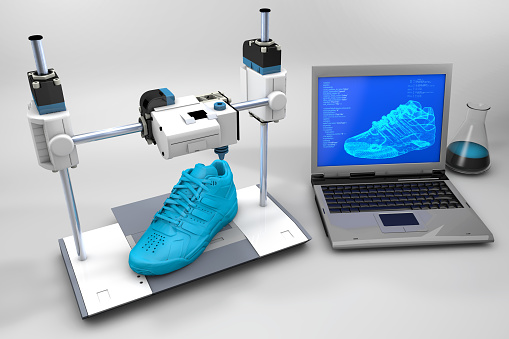
The earliest application of the layering method used by today’s 3D printers took place in the manufacture of topographical maps in the late 19th century, and 3D printing as we know it began in 1980. The convergence of cheaper manufacturing methods and open-source software, however, has led to a revolution of 3D printing in recent years. Today, the technology is being used in the production of everything from lower-cost car parts to bridges to less painful ballet slippers and it is even considered for artificial organs.

6. The Electric Car

Tesla, Tesla Model X, Charging


If you haven’t heard of Elon Musk and Tesla by now, we’re almost 100% certain you’re living in a media black hole. While his latest antics have been more geared towards space exploration, Tesla was an innovation of its own. Although electric cars had been invented previously, and subsequently, Tesla was the first to make them easily and readily available. Nissan and BMW have recently followed suit and produced their own commercially available electric cars.

7. High-density battery packs

lithium-ion cells

Tesla electric cars have received so much attention largely because of their batteries. The batteries, located underneath the passenger cabin, consist of thousands of high-density lithium-ion cells, each barely larger than a standard AA battery, nestled into a large, heavy battery pack that also offers Tesla electric cars a road-gripping low centre of gravity and structural support. The brainchild of Tesla co-founder J.B. Straubel, these battery modules pack more of a punch than standard (and cheaper) electric car batteries. These packs are also being used in residential, commercial, and grid-scale energy storage devices.

8. Facebook

Facebook logo


Facebook, introduced in 2004, wasn’t the first social media site to grace the internet but it was by far the most influential. Initially developed for Harvard students only, Facebook now has over 2 billions users. The ability to share your life with a multitude of contacts and use the internet to build lasting networks is one that is now ingrained into everyday life for both business and individuals.

9. YouTube

YouTube


YouTube arrived on our screens in 2005 just over a decade ago. To think that YouTube has changed the face of media consumption in such a short space is incredible. For everything from how-to videos, to comedy show catch-ups, viral videos and marketing campaigns, YouTube is to go-to whenever a video element is needed.

10. The Apple iPod


The Inventions That Changes The Modern Economy


Now it becomes I tunes. The iPod was the gadget that transformed how we listen to music. Gone were the days of walkmans and CD’s, and the ability to carry around so many songs in such a small device made it the must-have item of 2001.

If you like my work, support me on: https://www.patreon.com/pyoflife

How to use LinkedIn for your career progression?

Learning how to use LinkedIn for professional development is a great step toward improving your network, keeping in touch with colleagues, finding that perfect job and making new connections that offer exciting opportunities. LinkedIn is one of the fastest-growing and most valuable assets to access. In 2019 alone, LinkedIn had 645 million accounts, and 40% of those users actually logged on every single day.  With over 30 million companies now active on the platform, there were over 20 million open job postings in 2019 alone. 

Use LinkedIn for career progression:

1. Build an Outstanding Profile

LinkedIn provides a vast set of internal tools for building one’s profile. Make sure you fill out all areas and provide enough value in order to demonstrate your skills and qualifications in the best possible manner. Use a specific headline that corresponds with your core skill. Craft a genuine summary that outlines your top accomplishments and your main focus. Update your skills, the job experience (in details), communities you participate with and certificates that you hold. You can use a trustworthy photo which showcases your best self. Apply that same photo to your other online accounts so that people can connect the dots. Upload any SlideShare presentations or additional assets applicable to LinkedIn.

Remember first impressions matter, and not just in person.  Before ever meeting you, 41% of recruiters have admitted judging candidates by their photos. Your profile picture is your calling card on LinkedIn.

2. Use the app to your advantage.

When you are on the job hunt, find companies you want to work for, and make it a point to follow their accounts so you can stay aware of the company’s current happenings.  The “companies” tab will display updates, employees and job postings, all in one central location that will then make its way over to your news feed. Once you land an interview, you will already be well up to date on their latest product releases or corporate announcements, and this makes you stand out more than you realize

The app also contains a pulse tab, which allows you to see personalized articles and topics related to your industry and target audience. Dedicate a little time each morning to sift through the app. With your morning cup of coffee, spend 10 minutes finding articles worth sharing, or work towards building content around your industry (articles, blog posts, etc) so you can establish yourself as a thought-leader in your niche. 

3. Produce Regular Valuable Content

Out of the 645 million LinkedIn accounts, less than .5% are actually contributing new content.  This place is a goldmine for sharing content and being seen. Low competition means high view opportunities, a recipe for success.   If you find an article you liked within your realm of subject matter, read the comments section to find questions that other viewers may have posed as a way to search for and address gaps that weren’t covered on the topic. Tag other people who will get notified once mentioned – especially if you discuss more active LinkedIn members.

Recording daily educational videos (or every few days) will most likely receive more attention than standard textual posts. If you want to build your portfolio for work purposes, make sure your topics are closely related to your speciality. You want to end up with a complete profile that screams “professional” and is focused on what you do and are eager to do.

4. Connect with the right people

You met someone a few years back in college doesn’t necessarily mean you want to connect with them on this professional platform. Your level of reach depends largely on how social and engaged you are on the platform, not necessarily how many people are connected with you.  Start by connecting with existing professional and personal contacts in the industry you are working in, or want to move into.  If you meet a new coworker or connect with a professional during a networking event, seek out their account and send them a LinkedIn request that contains a short personalized message.

Join LinkedIn groups and interact with people. Comment on discussions, share topics on your own feed, mention other team members. Most people would be sending invitations every now and then and don’t be afraid to ask for a connection request after a couple of interactions.

If you like my work support me on: https://www.patreon.com/pyoflife