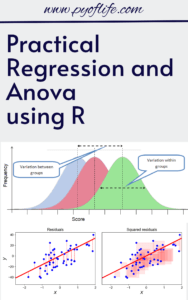
Practical Regression and Anova using R: Regression analysis and Analysis of Variance (ANOVA) are foundational statistical tools used in research to understand relationships between variables and differences among groups. In this guide, we’ll walk through practical examples of these techniques using R, a popular statistical programming language. This article assumes a basic understanding of R and is structured to facilitate step-by-step learning.
Linear regression models the relationship between a dependent variable yy and one or more independent variables xx. The simplest form is simple linear regression, where one independent variable predicts yy.
1.2 Performing Simple Linear Regression in R
Example:
Suppose you have a dataset mtcars and want to predict miles-per-gallon (mpg) using the weight of the car (wt).
# Load dataset

data(mtcars)
# Fit a simple linear regression model
model <- lm(mpg ~ wt, data = mtcars)# Summary of the model
summary(model)
Key Outputs:
Coefficients: The intercept and slope tell us how mpgmpg changes with wtwt.
R-squared: Measures how well the model explains the variability in mpgmpg.
Visualization:
# Scatter plot with regression line
plot(mtcars$wt, mtcars$mpg, main ="Weight vs MPG", xlab ="Weight", ylab ="MPG", pch =19)
abline(model, col ="blue")
1.3 Multiple Linear Regression
Extend the model to include more predictors, e.g., hp (horsepower).
# Fit a multiple linear regression model

model_multi <- lm(mpg ~ wt + hp, data = mtcars)
# Summary of the model
summary(model_multi)
Interpretation:
Each coefficient represents the effect of a variable on mpgmpg, holding other variables constant.
Always inspect data for missing values and outliers.
Use summary(), str(), and head() functions in R for exploration.
Assumption Checking:
For regression: Check linearity, normality, and homoscedasticity.
For ANOVA: Check normality and equality of variances.
plotUse diagnostics:
par(mfrow =c(2,2))
plot(model)
Model Refinement:
Simplify models by removing insignificant predictors using stepwise selection (step() function).
Conclusion
Regression and ANOVA are versatile tools for data analysis. R provides a robust platform with simple functions to execute these methods and generate visualizations. Practice is key—try these techniques on real datasets to gain proficiency.
For more resources, explore R’s built-in documentation (?lm, ?aov) and packages like car for advanced regression diagnostics.
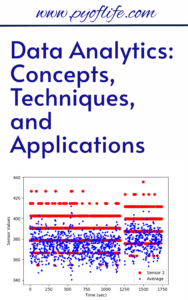
Data Analytics: Concepts, Techniques, and Applications: In today’s data-driven world, organizations of all sizes rely on data analytics to gain insights, improve decision-making, and drive innovation. Understanding the fundamentals of data analytics, the techniques involved, and its diverse applications can provide a competitive edge. This article explores these core aspects in depth.
What is Data Analytics?
Data analytics refers to the process of examining, cleaning, transforming, and modeling data to uncover meaningful patterns, trends, and insights. It combines statistical analysis, machine learning, and visualization tools to interpret data and support decision-making.
Key Concepts in Data Analytics
Data Collection: Gathering relevant data from various sources such as databases, APIs, and sensors.
Data Cleaning: Removing inaccuracies and inconsistencies to ensure data quality.
Data Transformation: Converting raw data into a format suitable for analysis.
Data Analysis: Using techniques like statistical modeling and machine learning to interpret data.
Visualization: Presenting data insights in visual formats like charts and dashboards.
A range of techniques is employed in data analytics to derive actionable insights:
1. Descriptive Analytics
This technique focuses on summarizing past data to understand historical trends. Methods include:
Data aggregation
Statistical summaries
Visualization tools
2. Predictive Analytics
Predictive analytics uses historical data and machine learning models to forecast future trends. Techniques include:
Regression analysis
Neural networks
Decision trees
3. Prescriptive Analytics
Prescriptive analytics recommends actions based on data insights. It combines predictive models with optimization algorithms.
4. Diagnostic Analytics
This method digs deeper into data to determine the reasons behind past outcomes. It uses:
Root cause analysis
Drill-down techniques
Correlation analysis
5. Real-Time Analytics
Real-time analytics processes data as it arrives, enabling immediate insights and responses. Common in industries like finance and e-commerce, it involves technologies like streaming analytics and edge computing.
Applications of Data Analytics
Data analytics has transformative applications across various industries:
1. Business
Customer Insights: Analyzing purchasing behaviors to enhance customer experiences.
Operations Management: Streamlining supply chains and reducing operational costs.
2. Healthcare
Patient Care: Predictive models for disease diagnosis and treatment.
Hospital Management: Improving resource allocation and reducing patient wait times.
3. Finance
Fraud Detection: Identifying anomalous transactions to prevent fraud.
Investment Analysis: Predicting market trends to inform investment strategies.
4. Retail
Personalized Marketing: Using customer data to tailor marketing campaigns.
Inventory Management: Optimizing stock levels based on sales trends.
5. Manufacturing
Predictive Maintenance: Monitoring equipment to predict and prevent failures.
Quality Control: Analyzing production data to ensure consistent quality.
6. Education
Learning Analytics: Tracking student performance to personalize learning experiences.
Administrative Efficiency: Enhancing resource planning and allocation.
7. Government
Policy Making: Using analytics to design data-driven policies.
Public Safety: Analyzing crime data to improve law enforcement strategies.
The Future of Data Analytics
With advancements in artificial intelligence, big data, and cloud computing, data analytics continues to evolve. Emerging trends include:
Augmented Analytics: Automating insights with AI and machine learning.
Edge Analytics: Performing analytics closer to the source of data generation.
Explainable AI: Enhancing transparency in complex predictive models.
Conclusion
Data analytics is an indispensable tool for modern organizations, offering powerful techniques and diverse applications to unlock the potential of data. By understanding its concepts, mastering its techniques, and exploring its applications, businesses and professionals can harness its full potential to drive growth and innovation.
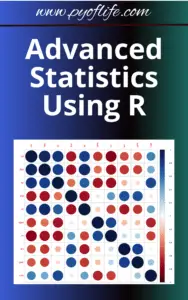
Statistics is the backbone of data-driven decision-making, and R has become the go-to tool for statisticians and data analysts worldwide. With its rich ecosystem of libraries and intuitive syntax, R simplifies complex statistical analysis and empowers users to extract actionable insights from data. This blog will walk you through the fundamentals and advanced features of R for statistics, ensuring you unlock the full potential of this powerful programming language.
Why Use R for Advanced Statistics?
R excels in statistical computing for several reasons:
Specialized Libraries: Packages like dplyr, ggplot2, caret, and MASS provide functionalities tailored to various statistical needs.
Data Visualization: R offers state-of-the-art visualization tools that make your statistical findings easy to interpret and present.
Community Support: A vibrant community ensures frequent updates, new packages, and a wealth of learning resources.
Flexibility and Integration: R integrates seamlessly with Python, SQL, and big data tools like Hadoop and Spark.
Dive into specific statistical techniques that match your project needs, from regression to hypothesis testing.
Tips for Mastering R for Advanced Statistics
Leverage Online Resources: Use platforms like CRAN, Stack Overflow, and R-bloggers for learning.
Practice Regularly: Build projects, analyze real-world datasets, and replicate case studies to sharpen your skills.
Focus on Visualization: Master ggplot2 to create compelling visual narratives for your analyses.
Conclusion
Advanced statistics using R opens up endless possibilities for data exploration, modeling, and prediction. Whether you’re analyzing large datasets or diving deep into Bayesian methods, R equips you with the tools needed for success. Start today, and transform your data into impactful insights.
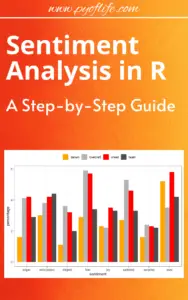
Sentiment analysis, a vital branch of natural language processing (NLP), is used to determine whether a given piece of text expresses a positive, negative, or neutral sentiment. From analyzing customer reviews to gauging public opinion on social media, sentiment analysis has a wide range of applications. In this tutorial, we’ll walk you through performing sentiment analysis in R, a powerful programming language for statistical computing and data analysis.
What is Sentiment Analysis?
Sentiment analysis involves classifying text into categories based on the emotions conveyed. Common applications include:
Tracking customer feedback on products or services.
Monitoring public sentiment during events or elections.
Enhancing recommendation systems.
R provides several libraries and tools that simplify this process, making it accessible to beginners and advanced users alike.
Getting Started with Sentiment Analysis in R
Before diving into the analysis, ensure you have R and RStudio installed. You’ll also need a basic understanding of R programming.
You can work with any text dataset, such as product reviews, tweets, or articles. For this tutorial, we’ll use a sample dataset of customer reviews. Load your dataset into R using read.csv or a similar function:
Ensure the dataset contains a column with text data.
Step 3: Tokenize Text Data
Tokenization splits text into individual words, which makes it easier to analyze sentiments. Use the unnest_tokens function from the tidytext package:
reviews_tokens <- reviews %>%
unnest_tokens(word, review_text_column)
# Replace with your text column name
Step 4: Assign Sentiment Scores
Sentiment lexicons like Bing, NRC, or AFINN are used to classify words into sentiments. Load the Bing lexicon and join it with your tokenized data:
bing_lexicon <- get_sentiments("bing")
sentiment_analysis <- reviews_tokens %>%
inner_join(bing_lexicon, by ="word")%>%
count(sentiment, sort =TRUE)
Step 5: Visualize Sentiment Analysis
Visualization helps in understanding the overall sentiment distribution. Use ggplot2 to create a bar chart:
ggplot(sentiment_analysis, aes(x = sentiment, y = n, fill = sentiment))+
geom_bar(stat ="identity")+
theme_minimal()+
labs(title ="Sentiment Analysis Results", x ="Sentiment", y ="Count")
Step 6: Advanced Sentiment Analysis
For more nuanced insights, explore other lexicons like NRC, which categorizes words into emotions (joy, sadness, anger, etc.):
nrc_lexicon <- get_sentiments("nrc")
emotions_analysis <- reviews_tokens %>%
inner_join(nrc_lexicon, by ="word")%>%
count(sentiment, sort =TRUE)
ggplot(emotions_analysis, aes(x = sentiment, y = n, fill = sentiment))+
geom_bar(stat ="identity")+
theme_minimal()+
labs(title ="Emotion Analysis Results", x ="Emotion", y ="Count")
Step 7: Automating Sentiment Scoring
Aggregate sentiment scores for each review:
review_sentiments <- reviews_tokens %>%
inner_join(bing_lexicon, by ="word")%>%
group_by(review_id_column)%>%# Replace with your review ID column
summarise(sentiment_score =sum(ifelse(sentiment =="positive",1,-1)))
Applications and Use Cases
Customer Feedback: Analyze reviews to identify satisfaction trends and areas for improvement.
Brand Monitoring: Understand public sentiment towards your brand on social media.
Content Analysis: Gauge the tone of articles, speeches, or user-generated content.
Conclusion
R simplifies sentiment analysis with its robust libraries and tools. By following the steps outlined above, you can perform sentiment analysis on a variety of datasets and extract valuable insights. Experiment with different lexicons and datasets to enhance your skills further.
Machine Learning Applications Using Python: Machine learning (ML) has revolutionized industries by enabling intelligent systems that predict outcomes, automate tasks, and enhance decision-making. Python, with its rich library ecosystem and user-friendly syntax, has become the go-to language for building ML solutions. This article demonstrates how Python powers ML applications in healthcare, retail, and finance, with real-world examples, including Python code snippets for each use case.
Machine learning improves diagnostics, predicts patient outcomes, and accelerates drug discovery in healthcare. Below are examples where Python plays a vital role.
Case Study 1: Early Disease Detection
Problem: Detect diabetic retinopathy from retinal images.
Solution: A convolutional neural network (CNN) built using TensorFlow and Keras.
Code Implementation:
import tensorflow as tf
from tensorflow.keras.models import Sequential
from tensorflow.keras.layers import Conv2D, MaxPooling2D, Flatten, Dense

# Build the CNN model
model = Sequential([
    Conv2D(32, (3, 3), activation='relu', input_shape=(128, 128, 3)),
    MaxPooling2D(2, 2),
    Conv2D(64, (3, 3), activation='relu'),
    MaxPooling2D(2, 2),
    Flatten(),
    Dense(128, activation='relu'),
    Dense(1, activation='sigmoid')
])

# Compile the model
model.compile(optimizer='adam', loss='binary_crossentropy', metrics=['accuracy'])

# Train the model
model.fit(train_images, train_labels, epochs=10, validation_data=(val_images, val_labels))
Outcome: The model achieved 92% accuracy in detecting diabetic retinopathy.
Case Study 2: Predicting Patient Readmission
Problem: Predict the likelihood of patient readmission within 30 days.
Solution: A logistic regression model built with Scikit-learn.
Code Implementation:
from sklearn.model_selection import train_test_split
from sklearn.linear_model import LogisticRegression
from sklearn.metrics import classification_report

# Split data into training and testing sets
X_train, X_test, y_train, y_test = train_test_split(features, target, test_size=0.3, random_state=42)

# Build and train the logistic regression model
model = LogisticRegression()
model.fit(X_train, y_train)

# Evaluate the model
predictions = model.predict(X_test)
print(classification_report(y_test, predictions))
Outcome: Enabled hospitals to proactively allocate resources and reduce readmission rates.
2. Retail: Enhancing Customer Experiences
Retailers leverage ML for dynamic pricing, inventory management, and personalized marketing strategies.
Case Study 1: Personalized Product Recommendations
Problem: Suggest relevant products based on customer preferences.
Solution: Collaborative filtering implemented using Scikit-learn.
Outcome: Increased customer satisfaction and sales by providing personalized recommendations.
Case Study 2: Dynamic Pricing
Problem: Optimize pricing based on demand and competitor data.
Solution: Gradient boosting with XGBoost.
Code Implementation:
import xgboost as xgb
from sklearn.model_selection import train_test_split
from sklearn.metrics import mean_squared_error

# Split data into training and testing sets
X_train, X_test, y_train, y_test = train_test_split(features, target, test_size=0.3, random_state=42)

# Train the XGBoost model
model = xgb.XGBRegressor(objective='reg:squarederror', n_estimators=100, learning_rate=0.1)
model.fit(X_train, y_train)

# Evaluate the model
predictions = model.predict(X_test)
rmse = mean_squared_error(y_test, predictions, squared=False)
print(f"RMSE: {rmse}")
Outcome: Increased revenue by 15% through optimal pricing strategies.
3. Finance: Enhancing Security and Risk Management
Finance applications of ML focus on fraud detection, stock price prediction, and loan default risk analysis.
Solution: An anomaly detection model using Scikit-learn.
Code Implementation:
from sklearn.ensemble import IsolationForest

# Train the Isolation Forest model
model = IsolationForest(contamination=0.01)
model.fit(transaction_data)

# Predict anomalies
anomalies = model.predict(transaction_data)
print(anomalies)
Outcome: Detected fraudulent transactions with 98% accuracy.
Case Study 2: Stock Price Prediction
Problem: Predict future stock prices using historical data.
Solution: A Long Short-Term Memory (LSTM) neural network implemented with TensorFlow.
Code Implementation:
import numpy as np
from tensorflow.keras.models import Sequential
from tensorflow.keras.layers import LSTM, Dense

# Prepare the data
X_train, y_train = np.array(X_train), np.array(y_train)

# Build the LSTM model
model = Sequential([
    LSTM(50, return_sequences=True, input_shape=(X_train.shape[1], X_train.shape[2])),
    LSTM(50),
    Dense(1)
])

# Compile and train the model
model.compile(optimizer='adam', loss='mse')
model.fit(X_train, y_train, epochs=20, batch_size=32)
Outcome: Provided accurate predictions to assist in investment decisions.
Final Thoughts: Machine Learning Applications Using Python
From predicting diseases to preventing fraud, Python’s ecosystem makes it the cornerstone of machine learning innovation. By utilizing libraries like Scikit-learn, TensorFlow, and XGBoost, industries such as healthcare, retail, and finance can achieve unprecedented levels of efficiency and insight.
Applied statistics is an essential skill in data-driven decision-making, research, and scientific inquiry. The integration of resampling methods and the R programming language into this field has transformed how beginners and experts alike approach statistical problems. In this article, we explore the key components of Introductory Applied Statistics, focusing on the synergy between resampling methods and R.
What is Applied Statistics?
Applied statistics involves using statistical methods to solve real-world problems. It encompasses data collection, analysis, interpretation, and presentation, providing actionable insights across diverse fields, including healthcare, business, and engineering.
Resampling is a powerful non-parametric statistical technique that involves repeatedly sampling data to assess the variability of a statistic or build models. Key resampling methods include:
1.Bootstrapping
Allows estimation of population parameters by sampling with replacement.
Ideal for constructing confidence intervals or hypothesis testing when assumptions about data distribution are unclear.
2. Permutation Tests
Focuses on testing hypotheses by analyzing the distribution of a test statistic under random rearrangements of the data.
3. Cross-Validation
Primarily used in predictive modeling, this method ensures robust model evaluation and comparison.
Resampling methods are easy to understand conceptually and work well for complex or small datasets where traditional methods falter.
R Programming: The Statistical Powerhouse
R is an open-source programming language designed for statistical computing and graphics. Its flexibility and extensive library of packages make it a go-to tool for statisticians. Here’s why R is indispensable for applied statistics:
Interactive Data Analysis: Tools like RStudio streamline coding, visualization, and reporting.
Comprehensive Libraries: Packages like boot, perm, and caret simplify the implementation of resampling techniques.
Customizability: R supports custom functions for unique statistical needs.
Combining Resampling Methods with R
The marriage of resampling methods and R offers a modern, practical approach to learning and applying statistics. For beginners, the combination simplifies understanding abstract concepts, as R’s clear syntax and visual outputs provide instant feedback. Examples include:
Bootstrapping Confidence Intervals in R
library(boot)
boot(data, statistic, R = 1000)
Performing Permutation Tests
library(perm)
perm.test(x, y, alternative = "greater")
These examples highlight how seamlessly R handles complex statistical tasks.
Why Learn Introductory Applied Statistics with Resampling Methods & R?
1.User-Friendly Learning Curve
Resampling simplifies statistical concepts.
R’s intuitive interface makes coding accessible.
2. Versatility Across Disciplines
From biomedical research to marketing analytics, the techniques are widely applicable.
3. Future-Proof Skillset
Mastery of R and resampling prepares learners for advanced statistical challenges.
Conclusion
Introductory applied statistics is more approachable than ever, thanks to the integration of resampling methods and R. Whether you’re a student, professional, or researcher, mastering these techniques will empower you to derive meaningful insights from data confidently. Embrace this synergy, and unlock the full potential of applied statistics in your field!
Machine Learning (ML) and Artificial Intelligence (AI) are driving technological advancements, revolutionizing industries, and enabling systems to solve complex problems with minimal human intervention. From predictive analytics to autonomous systems, these technologies are creating new paradigms in computing and automation.
Defining Machine Learning and Artificial Intelligence
Artificial Intelligence (AI) is a field of computer science that focuses on creating intelligent systems capable of mimicking human cognition, including reasoning, problem-solving, and decision-making. Machine Learning (ML), a subset of AI, enables systems to learn patterns and improve performance on tasks through experience, leveraging algorithms and statistical models without explicit programming.
Supervised learning trains algorithms using labeled datasets to predict outcomes or classify data. Common applications include fraud detection and image recognition.
Example Algorithms: Linear Regression, Support Vector Machines, Neural Networks.
2. Unsupervised Learning
This approach identifies hidden patterns in unlabeled data, often used for clustering and dimensionality reduction.
Example Algorithms: K-Means Clustering, Principal Component Analysis (PCA).
3. Reinforcement Learning
Reinforcement learning trains agents to make sequential decisions by maximizing rewards in a given environment, applied extensively in robotics and game AI.
Key Technique: Q-Learning, Deep Q-Networks (DQN).
Real-World Applications
1. Healthcare
AI and ML are transforming diagnostics, personalized medicine, and drug discovery.
Deep Learning in Medical Imaging: Convolutional Neural Networks (CNNs) analyze X-rays, MRIs, and CT scans for disease detection.
Predictive Analytics: Models predict patient outcomes and optimize treatment strategies.
Fraud Detection: Anomaly detection algorithms identify irregularities in transactions to mitigate financial fraud.
3. Natural Language Processing (NLP)
NLP, powered by AI, enables machines to interpret and generate human language.
Applications: Chatbots, sentiment analysis, and machine translation.
Frameworks: Transformer-based models like GPT and BERT.
Benefits of AI and ML
Scalability: Algorithms scale seamlessly to accommodate large datasets.
Automation: AI-powered systems automate complex workflows, reducing human intervention.
Predictive Power: Machine learning models provide accurate forecasting in applications like weather prediction and supply chain optimization.
Technical Challenges
1. Data Quality and Quantity
Training robust AI models requires high-quality, large-scale datasets. Inconsistent or biased data can compromise model performance.
2. Computational Complexity
High-performance computing resources, such as GPUs and TPUs, are essential for training large-scale models like deep neural networks.
3. Model Interpretability
Many AI models, especially deep learning systems, operate as “black boxes,” making it challenging to understand how decisions are made. Techniques like SHAP and LIME aim to improve explainability.
Emerging Trends in AI and ML
Edge AI: Deploying AI models on edge devices for low-latency, real-time decision-making.
Generative AI: Advances in GANs and diffusion models enable realistic content generation in media and design.
Federated Learning: Distributed machine learning preserves data privacy by training models locally and aggregating insights.
Quantum ML: Combining quantum computing with ML to solve problems beyond classical computational capabilities.
Conclusion
The interplay between Machine Learning and Artificial Intelligence is accelerating the pace of innovation. By advancing algorithms, improving computational infrastructure, and addressing ethical concerns, these technologies will redefine industries and pave the way for unprecedented opportunities.
Organizations aiming to stay competitive must integrate AI and ML into their workflows, capitalizing on their transformative potential to remain at the forefront of the technological frontier.
Mathematical statistics is the foundation of data analysis, enabling researchers and professionals to understand patterns, make informed decisions, and predict future trends. Coupled with the programming power of R, this discipline transforms raw data into meaningful insights. This article delves into the synergy between mathematical statistics and R, exploring its applications, benefits, and reasons to master this combination.
What Is Mathematical Statistics?
Mathematical statistics focuses on the theoretical framework of data analysis, leveraging probability theory, hypothesis testing, and statistical inference to draw conclusions from data. It provides the tools to quantify uncertainty and variability, essential in research, business, and scientific applications.
Why Choose R for Statistical Applications?
R is a powerful, open-source programming language designed for statistical computing and graphics. With its extensive libraries, R simplifies the implementation of complex mathematical concepts. Its strengths include:
Wide Range of Packages: R features specialized libraries like ggplot2 for visualization, dplyr for data manipulation, and MASS for statistical analysis.
Community Support: The R community continuously develops resources, ensuring up-to-date techniques and methodologies.
Flexibility: From small datasets to large-scale simulations, R handles it all efficiently.
R’s robust tools help in summarizing data through measures like mean, variance, and skewness, while its visualization capabilities turn data into interpretable charts and graphs.
2. Probability Distributions
Understanding probability distributions is vital in statistical analysis. R enables users to compute probabilities, generate random variables, and visualize distributions like normal, binomial, and Poisson.
3. Regression Analysis
Regression models in R assist in identifying trends and relationships between variables. Tools like lm() for linear regression and glm() for generalized models are standard features.
4. Simulation and Bootstrapping
Simulations in R are used to understand the behavior of statistics under various conditions. Bootstrapping techniques enhance accuracy in parameter estimation.
5. Hypothesis Testing
Statistical tests, such as t-tests, chi-square tests, and ANOVA, are seamlessly performed in R. These tests help validate assumptions and assess relationships within data.
Benefits of Integrating R into Mathematical Statistics
Efficiency: Automating calculations and repetitive tasks saves time and effort.
Scalability: Handle massive datasets effortlessly with R’s computational power.
Reproducibility: R scripts ensure consistency, making analyses easy to reproduce.
Customizability: Tailor analyses using R’s scripting and package development capabilities.
Conclusion
The integration of mathematical statistics with the computational prowess of R opens a world of opportunities in data analysis. Whether you’re a researcher, data analyst, or statistician, mastering these tools will elevate your skills and enable you to tackle complex challenges with confidence.
Enabling AI Applications in Data Science: Artificial Intelligence (AI) has become a transformative force in data science, driving innovation across industries. The ability to process, analyze, and derive insights from vast datasets has elevated AI applications, making them indispensable in decision-making, predictive analytics, and automation. Here’s how AI is enabling groundbreaking advancements in data science.
1. AI in Data Processing and Cleaning
Data is the backbone of data science, but raw data is often incomplete, noisy, or unstructured. AI-powered tools and algorithms simplify data preprocessing, automating tasks such as:
Identifying and filling missing values.
Detecting anomalies and outliers.
Structuring unorganized datasets (e.g., converting text or image data into analyzable formats).
For instance, Natural Language Processing (NLP) techniques enable the extraction of relevant information from unstructured text, while machine learning algorithms enhance the accuracy of data imputation.
AI excels at identifying patterns and trends in complex datasets, surpassing traditional statistical methods. Machine learning models, especially deep learning, are pivotal in predictive analytics. Examples include:
Healthcare Forecasting: AI predicts disease outbreaks or individual health risks based on historical and real-time data.
By integrating neural networks and reinforcement learning, organizations can build self-improving models for enhanced performance.
3. Enhancing Visualization and Insights
Data visualization, essential for understanding datasets, benefits immensely from AI. Intelligent visualization tools suggest optimal ways to represent data (e.g., charts, heatmaps) based on its characteristics. Additionally, AI-driven dashboards generate actionable insights by correlating variables and detecting hidden relationships, empowering data scientists and stakeholders to make informed decisions.
4. Automation in Data Science Workflows
AI is automating repetitive tasks, freeing data scientists to focus on strategic problems. Tools like AutoML (Automated Machine Learning) enable users to:
Automatically select the best algorithms for a dataset.
Fine-tune models with minimal manual intervention.
Streamline model deployment for production environments.
This democratization allows non-experts to leverage data science effectively.
5. AI for Real-Time Analysis
With the growth of IoT and sensor technologies, the demand for real-time analytics has surged. AI algorithms process and analyze streaming data, enabling real-time decision-making in areas such as:
Financial Services: Fraud detection during transactions.
Smart Cities: Traffic optimization and energy consumption monitoring.
The ability to act on data instantly is a game-changer for industries requiring agility.
6. Ethical AI and Responsible Data Usage
As AI applications proliferate, ethical concerns regarding data privacy, bias, and transparency have gained prominence. Implementing responsible AI practices ensures models are fair, explainable, and compliant with regulations. Organizations are adopting frameworks for ethical AI to build trust and accountability.
Conclusion
AI is reshaping data science, offering powerful tools to tackle complex challenges, from big data analytics to real-time predictions. As advancements in AI continue, its integration with data science will lead to smarter systems, better decisions, and groundbreaking innovations.
Businesses and professionals must embrace these AI applications to stay competitive and unlock the full potential of their data. The future of data science, powered by AI, is limitless.
Applied Statistics: Theory and Problem Solutions with R Applied statistics is a cornerstone in data-driven decision-making, offering tools and techniques to make sense of complex datasets. When paired with R, a powerful statistical computing and graphics language, applied statistics becomes even more accessible and efficient for problem-solving. This article explores the fundamental concepts of applied statistics, its importance, and how R can be used to solve real-world problems.
What is Applied Statistics?
Applied statistics involves using statistical methods to collect, analyze, and interpret data for practical applications. Unlike theoretical statistics, which focuses on developing mathematical underpinnings, applied statistics emphasizes real-world applications in fields like business, healthcare, engineering, and social sciences.
Key components of applied statistics include:
Descriptive Statistics: Summarizing and organizing data.
Inferential Statistics: Drawing conclusions and making predictions based on data samples.
Hypothesis Testing: Determining the validity of assumptions about datasets.
Regression Analysis: Identifying relationships between variables.
R is a versatile programming language specifically designed for statistical computing and visualization. Its extensive library of packages and active community support make it an ideal tool for applied statisticians.
Advantages of R in Applied Statistics:
Comprehensive Libraries: Packages like ggplot2, dplyr, and caret simplify data manipulation, visualization, and modeling.
Interactive Visualizations: Tools like shiny allow for creating interactive dashboards.
Reproducible Research: Integration with R Markdown ensures that analyses are transparent and reproducible.
Scalability: R handles datasets of varying sizes efficiently.
Common Applications of Applied Statistics with R
Here are some practical areas where applied statistics, powered by R, shines:
1.Business Analytics
Problem: A company wants to analyze customer behavior to improve marketing strategies.
Solution: Use R’s cluster package for customer segmentation and forecast for sales predictions.
2. Healthcare Research
Problem: A researcher needs to identify factors influencing patient recovery rates.
Solution: Perform logistic regression with R’s glm function to model binary outcomes like recovery or non-recovery.
3. Environmental Studies
Problem: Analyze climate data to predict temperature trends.
Solution: Employ time-series analysis using the ts package in R.
4. Education
Problem: Measure the impact of a new teaching method on student performance.
Solution: Conduct hypothesis testing with R’s t.test function.
Solving Statistical Problems with R: A Step-by-Step Guide
Define the Problem: Identify what you want to analyze or predict.
Collect Data: Use surveys, databases, or online resources.
Preprocess the Data: Handle missing values and outliers using packages like tidyverse.
Apply Statistical Methods: Use R’s wide range of functions for descriptive, inferential, and predictive analytics.
Interpret Results: Visualize findings with ggplot2 for better communication.
Example: Solving a Problem with R
Scenario: A retailer wants to identify factors affecting sales.
Solution:
Load the dataset into R using read.csv().
Use summary() to understand the data distribution.
Apply multiple regression with lm(sales ~ advertising + price, data = dataset) to determine the influence of advertising spend and pricing.
Visualize the regression line with ggplot2 to interpret the results.
Best Practices for Applied Statistics in R
Ensure data quality through thorough preprocessing.
Choose the right statistical model for the problem.
Regularly update R and its packages for the latest features.
Validate models with techniques like cross-validation to avoid overfitting.
Conclusion
Applied statistics, enhanced by the power of R, is a critical skill for anyone working with data. By mastering its theory and practical applications, professionals can solve complex problems across various domains efficiently. Whether it’s forecasting trends, optimizing business processes, or conducting scientific research, R provides the tools needed to turn data into actionable insights.