SAROJ

Using R and RStudio for Data Management, Statistical Analysis, and Graphics

Introduction to Rand RStudio

Using R and RStudio for Data Management: When it comes to data science and statistical analysis, R and RStudio are considered to be powerful and versatile tools. By combining the capabilities of the R programming language with the user-friendly interface of RStudio, it offers a comprehensive solution for managing data, performing statistical analysis, and generating graphics.

Understanding Data Management with Rand RStudio

Importing and Exporting Data

One of the fundamental tasks in data analysis is importing data from various sources. With Rand RStudio, users can seamlessly import data from CSV files, Excel spreadsheets, databases, and other formats. Likewise, exporting processed data is equally effortless, enabling seamless collaboration and sharing of insights.

Data Cleaning and Transformation

Before delving into analysis, ensuring data cleanliness and coherence is paramount. Rand RStudio provides a myriad of functions and packages for data cleaning and transformation. From handling missing values to standardizing data formats, it empowers analysts to preprocess data efficiently, laying a solid foundation for subsequent analysis.

Using R and RStudio for Data Management, Statistical Analysis, and Graphics

Statistical Analysis with R and RStudio

Descriptive Statistics

R and RStudio offer an extensive array of functions for descriptive statistics, allowing analysts to summarize and explore datasets comprehensively. From calculating measures of central tendency to visualizing distributions, descriptive statistics in Rand RStudio facilitate a deep understanding of data characteristics.

Inferential Statistics

Beyond descriptive statistics, R and RStudio empower analysts to easily perform inferential statistics. Whether hypothesis testing, regression analysis, or ANOVA, R and RStudio provide robust tools and packages for conducting rigorous statistical inference, enabling users to derive meaningful insights and make informed decisions.

Creating Graphics with R and RStudio

Basic Plots

Visualizing data is essential for gaining insights and communicating findings effectively. R and RStudio offers a rich suite of plotting functions for creating basic plots such as histograms, scatter plots, and bar charts. With customizable features and intuitive syntax, generating informative visualizations becomes a seamless endeavor.

Advanced Visualizations

For more sophisticated graphics, R and RStudio doesn’t disappoint. Whether it’s creating interactive plots, heatmaps, or 3D visualizations, R and RStudio offer advanced packages and tools to cater to diverse visualization needs. From exploratory data analysis to presentation-ready graphics, R and RStudio equips analysts with the means to convey complex insights effortlessly.

Integrating Rand RStudio with Other Tools

R and RStudio’s compatibility with other tools further enhances its utility. Whether it’s integrating with Python libraries for machine learning or connecting to cloud-based platforms for big data analysis, R and RStudio facilitate seamless interoperability, enabling users to leverage a diverse ecosystem of resources for their analytical endeavors.

Best Practices for Efficient Data Management and Analysis

To maximize the effectiveness of Rand RStudio, adhering to best practices is crucial. This includes maintaining organized project structures, documenting code and analyses, leveraging version control systems, and staying updated with the latest packages and techniques. By embracing these practices, analysts can streamline their workflow, enhance reproducibility, and foster collaboration within their teams.

Conclusion

In conclusion, R and RStudio stand as a formidable ally for data management, statistical analysis, and graphics generation. Its versatility, ease of use, and robust functionality make it a preferred choice among data scientists, analysts, and researchers worldwide. By harnessing the power of R and RStudio, analysts can unlock valuable insights from data, drive evidence-based decision-making, and propel innovation across various domains.

Download(PDF)

Read More: Using R for Introductory Statistics
Intro to Exploratory Data Analysis (EDA) in Python

Intro to Exploratory Data Analysis (EDA) in Python: In the world of data science, one of the initial and crucial steps in understanding a dataset is Exploratory Data Analysis (EDA). It’s like embarking on a journey where you explore the characteristics and patterns within your data before diving into any complex modeling. In this article, we’ll delve into what EDA is all about and how Python facilitates this process seamlessly with its powerful libraries.

Importance of EDA in Data Science

EDA serves as the foundation for any data analysis project. By visualizing and summarizing the main characteristics of a dataset, it helps analysts to:

  • Identify patterns and relationships
  • Detect outliers and anomalies
  • Understand the distribution and structure of the data
  • Formulate hypotheses for further analysis

Tools and Libraries for EDA in Python

Python offers a rich ecosystem of libraries for performing EDA efficiently. Some of the commonly used ones include:

Pandas

Pandas is a versatile library that provides data structures and functions to manipulate and analyze structured data. It offers powerful tools for reading, writing, and transforming data, making it a cornerstone for EDA.

Matplotlib

Matplotlib is a comprehensive library for creating static, animated, and interactive visualizations in Python. It enables users to generate various plots, from simple bar charts to complex 3D visualizations, ideal for exploring data distribution and relationships.

Seaborn

Seaborn is built on top of Matplotlib and provides a high-level interface for drawing attractive and informative statistical graphics. It simplifies the process of creating complex visualizations like heatmaps, pair plots, and categorical plots, enhancing theEDA experience.

Intro to Exploratory Data Analysis (EDA) in Python

Understanding Data Types

Before diving into analysis, it’s essential to understand the types of data present in the dataset:

Numeric Data

Numeric data consists of numbers and can be categorized as continuous or discrete. Understanding the distribution of numeric variables is crucial for identifying trends and outliers.

Categorical Data

Categorical data represents characteristics or qualities and often takes on a fixed number of possible values. Analyzing categorical variables involves examining frequency counts and distributions.

DateTime Data

DateTime data includes dates and times, which require special handling for meaningful analysis. Extracting features like the day of the week or month can reveal temporal patterns in the data.

Handling Missing Values

Dealing with missing values is a common challenge in real-world datasets. EDA involves assessing the extent of missingness and choosing appropriate strategies such as imputation or deletion to handle them effectively.

Descriptive Statistics

Descriptive statistics provide a summary of the main characteristics of a dataset. Measures like mean, median, standard deviation and percentiles offer insights into the central tendency and variability of the data.

Data Visualization Techniques

Visualization is a powerful tool for gaining insights into the data. Some commonly used techniques in EDA include:

Histograms

Histograms display the distribution of a numeric variable by dividing it into bins and plotting the frequency of observations within each bin.

Boxplots

Boxplots summarize the distribution of a numeric variable by displaying key statistics such as the median, quartiles, and outliers.

Scatter plots

Scatter plots reveal relationships between two numeric variables by plotting each data point as a dot on the graph.

Univariate Analysis

Univariate analysis focuses on examining the distribution and summary statistics of a single variable, providing insights into its characteristics.

Bivariate Analysis

Bivariate analysis explores the relationship between two variables, uncovering patterns and correlations that may exist between them.

Multivariate Analysis

Multivariate analysis extends bivariate analysis to multiple variables, allowing for a more comprehensive understanding of complex relationships within the data.

Outlier Detection and Treatment

Outliers can significantly impact the results of data analysis. EDA includes techniques for identifying and handling outliers to ensure robust and reliable insights.

Correlation Analysis

Correlation analysis measures the strength and direction of the relationship between two numeric variables, helping to identify potential dependencies and patterns.

Conclusion

Exploratory Data Analysis is a crucial step in the data analysis process, enabling analysts to uncover insights, detect patterns, and formulate hypotheses. By leveraging Python and its powerful libraries, analysts can streamline the EDA process and gain valuable insights into their datasets.

Download(PDF)

Read More: Python For Data Science Cheat Sheet

Linear Regression Using R: An Introduction to Data Modeling

Linear Regression Using R: Linear Regression is one of the fundamental techniques in statistical modeling and machine learning. It’s widely used for understanding the relationship between two continuous variables. In simple terms, it helps in predicting one variable based on the value of another variable. In the realm of data science, Linear Regression plays a crucial role in analyzing and interpreting data patterns.

Understanding the Basics of Linear Regression

Assumptions of Linear Regression

Before delving into the practical aspects of Linear Regression, it’s essential to understand its underlying assumptions. These include linearity, independence of errors, homoscedasticity, and normality of residuals. Violation of these assumptions can affect the accuracy of the model.

Types of Linear Regression

Linear Regression comes in various forms, including simple linear regression with one predictor variable and multiple linear regression with multiple predictor variables. Additionally, there are extensions like polynomial regression and logistic regression, each serving specific purposes in data modeling.

Linear Regression Using R An Introduction to Data Modeling
Linear Regression Using R: An Introduction to Data Modeling

Download:

Preparing Data for Linear Regression in R

Data preparation is a crucial step before fitting a Linear Regression model. It involves tasks like cleaning outliers, handling missing values, and transforming variables to meet the assumptions of the model. In R, this process is facilitated by libraries like dplyr and tidyr.

Data Cleaning

Cleaning the data involves removing inconsistencies, dealing with missing values, and ensuring data quality. Techniques like imputation and deletion are commonly used to handle missing data points.

Data Exploration and Visualization

Exploring the dataset helps in understanding the relationship between variables and identifying patterns. Visualization techniques like scatter plots, histograms, and correlation matrices are used to gain insights into the data.

Implementing Linear Regression in R

Installing R and RStudio

To begin with, one needs to install R and RStudio, which are popular open-source tools for statistical computing and data analysis. They provide a user-friendly interface and a wide range of packages for implementing various algorithms.

Loading Data into R

Once R and RStudio are set up, the next step is to load the dataset into R. This can be done using functions like read.csv() or read.table() depending on the format of the data.

Building the Linear Regression Model

In R, building a linear regression model is straightforward with the lm() function. It takes the formula specifying the relationship between the predictor and response variables as input and fits the model to the data.

Evaluating the Model

After fitting the model, it’s crucial to assess its performance and interpret the results.

Assessing Model Performance

Common metrics for evaluating the performance of a linear regression model include R-squared, Mean Squared Error (MSE), and Root Mean Squared Error (RMSE). These metrics help in understanding how well the model fits the data.

Interpreting Model Results

Interpreting the coefficients of the regression equation provides insights into the relationship between predictor and response variables. It helps in understanding the direction and strength of the relationship.

Improving Linear Regression Models

Feature Selection

Feature selection involves choosing the most relevant variables for the model while discarding irrelevant ones. Techniques like forward selection, backward elimination, and ridge regression aid in selecting the optimal set of features.

Regularization Techniques

Regularization techniques like Ridge Regression and Lasso Regression help in preventing overfitting by penalizing large coefficients. They add a regularization term to the loss function, thereby controlling the complexity of the model.

Applications of Linear Regression in Real Life

Linear Regression finds applications across various domains, including:

  • Predictive Analytics: Predicting sales trends, stock prices, and customer behavior.
  • Forecasting: Forecasting demand for products, weather prediction, and resource allocation.

Challenges and Limitations of Linear Regression

Despite its widespread use, Linear Regression has its limitations:

Assumptions Violation

Violating the assumptions of linear regression can lead to biased estimates and incorrect inferences. It’s essential to check for assumptions like linearity and homoscedasticity before interpreting the results.

Overfitting

Overfitting occurs when the model captures noise in the data rather than the underlying patterns. Regularization techniques help in combating overfitting by penalizing overly complex models.

Conclusion

In conclusion, linear regression is a powerful tool for modeling the relationship between variables and making predictions. By understanding its principles, implementing it in R, and interpreting the results, analysts can derive valuable insights from their data. However, to build robust models, it’s essential to be aware of its assumptions, limitations, and improvement techniques.

Download(PDF)

Read More: New Approach to Regression with R

Data Science in Practice

Data Science in Practice: In today’s digital age, data is ubiquitous, and its effective utilization has become paramount for businesses and organizations across various industries. Data science, a multidisciplinary field, plays a crucial role in extracting valuable insights from data to drive informed decision-making and enhance business strategies.

Defining Data Science

Data science encompasses the processes and techniques involved in analyzing and interpreting complex data sets to uncover patterns, trends, and correlations. It integrates elements of statistics, computer science, and domain knowledge to extract actionable insights from raw data.

Importance in Various Industries

Data science has revolutionized industries ranging from healthcare to finance, enabling organizations to optimize operations, improve customer experiences, and innovate products and services. By leveraging data-driven approaches, businesses can gain a competitive edge in today’s dynamic market landscape.

Data Science in Practice

Key Components of Data Science

Data Collection

The first step in the data science process involves gathering relevant data from various sources, including databases, sensors, social media, and IoT devices. This data may be structured, semi-structured, or unstructured and requires careful curation for meaningful analysis.

Data Cleaning and Preprocessing

Raw data often contains errors, inconsistencies, and missing values that need to be addressed before analysis. Data cleaning involves removing outliers, standardizing formats, and imputing missing values to ensure the accuracy and reliability of the dataset.

Data Analysis

Once the data is cleaned and prepared, it undergoes exploratory data analysis to identify patterns, correlations, and outliers. Techniques such as statistical analysis, data visualization, and clustering are employed to gain insights into the underlying data distribution.

Machine Learning and AI

Machine learning algorithms play a central role in predictive modeling, classification, and regression tasks within data science. By training models on historical data, organizations can make accurate predictions and automate decision-making processes.

Applications of Data Science

Healthcare

In healthcare, data science is used to analyze patient records, predict disease outbreaks, and personalize treatment plans. By leveraging electronic health records and medical imaging data, healthcare providers can improve diagnosis accuracy and patient outcomes.

Finance

In the finance industry, data science drives risk management, fraud detection, and algorithmic trading strategies. By analyzing market trends and customer behavior, financial institutions can make informed investment decisions and mitigate financial risks.

E-commerce

E-commerce companies use data science to personalize product recommendations, optimize pricing strategies, and enhance customer retention. By analyzing user browsing patterns and purchase history, e-commerce platforms can deliver targeted marketing campaigns and improve sales conversions.

Marketing

Data science enables marketers to segment audiences, measure campaign performance, and forecast customer demand. By analyzing social media data and consumer behavior, marketers can tailor marketing strategies to specific target demographics and maximize ROI.

Challenges in Implementing Data Science

Data Privacy and Security

The proliferation of data raises concerns about privacy violations and cybersecurity threats. Organizations must adhere to data protection regulations and implement robust security measures to safeguard sensitive information.

Data Quality Issues

Incomplete, inaccurate, or biased data can undermine the effectiveness of data science initiatives. Data scientists must address data quality issues through rigorous validation and cleansing processes.

Talent Shortage

The demand for skilled data scientists exceeds the supply, leading to a talent shortage in the field. Organizations face challenges in recruiting and retaining qualified professionals with expertise in data science and analytics.

Future Trends in Data Science

Advancements in AI and ML

Rapid advancements in artificial intelligence and machine learning are reshaping the landscape of data science. Breakthroughs in deep learning, natural language processing, and reinforcement learning hold promise for solving complex data challenges.

Edge Computing

Edge computing enables real-time data processing and analysis at the network edge, reducing latency and bandwidth usage. This paradigm shift has implications for IoT applications, autonomous systems, and decentralized data processing.

Ethical Considerations

As data science continues to evolve, ethical considerations surrounding data usage and algorithmic bias come to the forefront. Organizations must prioritize ethical principles such as transparency, fairness, and accountability in their data-driven decision-making processes.

Conclusion

Data Science in Practice: In conclusion, data science is pivotal in driving innovation, efficiency, and competitiveness across industries. By harnessing the power of data, organizations can unlock new opportunities for growth and address complex challenges in today’s interconnected world.

Download(PDF)

Read More: Intro to Python for Computer Science and Data Science

Python Data Science Handbook

Data Science is an interdisciplinary field that involves extracting knowledge and insights from structured or unstructured data using a combination of statistical, mathematical, and computational techniques. Python has emerged as one of the leading programming languages used in data science due to its simplicity, versatility, and a vast collection of libraries and tools. In this handbook, we have covered the basics of data science using Python, from data loading to model deployment, and we hope this handbook will help you get started with data science using Python.

Python Data Science Handbook
  1. Installation: Before starting with data science, we need to install Python and some essential libraries like numpy, pandas, matplotlib, seaborn, scikit-learn, and others. You can install Python from the official website, and you can install the libraries using pip, the package installer for Python.
  2. Data Loading: The first step in any data science project is to load the data into Python. We can load data from various sources like CSV, Excel, JSON, or SQL databases using libraries like pandas or SQLite3.
  3. Data Exploration: After loading data, we need to explore the data to understand its characteristics, patterns, and relationships. We can use various statistical methods like mean, median, mode, standard deviation, correlation, and visualization techniques like histograms, box plots, scatter plots, and heat maps.
  4. Data Cleaning: Data cleaning is an essential step in data science, where we remove irrelevant data, correct the missing values, remove duplicates, and transform data into a more manageable format. We can use techniques like data imputation, one-hot encoding, and feature scaling to clean the data.
  5. Data Preprocessing: Data preprocessing involves transforming the raw data into a format suitable for machine learning models. We can use various techniques like feature selection, dimensionality reduction, and normalization to preprocess the data.
  6. Machine Learning: Machine learning is a subfield of artificial intelligence that involves creating models that can learn from the data and make predictions or decisions. We can use various machine learning algorithms like linear regression, logistic regression, decision trees, random forests, and support vector machines to build the models.
  7. Model Evaluation: Model evaluation involves assessing the performance of the models using various metrics, such as accuracy, precision, recall, F1 score, and confusion matrix. Techniques like cross-validation, hyperparameter tuning, and model selection can also improve model performance.
  8. Model Deployment: Model deployment involves integrating the model into the production environment, where it can make predictions on new data. We can deploy the models as web services, APIs, or mobile applications.
  9. Data Visualization: Data visualization is an essential aspect of data science, where we create visual representations of the data to communicate insights and findings to stakeholders. We can use various visualization libraries, such as Matplotlib, Seaborn, and Plotly, to create interactive visualizations.

Download(PDF)

Practical Statistics in Medicine with R

Statistics plays a crucial role in modern medicine, aiding in the interpretation of data, identification of trends, and making informed decisions. With the advent of powerful computing tools like R, the application of statistics in medicine has become more accessible and efficient than ever before. In this article, we’ll explore the practical aspects of using statistics in medicine, focusing particularly on how to utilize R for statistical analysis.

Introduction to Practical Statistics in Medicine with R

Statistics forms the backbone of evidence-based medicine, guiding healthcare professionals in making informed decisions. Whether it’s assessing the efficacy of a new treatment, analyzing patient data, or understanding disease patterns, statistical methods are indispensable in the medical field. Additionally, R has emerged as a popular programming language and software environment for statistical computing and graphics, providing a wide array of tools for data analysis and visualization.

Basic Statistical Concepts

Before delving into the intricacies of statistical analysis with R, it’s essential to grasp fundamental concepts such as measures of central tendency (mean, median, mode), measures of dispersion (standard deviation, variance), and the basics of probability theory. These concepts lay the groundwork for more advanced statistical techniques and are crucial for interpreting data accurately.

Practical Statistics in Medicine with R

Data Visualization with R

One of the strengths of R lies in its powerful capabilities for data visualization. Through libraries like ggplot2, R enables users to create a variety of plots and graphs, including scatter plots, histograms, and box plots. Visualizing data not only facilitates exploratory analysis but also helps communicate findings effectively to others.

Probability Distributions in Medicine

Understanding probability distributions is fundamental in medical statistics, as many phenomena in healthcare follow specific distribution patterns. Common distributions include the normal distribution, which underpins many statistical tests, the binomial distribution, relevant for binary outcomes like success or failure in clinical trials, and the Poisson distribution, commonly used for modeling event occurrences over time.

Hypothesis Testing

Hypothesis testing is a cornerstone of inferential statistics, allowing researchers to conclude populations based on sample data. In medical research, hypothesis testing is used to assess the significance of observed differences or associations, helping validate or refute hypotheses regarding treatments, interventions, or disease outcomes.

Regression Analysis

Regression analysis is a powerful tool for exploring relationships between variables in medical data. Linear regression models can be used to predict continuous outcomes, while logistic regression is employed for binary outcomes. These techniques enable researchers to identify factors influencing patient outcomes and make predictions based on relevant variables.

Survival Analysis

Survival analysis is commonly used in medical research to analyze time-to-event data, such as patient survival times or time until disease recurrence. Techniques like Kaplan-Meier curves and the Cox proportional hazards model are widely used to assess factors affecting survival outcomes and make comparisons between different treatment groups.

Clinical Trials and Experimental Design

In clinical research, proper experimental design is essential for ensuring the validity and reliability of study findings. Concepts such as randomization, blinding, and control groups help minimize bias and confounding factors, allowing researchers to draw accurate conclusions about treatment efficacy and safety.

Meta-Analysis in Medicine

Meta-analysis involves combining data from multiple studies to derive more robust conclusions than individual studies alone. This approach is particularly valuable in synthesizing evidence from disparate sources and estimating overall treatment effects with greater precision.

Challenges and Pitfalls in Medical Statistics

Despite its benefits, medical statistics also pose several challenges, including confounding variables, publication bias, and the risk of drawing erroneous conclusions from observational data. Recognizing and addressing these pitfalls is essential for ensuring the validity and reliability of research findings.

Practical Applications of Statistics in Medicine

Statistics find numerous applications in clinical practice, from diagnostic testing and risk assessment to treatment evaluation and personalized medicine. By applying statistical methods rigorously, healthcare professionals can enhance patient care and contribute to advancements in medical science.

Ethical Considerations in Medical Research

In addition to methodological rigor, ethical considerations are paramount in medical research. Protecting patient privacy, obtaining informed consent, and ensuring data integrity are crucial aspects of conducting ethical research studies.

Resources for Learning Statistics with R

For those interested in learning statistics with R, numerous resources are available, including online courses, textbooks, and community forums. Websites like Coursera, DataCamp, and RStudio offer comprehensive courses covering various statistical topics with practical examples using R.

Case Studies and Examples

To illustrate the practical application of statistics in medicine, we’ll explore real-world case studies and examples showcasing how statistical methods and R programming have been utilized to address clinical research questions and improve patient outcomes.

Conclusion

In conclusion, practical statistics in medicine with R offers a powerful toolkit for analyzing healthcare data, identifying patterns, and making evidence-based decisions. By mastering statistical concepts and leveraging the capabilities of R, healthcare professionals can contribute to advancements in medical research and ultimately improve patient care.

Download

Read More:Biostatistics with R: An Introduction to Statistics Through Biological Data

Python for Programmers with introductory AI case studies

Python for Programmers: Python has emerged as one of the most popular programming languages worldwide. Its simple syntax and readability make it an ideal choice for beginners and experienced programmers.

Importance of Python for Programmers

Versatility

Python is a versatile language that can be used for various applications such as web development, data analysis, artificial intelligence, machine learning, and more.

Simplicity

The simplicity of Python’s syntax allows programmers to write code efficiently and effectively. This simplicity also contributes to faster development cycles and easier maintenance.

Extensive Libraries

Python boasts a vast collection of libraries and frameworks that facilitate various tasks, ranging from data manipulation to web scraping to machine learning. These libraries enable programmers to leverage existing solutions and accelerate development.

Python for Programmers with introductory AI case studies

Python Basics for Programmers

Syntax

Python’s syntax is straightforward to understand, making it accessible to programmers of all levels. Its use of indentation for code blocks enhances readability and reduces the likelihood of syntax errors.

Data Types

Python supports various data types, including integers, floats, strings, lists, tuples, dictionaries, and more. This flexibility allows programmers to handle diverse data structures efficiently.

Variables

In Python, variables are dynamically typed, meaning they can hold values of any data type. This dynamic typing simplifies variable declaration and enhances code flexibility.

Operators

Python supports various operators, including arithmetic, comparison, logical, and assignment operators. These operators enable programmers to perform various operations on data with ease.

Python Control Structures

Conditional Statements

Python supports conditional statements such as if, elif, and else, allowing programmers to execute different blocks of code based on specific conditions.

Loops

Python provides loop constructs like for and while loops, enabling programmers to iterate over sequences and perform repetitive tasks efficiently.

Functions and Modules in Python

Functions in Python allow programmers to encapsulate reusable code blocks, enhancing code organization and modularity. Python modules further facilitate code reuse by enabling the grouping of related functions and variables.

Object-Oriented Programming (OOP) in Python

Classes and Objects

Python supports object-oriented programming paradigms, allowing programmers to create classes and objects to model real-world entities. This approach enhances code reusability and maintainability.

Inheritance

Inheritance in Python enables the creation of subclasses that inherit properties and behaviors from parent classes. This feature promotes code reuse and supports hierarchical structuring.

Polymorphism

Polymorphism in Python allows objects of different classes to be treated interchangeably, enhancing code flexibility and extensibility.

Introduction to Artificial Intelligence (AI)

Artificial intelligence (AI) refers to the simulation of human intelligence in machines, enabling them to perform tasks that typically require human intelligence, such as learning, reasoning, and problem-solving.

Python’s Role in AI Development

Python has become the de facto language for AI development due to its simplicity, extensive libraries, and vibrant community support. Its rich ecosystem of libraries such as TensorFlow, Keras, and Scikit-learn facilitates various AI tasks, including machine learning, natural language processing, computer vision, and more.

Case Study: Sentiment Analysis with Python

Problem Statement

Sentiment analysis involves determining the sentiment expressed in textual data, such as positive, negative, or neutral.

Solution with Python

Python offers powerful libraries like NLTK and TextBlob for sentiment analysis. These libraries provide pre-trained models and tools for text processing, making sentiment analysis implementation straightforward.

Code Implementation

# Importing the necessary libraries  from textblob import TextBlob  # Analyzing sentiment text = "Python is an amazing programming language!"  blob = TextBlob(text) sentiment = blob.sentiment  # Displaying sentiment print(sentiment)

Case Study: Image Recognition with Python

Problem Statement

Image recognition involves identifying and categorizing objects or patterns within images.

Solution with Python

Python’s libraries like OpenCV and TensorFlow facilitate image recognition tasks. These libraries provide pre-trained models and APIs for image processing, enabling the development of robust image recognition systems.

Code Implementation

# Importing the necessary libraries  import cv2  # Loading pre-trained model model = cv2.dnn.readNetFromTensorflow('frozen_inference_graph.pb', 'ssd_mobilenet_v2_coco.pbtxt')  # Performing object detection  # Code implementation omitted for brevity

Conclusion

Python is a versatile and powerful programming language that plays a crucial role in various fields, including artificial intelligence. Its simplicity, extensive libraries, and strong community support make it an ideal choice for programmers seeking to develop AI solutions. We’ve demonstrated Python’s efficacy in real-world AI applications through introductory case studies in sentiment analysis and image recognition.

Download(PDF)

Read More: Intro to Python for Computer Science and Data Science

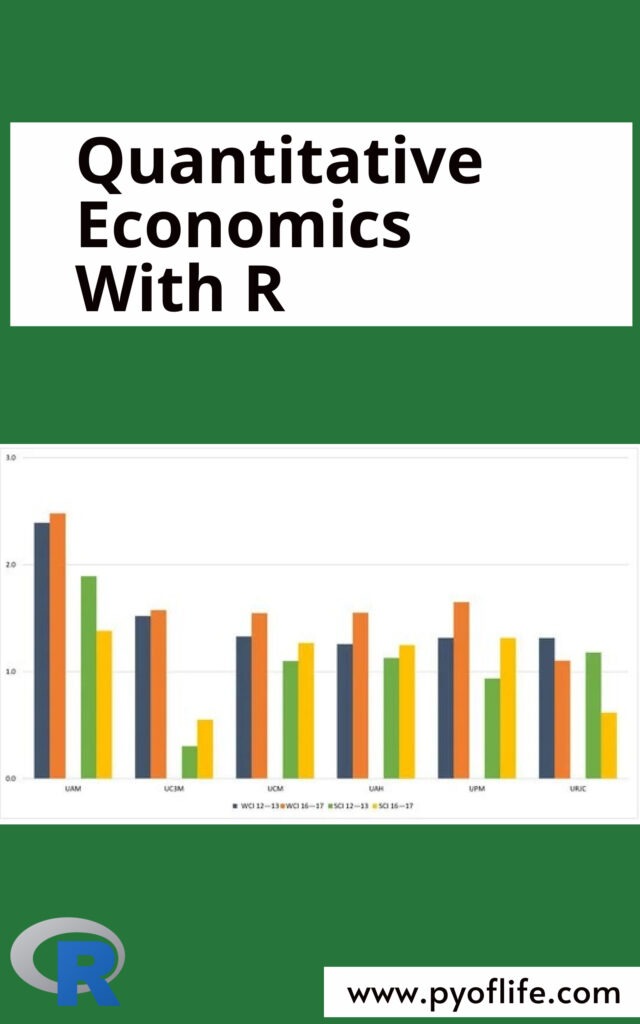
Quantitative Economics With R

Quantitative Economics With R: Quantitative economics is a branch of economics that relies heavily on mathematical and statistical methods to analyze economic phenomena. It involves the application of mathematical models and techniques to understand economic behavior, make predictions, and formulate policies. In recent years, the field has witnessed a significant transformation with the advent of data science techniques.

Importance of Data Science in Economics

Data science has revolutionized how economists approach problems by providing tools and techniques to analyze vast amounts of data efficiently. In economics, where data collection is fundamental, data science plays a crucial role in extracting meaningful insights from complex datasets. By leveraging data science methods, economists can uncover hidden patterns, relationships, and trends that were previously inaccessible.

Overview of R Programming Language

R is a powerful programming language and environment for statistical computing and graphics. It is widely used by economists and data scientists for data analysis, visualization, and modeling. With its rich ecosystem of packages and libraries, R provides a comprehensive toolkit for quantitative analysis in economics.

Quantitative Economics With R

Applications of R in Quantitative Economics

Data Manipulation and Cleaning

One of the primary tasks in quantitative economics is data manipulation and cleaning. R provides robust tools, such as the dplyr and tidyr packages, for efficiently managing and preparing data for analysis. These packages allow economists to filter, reshape, and aggregate datasets with ease.

Statistical Analysis

R offers a wide range of statistical functions and methods for analyzing economic data. From basic descriptive statistics to advanced modeling techniques, R enables economists to conduct rigorous statistical analysis to test hypotheses and derive insights.

Predictive Modeling

Predictive modeling is another essential aspect of quantitative economics, especially in forecasting economic trends and outcomes. With R’s machine learning libraries, such as caret and randomForest, economists can build predictive models that help anticipate future developments based on historical data.

Data Visualization with R

Visualization is a powerful tool for communicating insights and findings in economics. R’s ggplot2 package allows economists to create visually appealing and informative graphs, charts, and plots to illustrate economic trends, patterns, and relationships.

Time Series Analysis in Economics Using R

Time series analysis is a fundamental technique in economics for analyzing data collected over time. R provides specialized packages, such as forecast and tseries, for time series analysis, enabling economists to model and forecast economic variables such as GDP, inflation, and unemployment.

Econometric Modeling with R

Econometric modeling involves the application of statistical methods to economic data to estimate and test economic theories. R’s lm function and other econometric packages make it easy for economists to build and evaluate econometric models, allowing them to quantify relationships between variables and assess economic policies’ impacts.

Case Studies and Examples

To illustrate the practical applications of quantitative economics with R, let’s consider a few case studies:

  • Stock Market Prediction: Using historical stock price data, economists can build predictive models in R to forecast future stock prices and identify profitable trading opportunities.
  • Consumer Behavior Analysis: By analyzing consumer spending patterns and demographic data, economists can gain insights into consumer behavior and market trends using R.
  • Policy Evaluation: Econometric modeling in R allows economists to evaluate the effectiveness of various economic policies, such as taxation or monetary policy, by analyzing their impacts on relevant economic indicators.

Challenges and Limitations

Despite its many advantages, quantitative economics with R also faces challenges and limitations. These may include:

  • Data Quality: Ensuring the quality and reliability of data used in economic analysis can be challenging, particularly when dealing with large and heterogeneous datasets.
  • Model Complexity: Building and interpreting complex econometric models in R requires a solid understanding of economic theory and statistical methods.
  • Computational Resources: Performing intensive data analysis tasks in R may require significant computational resources, limiting the scalability of analyses.

Future Trends in Quantitative Economics with R

Looking ahead, the future of quantitative economics with R is promising. Advances in machine learning, big data analytics, and computational methods are expected to further enhance economists’ ability to analyze and understand complex economic phenomena. The growing availability of open data sources and collaborative platforms will also democratize access to economic data and analysis tools.

Conclusion

Quantitative economics with R offers a powerful and versatile approach to analyzing economic data and making informed decisions. By leveraging the tools and techniques provided by R and data science, economists can gain deeper insights into economic behavior, predict future trends, and formulate more effective policies.

Download(PDF)

Read More: Introduction to Econometrics with R

Learning Statistics with R

Welcome to this comprehensive tutorial on learning statistics with R, tailored specifically for psychology students and beginners. In this guide, we will explore the fundamentals of statistics and how to effectively use the R programming language for statistical analysis.

Why Statistics is Important for Psychology Students

Statistics plays a crucial role in psychology research, aiding in the interpretation of data and drawing meaningful conclusions. Whether you’re conducting experiments, surveys, or analyzing existing data, a solid understanding of statistics is essential for every psychology student.

Understanding R and its Benefits for Statistical Analysis

R is a powerful open-source programming language and software environment for statistical computing and graphics. It provides a wide array of tools and packages for data analysis, making it a preferred choice for researchers and analysts worldwide. Its flexibility and versatility make it ideal for beginners and advanced users alike.

Learning statistics with R

Installing R and RStudio

To get started with R, you’ll first need to install R and RStudio on your computer. R can be downloaded from the Comprehensive R Archive Network (CRAN), while RStudio, an integrated development environment (IDE) for R, can be downloaded from the RStudio website.

Basic R Syntax and Data Types

Once installed, familiarize yourself with basic R syntax and data types. R uses functions and operators to perform calculations and manipulations on data. It supports various data types such as numeric, character, logical, and factors.

Importing Data into R

One of the first steps in data analysis is importing data into R. R supports various file formats, including CSV, Excel, and SPSS. You can use functions like read.csv() or read_excel() to import data from external sources.

Descriptive Statistics with R

Descriptive statistics are used to summarize and describe the characteristics of a dataset. In R, you can calculate measures such as mean, median, mode, standard deviation, and variance using built-in functions like mean(), median(), and sd().

Inferential Statistics with R

Inferential statistics allow you to make inferences and predictions about a population based on a sample of data. R provides a wide range of statistical tests and procedures for hypothesis testing, correlation analysis, and regression analysis.

Data Visualization using R

Data visualization is a powerful tool for exploring and presenting data. R offers numerous packages for creating various types of plots and charts, including histograms, scatter plots, box plots, and bar graphs.

Regression Analysis with R

Regression analysis is used to model the relationship between a dependent variable and one or more independent variables. R provides functions for linear regression, logistic regression, and other types of regression analysis.

Hypothesis Testing in R

Hypothesis testing is a fundamental concept in statistics, allowing researchers to assess the validity of hypotheses based on sample data. R offers functions for conducting hypothesis tests such as t-tests, chi-square tests, and ANOVA.

ANOVA and MANOVA in R

Analysis of Variance (ANOVA) and Multivariate Analysis of Variance (MANOVA) are used to compare means across multiple groups or factors. R provides functions like aov() and manova() for conducting ANOVA and MANOVA tests.

Practical Examples and Exercises

To reinforce your learning, we’ll provide practical examples and exercises throughout the tutorial. These exercises will help you apply what you’ve learned and gain hands-on experience with R and statistical analysis.

Resources for Further Learning

Finally, we’ll conclude with a list of resources for further learning, including books, online courses, and community forums where you can continue to enhance your skills in statistics and R programming.

Conclusion

In conclusion, learning statistics with R can be a rewarding journey for psychology students and beginners alike. By mastering the basics of statistics and familiarizing yourself with R, you’ll be equipped with valuable skills for conducting research and analyzing data in various fields.

Download(PDF)

Read More: Using R for Data Analysis and Graphics Introduction, Code and Commentary

Intro to Python for Computer Science and Data Science

Intro to Python for Computer Science and Data Science: Python has emerged as one of the most popular programming languages in recent years, and its versatility makes it a favorite among computer scientists and data scientists. In this article, we’ll delve into the basics of Python, its importance in computer science and data science, and explore various applications of Python in these domains.

Why Python is Important for Computer Science and Data Science

Python’s rise to prominence can be attributed to several factors. Firstly, its simplicity and readability make it an ideal choice for beginners in programming. The syntax of Python is clear and concise, resembling natural language, which makes it easy to learn and understand for individuals with no prior coding experience.

Moreover, Python boasts a vast ecosystem of libraries and frameworks tailored for various purposes, ranging from web development to scientific computing. This extensive collection of tools simplifies complex tasks and accelerates the development process, making Python a preferred language for tackling diverse challenges in computer science and data science.

Intro to Python for Computer Science and Data Science

Basics of Python Programming Language

Variables and Data Types

In Python, variables are used to store data values. The data type of a variable is automatically determined based on the value assigned to it. Python supports various data types, including integers, floats, strings, lists, tuples, dictionaries, and sets.

Basic Syntax

Python utilizes indentation to define code blocks, dispensing with the need for curly braces or semicolons. This clean and concise syntax enhances code readability and reduces the likelihood of errors.

Conditional Statements and Loops

Python supports traditional control flow constructs such as if-else statements, for loops, and while loops, enabling developers to implement logic and iterate over data efficiently.

Python Libraries for Data Science

Python offers a plethora of libraries tailored for data manipulation, analysis, and visualization. Some of the popular libraries in the realm of data science include NumPy, Pandas, Matplotlib, and SciPy. These libraries provide powerful tools for handling large datasets, performing statistical analysis, and generating insightful visualizations.

Introduction to Object-Oriented Programming (OOP) in Python

Python is an object-oriented programming (OOP) language, that allows developers to create reusable and modular code by organizing functionality into classes and objects. This paradigm facilitates code maintenance, scalability, and code reusability, making it well-suited for large-scale software development projects.

Python for Data Analysis

In data analysis, Python shines as a versatile tool for exploring, cleaning, and transforming data. With libraries like Pandas, data scientists can easily manipulate tabular data, perform aggregations, and handle missing values. Additionally, libraries such as Matplotlib and Seaborn enable the creation of informative visualizations to extract insights from data.

Python for Machine Learning

Python serves as a powerhouse for machine learning tasks, thanks to libraries like Scikit-Learn, TensorFlow, and PyTorch. These libraries offer robust implementations of various machine learning algorithms, simplifying tasks such as classification, regression, clustering, and neural network modeling.

Python for Web Development

Python’s versatility extends to web development, with frameworks like Flask and Django facilitating the creation of dynamic and scalable web applications. These frameworks provide essential features such as routing, templating, and ORM (Object-Relational Mapping), streamlining the development process and enabling rapid prototyping of web-based solutions.

Resources for Learning Python

For aspiring Python developers, numerous resources are available to enhance their skills and knowledge. Online tutorials, documentation, and interactive coding platforms offer hands-on learning experiences, while books and community forums provide valuable insights and support from experienced developers.

Conclusion

In conclusion, Python is a powerhouse in both computer science and data science domains, offering a versatile and intuitive platform for developing robust software solutions and extracting insights from complex datasets. Its simplicity, readability, and extensive ecosystem of libraries make it the language of choice for professionals and enthusiasts alike.

Download(PDF)

Read More: Python For Data Science Cheat Sheet