Exploring the World of Subsea Cables with R: Subsea cables are the unsung heroes of our connected world, silently transmitting vast amounts of data across oceans, enabling global communication and internet connectivity. In this tutorial, we will dive into the fascinating world of subsea cables and learn how to visualize their data using the R programming language.
To get started, we need data about subsea cables. Fortunately, there are open datasets available that provide information on subsea cable locations, capacities, and more. You can find such datasets on websites like the Submarine Cable Map (https://www.submarinecablemap.com/) or through research organizations.
Mapping the Depths Exploring the World of Subsea Cables with R
Step 2: Data Import and Cleaning
Once you have obtained the dataset, import it into R using your preferred method, such as read.csv() for CSV files or read_excel() for Excel files. After importing, clean the data by removing duplicates, handling missing values, and ensuring data types are correct.
# Example code for data import and cleaning subsea_cables <- read.csv("subsea_cables.csv") subsea_cables <- unique(subsea_cables) # Remove duplicates subsea_cables <- na.omit(subsea_cables) # Remove rows with missing values
Step 3: Data Visualization
Now, let’s create visualizations to explore subsea cable data. We can use popular R packages like ggplot2 and leaflet for this purpose.
Visualizing Cable Routes with ggplot2:
library(ggplot2) # Create a basic map of cable routes ggplot(subsea_cables, aes(x = Longitude, y = Latitude, group = CableName)) + geom_path() + labs(title = "Subsea Cable Routes", x = "Longitude", y = "Latitude")
Interactive Map with Leaflet:
library(leaflet) # Create an interactive map of cable landing points leaflet(subsea_cables) %>% addTiles() %>% addMarkers( lng = ~Longitude, lat = ~Latitude, label = ~CableName ) %>% addMiniMap() %>% addControl( position = "bottomright", title = "Data source", label = "Submarine Cable Map" )
Step 4: Data Analysis (Optional)
Depending on your dataset, you can perform various analyses, such as calculating the total cable length, identifying the most connected countries, or visualizing cable capacities.
Conclusion:
Exploring the world of subsea cables with R programming allows us to gain insights into the backbone of global communication. With data visualization, we can better understand cable routes, landing points, and capacities. This knowledge can be invaluable for network engineers, researchers, and anyone interested in the fascinating infrastructure that powers our connected world.
Introduction, Statistics and Data Analysis in R: In the age of information, data is the driving force behind decision-making in various fields, from business to healthcare, and beyond. Understanding data and drawing meaningful insights from it has become paramount. This article will delve into the world of statistics and data analysis using R, a powerful and versatile programming language.
The Importance of Data Analysis
Data analysis is the process of inspecting, cleaning, transforming, and modeling data to discover useful information, draw conclusions, and support decision-making. In today’s data-driven world, organizations rely on data analysis to gain a competitive edge. It helps in identifying trends, making predictions, and solving complex problems.
Getting Started with R
R is an open-source programming language and environment specifically designed for statistical computing and graphics. It offers a wide range of packages and libraries that make data analysis efficient and accessible. To get started, you’ll need to install R on your computer and perhaps a user-friendly integrated development environment like RStudio.
Before diving into analysis, you need to manipulate your data. R provides tools for data cleaning, transformation, and merging datasets. You’ll learn how to handle missing values, filter data, and create new variables.
Exploratory Data Analysis (EDA) is the first step in analyzing data. It involves generating summaries and visualizations to understand the underlying patterns and relationships in your dataset. R makes EDA easy with packages like ggplot2 and dplyr.
Data visualization is a crucial aspect of data analysis. R offers a plethora of visualization options, from simple scatter plots to complex heatmaps. You’ll explore how to create compelling visualizations to communicate your findings effectively.
Statistical Analysis in R
R is a powerhouse when it comes to statistical analysis. You’ll learn how to perform common statistical tests, such as t-tests and ANOVA, to make inferences about your data. R also supports regression analysis, time series analysis, and more.
Advanced Techniques
For more complex analyses, R provides advanced techniques and machine learning algorithms. You can delve into topics like clustering, classification, and deep learning using packages like caret and keras.
Real-World Applications
To bring everything together, we’ll showcase real-world applications of R in various domains. From predicting stock prices to diagnosing diseases, R has a wide range of practical uses.
Conclusion
In conclusion, statistics and data analysis in R open doors to a world of possibilities. Whether you’re a data enthusiast, a researcher, or a business professional, mastering R can empower you to make informed decisions based on data-driven insights.
Frequently Asked Questions
Is R difficult to learn for beginners?
While R has a learning curve, it’s beginner-friendly with a supportive community and extensive documentation.
Can I use R for big data analysis?
Yes, R can handle big data through packages like ‘dplyr’ and ‘data.table.’
What are some popular R packages for data analysis?
Popular packages include ‘ggplot2’ for visualization, ‘dplyr’ for data manipulation, and ‘caret’ for machine learning.
Is R suitable for business analytics?
Absolutely! R is widely used in business analytics for forecasting, market segmentation, and customer analytics.
Where can I find datasets to practice with R?
You can find datasets on websites like Kaggle, UCI Machine Learning Repository, and data.gov.
Welcome to a journey through the fascinating realm of Bayesian statistics in Python, where we unravel the power of probabilistic programming using Think Bayes. In this comprehensive guide, we’ll explore the ins and outs of Bayesian statistics, providing you with valuable insights, expert knowledge, and answers to frequently asked questions (FAQs). Whether you’re a novice or an experienced data scientist, this article will equip you with the skills and understanding needed to harness the full potential of Think Bayes.
1. Understanding Bayesian Statistics
Bayesian statistics is a statistical approach that allows us to update our beliefs about a hypothesis as new evidence becomes available. It’s a powerful tool in data science and offers a robust framework for making predictions and decisions.
2. Why Python for Bayesian Statistics?
Python is a popular choice for Bayesian statistics due to its simplicity and a wealth of libraries like Think Bayes that make implementing Bayesian models a breeze.
Let’s dive right into Think Bayes and understand how to install and set up this incredible Python library for Bayesian analysis.
4. Basic Probability Theory
Before delving deeper into Think Bayes, it’s crucial to have a solid grasp of basic probability theory. We’ll cover essential concepts that will lay the foundation for Bayesian statistics.
5. Bayesian Inference
Discover the heart of Bayesian statistics – Bayesian inference. Learn how to make inferences about unknown parameters using probability distributions.
6. Bayes’ Theorem Demystified
Unravel the mysteries of Bayes’ theorem, a fundamental concept in Bayesian statistics. We’ll break it down into simple terms for better comprehension.
7. Prior and Posterior Distributions
Explore the significance of prior and posterior distributions in Bayesian analysis and how they impact decision-making.
8. Bayesian Modeling
Take your Bayesian skills to the next level by delving into Bayesian modeling techniques and applications.
9. Think Bayes in Action
Let’s put theory into practice. We’ll work through real-world examples using Think Bayes to solve complex problems.
10. Evaluating Model Performance
Learn how to assess the performance of Bayesian models and make data-driven decisions based on the results.
11. Think Bayes vs. Other Libraries
Compare Think Bayes with other Python libraries used for Bayesian analysis, highlighting its unique advantages.
12. Advanced Topics in Bayesian Statistics
Delve into advanced topics such as hierarchical modeling, Markov Chain Monte Carlo (MCMC) methods, and Bayesian networks.
13. Common Mistakes in Bayesian Analysis
Avoid pitfalls in Bayesian analysis by learning about common mistakes and how to steer clear of them.
14. FAQs
What Is the Key Advantage of Bayesian Statistics in Python?
Bayesian statistics in Python offers a flexible and intuitive approach to handling uncertainty in data, making it a powerful tool for data analysis and decision-making.
Can I Use Think Bayes for Machine Learning?
Yes, Think Bayes can be integrated into machine learning pipelines for tasks like classification and regression.
Is Bayesian Analysis Only for Advanced Data Scientists?
No, Bayesian analysis can be learned by beginners too, thanks to user-friendly libraries like Think Bayes.
How Do I Choose Priors in Bayesian Analysis?
Selecting appropriate priors is a critical step in Bayesian analysis. We’ll provide guidance on making informed choices.
Are There Any Limitations to Bayesian Statistics?
While Bayesian statistics is powerful, it’s not a one-size-fits-all solution. We’ll discuss its limitations and when other methods may be more suitable.
Can You Recommend Resources for Further Learning?
Absolutely! We’ll share valuable resources and references to help you deepen your understanding of Bayesian statistics in Python.
Conclusion
In this comprehensive guide, we’ve embarked on a journey through the world of Bayesian statistics in Python using Think Bayes. We’ve covered essential topics, provided real-world insights, and answered common questions. Whether you’re a data science enthusiast or a seasoned professional, you now have the knowledge and tools to harness the power of Bayesian statistics in Python.
Don’t miss the opportunity to explore the endless possibilities that Think Bayes offers in the realm of data analysis. Start your Bayesian journey today!
Welcome to the world of data analysis! In this article, we’ll dive into the exciting realm of data analysis using R, a powerful programming language for statistical computing and graphics. If you’re looking to become proficient in data analysis quickly, you’re in the right place. Just Enough R: Learn Data Analysis with R in a Day will equip you with the essential skills to harness the potential of data. Let’s embark on this data-driven journey together.
2. Understanding Data Analysis
Data analysis is the process of inspecting, cleaning, transforming, and modeling data to discover valuable insights, draw conclusions, and support decision-making. With R, you can perform these tasks efficiently and effectively.
3. Why Choose R for Data Analysis?
R is a preferred choice among data analysts for several reasons:
Open Source: R is free to use and has a vast community of users and developers.
Versatility: It can handle a wide range of data types and formats.
Rich Libraries: R offers numerous libraries and packages for data manipulation and visualization.
Statistical Power: R excels in statistical analysis, making it a favorite in research and academia.
Just Enough R: Learn Data Analysis with R in a Day
Visualizing data is essential for conveying insights effectively. R offers a variety of packages, including ggplot2, for creating stunning visualizations.
Take your data analysis skills to the next level by diving into machine learning. R provides libraries like caret and randomForest for predictive modeling.
10. Just Enough R: Learn Data Analysis with R in a Day
This section delves into the core content of this article. We’ll cover the following topics in detail:
Getting Started
Installing R: A step-by-step guide to installing R on your system.
RStudio Setup: Configure RStudio for a seamless data analysis experience.
Basic R Commands: Learn essential commands to navigate R.
Data Import and Cleaning
Loading Data: Import data from various sources and formats.
Data Cleaning Techniques: Master data cleaning to prepare for analysis.
Exploratory Data Analysis
Descriptive Statistics: Understand the basics of data summary.
Data Visualization: Create informative visualizations using ggplot2.
Statistical Analysis
Hypothesis Testing: Learn how to test hypotheses with R.
ggplot2 Essentials: Dive deep into ggplot2 for stunning visualizations.
Machine Learning
Introduction to Machine Learning: Explore the fundamentals.
Predictive Modeling: Build predictive models using R libraries.
11. Frequently Asked Questions (FAQs)
Here are some common questions about learning data analysis with R:
How long does it take to learn data analysis with R?
Can I use R for big data analysis?
Are there any prerequisites for learning R?
What are the career prospects for data analysts proficient in R?
Is R difficult to learn for beginners?
Where can I find datasets to practice data analysis with R?
12. Conclusion
Just Enough R: Learn Data Analysis with R in a Day provides a comprehensive and accessible way to become proficient in data analysis using R. Whether you’re a beginner or looking to expand your skillset, this guide equips you with the knowledge and tools to succeed in the world of data analysis. Start your journey today and unlock the power of data.
An Introduction to Financial Data Analysis with R: Financial data analysis is an important part of any financial decision-making process. With the rise of big data and advanced analytics, the ability to analyze financial data has become crucial for businesses, governments, and other organizations. R provides a powerful platform for financial data analysis. Whether working with time series data, regression analysis, or machine learning. With the right data and the right tools, you can make informed financial decisions based on your data analysis. In this article, we will cover the basics of financial data analysis in R and provide some practical examples with real data.
To get started with R, you will need to download and install the software. You can download R from the official website. Once you have installed R, you can use the software to analyze financial data.
The first step in financial data analysis is to import the data into R. R provides several functions for importing data, including read.csv and read.table. For example, to import a CSV file into R, you can use the following code:
financial_data <- read.csv("financial_data.csv")
Once you have imported the data into R, you can start exploring the data using various R functions. For example, you can use the head function to see the first few rows of the data:
head(financial_data)
Exploring Financial Data in R
Once you have imported the data into R, you can start exploring the data. The first step in this process is to get a sense of the overall structure of the data. You can use the str function to see the structure of the data:
str(financial_data)
Next, you can use the summary function to see a summary of the data:
summary(financial_data)
The summary function will give you information about the mean, median, and standard deviation of the data.
Data Visualization in R
Data visualization is an important part of financial data analysis. R provides many functions for visualizing data, including histograms, scatter plots, and line charts.
For example, you can use the hist function to create a histogram of the data:
hist(financial_data$returns)
You can also use the plot function to create a scatter plot of the data:
Once you have explored the data and visualized the data, you can start analyzing the data. There are many techniques for financial data analysis, including regression analysis, time series analysis, and machine learning.
For example, you can use the lm function to perform a linear regression analysis:
model <- lm(returns ~ price, data = financial_data)
summary(model)
You can also use the arima function to perform a time series analysis:
model <- arima(financial_data$returns, order = c(1, 1, 0))
summary(model)
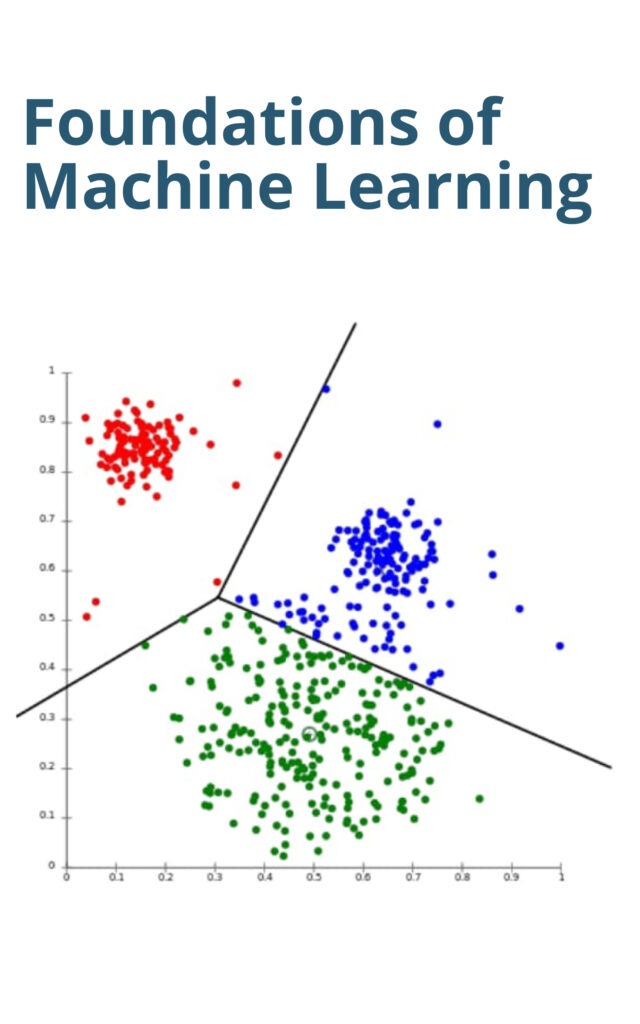
Welcome to the exciting world of machine learning, where computers learn and improve without explicit programming. In this article, we’ll delve deep into the foundations of machine learning, demystifying the core principles that underpin this revolutionary technology. Whether you’re a novice or a seasoned pro, there’s something here for everyone. So, let’s embark on this journey to unravel the mysteries of machine learning.
Foundations of Machine Learning
The Beginnings
Machine learning, often referred to as ML, represents a branch of artificial intelligence (AI) that focuses on the development of algorithms and statistical models. These algorithms enable computers to learn and make predictions or decisions without being explicitly programmed. The foundations of machine learning are rooted in mathematics, statistics, and computer science.
ML has evolved from the idea of creating computer systems that can automatically improve their performance through experience. Arthur Samuel, a pioneer in the field, coined the term “machine learning” in 1959, laying the groundwork for what we know today.
At the heart of machine learning is data. Enormous datasets serve as the fuel that powers ML algorithms. These datasets are used to train models, allowing them to recognize patterns and make predictions. The more high-quality data you have, the better your machine-learning model can perform.
2. Algorithms
ML algorithms are the brains behind the operation. These complex mathematical models process the data and adjust themselves to improve their performance over time. Common ML algorithms include decision trees, neural networks, and support vector machines.
3. Model Training
Training a machine learning model involves feeding it with labeled data, which means data with known outcomes. The model then learns from this data to predict new, unlabeled data. This iterative process is what enables machines to learn and improve.
4. Feature Engineering
Feature engineering is the art of selecting and transforming the most relevant attributes or features from your data. It’s a critical step in the ML pipeline as it directly impacts the model’s performance.
Applications
Machine learning has found applications in various domains, revolutionizing industries and enhancing our daily lives. Some notable applications include:
Natural Language Processing (NLP): ML powers chatbots, translation services, and sentiment analysis in language processing.
Healthcare: ML aids in disease diagnosis, drug discovery, and personalized treatment plans.
Finance: Fraud detection, algorithmic trading, and credit scoring rely heavily on ML.
Autonomous Vehicles: ML algorithms enable self-driving cars to perceive and navigate the world.
FAQs
How do machine learning models make predictions?
Machine learning models make predictions by learning patterns from labeled data during the training phase. Once trained, they apply this knowledge to new, unlabeled data to make predictions or classifications.
Is machine learning the same as artificial intelligence?
No, machine learning is a subset of artificial intelligence. AI encompasses a broader range of concepts, while machine learning specifically focuses on algorithms and statistical models that enable computers to learn and make predictions.
What are some challenges in machine learning?
Challenges in machine learning include data quality issues, overfitting (when a model performs well on training data but poorly on new data), and ethical considerations surrounding bias in algorithms.
Can I start learning machine learning without a background in programming?
While some programming knowledge is beneficial, you can start learning machine learning with the right resources and determination. Many online courses and tutorials cater to beginners in this field.
Are there any ethical concerns in machine learning?
Ethical concerns in machine learning include issues related to bias in algorithms, data privacy, and the potential for automation to displace jobs. It’s essential to address these concerns as the field continues to advance.
What’s the future of machine learning?
The future of machine learning holds endless possibilities. As technology continues to advance, ML will play a pivotal role in solving complex problems, driving innovation, and reshaping industries across the globe.
Conclusion
In this journey through the foundations of machine learning, we’ve explored the key concepts, applications, and some common FAQs that shed light on this dynamic field. As machine learning continues to evolve, it promises to transform industries, making our lives more efficient and enjoyable. Embrace the future of AI by understanding its foundations, and you’ll be well-prepared for the exciting developments yet to come.
Python programming has emerged as one of the most popular languages for data analysis, thanks to its simplicity and flexibility. It is an open-source, object-oriented programming language widely used for various tasks, including building web applications and scientific computing. In this article, we will cover the basics of Python programming for data analysis.
Setting up Python Environment for Data Analysis
Before we start exploring Python for data analysis, we need to set up our environment. We will need to install Python and several libraries that are commonly used in data analysis, such as Numpy, Pandas, Matplotlib, and Seaborn. These libraries can be installed using the pip command in the terminal or command prompt.
Python supports several data types, including numeric data types, strings, lists, tuples, sets, and dictionaries. Numeric data types include integers, floating-point numbers, and complex numbers. Strings are used to represent text data, while lists, tuples, sets, and dictionaries are used to store collections of data.
Reading and Writing Data with Python
Python provides several libraries for reading and writing data in different formats. For instance, we can read and write CSV files using the built-in csv module, which provides several functions for working with CSV files. Similarly, we can read and write Excel files using the pandas library.
Python provides several libraries that are specifically designed for data analysis, such as Numpy and Pandas. Numpy provides support for mathematical operations, while Pandas provides support for data manipulation and analysis. With these libraries, we can perform a variety of data analysis tasks, such as data cleaning, preprocessing, and visualization.
Python offers several libraries for data visualization, including Matplotlib and Seaborn. Matplotlib provides support for basic visualization, while Seaborn provides support for advanced visualization. With these libraries, we can create a variety of visualizations, such as bar charts, line charts, scatter plots, and heat maps.
Welcome to the world of Tidy Modeling with R – A Framework for Modeling in the Tidyverse. In this comprehensive guide, we will explore this powerful approach to data modeling, providing you with a complete understanding of the topic. Whether you’re a data scientist or just curious about data modeling, this article will equip you with the knowledge you need.
What is Tidy Modeling with R?
Tidy Modeling with R is a data modeling approach that leverages the capabilities of the Tidyverse ecosystem in R. It offers a structured and efficient way to work with data, allowing for seamless modeling and visualization. This framework has gained immense popularity in the data science community for its simplicity and effectiveness.
Tidy Modeling with R: A Framework for Modeling in the Tidyverse
In this section, we will delve into the fundamental aspects of Tidy Modeling with R, including:
Data Cleaning and Transformation
Learn how to prepare your data for modeling by applying essential cleaning and transformation techniques.
Data Visualization
Discover the art of visualizing data with the Tidyverse, making it easier to identify patterns and insights.
Model Building
Explore the process of building predictive models using Tidy Modeling techniques, optimizing your results.
Model Evaluation
Understand how to assess the performance of your models and make informed decisions based on the evaluation metrics.
Tidy Modeling with R in Practice
Now that we’ve covered the foundations, let’s see how Tidy Modeling is applied in real-world scenarios. We will discuss:
Predictive Analytics
Learn how to use Tidy Modeling to predict future trends and outcomes, with practical examples.
Classification
Discover how Tidy Modeling addresses classification problems, enabling accurate data categorization.
Regression Analysis
Delve into the world of regression analysis with Tidy Modeling, modeling relationships between variables.
Time Series Forecasting
Discover how Tidy Modeling is used in time series forecasting, a crucial component in various industries.
FAQs (Frequently Asked Questions)
Is Tidy Modeling suitable for beginners?
Absolutely! Tidy Modeling with R is designed to be beginner-friendly, and its logical structure makes it accessible to those new to data modeling.
Are there any prerequisites for learning Tidy Modeling?
While prior knowledge of R programming is beneficial, this framework can be learned by anyone with a keen interest in data science.
Can Tidy Modeling handle large datasets?
Yes, Tidy Modeling can handle large datasets efficiently, thanks to its optimization capabilities within the Tidyverse.
What are the advantages of Tidy Modeling over traditional modeling approaches?
Tidy Modeling provides a more streamlined and intuitive approach to data modeling, facilitating easier data manipulation and the creation of accurate models.
Are there any online resources for learning Tidy Modeling?
Certainly! There are numerous online courses and tutorials dedicated to Tidy Modeling, making it accessible to learners worldwide.
How can I get started with Tidy Modeling today?
To embark on your Tidy Modeling journey, you can start by installing the Tidyverse package in R and exploring online resources and tutorials.
Conclusion
In conclusion, Tidy Modeling with R – A Framework for Modeling in the Tidyverse is a game-changer in the field of data modeling. It simplifies the process, making it accessible to both beginners and experienced data scientists. With its robust capabilities, Tidy Modeling empowers you to extract valuable insights from your data efficiently.
Unlock the potential of Tidy Modeling with R and elevate your data modeling skills to new heights. Start your journey today and embrace the power of the Tidyverse.
New Approach to Regression with R: Regression analysis is one of the most commonly used techniques in data analysis. It is a powerful tool for predicting outcomes and understanding the relationship between variables. However, the traditional approach to regression analysis has limitations that have led to the development of new techniques. In this article, we will explore a new approach to regression with R that addresses these limitations.
Introduction
In this section, we will introduce the topic of regression analysis and its importance in data analysis. We will also discuss the limitations of the traditional approach to regression analysis.
What is regression analysis?
Regression analysis is a statistical technique used to explore the relationship between a dependent variable and one or more independent variables. It is used to predict the value of the dependent variable based on the values of the independent variables.
Regression analysis is an important tool in data analysis because it helps us understand the relationship between variables. It can be used to predict outcomes and identify important factors that affect the outcome.
Limitations of the traditional approach to regression analysis
The traditional approach to regression analysis has limitations that can make it difficult to interpret the results. One of the main limitations is that it assumes a linear relationship between the dependent variable and independent variables. This means that the relationship between variables is assumed to be constant across all values of the independent variables. Another limitation is that it assumes that the errors are normally distributed.
The new approach to regression with R
In this section, we will introduce the new approach to regression with R that addresses the limitations of the traditional approach. We will also discuss the benefits of using this approach.
Non-linear regression
The new approach to regression with R allows for non-linear relationships between the dependent variable and independent variables. This means that the relationship between variables can change depending on the values of the independent variables. Non-linear regression models are more flexible than linear regression models and can provide a better fit to the data.
Generalized linear models
The new approach to regression with R also includes generalized linear models. Generalized linear models allow for non-normal distributions of the errors. This means that the errors can be skewed or have heavy tails. Generalized linear models are more flexible than linear regression models and can provide a better fit to the data.
Bayesian regression
The new approach to regression with R also includes Bayesian regression. Bayesian regression allows us to incorporate prior knowledge into the analysis. This can be useful when we have some knowledge about the relationship between variables before we start the analysis. Bayesian regression can also provide more accurate predictions than traditional regression models.
Benefits of the new approach
The new approach to regression with R has several benefits over the traditional approach. It allows for non-linear relationships between variables, non-normal distributions of errors, and the incorporation of prior knowledge into the analysis. This makes it a more flexible and accurate tool for data analysis.
Create Graphical User Interfaces with Python: Python, a language known for its simplicity and versatility, is not only a favorite among developers but also an excellent choice for creating Graphical User Interfaces (GUIs). Whether you’re a seasoned programmer or a novice looking to dive into GUI development, Python has got you covered. In this comprehensive guide, we will explore the world of GUIs in Python, step by step, helping you unleash your creativity and turn your ideas into visually appealing and user-friendly applications.
Create Graphical User Interfaces with Python
Python’s rich ecosystem offers several libraries and frameworks for GUI development, making it a top choice for developers worldwide. Let’s dive right into the heart of this guide:
Understanding the Basics
What is a Graphical User Interface?
A Graphical User Interface, commonly known as a GUI, is a visual way for users to interact with a computer program. Instead of typing commands, users can simply click buttons, drag elements, and manipulate graphical objects to perform tasks.
Why Choose Python for GUI Development?
Python’s popularity and ease of use make it an ideal choice for GUI development. Its extensive libraries, like Tkinter, PyQt, and Kivy, provide powerful tools to create stunning interfaces effortlessly.
Tkinter is Python’s standard GUI library that comes bundled with most Python installations. It offers a simple way to create windows, dialogs, buttons, and more.
Setting Up Tkinter
Before diving into GUI development with Tkinter, ensure you have Python installed on your system. Then, follow these simple steps:
Import Tkinter: Start by importing Tkinter into your Python script.
Create a Window: Initialize the main application window.
Adding Widgets: Populate the window with widgets like buttons, labels, and entry fields.
Handling Events: Define functions to handle user interactions, such as button clicks.
Building Your First GUI Application
Step-by-Step Guide to a Simple Calculator
Let’s create a basic calculator application to get hands-on experience with Tkinter.
# Define button click function def handle_click(text): current = entry.get() if text == '=': try: result = eval(current) entry.delete(0, tk.END) entry.insert(tk.END, result) except Exception as e: entry.delete(0, tk.END) entry.insert(tk.END, "Error") else: entry.insert(tk.END, text)
Now you have a functional calculator GUI application. This example demonstrates the simplicity and power of Tkinter for creating GUIs in Python.
Exploring Advanced GUI Frameworks
Taking GUI Development to the Next Level
While Tkinter is excellent for simple applications, Python offers more advanced GUI frameworks for complex projects:
PyQt:
PyQt is a set of Python bindings for the Qt application framework.
It offers a comprehensive range of features, including support for 2D vector graphics and 3D graphics utilizing OpenGL.
Kivy:
Kivy is an open-source Python library for developing multitouch applications.
It’s highly suitable for creating touch-friendly interfaces on various platforms.
Tips and Tricks for GUI Development
Mastering the Art of GUI Design
Creating visually appealing and user-friendly GUIs requires more than just coding skills. Here are some tips and tricks to enhance your GUI development:
1. Plan Your Interface:
Before you start coding, sketch a layout and user flow to ensure a clear and intuitive interface.
2. Keep it Simple:
Avoid clutter and excessive elements. A clean design is often more effective.
3. Responsiveness Matters:
Ensure that your GUI works seamlessly on different screen sizes and resolutions.
4. Use Icons and Graphics:
Icons and graphical elements can improve user understanding and engagement.
5. Test Thoroughly:
Test your GUI with potential users to gather feedback and make improvements.
FAQs
Answering Your Burning Questions
How long does it take to learn GUI development with Python?
Learning the basics of GUI development with Python can take a few weeks to a couple of months, depending on your prior programming experience. Mastery comes with practice and project-based learning.
Is Python suitable for game development with GUIs?
Yes, Python can be used for game development with GUIs. Libraries like Pygame and Kivy are popular choices for creating games with graphical interfaces.
Are there any online resources for learning GUI development with Python?
Yes, there are plenty of online tutorials, courses, and documentation available for learning GUI development with Python. Websites like Coursera, edX, and Python.org offer valuable resources.
Can I create mobile apps with Python and GUIs?
Yes, you can create mobile apps with Python using frameworks like Kivy and BeeWare. These frameworks allow you to develop cross-platform apps for Android and iOS.
What are some popular software applications developed with Python GUIs?
Python has been used to develop various applications, including web browsers (like Chrome), 3D modeling tools (Blender), and image editing software (GIMP).
What are the career prospects for GUI developers?
GUI development is a valuable skill in today’s tech industry. GUI developers are in demand for creating user-friendly software applications, websites, and mobile apps.
Conclusion
In this comprehensive guide, we’ve explored the fascinating world of creating Graphical User Interfaces with Python. From understanding the basics to building your first GUI application and exploring advanced frameworks, you now have the knowledge and tools to embark on your GUI development journey.
Remember, GUI development is not just about coding; it’s about creating an exceptional user experience. So, plan, design, and code with passion. Your creativity knows no bounds, and with Python, the possibilities are endless. So, go ahead and create your GUI ideas with Python!