Data Science

Introducing Python

Introducing Python: Python, often referred to as the “Swiss Army knife” of programming languages, is a versatile and powerful language that has become immensely popular in recent years. Its simplicity and readability make it an excellent choice for beginners, while its extensive libraries and frameworks cater to the needs of advanced programmers. In this article, we’ll take a deep dive into the world of Python, exploring its history, applications, and why it has captured the hearts of developers worldwide.

2. A Brief History of Python

Python was created in the late 1980s by Guido van Rossum, a Dutch programmer. Guido’s aim was to design a language that emphasized code readability and ease of use. He succeeded, and Python was officially released in 1991. Over the years, Python has evolved, with Python 2 and Python 3 being the two major versions. In 2020, Python 2 reached its end of life, emphasizing the importance of migrating to Python 3 for ongoing support and security updates.

3. Python’s Popularity in the Programming World

Python’s popularity has surged in recent years, and it consistently ranks among the top programming languages. The reasons for this popularity are manifold. Its clear and concise syntax allows developers to write code quickly and with fewer errors. Additionally, Python’s extensive standard library and third-party packages simplify complex tasks, making it suitable for various domains.

Introducing Python
Introducing Python

4. Python’s Syntax: Readability and Elegance

One of Python’s standout features is its readability. Its clean and well-structured syntax resembles plain English, making it easy for developers to understand and maintain code. This readability not only aids collaboration but also reduces the learning curve for newcomers, making Python an ideal choice for beginners.

5. Versatility of Python: What Can You Do?

Python’s versatility is perhaps its most remarkable trait. It is a multi-paradigm language, which means it supports various programming styles, including procedural, object-oriented, and functional programming. This versatility makes it suitable for a wide range of applications.

6. Python in Web Development

Python is widely used in web development, thanks to frameworks like Django and Flask. These frameworks simplify web application development, enabling developers to create powerful and secure web applications quickly.

7. Python in Data Science and Machine Learning

Python has emerged as the go-to language for data science and machine learning. Libraries like NumPy, pandas, and TensorFlow provide robust tools for data analysis, manipulation, and building machine learning models.

8. Python in Automation

Python’s simplicity makes it an excellent choice for automation tasks. Whether it’s automating repetitive processes or creating scripts for system administration, Python’s versatility shines in this domain.

9. Python in Game Development

Even in the world of game development, Python has a role to play. The Pygame library allows developers to create 2D games with ease, making it an attractive choice for game enthusiasts and indie developers.

10. Python Community and Resources

Python boasts a thriving community of developers and enthusiasts. Online forums, tutorials, and extensive documentation make learning Python a breeze. Developers can always find help and support when needed.

11. Learning Python: Where to Begin

If you’re eager to start your Python journey, there are plenty of online resources available. From interactive tutorials to comprehensive courses, you can choose a learning path that suits your needs and pace.

12. Python 2 vs. Python 3: The Transition

The transition from Python 2 to Python 3 was a significant milestone in Python’s history. While Python 2 was widely used, it’s crucial to migrate to Python 3 for ongoing support and compatibility with modern libraries and tools.

13. Python’s Future: What Lies Ahead

Python’s future looks promising. As the language continues to evolve, it will likely gain even more popularity and versatility. With advancements in areas like artificial intelligence and data science, Python is poised to play a pivotal role in shaping the technology landscape.

14. Conclusion

In conclusion, Python’s simplicity, versatility, and readability have made it a favorite among programmers of all levels. Whether you’re a beginner looking to learn your first programming language or an experienced developer seeking a powerful tool, Python has something to offer. Embrace Python, and you’ll open doors to a world of endless possibilities.

Introducing Python (FAQS)

Q1. Is Python a good language for beginners? Yes, Python’s readability and simplicity make it an excellent choice for beginners.

Q2. What can I do with Python? You can use Python for web development, data science, machine learning, automation, and more.

Q3. What’s the difference between Python 2 and Python 3? Python 2 has reached its end of life, and Python 3 is the recommended version for ongoing development.

Q4. Are there job opportunities for Python developers? Absolutely, Python developers are in high demand across various industries.

Q5. Where can I learn Python online? There are many online resources, including websites, tutorials, and courses, where you can learn Python at your own pace.

Download: Python for Everybody: Exploring Data Using Python 3

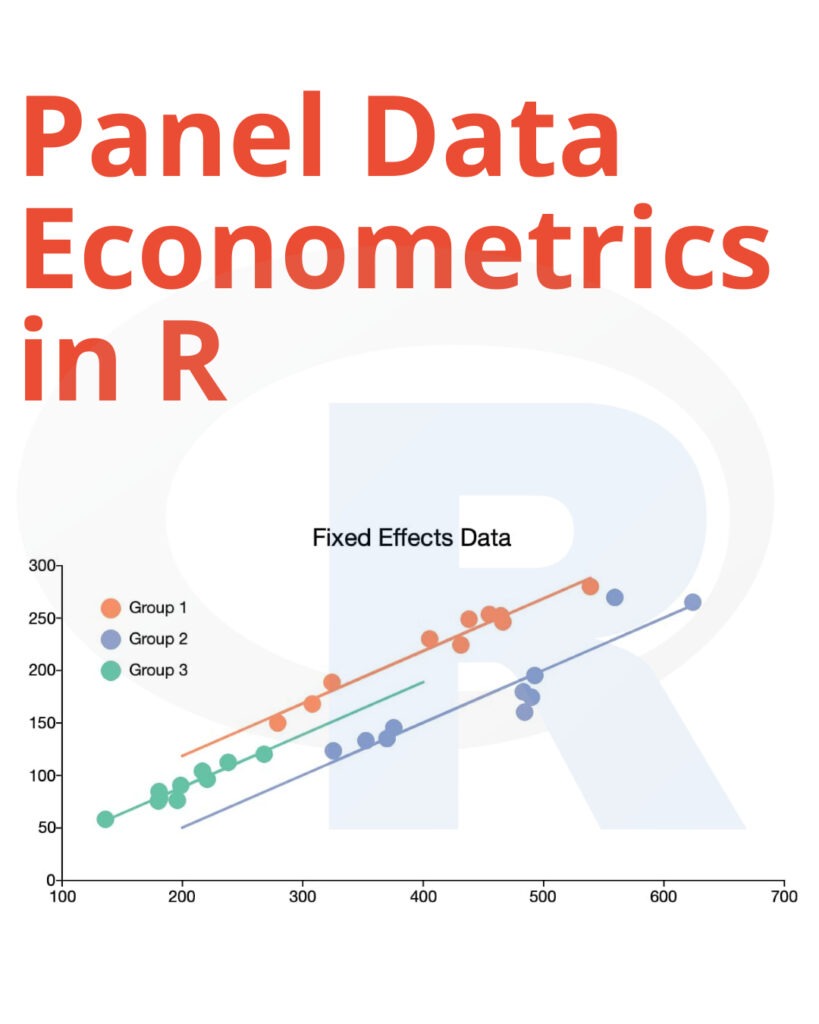
Panel Data Econometrics in R: The plm Package

In the world of econometrics, the analysis of panel data has become increasingly important. Panel data, also known as longitudinal data, involves observations of multiple entities over time. This type of data provides valuable insights into economic and social phenomena, making it a fundamental component of econometric research. In this article, we will explore the powerful “plm” package in R, which is a versatile tool for panel data econometrics.

Understanding Panel Data

Before delving into the “plm” package, it’s essential to grasp the concept of panel data. Panel data combines cross-sectional and time series data, enabling researchers to examine changes within individual entities over a period. The two main dimensions in panel data are:

Cross-sectional dimension (individuals or entities)

This dimension represents different entities such as companies, countries, or individuals. Each entity is observed over multiple time periods, creating a panel structure.

Time series dimension

The time series dimension comprises the various time points or periods when data is collected. It could be monthly, quarterly, yearly, or any other suitable interval.

Panel Data Econometrics in R

The plm Package: An Overview

Now that we understand panel data, let’s explore the “plm” package in R. This package is a powerful toolkit for panel data econometrics, offering a wide range of functionalities for data manipulation and analysis. Here are some key features:

1. Data Import and Transformation

The “plm” package provides functions for importing panel data and transforming it into a suitable format for analysis. Users can easily load data from CSV files or other sources, making it convenient for researchers dealing with diverse data sets.

2. Fixed Effects and Random Effects Models

One of the primary tasks in panel data analysis is modeling entity-specific effects. The “plm” package allows researchers to estimate fixed effects and random effects models, which are crucial for understanding the impact of individual entities on the dependent variable.

3. Robust Standard Errors

Robust standard errors are essential in panel data econometrics to account for heteroscedasticity and correlation in the data. The “plm” package offers robust standard error estimation, ensuring the reliability of the results.

4. First-Differencing and Within-Transformation

Researchers often need to differentiate or transform their data to eliminate unobserved heterogeneity. The “plm” package provides functions for first-differencing and within-transformation, simplifying these processes.

5. Hypothesis Testing

With the “plm” package, you can easily perform hypothesis tests on your panel data models. Whether you want to test the significance of coefficients or assess model fit, this package has you covered.

Getting Started with plm

To get started with the “plm” package, follow these steps:

Step 1: Installation

If you haven’t already installed the package, you can do so using the following command:

install.packages("plm")

Step 2: Loading the Package

After installation, load the package using:

library(plm)

Step 3: Importing Your Data

Use the appropriate functions to import your panel data into R.

Step 4: Model Estimation

Estimate your panel data models, whether it’s fixed effects, random effects, or other specifications, using the “plm” functions.

Conclusion

The “plm” package in R is a valuable resource for researchers and data analysts working with panel data econometrics. Its user-friendly functions and comprehensive capabilities make it an essential tool for understanding economic and social phenomena over time.

Incorporating panel data analysis into your research can provide deeper insights and improve the robustness of your econometric models. So, dive into the world of panel data econometrics with the “plm” package and unlock new dimensions of understanding in your data.

FAQs

  1. What is panel data econometrics? Panel data econometrics is a branch of econometrics that deals with data collected over time on multiple entities, allowing researchers to analyze both cross-sectional and time series variations.
  2. What are fixed effects and random effects models? Fixed effects models account for entity-specific effects, while random effects models capture unobserved heterogeneity in the data.
  3. Why is robust standard error estimation important in panel data analysis? Robust standard errors help correct for heteroscedasticity and correlation in the data, ensuring the validity of statistical tests.
  4. Can I use the “plm” package for other types of data analysis? While “plm” is primarily designed for panel data econometrics, it can also be used for other types of data analysis, depending on your research needs.
  5. Are there any tutorials or resources for learning more about the “plm” package? Yes, there are several online tutorials and documentation resources available to help you master the “plm” package in R.

Download(PDF)

Download: Learn Data Manipulation In R

Analyzing Linguistic Data A practical introduction to statistics using R

Welcome to the world of data analysis! In this comprehensive guide, we’ll take you on a journey through the fascinating realm of Analyzing Linguistic Data using R. Whether you’re a seasoned statistician or a beginner looking to dive into data analysis, this article has something for everyone. We’ll explore the fundamentals, delve into techniques, and provide insights that will help you master the art of linguistic data analysis.

Understanding Linguistic Data

Linguistic data analysis involves examining language-related information to extract valuable insights. This data can come from various sources, such as text documents, transcripts, or social media posts. By applying statistical techniques using R, you can uncover patterns, trends, and correlations within linguistic data.

The Power of R in Linguistic Data Analysis

R is a versatile and powerful programming language for statistical analysis. Its extensive library of packages makes it an ideal choice for linguistic data analysis. Here, we’ll explore some of the key reasons why R is the preferred tool for this task.

Analyzing Linguistic Data A practical introduction to statistics using R

Key Features of R for Linguistic Data Analysis

  1. Open-Source: R is freely available, making it accessible to all.
  2. Rich Graphical Capabilities: Create insightful visualizations to represent linguistic data.
  3. Statistical Packages: R boasts numerous packages specifically designed for linguistic analysis.
  4. Community Support: Join a thriving community of R users and access a wealth of knowledge.
  5. Data Manipulation: Easily manipulate linguistic data to suit your analysis needs.

Getting Started with R

Before we dive into linguistic data analysis, let’s ensure you’re comfortable with R. If you’re new to the language, don’t worry; we’ll guide you through the basics.

Analyzing Linguistic Data: A Practical Introduction to Statistics Using R

Now, let’s roll up our sleeves and start Analyzing Linguistic Data using R. We’ll cover a step-by-step process to help you navigate this fascinating journey.

Step 1: Data Collection

The first crucial step is gathering linguistic data. Identify your data sources and ensure data quality.

Step 2: Data Preprocessing

Clean and prepare your data. This step is essential for accurate analysis.

Step 3: Exploratory Data Analysis (EDA)

Explore your linguistic data using descriptive statistics and visualizations.

Step 4: Statistical Analysis

Apply statistical techniques such as regression, clustering, and hypothesis testing to gain insights.

Step 5: Interpretation and Insights

Interpret your findings and draw meaningful conclusions from linguistic data.

Step 6: Reporting and Visualization

Present your results effectively through reports and visualizations.

Frequently Asked Questions (FAQs)

Q: How can I access R for linguistic data analysis? A: You can download R for free from the official website (insert link). Additionally, there are various online resources and tutorials to help you get started.

Q: Is linguistic data analysis suitable for beginners? A: Yes, this article provides a practical introduction suitable for both beginners and experienced analysts.

Q: Can you recommend any R packages for linguistic data analysis? A: Certainly! Some popular packages include tm, quanteda, and NLP.

Q: Are there any online communities for R users interested in linguistic data analysis? A: Yes, you can join forums and communities like Stack Overflow and Cross Validated to connect with fellow R enthusiasts.

Q: What types of linguistic data can I analyze with R? A: R can analyze a wide range of linguistic data, including text documents, transcripts, social media posts, and more.

Q: How can I improve my skills in linguistic data analysis? A: Practice, explore different datasets, and keep learning from online courses and tutorials.

Conclusion

Analyzing Linguistic Data using R opens up a world of possibilities. With the right techniques and tools, you can unlock valuable insights from linguistic data, enhancing your decision-making and research capabilities. Embrace the power of R and embark on your journey to becoming a linguistic data analysis expert.

Download (PDF)

Download: A Handbook of Statistical Analyses Using R

Forecasting: Principles And Practice Using R

In today’s data-driven world, forecasting plays a pivotal role in making informed decisions. The ability to predict future trends, demands, and outcomes is crucial for individuals and businesses. In this comprehensive guide, we will delve into the principles and practice of forecasting using the powerful tool, R.

Introduction

Forecasting using R is not just a skill; it’s a strategic advantage. With the right techniques and tools, you can harness the power of data to make accurate predictions, whether it’s for financial planning, inventory management, or sales projections. This article will take you on a journey through the world of forecasting, equipping you with the knowledge and expertise to become a forecasting pro.

Understanding Forecasting: Principles And Practice Using R

Forecasting is the process of making predictions based on historical data and statistical models. R, a programming language and software environment for statistical computing and graphics, is widely used in the field of forecasting due to its versatility and extensive libraries.

Forecasting Principles And Practice Using R

Why Forecasting Matters

Forecasting is not just about making educated guesses; it’s about using data to make precise predictions. Here’s why it’s essential:

  1. Informed Decision-Making: Forecasting helps organizations make informed decisions by providing insights into future trends.
  2. Resource Optimization: It allows businesses to optimize resources, whether it’s managing inventory or allocating budgets.
  3. Risk Management: Understanding potential future scenarios enables better risk management.

Key Steps in Forecasting

To excel in forecasting using R, you need to follow a structured approach:

Data Collection and Preparation

Before you start forecasting, you must gather and clean your data. This step is crucial because the accuracy of your predictions depends on the quality of your data.

Model Selection

R offers various forecasting models, such as ARIMA, Exponential Smoothing, and Prophet. Choosing the right model depends on the nature of your data and the problem you’re trying to solve.

Model Training

Once you’ve selected a model, you’ll need to train it on historical data to learn patterns and trends.

Evaluation and Validation

After training, it’s essential to evaluate your model’s performance using validation techniques.

Forecasting and Visualization

Finally, you can use your trained model to make future predictions and visualize the results.

FAQs

How can I learn R for forecasting?

Learning R for forecasting can be done through online courses, tutorials, and books. Some excellent resources include Coursera’s “Practical Time Series Analysis” and the book “Forecasting: Principles and Practice” by Rob J Hyndman and George Athanasopoulos.

Are there any free resources for forecasting using R?

Yes, there are several free resources available. You can access R’s official documentation and tutorials on websites like R-bloggers and Stack Overflow. Additionally, many universities offer free online courses on R and forecasting.

Can R handle large datasets for forecasting?

Yes, R can handle large datasets, but it may require efficient coding and memory management techniques. You can also consider using packages like ‘bigmemory’ and ‘ff’ to work with large datasets in R.

What industries benefit from forecasting using R?

Forecasting using R is valuable across various industries, including finance, retail, healthcare, and manufacturing. It helps businesses make data-driven decisions and optimize their operations.

How can I ensure the accuracy of my forecasts?

To improve forecast accuracy, ensure your data is clean and choose the most suitable forecasting model. Regularly update and retrain your models as new data becomes available.

Are there any online communities for R and forecasting enthusiasts?

Yes, there are vibrant online communities and forums where R and forecasting enthusiasts share knowledge and experiences. Websites like Cross Validated and RStudio Community are great places to connect with experts and learners.

Conclusion

Forecasting: Principles and Practice using R empowers you to unlock the potential of data-driven predictions. Understanding the principles and following best practices allows you to make informed decisions, optimize resources, and thrive in an ever-changing world. Dive into the world of forecasting with R and gain a competitive edge in your field.

Download (PDF)

Download: R for Data Analysis in easy steps: R Programming Essentials

How To Code in Python 3

Welcome to the world of Python 3 programming! Whether you’re a beginner looking to dip your toes into coding or an experienced programmer venturing into Python, this guide will provide you with valuable insights, tips, and step-by-step instructions. In this article, we’ll explore the fundamentals of coding in Python 3, cover essential topics, and address common questions that may arise during your Python journey.

1. Getting Started with Python 3

Python is a versatile and beginner-friendly programming language. Let’s kick off our Python journey with the basics:

What is Python 3?

Python 3 is the latest version of Python, a high-level programming language known for its simplicity and readability. It’s widely used in web development, data analysis, artificial intelligence, and more.

Installing Python 3

To begin coding in Python 3, you need to install it on your computer. Visit the official Python website (link) and follow the installation instructions for your operating system.

Your First Python Program

Let’s write a simple “Hello, World!” program in Python to get started:

print("Hello, World!")
How To Code in Python 3

2. Python Syntax and Basics

Understanding the syntax and basics of Python is crucial. Let’s delve deeper:

Variables and Data Types

In Python, variables are used to store data. Common data types include integers, floats, strings, and booleans.

Control Flow

Learn about if statements, loops, and conditional statements to control the flow of your Python program.

Functions

Functions allow you to organize your code into reusable blocks. We’ll explore how to define and use functions effectively.

3. How To Code in Python 3

Let’s focus on the central topic:

Python Coding Best Practices

To write clean and maintainable Python code, follow these best practices. They include using meaningful variable names, proper indentation, and commenting on your code.

Debugging in Python

Discover techniques and tools for debugging your Python programs. We’ll cover common debugging issues and how to fix them.

4. Python Libraries and Frameworks

Python’s extensive library ecosystem makes it a powerful language. Here are some essential libraries and frameworks:

NumPy and pandas

For data manipulation and analysis, NumPy and pandas are indispensable. Learn how to use them effectively.

Django and Flask

If you’re interested in web development, Django and Flask are popular frameworks. We’ll introduce you to their basics.

5. FAQs about Python 3

Is Python 3 Hard to Learn?

Python’s simplicity makes it beginner-friendly. With dedication and practice, anyone can learn it.

What Can I Build with Python 3?

Python is incredibly versatile. You can create websites, build games, perform data analysis, and even work on machine learning projects.

How Do I Stay Updated with Python?

Python’s community is active. Follow Python-related blogs, forums, and attend meetups or conferences to stay updated.

Are There Job Opportunities for Python Developers?

Yes, Python developers are in high demand. Many companies look for Python expertise, especially in data science and web development.

How Do I Handle Python Errors?

Understanding error messages is key. Python provides descriptive error messages to help you identify and resolve issues.

What Are Some Advanced Python Topics?

Once you’ve mastered the basics, explore advanced topics like decorators, generators, and metaclasses to become a Python expert.

Conclusion

Congratulations! You’ve taken your first steps in learning how to code in Python 3. Python’s versatility and ease of use make it a valuable skill in today’s tech-driven world. Remember, practice is key to mastering Python, so keep coding and exploring new projects.

Download (PDF)

Download: Mastering Python Tricks for Efficient Coding

Free Harvard Courses to Learn Data Science

Free Harvard Courses to Learn Data Science: Are you interested in mastering the field of data science? Do you want to enhance your knowledge and skills in data analysis, visualization, and machine learning? Look no further than Harvard University, one of the world’s leading educational institutions. Harvard offers a range of free online courses that cater to aspiring data scientists. In this article, we will explore free Harvard courses to Learn Data Science to help you kick-start your journey into the fascinating world of data science.

Introduction

Data science has become an integral part of numerous industries, ranging from finance and healthcare to marketing and technology. The ability to analyze vast amounts of data and extract valuable insights has become a highly sought-after skill in today’s job market. Harvard University recognizes the importance of data science and has developed several courses to meet the growing demand for qualified professionals in this field.

Harvard University and Data Science

Harvard University, renowned for its academic excellence, offers a diverse range of educational programs across various disciplines. With its commitment to fostering innovation and pushing the boundaries of knowledge, Harvard has made significant contributions to the field of data science. The university’s data science courses provide learners with comprehensive training and practical experience to succeed in this rapidly evolving field.

Free Harvard Courses to Learn Data Science

Benefits of Learning Data Science

Before diving into the details of the specific courses, let’s explore the benefits of learning data science. By acquiring data science skills, you gain the ability to analyze complex datasets, make data-driven decisions, and solve real-world problems. Additionally, data science offers excellent career prospects, with a high demand for professionals who can extract valuable insights from data. Whether you are a student, a professional looking to switch careers, or an entrepreneur seeking to leverage data for business growth, learning data science can open up a world of opportunities.

Overview of Harvard’s Free Data Science Courses

Harvard University provides a range of free data science courses that cater to learners of all levels, from beginners to advanced practitioners. Let’s explore five standout courses that can equip you with the necessary knowledge and skills to excel in the field of data science.

Course 1: Introduction to Data Science

If you’d like to learn R, Harvard offers an introductory R course created specifically for data science learners, called Data Science: R Basics. This program will take you through R concepts like variables, data types, vector arithmetic, and indexing. You will also learn to wrangle data with libraries like dplyr and create plots to visualize data.

If you prefer Python, you can choose to take CS50’s Introduction to Programming with Python offered for free by Harvard. In this course, you will learn concepts like functions, arguments, variables, data types, conditional statements, loops, objects, methods, and more.

Course 2: Visualization

Visualization is one of the most powerful techniques with which you can translate your findings in data to another person. With Harvard’s Data Visualization program, you will learn to build visualizations using the ggplot2 library in R, along with the principles of communicating data-driven insights.

Course 3: Statistics

Statistical inference and modeling are indispensable for analyzing data affected by chance, and thus essential for data scientists. In this course, you will learn these key concepts through a motivating case study on election forecasting.

Course 4: Machine Learning

Perhaps the most popular data science methodologies come from machine learning. You will learn about training data, and how to use a set of data to discover potentially predictive relationships. As you build the movie recommendation system, you will learn how to train algorithms using training data so you can predict the outcome for future datasets. You will also learn about overtraining and techniques to avoid it such as cross-validation. All of these skills are fundamental to machine learning.

How to Enroll in Harvard’s Free Data Science Courses

Enrolling in Harvard’s free data science courses is a straightforward process. Simply visit the official Harvard online learning platform and browse the data science category. From there, you can select the course(s) that align with your interests and goals. Once enrolled, you will gain access to the course materials and can begin your learning journey immediately.

Tips for Success in Learning Data Science

Learning data science can be a challenging yet rewarding endeavor. To make the most out of your learning experience, consider the following tips:

Dedicate Time and Stay Consistent

Data science requires dedication and consistency. Set aside regular time slots for learning and ensure you stay committed to the coursework. Consistency is key to mastering the concepts and skills necessary for success in the field.

Seek Help and Collaborate

Don’t hesitate to seek help when faced with challenging concepts or problems. Online forums, communities, and peer support can provide valuable insights and clarification. Collaborating with fellow learners can also foster a sense of camaraderie and accelerate your learning process.

Practice Real-World Applications

Apply your data science skills to real-world problems whenever possible. Seek out datasets and create projects that simulate real-world scenarios. This practical experience will enhance your understanding and demonstrate your abilities to potential employers.

Conclusion

Harvard University offers an exceptional opportunity for individuals interested in data science to enhance their knowledge and skills. By enrolling in Harvard’s free data science courses, you can acquire valuable insights into data analysis, visualization, and machine learning. These courses provide a strong foundation and practical experience, preparing you for a successful career in data science.

Get started on your data science journey today by enrolling in Harvard’s free courses and unlocking the endless possibilities that data science has to offer.

FAQs

  1. Can I receive a certificate for completing these free Harvard data science courses?
    • No, these courses do not provide certificates of completion. However, the knowledge and skills gained from these courses can greatly benefit your professional development.
  2. Are these courses suitable for beginners with no prior data science experience?
    • Yes, these courses are designed to cater to learners of all levels, including beginners. The introductory courses provide a solid foundation, making them ideal for individuals with no prior data science experience.
  3. How long does it typically take to complete a Harvard data science course?
    • The duration of each course varies, but on average, learners can complete a course within 6-8 weeks by dedicating a few hours per week.
  4. Can I access the course materials even after completing the courses?
    • Yes, once enrolled in a course, you will have access to the course materials even after completing the course. This allows you to revisit the materials and reinforce your learning.
  5. Are there any prerequisites for enrolling in these courses?
    • While there are no strict prerequisites, having a basic understanding of programming concepts and mathematics can be beneficial. However, even without prior knowledge, the courses are designed to be accessible and comprehensible to learners from diverse backgrounds.

Download: The Art of Data Science: A Guide for Anyone Who Works with Data

A Handbook of Statistical Analyses Using R

A Handbook of Statistical Analyses Using R: In data analysis, the R programming language has emerged as a powerful tool. Whether you’re a seasoned data scientist or a beginner taking your first steps into statistical analysis, R offers a versatile and user-friendly platform to work with data. This article will serve as your comprehensive guide, a handbook of sorts, to navigate the world of statistical analyses using R. Let’s dive in!

Getting Started with R

Before we delve into the intricacies of statistical analyses, let’s get familiar with R. In this chapter, we’ll cover the basics of installing R, setting up your environment, and understanding the RStudio interface.

Data Import and Manipulation

The foundation of any data analysis is the data itself. In this chapter, we’ll explore how to import data into R, clean and preprocess it, and perform basic data manipulations.

Descriptive Statistics

Descriptive statistics help us understand and summarize our data. Here, we’ll discuss how to calculate measures like mean, median, and standard deviation, and create visual representations such as histograms and box plots.

A Handbook of Statistical Analyses Using R

Inferential Statistics

Moving beyond descriptive statistics, we’ll dive into inferential statistics. Learn how to perform hypothesis tests, conduct t-tests, chi-squared tests, and more to draw meaningful conclusions from your data.

Regression Analysis

Regression analysis is a powerful tool for understanding relationships between variables. We’ll cover linear regression, logistic regression, and how to interpret regression results in R.

Data Visualization with ggplot2

Data visualization is crucial for conveying insights effectively. We’ll explore the ggplot2 package, a popular choice for creating stunning and informative visualizations.

Time Series Analysis

Time series data is everywhere, from stock prices to weather patterns. This chapter will teach us how to work with time series data, perform forecasting, and seasonal decomposition.

Machine Learning with R

R offers a wide array of machine-learning algorithms. We’ll introduce you to machine learning basics and guide you through building predictive models.

Advanced Topics

This chapter covers advanced statistical techniques, including ANOVA, factor analysis, and survival analysis, expanding your statistical toolkit.

R Packages and Resources

Discover a treasure trove of R packages and online resources to enhance your statistical analysis skills.

Conclusion

Congratulations! You’ve now embarked on a journey through the world of statistical analyses using R. This handbook has equipped you with the knowledge to handle data, perform a wide range of statistical tests, create impactful visualizations, and even dive into the exciting field of machine learning. Keep practicing, and you’ll master the art of data analysis with R in no time.

FAQs

1. Is R suitable for beginners in data analysis?

Absolutely! R is known for its user-friendly interface and robust community support, making it an excellent choice for beginners.

2. Where can I find datasets to practice within R?

You can find datasets on platforms like Kaggle, the UCI Machine Learning Repository, and even within R packages.

3. Are there any alternatives to ggplot2 for data visualization in R?

Yes, alternatives like lattice and base graphics exist, but ggplot2 is widely preferred for its versatility and aesthetics.

4. How can I speed up my R code for large datasets?

Using optimized functions and packages like data.table can significantly improve the performance of your R code.

5. Where can I seek help if I encounter problems in R?

You can join online communities like Stack Overflow or explore R’s extensive documentation and forums for assistance with R-related issues.

Download (PDF)

Download: Introduction, Statistics, and Data Analysis in R

Data Visualization and Exploration with R

Data visualization and exploration are essential components of the data analysis process. They allow us to understand and communicate the patterns, trends, and insights present in our data. R is a popular programming language for data analysis and visualization, and it provides a wide range of tools and packages for these tasks.

In this practical guide, we will explore the use of R, RStudio, and Tidyverse for data visualization and exploration. Tidyverse is a collection of packages for data manipulation and visualization, which provides a consistent and intuitive syntax for working with data.

Data Visualization and Exploration with R

Here are some of the topics we will cover in this guide:

  1. Data Import and Cleaning: We will start by importing data into R and cleaning it using the Tidyverse package. We will explore functions such as read_csv(), filter(), select(), and mutate().
  2. Data Visualization with ggplot2: ggplot2 is a powerful data visualization package in R. We will explore how to create a variety of visualizations, such as scatterplots, bar charts, line charts, and heatmaps, using ggplot2.
  3. Exploring Data with Dplyr: Dplyr is another Tidyverse package that provides functions for data exploration and manipulation. We will explore how to use dplyr functions such as group_by(), summarize(), and arrange() to explore our data.
  4. Interactive Visualization with Shiny: Shiny is an R package that allows you to create interactive web applications for data visualization. We will explore how to create a simple Shiny application to visualize our data.
  5. Geospatial Visualization with Leaflet: Leaflet is an R package that allows you to create interactive maps for data visualization. We will explore how to use Leaflet to create a map visualization of our data.

Throughout this guide, we will use real-world datasets to demonstrate how to apply these techniques to solve data analysis problems. By the end of this guide, you will have a solid understanding of how to use R, RStudio, and Tidyverse for data visualization and exploration.

Free E-Book:

Mapping the Depths: Exploring the World of Subsea Cables with R

Exploring the World of Subsea Cables with R: Subsea cables are the unsung heroes of our connected world, silently transmitting vast amounts of data across oceans, enabling global communication and internet connectivity. In this tutorial, we will dive into the fascinating world of subsea cables and learn how to visualize their data using the R programming language.

Prerequisites:

Before we start, make sure you have R and RStudio installed on your computer. You can download them from the official websites (https://www.r-project.org/ and https://www.rstudio.com/).

Step 1: Data Collection

To get started, we need data about subsea cables. Fortunately, there are open datasets available that provide information on subsea cable locations, capacities, and more. You can find such datasets on websites like the Submarine Cable Map (https://www.submarinecablemap.com/) or through research organizations.

Mapping the Depths Exploring the World of Subsea Cables with R

Step 2: Data Import and Cleaning

Once you have obtained the dataset, import it into R using your preferred method, such as read.csv() for CSV files or read_excel() for Excel files. After importing, clean the data by removing duplicates, handling missing values, and ensuring data types are correct.

# Example code for data import and cleaning subsea_cables <- read.csv("subsea_cables.csv") subsea_cables <- unique(subsea_cables) # Remove duplicates subsea_cables <- na.omit(subsea_cables) # Remove rows with missing values

Step 3: Data Visualization

Now, let’s create visualizations to explore subsea cable data. We can use popular R packages like ggplot2 and leaflet for this purpose.

Visualizing Cable Routes with ggplot2:

library(ggplot2) # Create a basic map of cable routes ggplot(subsea_cables, aes(x = Longitude, y = Latitude, group = CableName)) + geom_path() + labs(title = "Subsea Cable Routes", x = "Longitude", y = "Latitude")

Interactive Map with Leaflet:

library(leaflet) # Create an interactive map of cable landing points leaflet(subsea_cables) %>% addTiles() %>% addMarkers( lng = ~Longitude, lat = ~Latitude, label = ~CableName ) %>% addMiniMap() %>% addControl( position = "bottomright", title = "Data source", label = "Submarine Cable Map" )

Step 4: Data Analysis (Optional)

Depending on your dataset, you can perform various analyses, such as calculating the total cable length, identifying the most connected countries, or visualizing cable capacities.

Conclusion:

Exploring the world of subsea cables with R programming allows us to gain insights into the backbone of global communication. With data visualization, we can better understand cable routes, landing points, and capacities. This knowledge can be invaluable for network engineers, researchers, and anyone interested in the fascinating infrastructure that powers our connected world.

Download: How to create a heat map on R programming?

Introduction Statistics And Data Analysis in R

Introduction, Statistics and Data Analysis in R: In the age of information, data is the driving force behind decision-making in various fields, from business to healthcare, and beyond. Understanding data and drawing meaningful insights from it has become paramount. This article will delve into the world of statistics and data analysis using R, a powerful and versatile programming language.

The Importance of Data Analysis

Data analysis is the process of inspecting, cleaning, transforming, and modeling data to discover useful information, draw conclusions, and support decision-making. In today’s data-driven world, organizations rely on data analysis to gain a competitive edge. It helps in identifying trends, making predictions, and solving complex problems.

Getting Started with R

R is an open-source programming language and environment specifically designed for statistical computing and graphics. It offers a wide range of packages and libraries that make data analysis efficient and accessible. To get started, you’ll need to install R on your computer and perhaps a user-friendly integrated development environment like RStudio.

Introduction Statistics And Data Analysis in R
Introduction, Statistics, And Data Analysis in R

Basic Data Manipulation

Before diving into analysis, you need to manipulate your data. R provides tools for data cleaning, transformation, and merging datasets. You’ll learn how to handle missing values, filter data, and create new variables.

Exploratory Data Analysis

Exploratory Data Analysis (EDA) is the first step in analyzing data. It involves generating summaries and visualizations to understand the underlying patterns and relationships in your dataset. R makes EDA easy with packages like ggplot2 and dplyr.

Data Visualization

Data visualization is a crucial aspect of data analysis. R offers a plethora of visualization options, from simple scatter plots to complex heatmaps. You’ll explore how to create compelling visualizations to communicate your findings effectively.

Statistical Analysis in R

R is a powerhouse when it comes to statistical analysis. You’ll learn how to perform common statistical tests, such as t-tests and ANOVA, to make inferences about your data. R also supports regression analysis, time series analysis, and more.

Advanced Techniques

For more complex analyses, R provides advanced techniques and machine learning algorithms. You can delve into topics like clustering, classification, and deep learning using packages like caret and keras.

Real-World Applications

To bring everything together, we’ll showcase real-world applications of R in various domains. From predicting stock prices to diagnosing diseases, R has a wide range of practical uses.

Conclusion

In conclusion, statistics and data analysis in R open doors to a world of possibilities. Whether you’re a data enthusiast, a researcher, or a business professional, mastering R can empower you to make informed decisions based on data-driven insights.

Frequently Asked Questions

  1. Is R difficult to learn for beginners?
    • While R has a learning curve, it’s beginner-friendly with a supportive community and extensive documentation.
  2. Can I use R for big data analysis?
    • Yes, R can handle big data through packages like ‘dplyr’ and ‘data.table.’
  3. What are some popular R packages for data analysis?
    • Popular packages include ‘ggplot2’ for visualization, ‘dplyr’ for data manipulation, and ‘caret’ for machine learning.
  4. Is R suitable for business analytics?
    • Absolutely! R is widely used in business analytics for forecasting, market segmentation, and customer analytics.
  5. Where can I find datasets to practice with R?
    • You can find datasets on websites like Kaggle, UCI Machine Learning Repository, and data.gov.

Download(PDF)

Download: Regression models for data science in R