Books

Spatial Data Science With Applications in R

In the realm of data science, a remarkable transformation has been catalyzed by the integration of spatial data analysis. The amalgamation of traditional data analysis with spatial context has given birth to a field called Spatial Data Science. This exciting domain involves the extraction of profound insights from geographical data, adding a new layer of understanding to the information-rich world of analytics. As we embark on this journey, let’s delve into the captivating world of Spatial Data Science With Applications in R.

Spatial Data Science With Applications in R

Spatial Data Science, often referred to as Geospatial Data Science, revolves around the exploration, analysis, and interpretation of data that holds a geographical component. It encompasses a diverse range of fields, from urban planning and environmental monitoring to logistics optimization and epidemiology. The synergy of data science techniques and spatial information opens up avenues for answering complex questions that were previously elusive.

Spatial Data Science With Applications in R

The Power of Location Intelligence

Location, location, location. This mantra holds not only in real estate but also in the realm of data. Location intelligence, a core facet of spatial data science, empowers us to unravel hidden patterns, correlations, and trends. By integrating spatial context into analysis, we can discern insights that remain concealed in traditional analyses. This strategic integration of location and data leads to more informed decision-making across industries.

Significance of Spatial Data Science

Spatial data is omnipresent, generated by devices, sensors, and platforms. This data captures the “where” dimension, offering a unique lens to understand various phenomena. Spatial Data Science adds value by transforming this raw data into actionable insights. For instance, it aids urban planners in optimizing traffic routes, assists ecologists in studying habitat changes, and aids businesses in targeted marketing based on geographic preferences.

Methodologies in Spatial Data Science

Spatial Data Science encompasses a variety of methodologies to analyze geospatial information effectively. From basic spatial queries to advanced machine learning techniques, the toolkit is expansive. R, a powerful programming language and environment for statistical computing, emerges as a pivotal tool in implementing these methodologies. Its rich ecosystem of packages dedicated to spatial analysis makes it a preferred choice for spatial data scientists.

Unveiling Applications with R

R, known for its data analysis and visualization prowess, seamlessly integrates spatial data analysis. Let’s explore some intriguing applications:

1. Geographical Information Systems (GIS)

R facilitates the creation of interactive and dynamic maps, enabling users to visualize complex spatial data. By integrating GIS functionalities, R empowers users to analyze and display data in ways that reveal spatial relationships effectively.

2. Spatial Clustering

Unsupervised machine learning techniques, available in R, allow the identification of spatial clusters. This finds applications in identifying disease hotspots, customer segmentation, and resource allocation.

3. Environmental Analysis

R aids in assessing environmental changes by analyzing satellite imagery, climate data, and topographical information. This supports informed decision-making in fields like conservation and disaster management.

4. Urban Planning

For urban planners, R assists in simulating urban growth, optimizing public transportation routes, and evaluating the impact of infrastructure projects on the urban landscape.

5. Epidemiological Studies

R’s spatial packages enable epidemiologists to track the spread of diseases, model their transmission, and devise effective containment strategies.

Frequently Asked Questions (FAQs)

How does spatial data differ from other types of data?

Spatial data includes geographic information, adding a “where” component to the data. This geographical context enables spatial data to reveal location-based patterns and relationships that other data types might miss.

What are the prerequisites for learning spatial data science with R?

To venture into spatial data science with R, a fundamental understanding of data science concepts and some familiarity with R programming is beneficial. However, many resources offer step-by-step guidance for beginners.

Can I perform real-time spatial analysis using R?

Yes, R allows real-time spatial analysis by leveraging libraries that enable the integration of real-time data streams with spatial datasets. This capability is invaluable for applications such as ride-hailing service optimization and environmental monitoring.

Are there any limitations to spatial data science?

Like any field, spatial data science has its challenges. Data quality, privacy concerns, and the computational intensity of specific analyses can pose hurdles. However, advancements in technology and methodologies continue to address these limitations effectively.

How can businesses benefit from spatial data science?

Businesses can gain a competitive edge by utilizing spatial data science. It aids in site selection, customer profiling, supply chain optimization, and understanding market trends based on geographic preferences.

Is spatial data science relevant beyond Earth?

Absolutely! Spatial data science extends beyond our planet. It’s crucial in planetary exploration, analyzing data from satellites and rovers to understand celestial bodies and their features.

Conclusion

Spatial Data Science With Applications in R represents a harmonious blend of data science prowess and geographical context. The fusion of these two realms leads to enhanced decision-making, deeper insights, and innovative solutions across domains. As technology continues to evolve, so does the landscape of spatial data science, promising an exciting future of discoveries waiting to be unlocked through the power of location intelligence.

Download:

Download: Geographic Data Science with Python

Ultimate Guide To Coding With Python

Ultimate Guide To Coding With Python: Python is a popular, high-level programming language that is easy to learn and use. It is used for a wide range of applications, including web development, data analysis, machine learning, and more. Here is a comprehensive guide to coding with Python:

Ultimate Guide To Coding With Python

1. Setting up the environment:

To get started with Python, you will need to install the Python software on your computer. You can download Python from the official website and follow the instructions to install it.

2. Getting familiar with the syntax:

Python has a simple, straightforward syntax that is easy to understand. Indentation is used to denote code blocks, and variables do not need to be declared before use. Basic data types include strings, numbers, lists, and dictionaries.

3. Basic programming concepts:

Functions, loops, and conditionals are fundamental programming concepts that are important to understand when using Python. Functions allow you to reuse code, loops allow you to repeat actions, and conditionals allow you to execute code based on specific conditions.

4. Working with libraries and modules:

Python has a large number of libraries and modules that provide additional functionality and can be easily imported and used in your code. Some popular libraries include NumPy, pandas, and matplotlib for data analysis and visualization, and TensorFlow and PyTorch for machine learning.

5. Debugging and error handling:

Debugging is an important part of the development process, and Python provides several tools to help you identify and fix errors in your code. Error handling, such as using try and except statements, can help you gracefully handle exceptions in your code.

6. Best practices:

To write efficient and maintainable code, it is important to follow best practices, such as using clear and descriptive variable names, commenting on your code, and using functions to break up your code into smaller, reusable blocks.

Whether you are just starting with coding or looking to expand your skills, learning Python can be a valuable investment of your time. With practice and perseverance, you can master Python and use it to build amazing projects!

Download(PDF)

Python Data Analytics: With Pandas, NumPy, and Matplotlib

Python is a powerful programming language used extensively in data analytics. It provides an array of libraries and tools that facilitate data manipulation, exploration, and visualization. Some of the popular libraries in Python for data analytics include Pandas for data manipulation, NumPy for numerical computing, Matplotlib for data visualization, and Scikit-learn for machine learning. Python’s ease of use, flexibility, and scalability make it a popular choice among data analysts and scientists for tasks such as data cleaning, exploratory data analysis, statistical modeling, and predictive analytics. With Python, data analysts can efficiently extract insights and actionable information from large datasets.

Python Data Analytics With Pandas, NumPy, and Matplotlib

NumPy: It is a powerful library in Python used for numerical computing. It provides a multi-dimensional array object, which is the fundamental data structure used for storing and manipulating large sets of numerical data in Python. NumPy provides a wide range of functions for performing operations on arrays, including mathematical, logical, and statistical operations.

Some of the key features of NumPy include broadcasting, which allows arrays with different shapes to be operated on together, and slicing, which allows for easy manipulation of subsets of data within an array. NumPy is a core library in the scientific Python ecosystem and is used extensively in fields such as data analysis, scientific computing, and machine learning.

Pandas: It is a popular library in Python used for data manipulation and analysis. It provides a data structure called DataFrame, which is a two-dimensional table-like data structure that can store heterogeneous data types. Pandas allow for efficient manipulation of tabular data, including filtering, sorting, grouping, and merging. It also provides a wide range of functions for handling missing data, reshaping data, and working with time-series data.

Pandas is widely used in data analysis tasks, such as data cleaning, data wrangling, and exploratory data analysis. It is also used in other areas such as finance, social sciences, and healthcare, where structured data analysis is essential. Pandas is a fundamental library in the scientific Python ecosystem and is often used in conjunction with other libraries, such as NumPy and Matplotlib, to provide a comprehensive data analysis and visualization toolkit.

Matplotlib: It is a popular data visualization library in Python used for creating high-quality static and interactive visualizations. It provides a wide range of functions for creating line plots, scatter plots, bar charts, histograms, and other types of visualizations. Matplotlib provides extensive customization options for the appearance and layout of visualizations, including control over colors, fonts, markers, and axes.

It also provides support for creating animations, interactive plots, and 3D plots. Matplotlib is a core library in the scientific Python ecosystem and is widely used in data analysis, scientific computing, and machine learning. It is often used in conjunction with other libraries, such as NumPy and Pandas, to create comprehensive data analysis and visualization workflows.

Download(PDF)

Hands-on Machine Learning with R

Welcome to the world of hands-on machine learning with R! In this comprehensive guide, we’ll explore the exciting realm of data science, where you’ll gain expertise in utilizing R to unlock insights from complex datasets. Whether you’re a beginner or an experienced programmer, this article will equip you with the knowledge to harness the power of machine learning for real-world applications.

Exploring the Basics of Machine Learning

In this section, we’ll delve into the fundamental concepts of machine learning and how they relate to the R programming language.

Understanding Machine Learning

Machine learning is the art of teaching computers to learn from data and make informed decisions. It empowers computers to recognize patterns and trends, enabling them to perform tasks without explicit programming.

Hands-on Machine Learning with R

R as Your Machine Learning Companion

R is a versatile programming language that’s widely used for statistical computing and graphics. Its rich ecosystem of libraries and tools makes it an excellent choice for machine learning projects.

Hands-on with R: Building Your Foundation

Let’s roll up our sleeves and get hands-on with R for machine learning.

Installing R and RStudio

To embark on this journey, you’ll need to set up R and RStudio. RStudio provides an integrated development environment that makes coding in R efficient and user-friendly.

Loading and Exploring Data

Before diving into machine learning algorithms, it’s crucial to understand your dataset. We’ll cover how to load, visualize, and preprocess data to set the stage for your analyses.

Data Preprocessing and Cleaning

Data often comes with imperfections. Learn how to handle missing values, outliers, and noise, ensuring your data is clean and ready for analysis.

Training and Testing Splits

Discover the importance of splitting your dataset into training and testing subsets. This practice helps you assess your model’s performance accurately.

Unveiling Machine Learning Algorithms

Now that we have a solid foundation, let’s explore various machine learning algorithms and how to implement them using R.

Linear Regression

Linear regression is a powerful technique for predicting numerical outcomes. We’ll demonstrate how to build and evaluate a linear regression model using R.

Decision Trees and Random Forests

Delve into decision trees and their ensemble counterpart, random forests. These algorithms are adept at handling complex relationships within data.

Support Vector Machines (SVM)

Explore the world of SVM, a versatile algorithm used for classification and regression tasks. We’ll guide you through its implementation and fine-tuning.

Neural Networks with R

Uncover the realm of neural networks and deep learning. Learn how to construct, train, and optimize neural networks for tasks like image recognition.

Clustering with k-means

Discover unsupervised learning through clustering. We’ll focus on k-means clustering and how it can unveil hidden patterns within your data.

Real-World Applications

Machine learning isn’t just theory—it’s about solving real-world problems. Let’s explore practical applications of machine learning with R.

Predictive Analytics in Business

See how machine learning drives business decisions by predicting customer behavior, sales trends, and market shifts.

Healthcare and Medical Insights

Learn how machine learning is revolutionizing healthcare, from disease prediction to medical image analysis.

Natural Language Processing (NLP)

Delve into NLP and its applications, such as sentiment analysis, text generation, and language translation.

FAQs

How steep is the learning curve for beginners?

The learning curve varies, but with dedication and practice, beginners can grasp the basics of hands-on machine learning with R within a few months.

Are there resources for advanced learners?

Absolutely, R offers a plethora of advanced libraries and techniques for seasoned learners looking to tackle complex machine learning challenges.

Can I apply machine learning to non-technical fields?

Certainly! Machine learning has applications in diverse fields like finance, marketing, and social sciences, enabling data-driven decision-making.

Is R suitable for big datasets?

Yes, R can handle large datasets with efficient memory management and parallel processing capabilities.

Are there job opportunities in machine learning with R?

Definitely, the demand for professionals skilled in machine learning with R is on the rise across industries.

How can I stay updated with the latest advancements?

Engage with the vibrant R community through forums, blogs, and conferences to stay abreast of the latest developments.

Conclusion

Embarking on a journey into hands-on machine learning with R opens doors to endless possibilities. From understanding the basics to applying sophisticated algorithms, this guide has equipped you to take on data science challenges. Start your journey today and unlock the potential of data-driven insights!

Download(PDF)

Download: Machine Learning with R

Statistics and Data with R: An Applied Approach Through Examples

In the realm of data analysis, R stands as a powerful and versatile tool that empowers researchers, analysts, and enthusiasts alike. Combining statistical prowess with an intuitive programming language, R facilitates the exploration of data, uncovering patterns, and deriving meaningful insights. In this article, we embark on a journey through the intricacies of statistics and data analysis using R, backed by practical examples and a hands-on approach.

Statistics and Data with R: An Applied Approach

When it comes to understanding data, Statistics and Data with R: An Applied Approach serves as the cornerstone. This approach emphasizes real-world application, demonstrating how statistical concepts can be wielded to extract valuable information from raw data. Whether you’re a beginner taking your first steps in data analysis or an experienced analyst seeking to enhance your skillset, this article is your guide to mastering the art of data analysis with R.

Statistics and Data with R An Applied Approach Through Examples
Statistics and Data with R: An Applied Approach Through Examples

Download:

The Power of R in Data Analysis

R is more than just a programming language; it’s a community-driven environment specifically designed for statistical computing and graphics. Its vast library of packages and functions caters to a wide range of data analysis needs. With R, you can:

  • Perform data cleaning and preprocessing.
  • Conduct exploratory data analysis (EDA).
  • Create descriptive statistics and visualizations.
  • Develop and apply advanced statistical models.

Key Concepts in Statistics and Data Analysis

Descriptive Statistics: Unveiling Insights

Descriptive statistics form the foundation of data analysis. They provide a snapshot of the dataset’s central tendencies, spreads, and distributions. Using R, you can easily calculate and interpret measures like mean, median, and standard deviation. For example, the command mean(data) returns the mean of the dataset.

Inferential Statistics: Drawing Conclusions

Inferential statistics take data analysis a step further by enabling us to draw conclusions about populations based on sample data. Techniques such as hypothesis testing and confidence intervals play a crucial role here. R’s built-in functions allow you to perform t-tests, ANOVA, and regression analysis effortlessly.

Data Visualization: Telling the Story

Visualizations breathe life into data, making it easier to grasp complex patterns. R boasts a plethora of visualization packages like ggplot2 and lattice. By harnessing these tools, you can create stunning plots, charts, and graphs that elucidate your data’s narrative.

Linear Regression: Predictive Insights

Linear regression is a fundamental technique for modeling the relationship between variables. R simplifies this process with its lm() function, enabling you to perform linear regression and predict outcomes based on independent variables.

Exploring Practical Examples

Let’s delve into a couple of practical examples that showcase the power of R in action.

Example 1: Analyzing Sales Data

Imagine you have sales data for a retail company. By importing the data into R and utilizing its statistical functions, you can extract insights on sales trends, peak buying periods, and customer preferences.

Example 2: Medical Research

In medical research, R proves invaluable. Suppose you’re conducting a clinical study and need to analyze the effects of a new drug. R enables you to perform statistical tests, visualize patient outcomes, and draw evidence-based conclusions.

FAQs

Q: Can I use R on different operating systems? A: Yes, R is compatible with Windows, macOS, and Linux.

Q: Is R suitable for big data analysis? A: While R is efficient for many analyses, big data processing might require additional tools like Apache Spark.

Q: Are there resources to learn R online? A: Absolutely, you can find numerous tutorials, courses, and documentation online to learn R effectively.

Q: Can I create interactive visualizations in R? A: Yes, packages like plotly and shiny enable you to build interactive and dynamic visualizations.

Q: Is R only for statisticians? A: No, R is for anyone interested in data analysis, including researchers, business analysts, and data scientists.

Q: What are R packages, and why are they important? A: R packages are collections of functions and data sets. They extend R’s capabilities and allow you to perform specialized analyses.

Conclusion

In the world of data analysis, R emerges as a beacon of versatility, enabling individuals from various domains to extract insights from raw data. This article has provided a glimpse into the power and potential of using R for statistics and data analysis. By exploring practical examples and delving into key concepts, you’re well-equipped to embark on your own analytical journeys. So, dive in, experiment, and harness the true potential of statistics and data analysis with R.

Download(PDF)

Visual Statistics Use R

In the digital age, data is everywhere, and making sense of it has become a paramount challenge. Enter Visual Statistics Use R! In this guide, we’ll delve into the world of data visualization with R programming. From the basics to advanced techniques, we’ll equip you with the skills to craft compelling visualizations that uncover hidden insights within your data.

Visual Statistics Use R!

Data visualization isn’t just about creating pretty charts – it’s about turning complex data into understandable stories. With Visual Sstics Use R!, you’ll harness the power of R, a versatile programming language for data analysis, to transform raw data into meaningful visuals that drive informed decisions. Whether you’re a seasoned data scientist or a beginner, R offers a user-friendly environment to create stunning visualizations.

Visual Sstics Use R

Download:

The Importance of Data Visualization

Enhancing Data Understanding

Visualizing data using R bridges the gap between data and human comprehension. Complex datasets can be daunting, but through carefully designed charts and graphs, you can present information in a manner that’s easy to grasp.

Identifying Patterns and Trends

R’s visualization libraries enable you to uncover patterns, trends, and correlations that might remain hidden in rows and columns of raw data. These insights can lead to strategic business decisions, predictive modeling, and process improvements.

Effective Communication

Data visualizations transcend language barriers. Whether you’re communicating with technical or non-technical audiences, well-crafted visuals can convey information efficiently and persuasively.

Types of Visualizations with R

Bar Charts and Histograms

Bar charts and histograms are ideal for displaying frequency distributions and comparing categorical data. R’s ggplot2 library offers customizable options for creating visually appealing bar visuals.

Line and Scatter Plots

Line and scatter plots are invaluable for displaying relationships between variables. R allows you to annotate, label, and customize these plots for deeper insights.

Pie Charts and Donut Charts

Pie charts and donut charts are great for showcasing parts of a whole. While they should be used judiciously, R provides tools to create engaging and informative circular visuals.

Heatmaps and Correlation Matrices

Heatmaps and correlation matrices visualize relationships between variables in a matrix format. These visuals are indispensable for identifying clusters and patterns in large datasets.

Interactive Visualizations with Shiny

R’s Shiny package enables you to create interactive web applications from your visualizations. This dynamic experience lets users explore data and adjust parameters for a personalized insight journey.

Best Practices for Data Visualization with R

Choose the Right Visualization

Select visualizations that align with your data and objectives. Not every dataset benefits from the same type of chart, so consider the story you want to tell.

Keep it Simple

Avoid clutter and unnecessary decorations. Clean visuals with clear labels enhance understanding and eliminate distractions.

Use Color Strategically

Colors should aid comprehension, not confuse it. Use color to highlight key points and create visual hierarchies.

Label and Title Everything

Ensure your visualizations have informative titles and axis labels. Clarity in labeling eliminates ambiguity and ensures your audience understands your message.

Provide Context

Include context or explanations alongside your visuals. Not all viewers will have the same level of familiarity with the data.

FAQs (Frequently Asked Questions):

How do I start with data visualization in R?

Begin by installing R and RStudio, a popular integrated development environment. Explore R’s built-in datasets and experiment with simple visualizations.

What are some essential R packages for data visualization?

Some key packages include ggplot2 for versatile visualizations, plotly for interactive plots, and lattice for specialized visualizations like trellis plots.

Can I create interactive dashboards using R?

Absolutely! The Shiny package in R allows you to build interactive dashboards and web applications that update in real-time based on user inputs.

How can I handle large datasets for visualization?

R’s data manipulation packages like dplyr and data.table can help you preprocess and summarize large datasets efficiently before creating visualizations.

Are there resources for learning advanced visualization techniques?

Certainly! Online tutorials, books like “ggplot2: Elegant Graphics for Data Analysis” by Hadley Wickham, and R community forums can guide you through advanced techniques.

What’s the benefit of open-source tools like R for visualization?

Open-source tools like R foster collaboration, innovation, and community-driven improvements. Plus, they’re cost-effective alternatives to proprietary software.

Conclusion:

Visual Statistics Use R! empowers you to tell compelling stories with your data. By leveraging R’s capabilities, you can create impactful visualizations that facilitate data-driven decision-making, foster insights, and enhance communication. Remember, data visualization isn’t just about aesthetics; it’s about translating raw information into actionable knowledge.

Download(PDF)

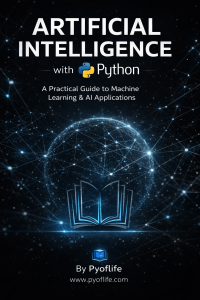
Artificial Intelligence with Python

Artificial Intelligence (AI) has revolutionized various industries, and Python has emerged as a powerful programming language to implement AI solutions. In this article, we will explore the intersection of Artificial Intelligence and Python, understanding its applications, benefits, and how to get started.

Introduction to Artificial Intelligence

Artificial Intelligence refers to the simulation of human intelligence in computers. It involves creating algorithms that can perform tasks that typically require human intelligence. The concept of AI dates back to ancient times, but modern AI has its roots in the mid-20th century.

The Role of Python in Artificial Intelligence

Python’s popularity in the AI community can be attributed to its simplicity and versatility. Its clean syntax allows developers to express ideas concisely, making it an ideal choice for AI projects. Python boasts a rich collection of libraries like NumPy, Pandas, and Scikit-learn, which are instrumental in developing AI models efficiently.

Machine Learning with Python

Machine Learning is a subset of AI that enables systems to learn from data and improve their performance over time. It has two main categories: supervised and unsupervised learning. In Python, you can implement ML algorithms using libraries like Scikit-learn, making complex tasks like regression, classification, and clustering more accessible.

Artificial Intelligence with Python

Artificial Intelligence with Python


Download:

Deep Learning and Neural Networks

Deep Learning involves training artificial neural networks on vast amounts of data to perform tasks. Neural networks, inspired by the human brain, consist of layers of interconnected nodes. Python offers frameworks like TensorFlow and Keras that simplify the creation and training of complex neural networks.

Natural Language Processing (NLP)

NLP allows computers to understand, interpret, and generate human language. Python’s NLP libraries, such as NLTK and SpaCy, enable sentiment analysis, language translation, and chatbot development. NLP’s applications span from customer service bots to language translation apps.

Computer Vision and AI

Computer Vision enables computers to interpret and understand visual information from the world. With Python’s OpenCV library, developers can build applications that process images and videos, enabling tasks like facial recognition and object detection.

Reinforcement Learning

Reinforcement Learning involves training agents to make sequences of decisions in an environment to maximize rewards. Python’s reinforcement learning libraries, like Gym, provide tools for developing and testing RL algorithms.

AI Ethics and Bias

As AI becomes more integrated into daily life, addressing ethical concerns and bias is crucial. Python’s transparency and interpretability make it easier to identify and mitigate biases in AI models, ensuring fairness and accountability.

Getting Started with AI in Python

Setting up a Python environment for AI development involves installing libraries and frameworks like TensorFlow, PyTorch, and scikit-learn. Your first AI project could be something as simple as a sentiment analysis model or a basic image classifier.

Future Trends in AI

AI’s rapid evolution shows no signs of slowing down. From healthcare to autonomous vehicles, AI is transforming industries. However, ethical considerations regarding data privacy and job displacement require ongoing attention.

Conclusion

Python’s synergy with Artificial Intelligence has democratized AI development. Its simplicity, coupled with robust libraries, empowers developers to create intelligent systems with ease. As AI continues to shape our world, Python will remain a driving force in its progress.

FAQs

  1. Is Python the only language used for AI? While Python is popular, other languages like R and Julia are also used in AI. However, Python’s versatility and community support make it a preferred choice.
  2. Can I learn AI without a programming background? Yes, but having a programming foundation will make learning AI concepts and implementation much smoother.
  3. What are some real-world AI applications? Real-world AI applications include virtual assistants, recommendation systems, fraud detection, and self-driving cars.
  4. How can I ensure my AI models are ethical? Regularly audit your data, test for biases, and involve diverse perspectives in the development process.
  5. Where can I learn more about AI and Python? You can find numerous online courses and tutorials on platforms like Coursera, edX, and Codecademy.

Download(PDF)

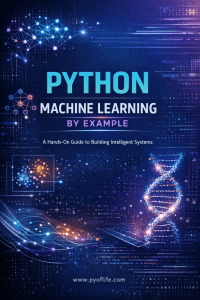
Python Machine Learning by Example

Python Machine Learning by Example: In the world of technology, Python has emerged as a versatile and powerful programming language. With its extensive libraries and frameworks, Python is at the forefront of machine learning advancements. In this article, we will delve into the fascinating realm of Python machine learning, exploring its applications, tools, and real-life examples.

Understanding Machine Learning

Machine learning, in essence, is the ability of computers to learn from data and improve their performance over time without being explicitly programmed. It has two main categories: supervised learning and unsupervised learning. In today’s tech-driven landscape, machine learning has become integral to industries ranging from healthcare to finance.

Python Machine Learning By Example

Python Machine Learning By Example    Download:


Python’s Role in Machine Learning

Python’s popularity in machine learning can be attributed to its simplicity and a wide array of libraries, including TensorFlow, Keras, and scikit-learn. These libraries provide pre-built functions and tools that simplify complex tasks, making it easier for developers to create efficient machine learning models.

Getting Started with Python ML

To embark on your Python machine learning journey, you need to install Python and essential libraries. You can quickly get started by writing your first machine learning code using a basic dataset, which is a great way to grasp the foundational concepts.

Data Preprocessing

Before feeding data into a machine learning model, it’s essential to preprocess it. This involves cleaning the data, handling missing values, and transforming the data into a suitable format. Proper data preprocessing ensures the accuracy and reliability of your model.

Supervised Learning Techniques

Supervised learning involves training a model on a labeled dataset to make predictions or decisions. Linear regression helps in predicting numerical values, while decision trees and support vector machines are employed for classification tasks.

Unsupervised Learning Techniques

Unsupervised learning deals with unlabeled data and focuses on finding patterns or grouping similar data points. K-Means clustering is a popular technique for grouping data, and dimensionality reduction methods like Principal Component Analysis (PCA) aid in simplifying complex datasets.

Deep Learning with Python

Deep learning, a subset of machine learning, revolves around neural networks inspired by the human brain’s structure. You can create intricate models using libraries like TensorFlow, allowing you to solve complex problems like image and speech recognition.

Natural Language Processing (NLP)

NLP enables computers to understand, interpret, and generate human language. With Python, you can process text and perform tasks like sentiment analysis, which gauges the emotional tone of a piece of text.

Computer Vision with Python

Computer vision empowers machines to interpret and understand the visual world. Through Python, you can build models to recognize objects, faces, and even entire scenes, opening doors to applications in autonomous vehicles and surveillance systems.

Real-Life Examples of Python ML

Python machine learning finds applications in various sectors. In healthcare, it aids in disease diagnosis and prognosis. Financial institutions use ML for fraud detection and market analysis. Recommender systems, as seen on platforms like Netflix and Amazon, utilize ML to provide personalized suggestions.

Challenges and Future Trends

While Python’s machine learning capabilities are impressive, ethical considerations and biases in AI systems remain challenges. The future holds the promise of more sophisticated models, increased automation, and wider adoption across industries.

Conclusion

Python’s machine learning capabilities have revolutionized industries by automating processes, making predictions, and generating insights from data. Its user-friendly syntax and robust libraries continue to attract both beginners and experienced developers to explore the vast realm of machine learning.

FAQs

  1. Is Python suitable for beginners in machine learning? Absolutely! Python’s simplicity and extensive documentation make it an excellent choice for newcomers.
  2. Can I implement deep learning without prior machine learning experience? While a basic understanding of machine learning helps, many resources and tutorials can guide you through deep learning concepts using Python.
  3. Are there any industries not benefiting from Python ML? Python ML finds applications across industries, but its impact might vary based on specific use cases.
  4. What ethical concerns are associated with Python ML? Bias in algorithms and data privacy are major ethical concerns that need to be addressed.
  5. How can I learn Python ML effectively? Online courses, tutorials, and hands-on projects are valuable resources to learn and master Python machine learning.

Download(PDF)

Download: Probability for Statistics and Machine Learning

Modern Data Science with R

In our fast-paced society, data is highly valued by businesses, researchers, and organizations for its potential to provide insights, inform decisions and predict trends. Among the most powerful tools in the field of data science is the programming language R. R is versatile, with a broad range of libraries, and has become fundamental to modern data science. This article will examine the world of modern data science with R, exploring its applications, advantages, and libraries.

Introduction to Modern Data Science

Data science is a multidisciplinary field that involves extracting knowledge and insights from structured and unstructured data. It encompasses various techniques, algorithms, processes, and systems to analyze and interpret complex data. Modern data science goes beyond traditional statistics and involves the integration of machine learning, artificial intelligence, and domain expertise to solve real-world problems.

Modern Data Science with R

The Evolution of R in Data Science

R, initially developed by Ross Ihaka and Robert Gentleman at the University of Auckland, has evolved into a powerful programming language and environment for statistical computing and graphics. Its open-source nature and rich ecosystem of packages have made it a preferred choice among data scientists and statisticians.

Getting Started with R

Installation and Setup

To embark on your journey with R, you need to install the R programming language and, optionally, RStudio, an integrated development environment (IDE) specifically designed for R. Both tools are available for various platforms, ensuring a smooth setup process.

Basic Syntax and Operations

R boasts an intuitive syntax that facilitates data manipulation, statistical analysis, and visualization. Its interactive nature allows users to execute commands and receive instant feedback, making the learning curve less steep.

Data Manipulation and Cleaning

Importing Data

Before analysis can begin, data must be imported into R. The language supports various formats, such as CSV, Excel, JSON, and databases. R’s flexible input functions enable seamless data integration.

Data Cleaning Techniques

Data is rarely clean and ready for analysis. R offers an array of functions and packages to handle missing values, outliers, and inconsistencies, ensuring data quality and integrity.

Exploratory Data Analysis (EDA)

Summary Statistics

EDA involves computing summary statistics to gain a preliminary understanding of the data. R provides functions to calculate measures like mean, median, standard deviation, and percentiles.

Data Visualization

Visualizations bring data to life. R’s ggplot2 package empowers users to create a wide range of static and dynamic visualizations, aiding in pattern recognition and insights generation.

Statistical Modeling with R

Linear Regression

Linear regression is a fundamental statistical method for modeling the relationship between variables. R simplifies model fitting, parameter estimation, and hypothesis testing, making it a go-to tool for regression analysis.

Logistic Regression

Logistic regression extends linear regression to predict binary outcomes. In R, logistic regression is employed for scenarios like classification and estimating probabilities.

Time Series Analysis

Time series data, prevalent in economics and finance, requires specialized techniques. R’s time series packages enable tasks such as decomposition, forecasting, and anomaly detection.

Machine Learning with R

Supervised Learning

R facilitates supervised learning through packages like caret and randomForest, enabling the creation of predictive models for classification and regression tasks.

Unsupervised Learning

Clustering and dimensionality reduction fall under unsupervised learning. R offers algorithms like k-means, hierarchical clustering, and principal component analysis.

Text Mining and NLP

Text Preprocessing

Textual data demands preprocessing before analysis. R supports tasks like tokenization, stemming, and stop-word removal, laying the groundwork for effective text mining.

Sentiment Analysis

Sentiment analysis gauges emotions expressed in text. R’s sentiment analysis packages enable businesses to understand public opinions and adapt strategies accordingly.

Data Visualization with ggplot2

Creating Basic Plots

The ggplot2 package, a cornerstone of R’s data visualization capabilities, lets users craft a wide array of plots, including scatter plots, bar plots, and histograms.

Customizing Visualizations

Visualizations need to be both informative and aesthetically pleasing. R’s customization options empower users to fine-tune plots to suit their preferences.

Web Scraping Using R

Basics of Web Scraping

R’s rvest package equips data scientists with the ability to extract data from websites. This is particularly valuable for data collection and research purposes.

Utilizing APIs for Data Collection

Many platforms offer APIs that grant programmatic access to their data. R can tap into these APIs, streamlining the process of data acquisition.

Deploying R Models

Shiny App Development

R’s shiny package revolutionizes how data scientists deploy models. It allows the creation of interactive web applications that enable users to explore data and results.

Creating Interactive Dashboards

Interactive dashboards consolidate insights and visualizations into a single interface. R’s flexdashboard package facilitates dashboard creation for effective data communication.

Ethical Considerations in Data Science

Privacy and Security

Data scientists must handle data responsibly, respecting privacy laws and implementing robust security measures to safeguard sensitive information.

Bias and Fairness

Biases in data can lead to unfair outcomes. Raising awareness about potential biases and working to mitigate them is crucial in ethical data science.

Advantages of R in Data Science

Rich Repository of Packages

R’s extensive collection of packages spans from statistical analysis to machine learning, easing implementation and saving time for data scientists.

Active Community Support

The R community is vibrant and supportive, offering forums, tutorials, and resources that aid in troubleshooting and knowledge sharing.

Future Trends in Data Science with R

Integration of AI and Big Data

As data science converges with artificial intelligence and big data, R is poised to evolve further, empowering more complex analyses and predictions.

Advancements in R Language

The R language itself is subject to enhancements, ensuring it remains a cutting-edge tool in the ever-evolving landscape of data science.

Conclusion

In the realm of modern data science, R stands as a beacon of innovation and capability. Its versatility, combined with a rich set of libraries and a dedicated community, makes it an indispensable tool for data scientists. As industries continue to recognize the potential of data, mastering R can open doors to a world of insights and opportunities.

FAQs

Q1: Is R difficult to learn for beginners? A: R’s syntax is intuitive, making it accessible for beginners. Numerous learning resources are available online to aid the learning process.

Q2: Can I use R for deep learning? A: While R has libraries like keras for deep learning, other languages like Python are more commonly used for this purpose.

Q3: What is the cost of using R? A: R is an open-source language, meaning it’s free to use. You only need to invest time in learning and mastering it.

Q4: Are there alternatives to R for data science? A: Yes, Python is another popular language for data science. Both R and Python have their strengths and are often used together in a data science toolkit.

Q5: How do I contribute to the R community? A: You can contribute by developing packages, sharing knowledge on forums, and participating in open-source projects.

Advanced Guide to Python 3 Programming

Advanced Guide to Python 3 Programming: Python 3 has become one of the most popular programming languages, known for its simplicity, versatility, and readability. Whether you’re a beginner or an experienced developer, this advanced guide will delve into various aspects of Python 3 programming to help you take your skills to the next level.

1. Introduction to Advanced Python 3 Programming

In this section, we’ll introduce the concept of advanced Python 3 programming and discuss why it’s essential for developers to explore beyond the basics. We’ll highlight the areas this guide will cover and provide a roadmap for readers to navigate through.

Advanced Guide to Python 3 Programming

2. Understanding Python Memory Management

Memory management is a crucial aspect of programming. Here, we’ll explore how Python’s memory management works and discuss strategies to optimize memory usage. We’ll cover topics such as garbage collection, memory leaks, and profiling.

3. Mastering Data Structures and Algorithms

Data structures and algorithms are the backbone of efficient programming. In this section, we’ll dive deep into various data structures like arrays, linked lists, and trees, and explore advanced algorithms for sorting, searching, and graph traversal.

4. Functional Programming Techniques

Functional programming is gaining traction due to its elegant approach. We’ll discuss functional programming concepts such as higher-order functions, lambda expressions, and map-reduce operations. Real-world examples will illustrate their usage.

5. Object-Oriented Programming Refinement

Building upon the basics of OOP, we’ll explore advanced OOP concepts like inheritance, polymorphism, and composition. We’ll also discuss design patterns that promote clean and maintainable code.

6. Advanced File Handling and I/O Operations

File handling and I/O are essential for interacting with external data. We’ll cover advanced techniques for reading and writing files, handling exceptions, and working with different file formats like JSON, CSV, and XML.

7. Exploring Decorators and Metaclasses

Decorators and metaclasses provide powerful ways to modify class and function behavior. This section will demonstrate how to create custom decorators and metaclasses to enhance your code’s functionality and maintainability.

8. Concurrency and Multithreading in Python

Python offers various ways to handle concurrency and multithreading. We’ll explore the Global Interpreter Lock (GIL), asynchronous programming using async/await, and the multiprocessing module for efficient parallelism.

9. GUI Development with Python

Creating graphical user interfaces (GUIs) is made easy with Python. We’ll introduce popular GUI libraries like Tkinter and PyQt, guiding you through the process of building interactive desktop applications.

10. Web Scraping and Automation

Web scraping is a valuable skill for extracting data from websites. We’ll showcase how to use libraries like Beautiful Soup and Selenium for web scraping and demonstrate how to automate repetitive tasks.

11. Working with Databases using Python

Python provides robust tools for database interaction. This section will cover database connectivity, querying with SQL, and using ORMs (Object-Relational Mapping) to work with databases efficiently.

12. Unit Testing and Debugging Strategies

Writing tests and debugging are vital for maintaining code quality. We’ll explore advanced techniques for unit testing, debugging, and profiling to identify and resolve issues effectively.

13. Performance Optimization Tips

Optimizing code performance is crucial for resource-intensive applications. We’ll discuss profiling tools, performance bottlenecks, and optimization strategies to enhance the speed and efficiency of your Python programs.

14. Advanced Tips for Library and Framework Usage

Python has a vast ecosystem of libraries and frameworks. We’ll provide insights into choosing the right ones for your projects, mastering their advanced features, and integrating them seamlessly.

15. Real-world Projects and Applications

In this final section, we’ll showcase real-world projects that encompass the concepts covered in this guide. From machine learning applications to web development projects, you’ll gain inspiration and practical insights.

Conclusion

Congratulations! You’ve journeyed through the intricacies of advanced Python 3 programming. By mastering these concepts, you’re well-equipped to tackle complex projects and contribute to the vibrant Python community.

FAQs

  1. Is this guide suitable for Python beginners? This guide is aimed at those with a foundational understanding of Python. If you’re a beginner, we recommend starting with introductory Python resources first.
  2. Can I use these advanced techniques in real-world projects? Absolutely! The concepts covered here are applicable to various real-world scenarios, from software development to data analysis.
  3. Are there any prerequisites for following the guide? A basic grasp of Python fundamentals is required. Familiarity with programming concepts will enhance your understanding.
  4. Where can I find the code examples mentioned? Code examples will be provided throughout the guide, illustrating each concept. You can also find additional resources in the Python documentation.
  5. What’s the next step after mastering advanced Python 3 programming? Once you’re comfortable with these advanced topics, consider contributing to open-source projects, exploring machine learning, or building your innovative applications.