Economics

Using R for Introductory Econometrics

Econometrics is a crucial field in economics that combines statistical methods with economic theories to analyze data and test hypotheses. For students and professionals entering the field, mastering the necessary software tools is essential for conducting econometric analyses effectively. R, a powerful programming language and environment for statistical computing, is becoming increasingly popular for this purpose. This article provides an introductory overview of how R can be used for econometrics, highlighting its advantages, common applications, and practical tips for beginners.

1. Why Use R for Econometrics?

R stands out among statistical software because it is:

  • Open-source and free: Unlike proprietary software such as Stata or EViews, R is completely free, making it accessible to students and researchers alike.
  • Extremely versatile: R is not only suitable for basic econometrics but can handle advanced statistical models, machine learning, and data visualization.
  • Rich in libraries: There are numerous packages like AER, lmtest, plm, and sandwich, which are specifically tailored for econometric analysis.

Additionally, R has a vast and supportive user community. Tutorials, forums, and other learning resources are readily available, which significantly eases the learning curve for newcomers.

Using R for Introductory Econometrics

2. Getting Started with R

Installing R and RStudio

To start using R for econometrics, you will need two things:

  • R: The base programming language.
  • RStudio: An integrated development environment (IDE) that simplifies writing, running, and debugging code.

After installation, familiarizing yourself with basic R syntax is key. You’ll want to understand:

  • How to import data (from CSV, Excel, or other formats).
  • Basic functions for descriptive statistics (mean(), sd(), summary()).
  • Plotting basic graphs using plot(), ggplot2.

Understanding Data Types and Structures

In econometrics, data comes in different forms (time series, panel data, cross-sectional data). In R, you can represent these in structures like:

  • Vectors: For single variables.
  • Data frames: For datasets, where each column represents a variable, and each row represents an observation.
  • Matrices: Useful for certain algebraic operations.

3. Key Econometric Concepts and Their Application in R

3.1. Simple Linear Regression

A simple linear regression model is a cornerstone of econometric analysis, and R provides an easy way to estimate these models using the lm() function.

Example:

# Simple linear regression model
data <- read.csv("economics_data.csv")
model <- lm(income ~ education, data = data)
summary(model)

This code estimates the relationship between income (dependent variable) and education (independent variable). The output provides the coefficients, standard errors, t-values, and p-values.

3.2. Multiple Regression

Expanding from simple regression, multiple regression allows for the inclusion of more explanatory variables. Using the same lm() function, we can easily add more independent variables.

Example:

# Multiple regression model
model <- lm(income ~ education + experience + age, data = data)
summary(model)

3.3. Hypothesis Testing

Econometricians often test hypotheses about their model coefficients. R allows for conducting t-tests, F-tests, and other significance tests with built-in functions.

Example:

  • T-test for coefficients: This is automatically included in the summary(model) output.
  • F-test: Can be conducted using anova() function.
anova(model)

3.4. Heteroscedasticity and Autocorrelation

In real-world data, common problems like heteroscedasticity (non-constant variance) and autocorrelation (correlation of residuals) may arise. Fortunately, R offers tools to detect and correct these issues.

  • Detecting heteroscedasticity: Use the Breusch-Pagan test from the lmtest package.
library(lmtest)
bptest(model)

  • Dealing with autocorrelation: You can use the Durbin-Watson test from the car package.
library(car)
durbinWatsonTest(model)

4. Time Series and Panel Data Econometrics

4.1. Time Series Analysis

For students interested in analyzing economic data over time, R provides extensive time series functionalities. Common tasks include handling data with ts objects and running autoregressive models (AR, ARIMA).

Example:

# Time series data
gdp_data <- ts(read.csv("gdp.csv"), start=c(1990,1), frequency=4)

# Fitting an ARIMA model
library(forecast)
auto.arima(gdp_data)

4.2. Panel Data Analysis

Panel data combines cross-sectional and time series data, which makes it more complex but also rich for econometric insights. The plm package in R simplifies panel data analysis.

Example:

library(plm)

# Loading panel data and running a fixed-effects model
panel_data <- pdata.frame(read.csv("panel_data.csv"), index=c("id", "year"))
model <- plm(y ~ x1 + x2, data=panel_data, model="within")
summary(model)

5. Advanced Visualization with R

R offers powerful tools for visualizing econometric results, which is critical for interpreting and communicating findings. For basic plotting, the plot() function suffices, but for advanced and customizable plots, ggplot2 is highly recommended.

library(ggplot2)

# Plotting a regression line
ggplot(data, aes(x=education, y=income)) +
  geom_point() +
  geom_smooth(method="lm", se=FALSE)

6. R Packages for Econometrics

Below are some essential R packages that econometrics students should be aware of:

  • AER: Applied Econometrics with R, which includes datasets and functions for econometric analysis.
  • lmtest: For diagnostic testing (heteroscedasticity, autocorrelation).
  • plm: For panel data econometrics.
  • sandwich: For robust standard errors.
  • forecast: For time series analysis.

7. Learning Resources and Next Steps

R has a steep learning curve, but numerous resources can help you become proficient:

  • Books: “Introduction to Econometrics with R” is a great textbook for beginners.
  • Online Courses: Platforms like Coursera and DataCamp offer courses on R for econometrics.
  • Forums and Blogs: The R community is active on sites like Stack Overflow, where you can get answers to technical questions.

Conclusion: Using R for Introductory Econometrics

R is a powerful tool for students and professionals embarking on econometric analyses. Its flexibility, combined with a vast ecosystem of packages, makes it ideal for everything from simple regressions to complex time series or panel data models. With the right resources and practice, you can leverage R to gain valuable econometric insights and advance your understanding of economic data.

Download: Exploring Panel Data Econometrics with R

Mathematical Methods for Economic Analysis

In the realm of economics, where decisions hold immense financial implications, harnessing the power of Mathematical Methods for Economic Analysis is nothing short of crucial. By leveraging sophisticated quantitative tools, economists can unravel complex scenarios, forecast trends, and devise effective strategies. This article takes you on a journey through the landscape of Mathematical Methods for Economic Analysis, highlighting key concepts, applications, and the synergy between mathematics and economics.

Mathematical Methods for Economic Analysis: Bridging Theory and Application

Mathematical Methods for Economic Analysis serves as the bedrock upon which economic theories are formulated, tested, and refined. It’s the art of translating real-world economic problems into mathematical equations that can be analyzed, manipulated, and solved. This synergy between mathematics and economics empowers professionals to make well-informed decisions backed by data-driven insights.

Mathematical Methods for Economic Analysis

Exploring Key Mathematical Concepts in Economics

Calculus: The Language of Change

Calculus lies at the heart of Economic Analysis. It provides tools to examine how variables change in relation to one another. Whether it’s determining marginal cost, optimizing production, or understanding elasticity, calculus enables economists to quantify rates of change and make precise predictions.

Linear Algebra: Mapping Relationships

Linear algebra comes into play when analyzing relationships between variables. From input-output models to understanding supply and demand interdependencies, economists employ matrices and vectors to represent and manipulate these relationships, unraveling the intricate web of economic dynamics.

Differential Equations: Modeling Change

Differential equations are essential for modeling dynamic economic processes. They capture how variables change over time, enabling economists to simulate and predict economic behavior. Whether it’s population growth, investment trajectories, or interest rate fluctuations, differential equations offer invaluable insights.

Statistics and Probability: Deciphering Uncertainty

Economic decisions often hinge on uncertain outcomes. Here, statistics and probability step in, providing tools to measure and manage uncertainty. Economists use probability distributions, hypothesis testing, and regression analysis to assess risk, forecast trends, and make informed choices.

Real-World Applications of Mathematical Methods

Financial Markets Analysis

Mathematical Methods enable economists to dissect financial market trends, evaluate risk-return profiles, and develop investment strategies. Whether it’s pricing options using the Black-Scholes model or understanding the efficient market hypothesis, mathematics provides the analytical backbone for financial decision-making.

Macroeconomic Policy Formulation

From monetary policy to fiscal stimulus, governments rely on Mathematical Methods to design effective macroeconomic policies. Equations modeling national income, inflation, and unemployment rates guide policymakers in maintaining economic stability and growth.

Game Theory and Strategic Behavior

In a world of strategic interactions, game theory emerges as a guiding light. By employing mathematical models, economists decipher optimal strategies in competitive scenarios. This finds applications in industries ranging from telecommunications to international trade negotiations.

Environmental and Resource Economics

Mathematical Methods extend their reach to environmental economics, aiding in resource management and sustainability. Equations modeling resource depletion, pollution control, and renewable energy adoption aid policymakers in balancing economic growth with environmental well-being.

FAQs

Q: How do Mathematical Methods enhance economic forecasting? A: Mathematical Methods provide tools like time series analysis and econometric models that help economists analyze historical data and make accurate forecasts based on trends and patterns.

Q: Can Mathematical Methods be applied to behavioral economics? A: Absolutely! Mathematical models can capture behavioral aspects, enabling economists to incorporate human psychology into economic analyses, offering a comprehensive understanding of decision-making.

Q: What role do Mathematical Methods play in international trade? A: Mathematical Methods help economists model trade patterns, exchange rates, and tariffs, aiding in the formulation of trade policies and predicting the outcomes of international economic interactions.

Q: Are Mathematical Methods only for advanced economists? A: Not at all. While some applications may be complex, foundational concepts like supply and demand curves or compound interest calculations are examples of Mathematical Methods accessible to all.

Q: How are Mathematical Methods utilized in risk management? A: In risk management, concepts like value-at-risk (VaR) and portfolio optimization rely on Mathematical Methods to assess and mitigate financial risks effectively.

Q: Can you recommend resources for learning more about Mathematical Methods? A: Certainly. Websites like Khan Academy, Coursera, and MIT OpenCourseWare offer a wealth of resources for learning Mathematical Methods for Economic Analysis.

Conclusion

Mathematical Methods for Economic Analysis is a testament to the symbiotic relationship between mathematics and economics. From deciphering market trends to formulating policies with environmental consciousness, these methods empower economists with a robust toolkit for decision-making. By embracing the quantitative elegance of mathematics, we illuminate the path toward a more informed and prosperous economic landscape.

Download(PDF)

Download: Basic Statistics for Business & Economics

Top 5 Nobel Prize-Winning Economic Theories Everyone Should Know

The Sveriges Riksbank Prize in Economic Sciences in Memory of Alfred Nobel was established in 1968 by the Bank of Sweden, and it was first awarded in 1969, more than 60 years after the distribution of the first Nobel Prizes.

It has been awarded 51 times to 84 Laureates who have researched and tested dozens of ground-breaking ideas. Here are five prize-winning economic theories that you’ll want to be familiar with. These are ideas you’re likely to hear about in news stories because they apply to major aspects of our everyday lives.

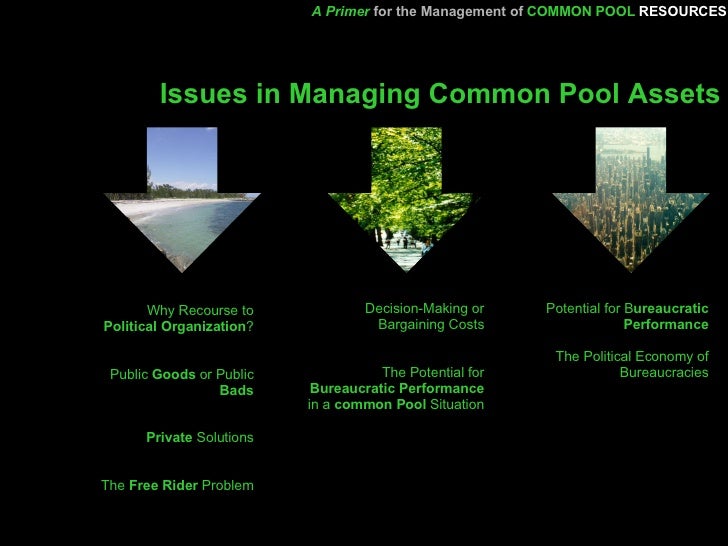
1. Management of Common Pool Resources

Common Pool Theory

In 2009, Indiana University political science professor, Elinor Ostrom, became the first woman to win the Nobel Prize in economics. She received it “for her analysis of economic governance, especially the commons.

Management of common-pool resources is a resource that benefits a group of people, but which provides diminished benefits to everyone if each individual pursues his or her self-interest. The value of a common pool resource can be reduced through overuse because the supply of the resource is not unlimited, and using more than can be replenished can result in scarcity. Overuse of a common pool resource can lead to the tragedy of the commons problem.

2. Behavioral Economics

Intro to Behavioral Economics

The US academic Richard Thaler won the Nobel prize in economics for his pioneering work in behavioural economics. The Royal Swedish Academy of Sciences, which awarded the £845,000 prize, praised Thaler for incorporating psychological assumptions into analyses of economic decision-making.

Unlike the field of classical economics, in which decision-making is entirely based on cold-headed logic, behavioural economics allows for irrational behaviour and attempts to understand why this may be the case. The concept can be applied in miniature to individual situations, or more broadly to encompass the wider actions of a society or trends in financial markets. The theory is particularly useful for companies and marketers looking to increase sales by encouraging changes in behaviour by consumers.

3. Asymmetric Information

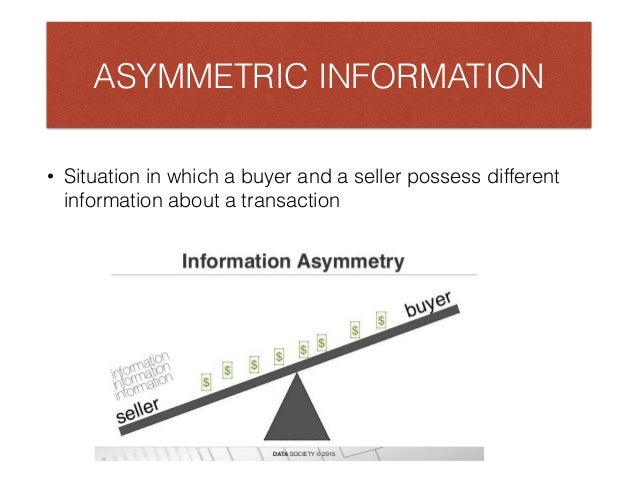
Information Asymmetry
Nobel Prize-Winning Economic Theories Everyone Should Know

In 2001, George A. Akerlof, A. Michael Spence, and Joseph E. Stiglitz won the prize for their analyses of markets with asymmetric information. The theory showed that economic models predicated on perfect information are often misguided because, in reality, one party to a transaction often has superior information, a phenomenon known as information asymmetry.

An understanding of information asymmetry has improved our understanding of how various types of markets work and the importance of corporate transparency. Asymmetric information can also be viewed as the specialization and division of knowledge, as applied to any economic trade. For example, doctors typically know more about medical practices than their patients. After all, physicians have extensive medical school educational backgrounds that their patients generally don’t have. This principle equally applies to architects, teachers, police officers, attorneys, engineers, fitness instructors, and other trained professionals. Asymmetric information, therefore, is most often beneficial to an economy and a society in increasing efficiency.

4. Game Theory

Top 5 Nobel Prize-Winning Economic Theories Everyone Should Know

The academy awarded the 1994 prize to John C. Harsanyi, John F. Nash Jr., and Reinhard Selten for their pioneering analysis of equilibria in the theory of non-cooperative games. The theory of non-cooperative games is a branch of the analysis of strategic interaction commonly known as “game theory.”

One of Nash’s major contributions was the Nash Equilibrium, a method for predicting the outcome of non-cooperative games based on equilibrium. Nash’s 1950 doctoral dissertation, “Non-Cooperative Games,” details his theory. The Nash Equilibrium expanded upon earlier research on two-player, zero-sum games. Selten applied Nash’s findings to dynamic strategic interactions, and Harsanyi applied them to scenarios with incomplete information to help develop the field of information economics. Their contributions are widely used in economics, such as in the analysis of oligopoly and the theory of industrial organization, and have inspired new fields of research.

5. Public Choice Theory

Nobel Prize-Winning Economic Theories Everyone Should Know

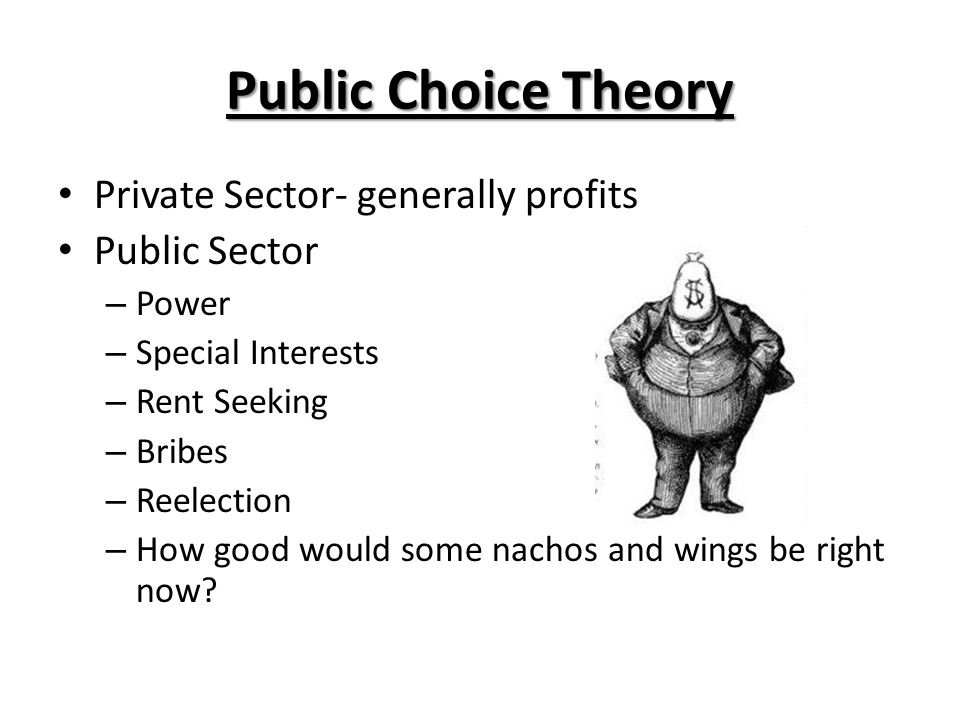
James M. Buchanan Jr. received the prize in 1986 for his development of the contractual and constitutional bases for the theory of economic and political decision-making. Using Buchanan’s insights regarding the political process, human nature, and free markets.

He showed that contrary to the conventional wisdom that public-sector actors act in the public’s best interest as “public servants”, politicians and bureaucrats tend to act in their self-interest, just like the private sector. He described his theory as “politics without romance.” We can better understand the incentives that motivate political actors and better predict the results of political decision-making. We can then design fixed rules that are more likely to lead to desirable outcomes.

Hy we are on Patreon: https://www.patreon.com/pyoflife

Economists Whose Idea Are Changing The World

Economics is one of the most important and influential fields of study one can enter: the ramifications of its theory have changed our world, and will of course continue to do so. When we think of powerful men of the past, our minds turn to politicians and leaders the Churchills, Ghandis and even the Stalins and Hitlers who led men to glory, freedom, or destructions. However, the economists on whose ideas and counsel these giants of the modern age based their policies have had no less of an influence, indeed arguably even more of an impact, on our world.

We’re living in the age of the rock star academic. Everyone is trying to make sense of financial crises and the old economics textbooks don’t work so well anymore. So it’s natural to turn to the people who study this stuff for a living. Thomas Piketty, a French academic, sold 1.5 million copies of his book “Capital in the Twenty-First Century,” while Nobel prize-winning economists like Paul Krugman and Joseph Stiglitz can be found burning up social media, the newspapers, and the conference circuit. But not everyone with influential ideas on economics and finance is as well-known. Here are the Economists that are changing the world behind-the-scenes.

Related post: Skill And knowledge Required For An Economics Major:

1: Ha-Joon Chang, University of Cambridge

Idea: Developed countries talk a lot about the free market but really use their power and financial strength to profit at the expense of emerging economies. Chang’s ideas are controversial, centering on the role that international bodies like the IMF and World Bank play in the world economy. In books such as Kicking Away the Ladder and The Myth of Free Trade he argues that the governments of bigger economies help out their own companies, while preaching the benefits of the free market to developing nations.

2: Katherina Pistor, Columbia Law School

Idea: The rule of law must be suspended for financial markets in a crisis, or the whole system will collapse. Pistor, who won the Max Planck academic research award in 2012, is developing a legal theory of finance to work out how laws affect its shape and composition. She discovered that, in a crisis, the regulations that build markets aren’t worth the paper they’re printed on. Political power is the driving force behind who gets hit in the heat of the moment.

3: Charles Calomiris, Columbia Business School

Idea: Financial collapses don’t happen at random and aren’t inevitable. They come from complex bargains between politicians and bankers that spiral out of the government’s control. That’s one of the reasons why the US has had 12 major banking crises since 1840, while Canada has had none.

Related post: Economics Books For Economist.

4: Jon Danielsson, London School of Economics

Idea: Trusting your risk models will lose you money in a crisis. Risk models will generally tend to have the same outcomes when everything is going well, even if they have different mathematical foundations. This tricks people in to thinking that they work all the time. But when all hell breaks loose, the models will give you wildly different risk assesments, leaving you flying blind. This is bad for banks and hedge funds but even worse for central banks, who have to make policy decisions for everyone else.

5: Marianne Bertrand, University of Chicago Booth

Idea: CEOs are rewarded for luck rather than performance. Also, employers judge applicants on their name as much as their qualifications. Bertrand is one the reasons why there’s been such a shareholder backlash against CEO pay, after proving their huge bonuses are based on luck rather than genius. In a 2003 paper, she and Sendhil Mullainathan also famously replied to help-wanted ads in Chicago and Boston with fake names. Some applicants used names like Emily and Greg, while others used names like Lakisha and Jamal. “The results show significant discrimination against African-American names,” the authors wrote. “White names receive 50% more callbacks for interviews.”

Related post: Highest Paying Jobs with an Economics Degree

6: Alvin Roth, Harvard University and Stanford University

Idea: You don’t need money to make a stable market for something. Roth, along with Lloyd Shapely, won the Nobel Prize in 2012 for showing that people can make a market based on mutually-beneficial swaps rather than cash to satisfy a specific need. This was particularly useful for easing the shortage of kidney donors in the US. Roth used game theory to pair up donors with patients they didn’t know, making it easier for people to swap their organs and find a match.

7: Richard Portes, London Business School

Idea: Bondholders can often work together to get concessions from a borrower. Portes, now professor of economics at London Business School, laid down the groundwork for collective action clauses, where sovereign bondholders use their bargaining power to impose conditions on a debtor country. The work has been especially important in cases like Greece or Argentina.

Related post: 11 Best Modern Economics Books

8: Charles Goodhart, London School of Economics

Idea: Goodhart’s Law. Goodhart said that as soon as governments or central banks turn a statistic, such as the stock market, into an implicit policy target, it ceases to become a reliable statistic. This is because players in financial markets change their investment strategies to pre-empt the policy. Goodhart was one of the orignal members of the Bank of England’s monetary policy committee in 1997, and a veteran of financial crises in 1970s.

9: Alberto Alesina, Harvard University

Idea: Far from hurting growth, austerity measures can actually help economies recover. In 2009, Alesina and Silvia Ardegna published a paper called Large Changes in Fiscal Policy: Taxes Versus Spending. It was an important part of the debate in the years that followed over whether austerity and reducing debt or boosting government spending were the best strategies for economies recovering, cited by fiscal hawks.

Every reader contribution, however big or small, is so valuable for our future. Support pyoflife.com from as little as $1 – and it only takes a minute. Thank you.

6 REASONS WHY YOU SHOULD BE ECONOMIST

A question or a challenge? There is a variety of reasons a student would choose to major in any discipline. These choices are inspired by different reasons, from family background to the environment or peer group association or it could even be for a choice of career or passion, whichever it is, it is important for you to understand some basic insight about economics.

From a personal perspective, the study of economics has provided me with a systematic framework for analyzing, researching, writing, and teaching about a wide array financial and regional economic issues. Economics has provided me with a methodology for understanding and making sense of our complex environment. So here are 6 absolutely foolproof reasons for studying economics.

1. Economic Forecaster:

As an economist, you can make a living from predicting future economic events. The key to being a good economic forecaster is to use a mixture of dice and lottery numbers. (some economists make the mistake of using just lottery numbers, but this can lead to really bad forecasting) If this method fails just use the statistics from the previous year; they are always more accurate than the actual predictions of economists. An economist practically evaluates risks, which may be conditions or circumstances that may lead to a result of fluctuating from their initial estimates, hence demonstrates the thorough and deep thinking process used to final forecast estimates. Forecast results are sometimes generated annually but at other times updated frequently. Though there are so many tools put in place to help economists achieve results but need the statistical knowledge and models to follow in order to arrive at the result for particular variables. For your information economists have successfully predicted 10 out of the last 2 recessions.

2. You will understand the Market dynamics:

learning, as they say, is all-round progress, which touches every part of one’s life. Choosing to study economics will help you to understand the dynamics of the market. Market dynamics are simply those factors that impact the market. An economist perspective would mean demand and supply, opportunity cost, scarcity, equilibrium just to mention a few. The course will expand your vocabulary and knowledge to understand how the market works even if you would not be working primarily as an economist, but always at the back of your mind to help understand your organization market and can also help to influence the strategic decision in improving your organization’s performance.

3. Economists know reasons for unemployment:

Economist would define unemployment as a part of the labour force actively seeking employment. Dividing the unemployed over the employed gives an economist a statistically calculated percentage. An indicator used in understanding the operations of the total country’s labour force. Unemployment consequentially has an adverse effect on a country’s economy, especially when the rates are so high. This can then draw the attention of the media and other nations of the world too. There are numerous reasons for unemployment of a particular person in a country but if a country experiences recession or economic fall, most of the available private sector may be forced to lay off staff to reduce cost, and this, in turn, is causative for sometimes the mental minds both for the unemployed and employed. Reasons are numbers to an economist, which they could also predict or decipher in an economy.

Related post: Economics Books For Economist.

4. Able to make a good decision on personal spending:

There is a funny idea that economists are stingy people, but it is not so, they are only after making a very good economic decision. Learning to major in this course would enlighten your scope of reasoning to another level and eventually with enough passion to carry on would turn into a habit that is economically sound and financially healthy, since economics will teach you about market behaviours and organization trends. For example, learning about willingness to pay theory could help you develop your own spending habits, which will prove your sound economic mind and able to influence analytical thinking in immediate family members if possible.

5. Economists earn a high paying Job:

This is another reason be it as it may, why some students study economics as a major. It gives you the power to examine the labour markets, prospective private companies, industry tendencies or forces which direct the economy as it is. Definitely a major in economics could land you different jobs, one of such is a market research analyst, where they are required to apply skills like graphical representation, statistical skills and a critical mind for thinking, another is an economic consultant is needed across various sectors like government, finance, education, healthcare and business, they are required also to analyze and research economic strategies in order to help enhance performance. Any student that enjoys analytical thinking could major in economics which in turn will help to understand deeper how to coordinate and interpret data using mathematical formulas and statistics to make calculations. There are models also in place to learn, which helps to predict the effect of policy decisions, industry tendencies, climate change, investment, just to mention a few. The ability for problem-solving and great communication skills should be a strong suit for such an interested student, they are required to evaluate problems and recommend solutions.

Related post: Highest Paying Jobs with an Economics Degree

6. You can always give advice.

When the economy enters a recession, you will be able to tell everybody why the economy is in a recession. Also, you will be able to suggest several conflicting reasons as to how we can get out of a recession. This will simultaneously, both confuse and impress everybody; but it doesn’t matter because nobody ever listen to economists.

Related post: Skill And knowledge Required For An Economics Major:

Every reader contribution, however big or small, is so valuable for our future. Support pyoflife.com from as little as $1 – and it only takes a minute. Thank you.

Highest Paying Jobs with an Economics Degree

What can you do with an economics degree? This is a question many prospective college students ask when considering this popular major. While there may be many potential answers to this question, some of the most lucrative ones are highlighted below. If you want to study economics and earn a handsome salary upon graduation, these are the career paths you should consider.

Job TitleMedian Salary (2018)*Job Growth (2018-2028)*
Economist$104,3408%
Budget Analyst$76,2204%
Top Executive$104,9806%
Personal Financial Advisor$88,8907%
Financial Manager$127,99016%
Source: *U.S. Bureau of Labor

1. Economist

With a bachelor’s degree in economics, you would be qualified for entry-level positions and pursuing a graduate degree in economics would open up several other options. Economist uses analytical and research skills to carry out studies regarding economic scenarios. They analyze industry trends to help organizations improve their performance.

They might work for organizations in a variety of industries, including business, finance, healthcare, education, the government, and more. The economist can also act as an expert witness in legal cases to assess economic damages, analyze intellectual property and antitrust violations, and address regulatory violations.  In 2018, economists made a median annual salary of $104,340.

2. Budget Analyst

A budget analyst is employed by an organization or business and is responsible for helping the company develop and manage an annual budget. They may work closely with other company executives and managers to understand the financial needs of each department, as well as the expenditures.

An economics bachelor’s degree would be adequate preparation for a career as a budget analyst, though certification may also be helpful for those working in the government. These professionals made a median salary of $76,220.

Related post: Economics Books For Economist.

3. Top Executive

Top executives work in several different capacities for companies and organizations, like operations managers, executive directors, and CEOs. While their responsibilities and job duties may vary depending on their specific role, top executives are often in charge of setting organizational goals, working with other company executives, analyzing sales and financial reports, and overseeing the daily operations of a company.

With an economics degree and relevant work experience, you would be qualified for a position as a top executive. In 2018, top executives made a median annual salary of $104,980 and there is the potential to earn even more depending on your role, as the top ten per cent of CEOs made over $208,000 in 2018.

4. Personal Financial Advisor

As a personal financial advisor, you will work closely with clients who are seeking financial advice concerning their investments and savings. You may help them set up savings funds for retirement or their children’s future education, manage their investment portfolios, and navigate tax season.

A degree in economics would provide an individual with a good foundation for a career as a personal financial advisor and certifications or licenses may provide an additional advantage. These advisors made a median annual salary of $88,890 in 2018, which is also much higher than the national median of $38,640 for all occupations.

5. Financial Manager

Financial managers play a key role in businesses and organizations, as they oversee all of the business’s financial activities and make important financial decisions. For example, a financial manager would be responsible for managing the finance department and all of its employees, producing financial reports and statements, making sure budgets are set and abided by, and reporting to top executives.

Financial managers typically have a bachelor’s degree in a relevant field, like economics, and significant work experience in a related role. In 2018, financial managers earned a median annual salary of $127,990.

COVID-19 Pandemic: Top Business Opportunities

Coronavirus pandemic has affected almost every continent and country. It had an unprecedented impact not only on health and humanity but also on the global economy. The drastic shift in consumer behaviour has created an everlasting ripple effect on businesses from all industries.

The announcements of health regulators to maintain social distancing made customers stay in. On the other hand, it has brought forth an opportunity for the entrepreneurs and business owners to give it back to society in the most critical times.

Here are some business opportunities worth spending time and money:

AI-Empowered Online Education platform

Online, Learning, Education, School
Post-COVID-19 Pandemic: Top Business Opportunities

The most important thing we learn from this pandemic is our education system does not work. Educational institutions around the world are forced to shut down and shift to online learning programmes. Institutions are adopting innovative tools for learning to thrive in this post-pandemic world.

This shift in the learning system with online classes replacing the traditional methods; and the demand for new learning management software have created opportunities to collaborate education with technology on a better scale. AI-empowered tools to assist in attendance and validate candidates are predicted to be the new normal for the future educational system.

24 Hour Online Medicine and health care Service

Post-COVID-19 Pandemic: Top Business Opportunities

At this moment, pharmaceutical businesses have an essential role to play. Patients are being advised to seek care from their homes. A large majority of the audience who never tried telehealth services are comfortable with using it now. Due to COVID-19, the industry is demanding support for medical assistance, customer service, health report maintenance and many more.

It is also the responsibility of every business person to provide true value to healthcare through quality service and cost-efficiency.  You can offer the best possible solutions to their health issues with the help of your own branded online healthcare app or website.

E commerce Marketplace

Post-COVID-19 Pandemic: Top Business Opportunities 
Shopping Cart, Icon, Logo, Shop

It is very difficult for small business and shop owner to find their sustainability in the market. Thankfully, the digital world has a solution to this problem. Businesses have a golden opportunity to expand their customer reach by going online and boost their sales.

Online sales have surged 52% from the year-ago period, and the number of online shoppers has increased by 8.8% since the outbreak began. Taking your e-commerce business online, you can enable contactless commerce deliveries now.

Grocery Delivery Service

Post-COVID-19 Pandemic: Top Business Opportunities

The fear of getting exposed to the pandemic keeps people from going to offline grocery stores. While the stock in their homes doesn’t seem to be lasting for longer now, they are ordering it online. It is the major reason for the exponential rise in a number of downloads for grocery delivery apps in recent days.

Did you know, downloads of grocery app and Shipt have increased every day? Take your grocery store online to ensure timely delivery of grocery orders at customers’ doorstep.

Pickup and Delivery Service

Post-COVID-19 Pandemic: Top Business Opportunities 
Truck, Pickup, Isolated, Human, Move

With all types of businesses finding ways to reach their customer’s doorstep, delivery solutions are becoming a life-saviour. And for this reason, delivery services have observed a surge in their business amid the coronavirus crisis. 

A changing economy means new opportunities, especially for delivery services. Regardless of the business size & type, there is a need for a delivery management solution. To increase your business you can provide service for small business.

Online Payment Service

Post-COVID-19 Pandemic: Top Business Opportunities

The World Health Organization (WHO) recommends customers to pay contactless rather than with cash. It is very important to improve the existing online payment system. When the pandemic made every store adopt a curb-side pickup and eCommerce module, online payment gateways turned to be the ultimate support for every retailer big or small.

Online payment platforms are now creating more digital options and solutions for customers. Devising an inclusive setup for the audience irrespective of their educational and financial background. Building omnichannel payment solutions to accommodate varying ways of shopping accelerating business opportunities to collaborate with tech support in the future.

Food Delivery Service

Post-COVID-19 Pandemic: Top Business Opportunities

Several restaurants had to shut their shutters after the government ordered an enforced lockdown. Waiting for the situation to get back to normal seems no longer a good option for them. But switching to online delivery sounds certainly perfect.

The food delivery services thrive, as consumers stay home to avoid the spread of contagious diseases. Launch your branded food delivery app to enable your customers to order food online and delight them with contactless deliveries.

Fitness App

Post-COVID-19 Pandemic: Top Business Opportunities

The impact of the pandemic on the fitness industry has been nothing short of catastrophic. Though the ambience of the instructor-led classrooms cannot be replicated on online sessions, the industry has no choice but to adopt digital instruction modules to combat the impact.

The solution to combine the sale of fitness equipment with live classes and pre-recorded content as a subscription model is finding revenue. However, the challenge according to Peloton, an American exercise equipment and media company, is meeting the soaring customer demand. With the situation changing after the lockdown scenario, the fitness industry definitely needs business support to meet the demand of the bifurcating audience, choosing between traditional classroom workout and the luxury of at-home workout routines.

https://pyoflife.com/2020/07/10/entrepreneurs-best-books-for-your-life/

Top 5 Free economics eBooks on the internet

Economics is a beautiful subject not as complicated as people might think. In fact, economics starts with individual human action. If you understand that humans act with a purpose, you’re well on your way to understanding economics. To help you learn from the ground up, I’ve compiled a list of 5 free economics eBooks, ranked from easiest-to-understand to more advanced.

This list will give you a new perspective on what economics actually is, tools and terminology to talk econ with the best of them, examples of common economic misconceptions, and a base-level understanding to jump-start your dive into more advanced material. Here are the top 5 Free economics eBooks you can download now.

1. “I, Pencil” – Leonard E. Read

Top 5 Free economics eBooks

This timeless and perspective-shifting essay was originally written by FEE founder Leonard E. Read in 1958 and is a must-read for anybody curious about economics. Read tells a story through the eyes of a pencil that details the innumerous forces behind market production, and how no single person could possess the know-how or resources to produce such a thing.

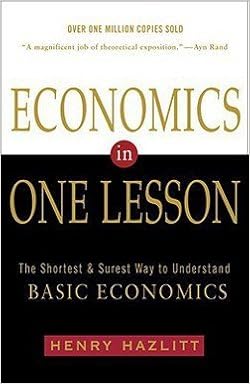
2. Economics in One Lesson – Henry Hazlitt

Top 5 Free economics eBooks

Economics in One Lesson is an introduction to economics written by Henry Hazlitt and first published in 1946. The art of economics consists in looking not merely at the immediate but at the more prolonged effects of any act or policy; it consists in tracing the consequences of that policy not merely for one group but for all groups.

3. A Renewable World: Energy, Ecology, Equality

Top 5 Free economics eBooks

This path-breaking book provides sound and practical introduction, arguments, directions, and specific solutions not only for the fast diffusion of renewable energies but for a whole revolution widening their exponential dynamics (and advantages) to all sectors, to demonstrate that yes, “we can renew our world, despite many of the grim developments of the last few centuries”

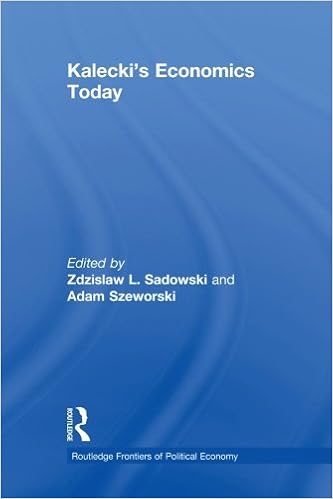
4. Kalecki’s Economics Today

.Top 5 Free economics eBooks

This 250-pages-long book presents not only the legacy of Kalecki (a brilliant economist, whose only fault was to publish in the Polish language; he independently discovered many of the key concepts of what is now identified as Keynesian theory) but also a possible reading of Michal Kalecki as a behavioral economist and the implications for modern evolutionary economic analysis.

5. Econometrics textbook

Top 5 Free economics eBooks

This free textbook about econometrics analysis, methods, and algebra cover themes like regression, ordinary least squares estimation, multicollinearity, omitted variables, generalized least squares, heteroskedasticity, generalized method of moments, bootstrap techniques, time series analysis, vector auto-regressive analysis (VAR), cointegration, non-parametric methods.

The skills required for the digital economy

We are living in a digital economy. Business executives around the world worry about the future of jobs and the welfare of their employees as technology automated processes and make sections of staff redundant. According to a recent PwC study, almost half 46 per cent of CEOs globally said significant retraining is the most important initiative to close a potential skills gap, against just 18 per cent who said they would be hiring from outside their industry.

Tech companies, and indeed all organizations in the digital economy, are coming to realise that digital skills are vital for employees in the digital era. It is more important than ever that new employees are cross-disciplined and have both hard and soft skills.  Whatever the specific job you are interviewing for, recruiters will be looking out for a wider skill set and broader experience in their new hires.

This list covers the top skills employers are looking for today and in the coming years. 

1. Human skills

Human skills include communication, creativity, critical thinking, collaboration, and analytical skills. Since an analysis of job descriptions highlighted human skills as a must-have, they didn’t seem to warrant a premium in salary. However, the reality is that although hard to judge in an interview, lacking any of these skills might cause candidates to be deemed unsuitable for certain jobs.

An interesting thing in an analysis of human skills was the fact that collaboration, as a skill, is becoming increasingly important in the work environment.

2. Programming, Web and App Development

At the heart of any tech product or digital service is coding. The core languages that most programming and web and app development positions need include Bootstrap, jQuery, Angular, Code Igniter, PHP/JavaScript, Python and MySQL. These skills are listed regularly in the top 10 most in-demand by employers on LinkedIn. Having a portfolio of projects demonstrating your coding skills can also help to validate your knowledge and expertise and help you land your dream role. Examples of mobile and responsive web development experience will give you an edge over other candidates.

Coding is also vital for emerging technologies such as augmented reality (AR) and virtual reality (VR). Coding will provide AR and VR Developers with the foundation skills needed to develop the next generation of AR and VR technologies. 

3. Digital Business Analysis

Digital Business Analysis helps organizations to make the right choices by providing an independent and objective mindset and applying a range of proven analysis techniques to make a convincing business case for investment in a digital solution.  As digital transformation is central to all organizations in the digital economy, digital business analysis skills have become the hottest skills to have on your CV in the 21st Century. Digital Business Analysts are at the epicentre of digital transformation projects. They help organisations develop a digital ecosystem of technologies that will help drive digital transformation and business growth. Much needed skill for the digital economy.

4. Data Design and Data Visualization

Websites, Apps and Digital Services have one thing in common; a user interface. Any designer with experience creating effective, dynamic user experiences will be in high demand with most tech companies.

Designers can also visualize complex data to help management make vital business decisions. This skill is called data visualization. Data visualization is useful for senior leaders to gain valuable insights from data. Tools such as Tableau and Power BI are used by designers to analyse and visualize data.

5. Digital Product Management

Another skill that is not unique to software development but one that is particularly valuable nonetheless is Digital Product Management. Software services in particular need to have a lifecycle management plan put in place. The continued growth of Software as a Service will make Product Management ever more integral to the tech sector.

6. Digital Marketing

To promote their products and services tech companies will look to digital marketing. Understanding of how to get the most value for money out of the broadest range of networks will be key here. In-demand skills for Digital Marketers include: 

  • Digital marketing tools 
  • Analytics tools
  • Social media marketing 
  • Content marketing 
  • SEO 
  • UX (User Experience Design)

7. Social Media

Some of the best PR today is carried out almost exclusively through social media. Twitter, Facebook, Reddit, Instagram and countless other platforms give tech companies direct access to customers, thought leaders and evangelists. The best Tech PR managers are Social Media managers.

8. Data Science and Data Analytics

Companies gather huge amounts of data that can be immensely valuable to them if they have a Big Data Analyst who can make sense of it all. Data Scientists are in-demand by employers across the world. Glassdoor constantly features Data Scientists in their Best Jobs Listing. Not only is Data Science an excellent career path for professionals in the digital age, but demand far outweighs supply, making Data Scientists highly employable. A recent McKinsey report showed that “The United States alone faces a shortage of 140,000 to 190,000 people with analytical expertise and 1.5 million managers with skills to make decisions based on the analysis of big data.” As data science becomes a minimum requirement for more and more manager-level jobs, learning data science will help you position yourself ahead of the curve. 

Top Youtube Channel For Economic

If you are a student of economics you may have visited these top youtube channels for economics. Some of them are very popular with economic students all around the world. According to our research team, these are the top youtube channel for economics:

Related post: Top 10 Universities For Economics In The World

Top Youtube Channel For an Economist
Top Youtube Channel For Economics

1.UC Berkley 

https://www.youtube.com/user/UCBerkeley/videos

The Berkley channel generously shares full courses (with PowerPoint slides) in many sub-divisions of economics, as well as in a large number of other disciplines. This means you can keep up-to-date with the teachings of one of the world’s leading universities. As a free resource, you can’t get much better. It’s like studying without the fees!

2. YouTube Channel of MIT

https://www.youtube.com/user/MIT

Slightly more limited than the Berkley channel (especially for external users), the MIT channel still offers some precious nuggets of economic knowledge – particularly to do with the basics. The full set of lectures is, unfortunately, only available on the official page of MIT Open Course Ware. That said, for those just looking for an introductory look into economics, it’s definitely worth checking out.

3. Mark Thoma’s YouTube channel

https://www.youtube.com/user/markthoma?feature=watch

Produced by the author of Economist’s View, this channel is a real treasure trove, giving its viewers access to full courses of lectures all recorded live. The channel covers Econometrics, Monetary Theory and Policy, History of Economic Thought and much more. It really has something for everyone.

4. Duke Economics

 https://www.youtube.com/user/DukeEconomic

The YouTube channel of the Department of Economics of Duke University hosts a small but interesting collection of introductory lectures, as well as lectures on trending economics topics by some renowned speakers. This second feature makes the channel really worth checking in on now and again, as you can never be sure which hotshot economist could be popping up next! 

5. Ben Lambert 

https://www.youtube.com/user/SpartacanUsuals/videos

Lambert’s videos provide detailed commentaries on the main undergraduate and graduate courses most universities offer in economics. They are taught through a series of lectures given on an animated chalkboard. A perusal of this site is a great way to get an impression of exactly what an economics degree will be like – without having to pay the admission fee!

6. Econ Girl

https://www.youtube.com/user/jodiecongirl

Jodi Beggs, author of the popular blog Economists Do It With Models, teaches economics to college and MBA students. In her videos, she shares her expertise in a collection of short explanatory lectures normally between 10-40 minutes. The channel consists not only of introductory videos but also includes practice problem videos, making your research relevant and applicable – essential for those who get bogged down in too much abstraction.

7. The Economics Detective 

https://www.youtube.com/user/GarrettPetersen/videos

The Economics Detective has a series of short animated videos – real short, normally between 3-4 minutes – covering some of the key economics concepts – a creative, fun, and non-time-consuming way to get yourself familiar with the basics. For those short of time, this is a great way to get a flavour of what the study of economics could bring. Also for those just wanting to brush up on some of the basics, the ‘detective’ could prove an invaluable resource.

8. Math for Economists

Although not a huge catalogue, the University of California, Irvine, has published an extremely useful introductory lecture ‘Math for Economists’. Broken in parts, this small but comprehensive lecture series does exactly what it says on the tin. The viewing figures alone show how useful it has already been, reaching clicks of over 50,000. Quite incredible for an economics lecture series!

9. The Snarr Institute

https://www.youtube.com/user/snarrinstitute/about

Hosted by Hal Snarr, a professor at Westminster College, ‘The Snarr Institute’ provides instructional videos on economics and business quantitative methods. Those of the quantitive inclination will find these introductory videos a great initiation to the field. And for those already familiar with this area, the videos can serve as a useful refresher. It is always advisable to be confident with the fundamentals.

10. V for voluntary library

https://www.youtube.com/user/Nielsio?feature=watch

Even though not concentrated exclusively on economics, the voluntary library has shared an interesting collection of videos recorded at various events, offering diverse content not limited to economics. Given that economics is increasingly reliant on the methodology of many of the social sciences, keeping up to date in the development of other fields is of great value!

11. Mathew Khan

https://www.youtube.com/user/mek1966/videos

This must-watch channel will be of particular interest for those specializing in Environmental Economics, as most of its content pertains to this area. In our time of accelerating climate deterioration, this sub-discipline of economics is growing in importance. If we are to lengthen our planet’s life, environmental economists will have to play a significant role. Get started and get watching!