Economy

Mathematical Methods for Economic Analysis

In the realm of economics, where decisions hold immense financial implications, harnessing the power of Mathematical Methods for Economic Analysis is nothing short of crucial. By leveraging sophisticated quantitative tools, economists can unravel complex scenarios, forecast trends, and devise effective strategies. This article takes you on a journey through the landscape of Mathematical Methods for Economic Analysis, highlighting key concepts, applications, and the synergy between mathematics and economics.

Mathematical Methods for Economic Analysis: Bridging Theory and Application

Mathematical Methods for Economic Analysis serves as the bedrock upon which economic theories are formulated, tested, and refined. It’s the art of translating real-world economic problems into mathematical equations that can be analyzed, manipulated, and solved. This synergy between mathematics and economics empowers professionals to make well-informed decisions backed by data-driven insights.

Mathematical Methods for Economic Analysis

Exploring Key Mathematical Concepts in Economics

Calculus: The Language of Change

Calculus lies at the heart of Economic Analysis. It provides tools to examine how variables change in relation to one another. Whether it’s determining marginal cost, optimizing production, or understanding elasticity, calculus enables economists to quantify rates of change and make precise predictions.

Linear Algebra: Mapping Relationships

Linear algebra comes into play when analyzing relationships between variables. From input-output models to understanding supply and demand interdependencies, economists employ matrices and vectors to represent and manipulate these relationships, unraveling the intricate web of economic dynamics.

Differential Equations: Modeling Change

Differential equations are essential for modeling dynamic economic processes. They capture how variables change over time, enabling economists to simulate and predict economic behavior. Whether it’s population growth, investment trajectories, or interest rate fluctuations, differential equations offer invaluable insights.

Statistics and Probability: Deciphering Uncertainty

Economic decisions often hinge on uncertain outcomes. Here, statistics and probability step in, providing tools to measure and manage uncertainty. Economists use probability distributions, hypothesis testing, and regression analysis to assess risk, forecast trends, and make informed choices.

Real-World Applications of Mathematical Methods

Financial Markets Analysis

Mathematical Methods enable economists to dissect financial market trends, evaluate risk-return profiles, and develop investment strategies. Whether it’s pricing options using the Black-Scholes model or understanding the efficient market hypothesis, mathematics provides the analytical backbone for financial decision-making.

Macroeconomic Policy Formulation

From monetary policy to fiscal stimulus, governments rely on Mathematical Methods to design effective macroeconomic policies. Equations modeling national income, inflation, and unemployment rates guide policymakers in maintaining economic stability and growth.

Game Theory and Strategic Behavior

In a world of strategic interactions, game theory emerges as a guiding light. By employing mathematical models, economists decipher optimal strategies in competitive scenarios. This finds applications in industries ranging from telecommunications to international trade negotiations.

Environmental and Resource Economics

Mathematical Methods extend their reach to environmental economics, aiding in resource management and sustainability. Equations modeling resource depletion, pollution control, and renewable energy adoption aid policymakers in balancing economic growth with environmental well-being.

FAQs

Q: How do Mathematical Methods enhance economic forecasting? A: Mathematical Methods provide tools like time series analysis and econometric models that help economists analyze historical data and make accurate forecasts based on trends and patterns.

Q: Can Mathematical Methods be applied to behavioral economics? A: Absolutely! Mathematical models can capture behavioral aspects, enabling economists to incorporate human psychology into economic analyses, offering a comprehensive understanding of decision-making.

Q: What role do Mathematical Methods play in international trade? A: Mathematical Methods help economists model trade patterns, exchange rates, and tariffs, aiding in the formulation of trade policies and predicting the outcomes of international economic interactions.

Q: Are Mathematical Methods only for advanced economists? A: Not at all. While some applications may be complex, foundational concepts like supply and demand curves or compound interest calculations are examples of Mathematical Methods accessible to all.

Q: How are Mathematical Methods utilized in risk management? A: In risk management, concepts like value-at-risk (VaR) and portfolio optimization rely on Mathematical Methods to assess and mitigate financial risks effectively.

Q: Can you recommend resources for learning more about Mathematical Methods? A: Certainly. Websites like Khan Academy, Coursera, and MIT OpenCourseWare offer a wealth of resources for learning Mathematical Methods for Economic Analysis.

Conclusion

Mathematical Methods for Economic Analysis is a testament to the symbiotic relationship between mathematics and economics. From deciphering market trends to formulating policies with environmental consciousness, these methods empower economists with a robust toolkit for decision-making. By embracing the quantitative elegance of mathematics, we illuminate the path toward a more informed and prosperous economic landscape.

Download(PDF)

Download: Basic Statistics for Business & Economics

Monetize Your Data Science Skills

Monetize your Data Science skills: Data science is without a doubt the most in-demand field today. No wonder data scientists with proficient skills are handsomely rewarded in jobs across the world. There are multiple interesting ways to make money from data science skills.

Monetize Your Data Science Skills

1. Write A Blog

Data science is new like every other technology! we love to read the content on websites. The opportunity is for you that there are very less resources in data science. Whatever is already present is good but data science fields lack some more quality content. Blogging is one of the most popular ways to share your findings with the world.  There are so many ways to monetize blogs like Adsense, affiliates, etc. You may start to earn money from data science in this way as well.

2. Freelancing

You can start freelancing to monetize data science skills effectively through the power of the internet. You can work as much or as little as you want as a freelancer, giving you the freedom to advance at your own pace. There are many opportunities due to the rising demand for data science expertise. Freelancing is one of the top ways to monetize data science skills as a data scientist in 2023. There are multiple websites ( UpworkFiverr, and Freelance.) that provide sufficient and high-quality work for different professions with good payments, sometimes international payments.

3. Competing In Hackathons

You can put your data science skills to the test in high-stakes competitions such as Kaggle competitions. Active participation in Kaggle competitions, as well as global data science competitions, helps data scientists to improve their data science skills as well as earn good rewards. This will help to add some value to the CV of a data scientist to show communication skills, technical skills, as well as other data science skills.

4. Start A Consulting Firm

You can start with small projects with clearly defined goals. As a data science consultant, it will be your job to assist businesses in using data to solve issues and guide choices. This can entail everything from data analysis and model development to giving advice and producing documents. For this You must possess a strong foundation of data science knowledge and skills, as well as exceptional communication and problem-solving capabilities, to be effective.

5. Create Data Science Courses

One of the best ways to monetize your Data Science skills is to create data science courses for this, you must have experience in teaching and explaining technical concepts. You can Join online teaching platforms to work with them on instructing certain topics and courses. Create your own course and sell it on different platforms such as Udemy, teachable, Thinkific, Ruzuku, and LearnDash.

6 REASONS WHY YOU SHOULD BE ECONOMIST

A question or a challenge? There is a variety of reasons a student would choose to major in any discipline. These choices are inspired by different reasons, from family background to the environment or peer group association or it could even be for a choice of career or passion, whichever it is, it is important for you to understand some basic insight about economics.

From a personal perspective, the study of economics has provided me with a systematic framework for analyzing, researching, writing, and teaching about a wide array financial and regional economic issues. Economics has provided me with a methodology for understanding and making sense of our complex environment. So here are 6 absolutely foolproof reasons for studying economics.

1. Economic Forecaster:

As an economist, you can make a living from predicting future economic events. The key to being a good economic forecaster is to use a mixture of dice and lottery numbers. (some economists make the mistake of using just lottery numbers, but this can lead to really bad forecasting) If this method fails just use the statistics from the previous year; they are always more accurate than the actual predictions of economists. An economist practically evaluates risks, which may be conditions or circumstances that may lead to a result of fluctuating from their initial estimates, hence demonstrates the thorough and deep thinking process used to final forecast estimates. Forecast results are sometimes generated annually but at other times updated frequently. Though there are so many tools put in place to help economists achieve results but need the statistical knowledge and models to follow in order to arrive at the result for particular variables. For your information economists have successfully predicted 10 out of the last 2 recessions.

2. You will understand the Market dynamics:

learning, as they say, is all-round progress, which touches every part of one’s life. Choosing to study economics will help you to understand the dynamics of the market. Market dynamics are simply those factors that impact the market. An economist perspective would mean demand and supply, opportunity cost, scarcity, equilibrium just to mention a few. The course will expand your vocabulary and knowledge to understand how the market works even if you would not be working primarily as an economist, but always at the back of your mind to help understand your organization market and can also help to influence the strategic decision in improving your organization’s performance.

3. Economists know reasons for unemployment:

Economist would define unemployment as a part of the labour force actively seeking employment. Dividing the unemployed over the employed gives an economist a statistically calculated percentage. An indicator used in understanding the operations of the total country’s labour force. Unemployment consequentially has an adverse effect on a country’s economy, especially when the rates are so high. This can then draw the attention of the media and other nations of the world too. There are numerous reasons for unemployment of a particular person in a country but if a country experiences recession or economic fall, most of the available private sector may be forced to lay off staff to reduce cost, and this, in turn, is causative for sometimes the mental minds both for the unemployed and employed. Reasons are numbers to an economist, which they could also predict or decipher in an economy.

Related post: Economics Books For Economist.

4. Able to make a good decision on personal spending:

There is a funny idea that economists are stingy people, but it is not so, they are only after making a very good economic decision. Learning to major in this course would enlighten your scope of reasoning to another level and eventually with enough passion to carry on would turn into a habit that is economically sound and financially healthy, since economics will teach you about market behaviours and organization trends. For example, learning about willingness to pay theory could help you develop your own spending habits, which will prove your sound economic mind and able to influence analytical thinking in immediate family members if possible.

5. Economists earn a high paying Job:

This is another reason be it as it may, why some students study economics as a major. It gives you the power to examine the labour markets, prospective private companies, industry tendencies or forces which direct the economy as it is. Definitely a major in economics could land you different jobs, one of such is a market research analyst, where they are required to apply skills like graphical representation, statistical skills and a critical mind for thinking, another is an economic consultant is needed across various sectors like government, finance, education, healthcare and business, they are required also to analyze and research economic strategies in order to help enhance performance. Any student that enjoys analytical thinking could major in economics which in turn will help to understand deeper how to coordinate and interpret data using mathematical formulas and statistics to make calculations. There are models also in place to learn, which helps to predict the effect of policy decisions, industry tendencies, climate change, investment, just to mention a few. The ability for problem-solving and great communication skills should be a strong suit for such an interested student, they are required to evaluate problems and recommend solutions.

Related post: Highest Paying Jobs with an Economics Degree

6. You can always give advice.

When the economy enters a recession, you will be able to tell everybody why the economy is in a recession. Also, you will be able to suggest several conflicting reasons as to how we can get out of a recession. This will simultaneously, both confuse and impress everybody; but it doesn’t matter because nobody ever listen to economists.

Related post: Skill And knowledge Required For An Economics Major:

Every reader contribution, however big or small, is so valuable for our future. Support pyoflife.com from as little as $1 – and it only takes a minute. Thank you.

Different Ways To Calculate GDP Of A Country

The gross domestic product (GDP) of a nation is an estimate of the total value of all the goods and services it produced during a specific period, usually a quarter or a year. Its greatest use is as a point of comparison: Did the nation’s economy grow or contract compared to the previous period measured?

There are three different methods (Expenditure, Income and Production) which can be used to measure the GDP of a country. All of these methods in theory should sum to the same amount.

1. Expenditure method

The expenditure approach is where you add up all the various types of spending which occurs within an economy. There are 4 different types.

Consumption (C)

Consumption is all the spending that households do on goods and services. For example, the number of apples a household purchases; the amount of money spent on healthcare; the amount of money spent purchasing new cars and the money spent on pizza are all examples of consumption spending.

Investment (I)

Investment is the spending that firms do machinery and equipment to operate their businesses. Examples of investment spending would be a mining company purchases a truck to transport coal; It companies purchasing new computers and the purchase of a new plane for an airline company.

Government Spending (G)

Government spending is the spending that the government conducts within an economy. Examples of government spending include spending on defence; spending on health care; the building of roads and education spending.

Net Exports (NX)

Net exports is defined at the purchases of domestically produced goods by foreigners subtracted from the purchases of internationally produced goods by local residents. In essence, it is the value of what is sent overseas minus the value of stuff that comes here.

If an airline company operating in the USA purchases a new plane from France, this would be considered an import for the USA and an export for France. This would cause the net exports to decrease for the USA whilst causing the net exports to increase for France.

An interesting case is where a foreign student from China comes and studies at a school in the USA. This is considered an export from the USA to China since the USA is producing a service (education) which is essentially being “sent” to a Chinese student who is from the Chinese economy. Thus, China is importing education from the USA.

Therefore, if we add up these 4 components we get:

GDP = C + I + G +NX

This is also called the demand approach to calculating GDP since all these components are demands for goods and services. It is looking at the demand side of the economy.

For example, using the input-output tables for Australia you can calculate the GDP for Australia in the year 2018 with:

C=$969,173C=$969,173
I=$418,703I=$418,703
G=$309,325G=$309,325
X=$308,306X=$308,306
M=$357,121M=$357,121

Giving GDP=$969,173+$418,703+$309,325+$308,306−$357,121GDP=$969,173+$418,703+$309,325+$308,306−$357,121

GDP=$1,659,604GDP=$1,659,604

where GDP is measured in millions of dollars.

2. Income Method :

The income approach starts with the income earned from the production of goods and services. Under the income approach, we calculate the income earned by all the factors of production in an economy.

Factors of production are the inputs which go into producing final product or service. Thus, the factors of production for business are – Land, Labour, Capital and Management within the domestic boundaries of a country. 

In this approach, we calculate income from each of these Factor of production which includes the wages got by labour, the rent earned by land, the return on capital in the form of interest, as well as business profits earned by management. Sum of All these incomes constitutes national income and is a way to calculate GDP.

Formula : Net National Income = Wages + Rent + Interest + Profits

To make it gross, we need to do two adjustments – Add depreciation of capital & Add Net Foreign Factor Income. NFFI is (income earned by the rest of the world in the country – income earned by the country from the rest of the world)

GDP (Factor Cost) = Wages + Rent + Interest + Profits+ Depreciation + Net Foreign Factor Income

This basically is the sum of final income of all factors of production contributing to a business in a country before tax.

Now if we add taxes and deduct subsidies, then it becomes GDP at Market cost.

GDP (Market Cost) = GDP (Factor Cost)+ (Indirect Taxes – Subsidies)

3. Production Method:

The production method (or value-added) is where we calculate the total value of all goods produced in the economy minus the value of intermediate goods.

Consider an economy which produces steel and cars. Suppose the economy produces 100 units of steel which it sells for $1 and it produces 10 cars, using 5 units of steel, which it sells for $100.

As the production of steel requires no intermediate inputs, the value added from the production of steel is $100.

The production of cars produces $1000 worth of cars using $50 of steel. Therefore, the value added is $950.

The total value-added/GDP of the economy is thus $1050. Alternatively, we could have added the total amount spent on the cars $1000 and total spend on steel $100 giving $1100 and then subtracted the $50 of intermediate inputs to also get $1050.

Every reader contribution, however big or small, is so valuable for our future. Support pyoflife.com from as little as $1 – and it only takes a minute. Thank you.

The Inventions That Changes The Modern Economy

Human inventions and technologies have shaped civilizations and transformed life on Earth.  As expectations and capabilities evolve, each new generation possesses its own set of innovative thinkers. Right from the invention of the wheel to the development of Mars rover, several inventions are revolutionary.

The past decade has seen a significant-tech boom and an increase in products featuring smart technology. Here are some of the most important and influential inventions that change the modern economy.

Related post: Economics Books To Study If You are Going To Be Economist.

1.Search Engine

Google, Www, Online Search, Search

Google isn’t the only search engine available, it certainly is the most popular. Since it’s creation the website has achieved things that were previously impossible, from SEO optimisation to seamless global collaboration. Search engines give us access to limitless information 24 hours a day. It completely changed how we consume news and find out about current events. Search engines have changed marketing forever. Whether its pay per click advertising campaigns or SEO optimisation, most businesses now promote themselves online and rely heavily on sites like Google to pull in results.

2. Smartphones

Smartphone, Technology, Mockup, Apps


Yes, phones existed before 2000. The age of the smartphone, however, is a whole different ball game. There have been many variations and the smartphone now is far more advanced than even 5 years ago. However, the role that modern-day smartphones play in our day to day lives is undeniable. Being able to access almost any type of information or service at the touch of a button must surely make the smartphone one of the very best inventions of all time.

3.Artificial Intelligence

Artificial Intelligence, Brain, Think


Sci-fi movies from older times feature talking robots and computers that can think for themselves. These things still feature in movies, admittedly, but artificial intelligence is becoming a real “thing”. In 2011, for instance, a computer system called IBM Watson competed on and won American quiz-show Jeopardy, beating two all-time champions in the process. Though we’re not at a stage where robots are uprising and taking over the world, the capability to develop full artificial intelligence can’t be too far off.

4. Blockchain

Bitcoin, Blockchain, Crypto

You’ve likely heard about it even if you don’t fully understand it. The simplest explanation of blockchain is that it is an incorruptible way to record transactions between parties – a shared digital ledger that parties can only add to and that is transparent to all members of a peer-to-peer network where the blockchain is logged and stored. The technology was first deployed in 2008 to create Bitcoin, the first decentralized cryptocurrency, but it has since been adopted by the financial sector and other industries for myriad uses, including money transfers, supply chain monitoring, and food safety.

5. 3D printing

The Inventions That Changes The Modern Economy

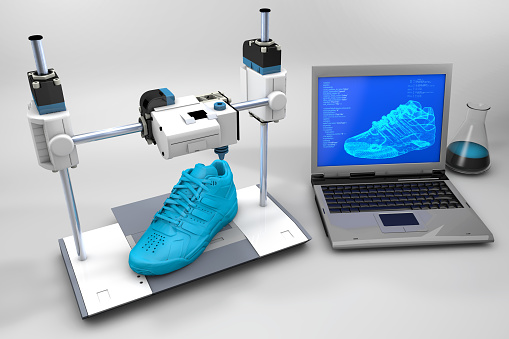
The earliest application of the layering method used by today’s 3D printers took place in the manufacture of topographical maps in the late 19th century, and 3D printing as we know it began in 1980. The convergence of cheaper manufacturing methods and open-source software, however, has led to a revolution of 3D printing in recent years. Today, the technology is being used in the production of everything from lower-cost car parts to bridges to less painful ballet slippers and it is even considered for artificial organs.

6. The Electric Car

Tesla, Tesla Model X, Charging


If you haven’t heard of Elon Musk and Tesla by now, we’re almost 100% certain you’re living in a media black hole. While his latest antics have been more geared towards space exploration, Tesla was an innovation of its own. Although electric cars had been invented previously, and subsequently, Tesla was the first to make them easily and readily available. Nissan and BMW have recently followed suit and produced their own commercially available electric cars.

7. High-density battery packs

lithium-ion cells

Tesla electric cars have received so much attention largely because of their batteries. The batteries, located underneath the passenger cabin, consist of thousands of high-density lithium-ion cells, each barely larger than a standard AA battery, nestled into a large, heavy battery pack that also offers Tesla electric cars a road-gripping low centre of gravity and structural support. The brainchild of Tesla co-founder J.B. Straubel, these battery modules pack more of a punch than standard (and cheaper) electric car batteries. These packs are also being used in residential, commercial, and grid-scale energy storage devices.

8. Facebook

Facebook logo


Facebook, introduced in 2004, wasn’t the first social media site to grace the internet but it was by far the most influential. Initially developed for Harvard students only, Facebook now has over 2 billions users. The ability to share your life with a multitude of contacts and use the internet to build lasting networks is one that is now ingrained into everyday life for both business and individuals.

9. YouTube

YouTube


YouTube arrived on our screens in 2005 just over a decade ago. To think that YouTube has changed the face of media consumption in such a short space is incredible. For everything from how-to videos, to comedy show catch-ups, viral videos and marketing campaigns, YouTube is to go-to whenever a video element is needed.

10. The Apple iPod


The Inventions That Changes The Modern Economy


Now it becomes I tunes. The iPod was the gadget that transformed how we listen to music. Gone were the days of walkmans and CD’s, and the ability to carry around so many songs in such a small device made it the must-have item of 2001.

If you like my work, support me on: https://www.patreon.com/pyoflife

Happiness: How much money do we need to be happy?

Having money may bring you more happiness than spending it. It isn’t unusual for people to ask themselves how much money it takes to be happy. The next time this thought crosses your mind, don’t take it lightly because the answer is important.

Being Rich Doesn’t Mean Happy

A common assumption is a notion that happiness is synonymous with being rich. One problem with that assumption is that even members of your own family might have different expectations for what rich is. Contemporary sociologists such as Dennis Gilbert, a professor at New York’s Hamilton College, define rich as those who live off of income from their investments rather than occupation-driven income.

Have you read this:

  1. Start A Business With No Money
  2. COVID-19 Pandemic: Top Business Opportunities
  3. Entrepreneurs: Best books for your life

By this standard, a doctor even one earning $1 million a year isn’t as rich as someone who has earned $1 million from stocks, bonds, real estate, copyrights, or other passive income sources. The reason has to do with time. The investor can sit at home and make money, while the doctor stops receiving a paycheck if they stop working. They’re only paid if they continue to sell their labour. However, others might define being rich by entirely different metrics.

It means our life satisfaction depends on. How you feel about what you’ve accomplished, but the degree to which you love your work is the icing on the cake.

So How Much Money Do We Need to Be Happy?

Psychologists from Purdue University and the University of Virginia analyzed World Gallup Poll data from 1.7 million people in 164 countries and cross-referenced their earnings and life satisfaction. Although the cost and standard of living different across these countries, researchers came up with a bold conclusion: The ideal income for individuals is $95,000 a year for life satisfaction and $60,000 to $75,000 a year for emotional well-being. Families with children, of course, will need more.

If you like my work, support me on: https://www.patreon.com/pyoflife

COVID-19 Pandemic: Top Business Opportunities

Coronavirus pandemic has affected almost every continent and country. It had an unprecedented impact not only on health and humanity but also on the global economy. The drastic shift in consumer behaviour has created an everlasting ripple effect on businesses from all industries.

The announcements of health regulators to maintain social distancing made customers stay in. On the other hand, it has brought forth an opportunity for the entrepreneurs and business owners to give it back to society in the most critical times.

Here are some business opportunities worth spending time and money:

AI-Empowered Online Education platform

Online, Learning, Education, School
Post-COVID-19 Pandemic: Top Business Opportunities

The most important thing we learn from this pandemic is our education system does not work. Educational institutions around the world are forced to shut down and shift to online learning programmes. Institutions are adopting innovative tools for learning to thrive in this post-pandemic world.

This shift in the learning system with online classes replacing the traditional methods; and the demand for new learning management software have created opportunities to collaborate education with technology on a better scale. AI-empowered tools to assist in attendance and validate candidates are predicted to be the new normal for the future educational system.

24 Hour Online Medicine and health care Service

Post-COVID-19 Pandemic: Top Business Opportunities

At this moment, pharmaceutical businesses have an essential role to play. Patients are being advised to seek care from their homes. A large majority of the audience who never tried telehealth services are comfortable with using it now. Due to COVID-19, the industry is demanding support for medical assistance, customer service, health report maintenance and many more.

It is also the responsibility of every business person to provide true value to healthcare through quality service and cost-efficiency.  You can offer the best possible solutions to their health issues with the help of your own branded online healthcare app or website.

E commerce Marketplace

Post-COVID-19 Pandemic: Top Business Opportunities 
Shopping Cart, Icon, Logo, Shop

It is very difficult for small business and shop owner to find their sustainability in the market. Thankfully, the digital world has a solution to this problem. Businesses have a golden opportunity to expand their customer reach by going online and boost their sales.

Online sales have surged 52% from the year-ago period, and the number of online shoppers has increased by 8.8% since the outbreak began. Taking your e-commerce business online, you can enable contactless commerce deliveries now.

Grocery Delivery Service

Post-COVID-19 Pandemic: Top Business Opportunities

The fear of getting exposed to the pandemic keeps people from going to offline grocery stores. While the stock in their homes doesn’t seem to be lasting for longer now, they are ordering it online. It is the major reason for the exponential rise in a number of downloads for grocery delivery apps in recent days.

Did you know, downloads of grocery app and Shipt have increased every day? Take your grocery store online to ensure timely delivery of grocery orders at customers’ doorstep.

Pickup and Delivery Service

Post-COVID-19 Pandemic: Top Business Opportunities 
Truck, Pickup, Isolated, Human, Move

With all types of businesses finding ways to reach their customer’s doorstep, delivery solutions are becoming a life-saviour. And for this reason, delivery services have observed a surge in their business amid the coronavirus crisis. 

A changing economy means new opportunities, especially for delivery services. Regardless of the business size & type, there is a need for a delivery management solution. To increase your business you can provide service for small business.

Online Payment Service

Post-COVID-19 Pandemic: Top Business Opportunities

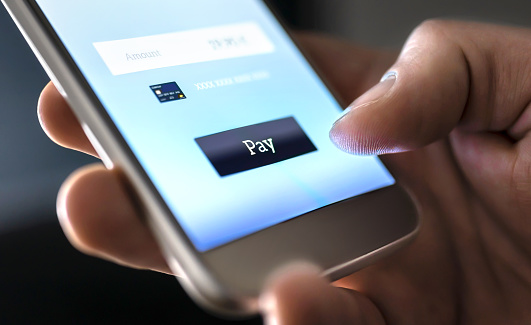
The World Health Organization (WHO) recommends customers to pay contactless rather than with cash. It is very important to improve the existing online payment system. When the pandemic made every store adopt a curb-side pickup and eCommerce module, online payment gateways turned to be the ultimate support for every retailer big or small.

Online payment platforms are now creating more digital options and solutions for customers. Devising an inclusive setup for the audience irrespective of their educational and financial background. Building omnichannel payment solutions to accommodate varying ways of shopping accelerating business opportunities to collaborate with tech support in the future.

Food Delivery Service

Post-COVID-19 Pandemic: Top Business Opportunities

Several restaurants had to shut their shutters after the government ordered an enforced lockdown. Waiting for the situation to get back to normal seems no longer a good option for them. But switching to online delivery sounds certainly perfect.

The food delivery services thrive, as consumers stay home to avoid the spread of contagious diseases. Launch your branded food delivery app to enable your customers to order food online and delight them with contactless deliveries.

Fitness App

Post-COVID-19 Pandemic: Top Business Opportunities

The impact of the pandemic on the fitness industry has been nothing short of catastrophic. Though the ambience of the instructor-led classrooms cannot be replicated on online sessions, the industry has no choice but to adopt digital instruction modules to combat the impact.

The solution to combine the sale of fitness equipment with live classes and pre-recorded content as a subscription model is finding revenue. However, the challenge according to Peloton, an American exercise equipment and media company, is meeting the soaring customer demand. With the situation changing after the lockdown scenario, the fitness industry definitely needs business support to meet the demand of the bifurcating audience, choosing between traditional classroom workout and the luxury of at-home workout routines.

https://pyoflife.com/2020/07/10/entrepreneurs-best-books-for-your-life/